Understanding Cape Verde as a luxury destination
The islands are grouped into two clusters. The Barlavento (windward) islands to the north include Santo Antão, São Vicente, Santa Luzia, São Nicolau, Sal, and Boa Vista. The Sotavento (leeward) islands to the south include Maio, Santiago, Fogo, and Brava. Each group carries a different energy, and the choice between them shapes the nature of the entire stay.
Best islands and areas for a luxury suite stay
Sal and Boa Vista: Atlantic stillness and sand
Sal and Boa Vista are the islands most associated with resort infrastructure. Their flat, arid landscapes extend into long stretches of pale sand, and the light in both locations has an almost clinical sharpness for most of the year. These islands attract travellers seeking direct beach access, consistent sun, and the kind of horizontal calm that only wide, low-density coastlines can provide. Luxury hotel suites here tend to privilege ocean-facing terraces, private pool configurations, and proximity to the water.
São Vicente and Mindelo: culture and architectural texture
São Vicente is home to Mindelo, a port city widely regarded as the cultural capital of Cape Verde. The architecture here carries clear Portuguese colonial inflections, and the city has historically been a reference point for Cape Verdean music, particularly morna, the melancholic genre associated with Cesária Évora. A suite stay in or near Mindelo offers a more textured urban experience, with proximity to galleries, independent restaurants, and a harbour that has served Atlantic trade routes for centuries.
Fogo: volcanic interior and altitude
Fogo is defined by the Pico do Fogo volcano, an active stratovolcano rising to 2,829 metres. The interior of the island produces a distinctive microclimate and some of the most unusual terroir in the Atlantic, including a wine production tradition that has grown in international recognition. Staying here means engaging with a landscape of lava fields, crater vineyards, and high-altitude villages. Accommodation options are more intimate in scale, and the experience is fundamentally different from the coastal islands.
Santo Antão: green valleys and dramatic relief
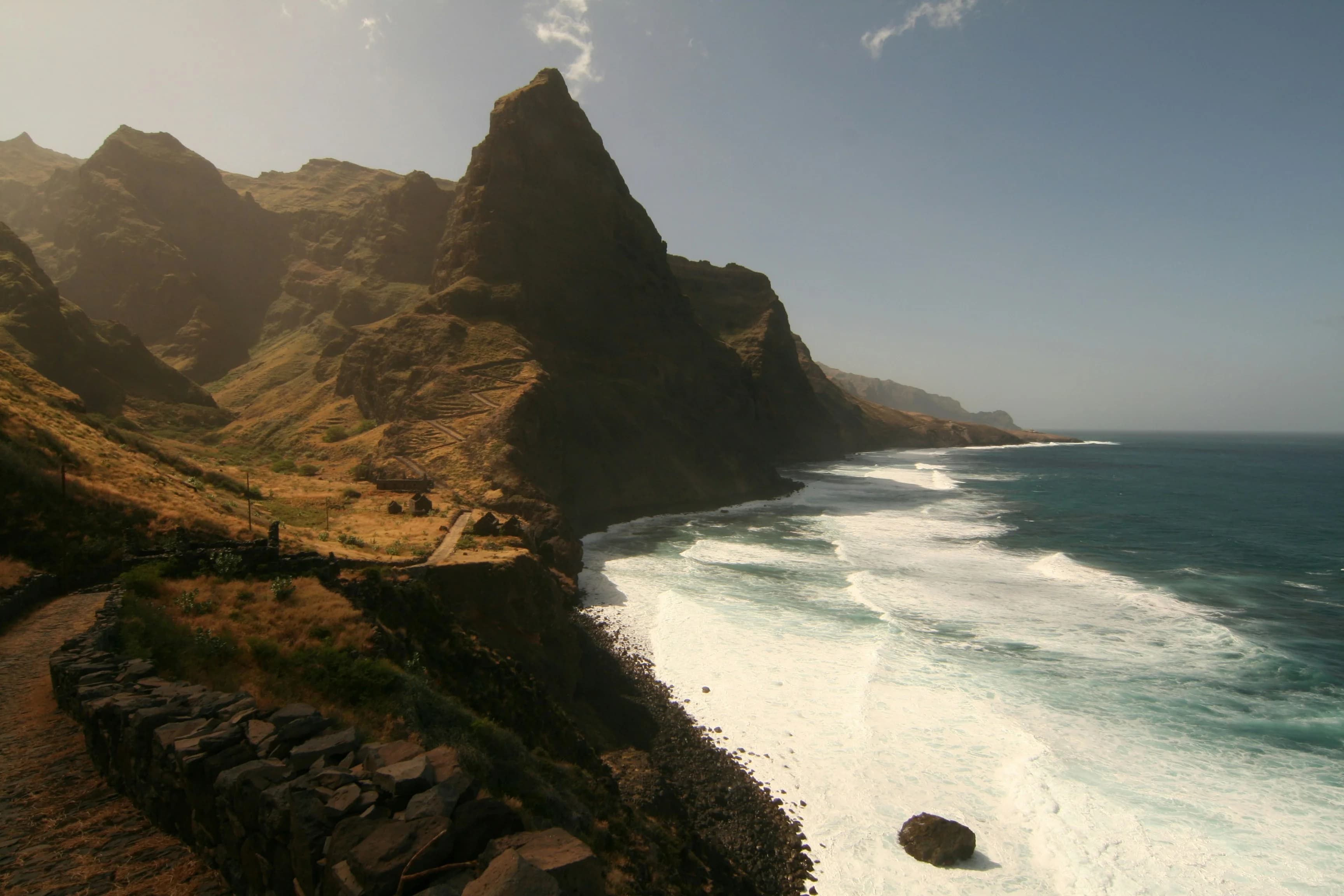
Santo Antão is the most topographically dramatic of the northern islands, characterised by deep ravines, terraced agriculture, and a persistent green that contrasts with the aridity of the eastern islands. It attracts a more active traveller profile, though the seclusion it offers is unmatched within the archipelago. A suite with views over the Ribeira Grande valley represents one of the more singular residential experiences available in this part of the Atlantic.
When to visit Cape Verde for a suite stay
Cape Verde benefits from a remarkably stable climate, with temperatures ranging between 22 and 30 degrees Celsius across most of the year. The dry season, running from November through June, is generally considered the optimal period for travel. Sea conditions are calmer, visibility is high, and the risk of the Harmattan (the dust-laden wind from the Sahara) is reduced.
July through October corresponds to the brief rainy season, which brings higher humidity and occasional precipitation, particularly on the mountainous western islands. For travellers seeking exclusivity and reduced occupancy rates at luxury hotels, the shoulder months of October and May can offer advantageous conditions.
There are no large-scale international luxury events of the kind found in Monaco or Cannes, but the Mindelact International Theatre Festival in September (held in Mindelo) and various local music festivals through the winter months add cultural depth to a stay.
Local luxury standards: what to expect from top-tier properties in Cape Verde
Cape Verde does not operate a national palace designation equivalent to France's Palace label. The top tier of hospitality here is typically represented by international resort operators and a smaller number of boutique properties that have invested in architectural quality and service consistency.
The most accomplished properties in the archipelago share several characteristics: generous suite footprints with direct outdoor access, architecture that references local vernacular without being literal about it, and a culinary offer that integrates Cape Verdean ingredients (including local fish, grogue (sugarcane spirit), and volcanic-soil vegetables) into a refined framework.
It is worth noting that infrastructure across the islands varies significantly. On Sal and Boa Vista, international standards of connectivity, transfer logistics, and service depth are well established. On the more remote islands, the experience can be more intimate but also more logistically demanding. This is a consideration that should inform the choice of property as much as aesthetic preference.
How to choose the right suite in Cape Verde
The primary consideration is island selection, as discussed above. Beyond geography, the following factors apply specifically to Cape Verde.
First, orientation matters more here than in most destinations. The Atlantic trade winds are constant and directional. A suite facing the prevailing wind on Sal may be cooler and more aerated, while a sheltered south-facing terrace will accumulate heat. Both are valid choices depending on the traveller's preference, but this is a detail that generic booking platforms rarely surface.
Second, the distinction between a self-contained resort suite and a property with genuine integration into local life is significant in Cape Verde. Some resorts on Sal and Boa Vista are essentially enclosed environments with limited engagement with the surrounding community. Others, particularly in Mindelo and on the smaller islands, function as genuine gateways to local culture. The choice between these two models should be deliberate.
Third, transfer logistics deserve attention. The islands are connected by inter-island flights (TACV and Binter Canarias) and ferry services, but schedules are not always aligned with international arrival times. A well-chosen property will facilitate these connections without friction.
Why curation matters in Cape Verde
The Cape Verdean market includes a wide spectrum of properties, from mass-market all-inclusive resorts occupying large sections of Sal's coastline to intimate boutique addresses on islands with almost no tourist infrastructure. The distance between these categories, in terms of experience quality, is considerable.
La Suite's curated selection for Cape Verde identifies the properties where suite design, service architecture, and locational intelligence converge. With only a limited number of hotels currently listed for this destination, the selection is precise by definition. This is not a gap in coverage but a reflection of genuine scarcity at the highest level.
For travellers approaching Cape Verde as a deliberate choice rather than a default sun destination, the curation layer is the most efficient tool for avoiding a mismatch between expectation and reality. The archipelago rewards considered travel, and the right suite is the structural foundation of that experience.