The distinct areas of the Amalfi Coast and where to stay
Positano: vertical living above the water
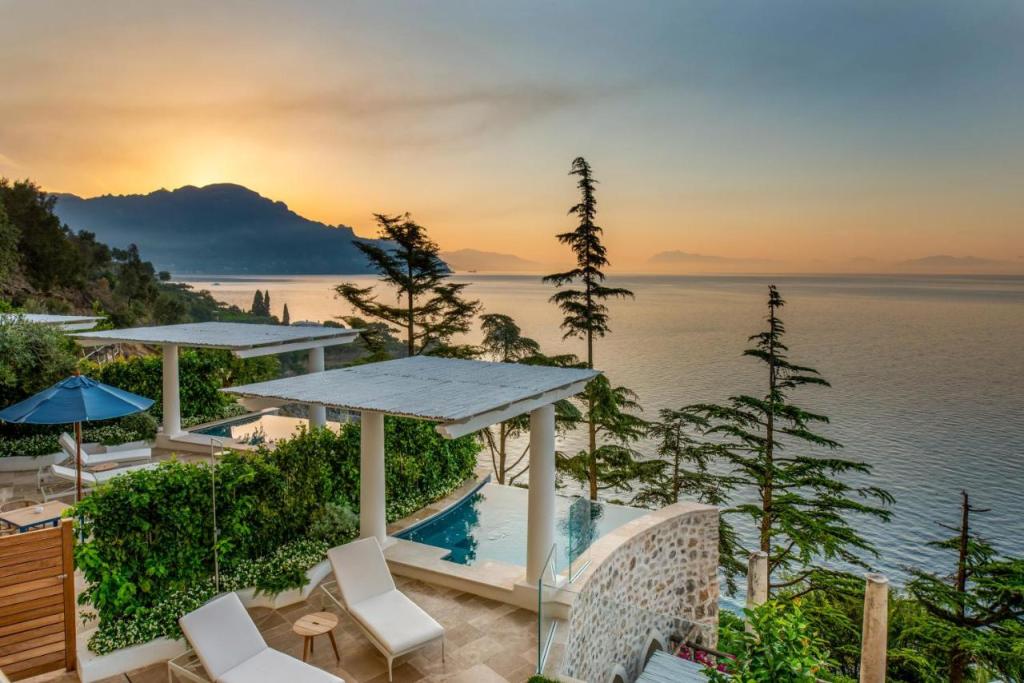
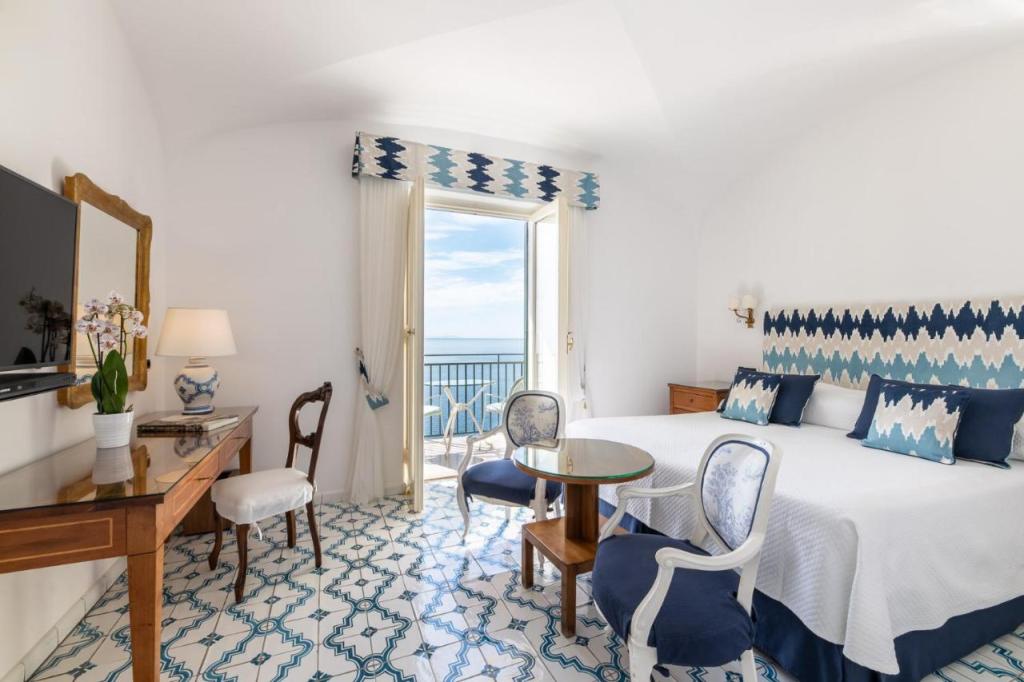
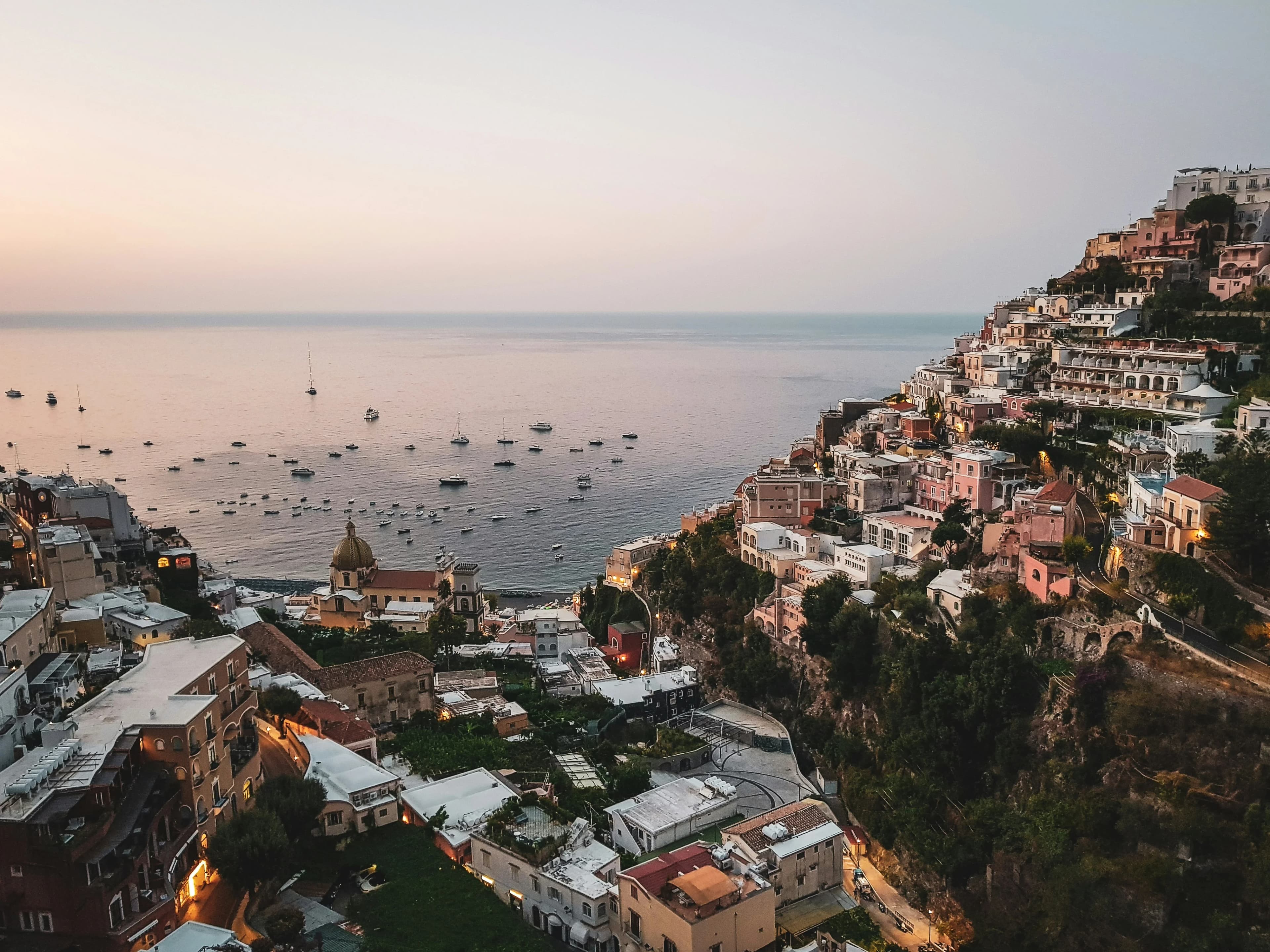
Positano is the most architecturally dramatic section of the coast. The town descends in tiers of pastel-coloured buildings from the SS163 road down to a narrow beach, and properties here are defined by altitude. A luxury suite in Positano typically means multiple flights of steps from the road, no vehicle access, and a terrace oriented directly toward the open Tyrrhenian. This physical isolation is precisely what makes it sought after. The views are unobstructed, the noise of the street does not carry, and the architecture leans heavily on vaulted ceilings and hand-painted ceramic detail inherited from the Arab-Norman period.
Ravello: the clifftop interior
Ravello sits at approximately 350 metres above sea level, accessed by a steep road from Atrani. It does not have a beach. What it has instead is a quality of silence and a panoramic elevation that no other settlement on the coast can match. Wagner composed part of Parsifal here in 1880, and the town has maintained a consistent association with serious cultural visitors ever since. Luxury hotel suites in Ravello tend toward the patrician: high-ceilinged rooms in converted villas, gardens planted with lemon and wisteria, and terraces that face west toward Positano and Capri. The Ravello Festival, held each summer, brings international classical music to an open-air stage on the cliffs.
Amalfi town and the central coast
Amalfi itself is the historic and commercial centre of the coastline, home to the ninth-century Cathedral of Sant'Andrea and the remnants of a medieval maritime republic that once rivalled Genoa and Venice. It is the most accessible point on the coast for ferries and road connections. Properties in and around Amalfi tend to occupy former convents, paper mills, and noble residences, offering suites with an architectural density that more resort-oriented properties elsewhere do not match.
Praiano and the quieter eastern stretch
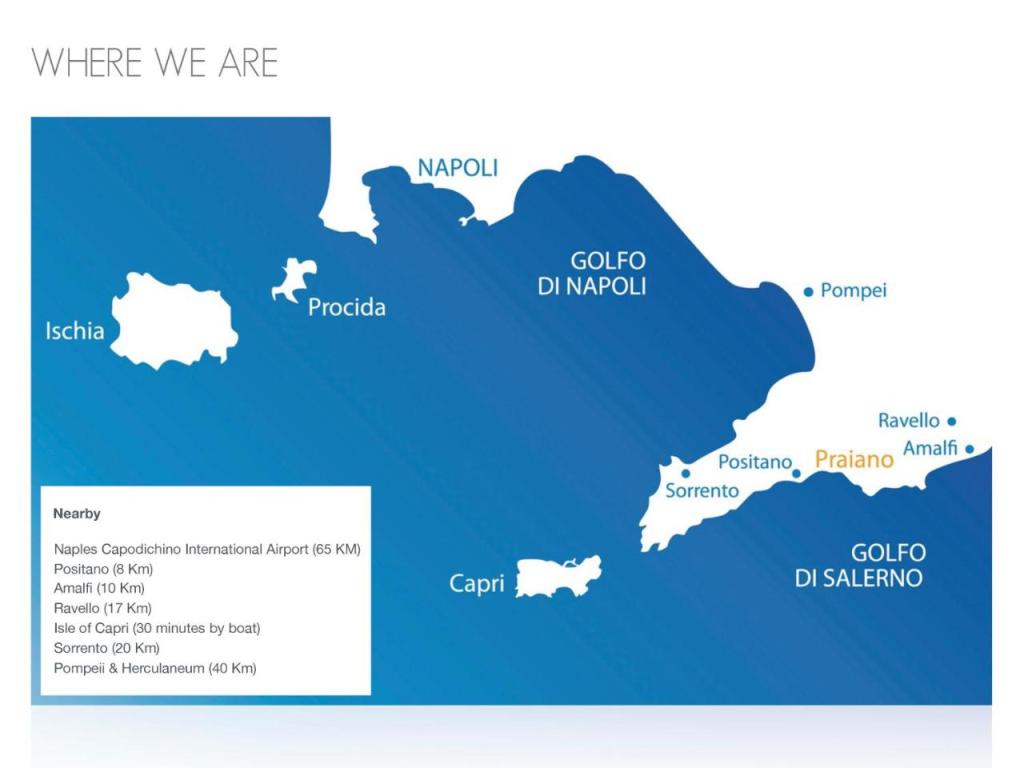
Between Positano and Amalfi, Praiano is the section of coastline that has retained the most residential character. There are no large hotels. Luxury here is quieter and more deliberate: smaller properties, fewer guests, a direct relationship with the water. For travelers who want the physical drama of the coast without the social density of Positano, this stretch offers a convincing alternative.
When to visit the Amalfi Coast for a luxury suite stay
The high season runs from late June through August, when temperatures sit between 28 and 32 degrees Celsius and the coast operates at full occupancy. Suite availability during this period is limited and prices reach their annual peak. Booking six to nine months in advance is standard practice for properties of significant quality.
May, June, and September represent the most considered choice for experienced travelers. The light in May is clear and cool, the bougainvillea is in full flower, and the roads carry a fraction of the summer traffic. September extends the warmth into a quieter register, with sea temperatures remaining high and the summer crowds largely absent.
October and November bring a different atmosphere entirely. The coast turns green after the summer dryness, the lemon harvest begins, and many properties reduce occupancy significantly. Some close entirely between November and March. For travelers who want full use of a private terrace without the noise of a fully booked hotel, late September and early October offer the most precise combination of conditions.
The Ravello Festival takes place primarily in July and August, with some events extending into September. Booking a luxury hotel suite in Ravello during festival weeks requires planning well in advance.
Local luxury standards on the Amalfi Coast
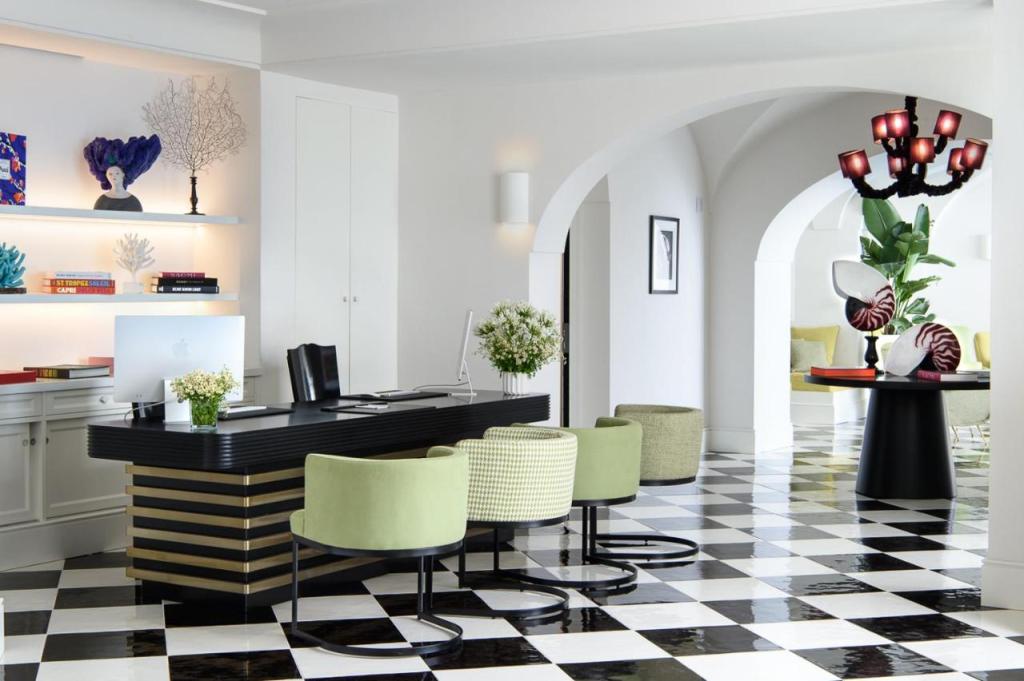
Italy does not use the French Palace designation. The closest structural equivalent in the Italian hotel classification system is the five-star superior category, which certain properties hold alongside membership of international luxury collections such as The Leading Hotels of the World or Relais and Chateaux. On the Amalfi Coast, the most significant quality markers tend to be architectural rather than purely categorical: whether a property occupies a genuinely historic structure, whether the suite terrace faces the sea directly rather than obliquely, and whether the staff-to-guest ratio allows for a service model that functions without friction.
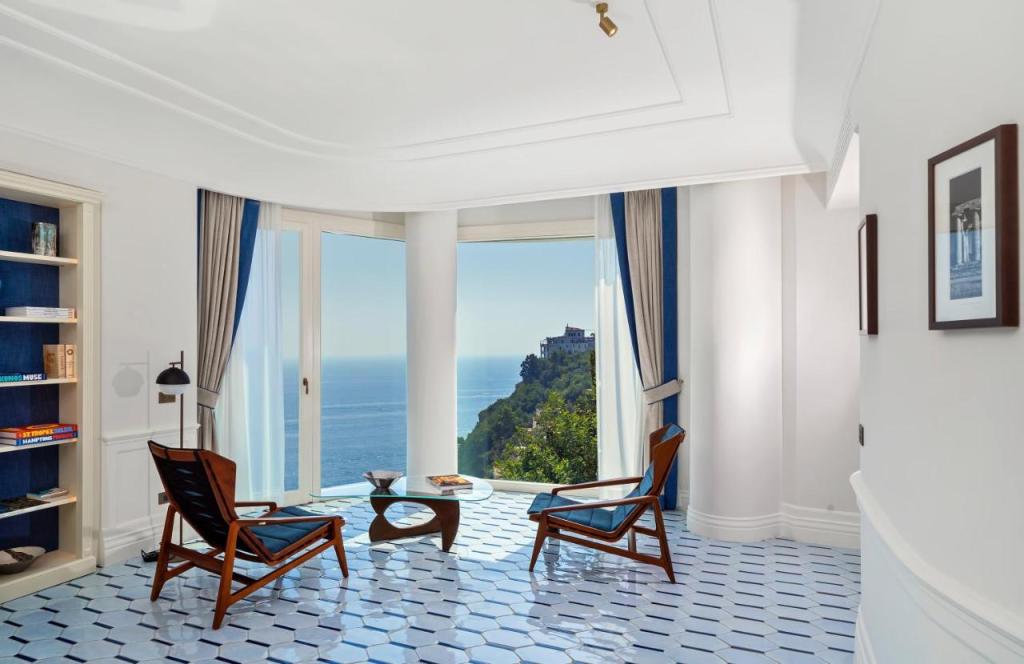
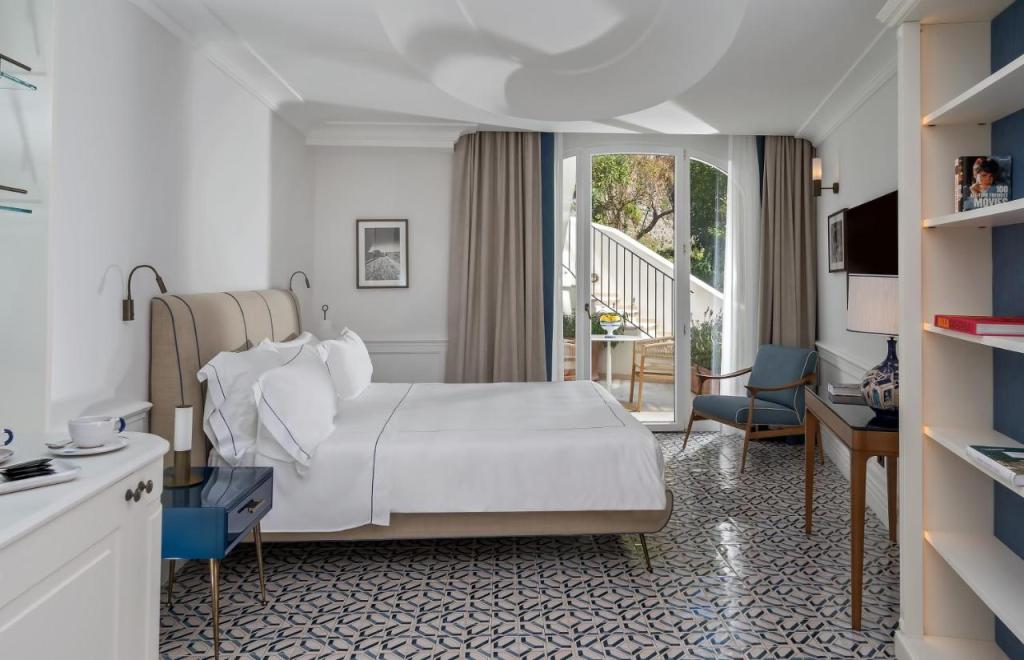
The characteristic suite typology on this coastline is the junior suite or suite with a private terrace, often incorporating a plunge pool or a dedicated outdoor dining area. Given the topography, the best suites are frequently carved into existing rock or built across multiple levels of a cliff face. Ceiling heights vary considerably depending on whether the structure was originally a convent, a noble villa, or a purpose-built hotel. Each archetype produces a fundamentally different spatial experience.
How to choose the right luxury suite on the Amalfi Coast
The most important single variable when selecting a luxury suite on the Amalfi Coast is access. Every property on this coastline involves some form of physical negotiation: steps, narrow roads, boat transfers, or cliff lifts. Understanding the access model before arrival determines whether the experience feels architecturally immersive or simply inconvenient. Properties that appear equivalent on a hotel booking platform can differ entirely in terms of how guests actually arrive, move through, and inhabit the space.
The second variable is the suite orientation. On a coastline that runs roughly east to west, southwest-facing terraces receive afternoon and evening light. North-facing rooms, which exist in some converted inland structures, may offer dramatic cliff views but limited direct sun. The question of light is not aesthetic preference alone: it determines how much time can actually be spent on a private terrace and at what hours the space is most usable.
A third consideration is the property's relationship to the sea itself. Some suites are directly above the water, accessible by lift or steps to a private dock. Others are set back into the hillside with a panoramic perspective but no physical connection to swimming. Both are valid configurations, but they produce entirely different stays. Travelers who intend to spend significant time in the water should prioritise properties with direct sea access or a private pool.
Why a curated selection makes sense on this coastline
The Amalfi Coast is one of the most heavily marketed destinations in Europe. The volume of properties presenting themselves as luxury or boutique is disproportionate to the number that genuinely deliver at the level the designation implies. The gap between a professionally photographed terrace and the actual spatial quality, service standard, and acoustic environment of a suite is significant here, partly because the physical constraints of the coastline mean that even expensive properties can be narrow, loud, or poorly oriented.
La Suite approaches this destination as a curation problem rather than a listing exercise. The selection criteria account for architectural quality, terrace usability, access logistics, service consistency, and the degree to which a property offers genuine privacy rather than the appearance of it. For travelers who are investing serious time and money in this coastline, that level of editorial judgement is not a convenience. It is the difference between a stay that fulfils the idea of the Amalfi Coast and one that merely reproduces its image.