The distinct areas of Lake Como and their luxury character
The central triangle, anchored by the town of Bellagio, sits at the confluence of the two southern arms. This position offers unobstructed views in multiple directions and proximity to both the western and eastern shores. Properties here tend to attract guests who prioritize visual drama and a sense of geographic centrality. The pace is slower here than at the lake's southern tip, and the surrounding hills remain largely agricultural.
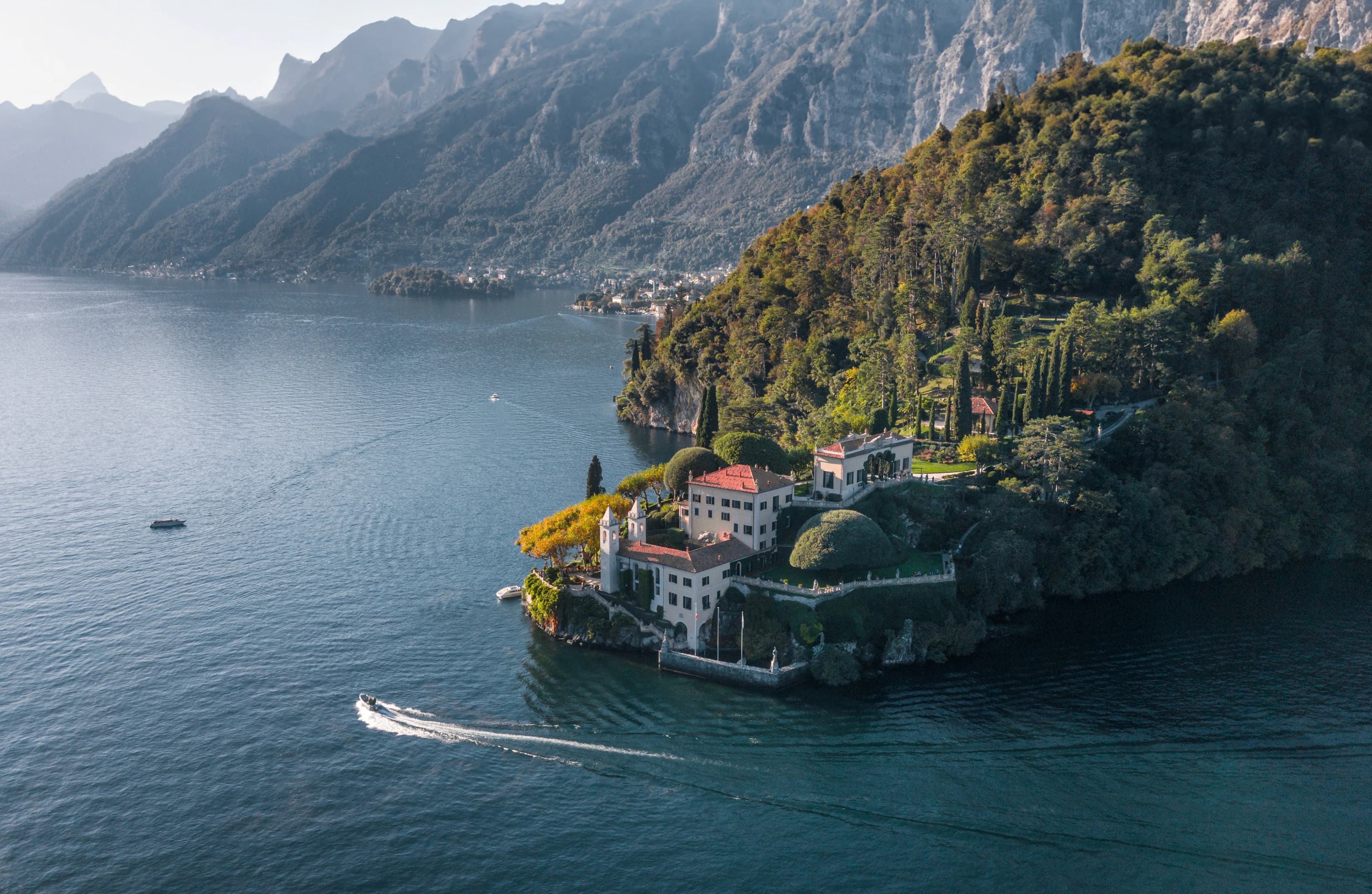
The western shore, running between Como city and Tremezzo, contains the highest concentration of historic villa hotels. The microclimate along this stretch is notably mild, sheltered by the pre-Alpine ridgeline. Architecture from the 18th and 19th centuries dominates, with formal Italian gardens descending directly to the waterline. Suites in this corridor frequently occupy original villa rooms, with proportions and ceiling heights that reflect the building's aristocratic origins.
The eastern shore, quieter and less visited, suits travelers seeking discretion over spectacle. Properties here tend to operate on a smaller scale, and the landscape transitions more abruptly from water to mountain. For guests prioritizing privacy and altitude, this arm of the lake offers a different register of luxury.
The northern reaches, approaching Colico and the Valtellina valley, are almost entirely outside the mainstream luxury circuit. The scale becomes Alpine rather than Italianate, and the light changes perceptibly.
When to visit Lake Como for a luxury suite stay
The hotel season at Lake Como runs broadly from late March through early November. Most of the landmark properties close entirely during winter, which concentrates the supply of top-tier suites into roughly seven months of the year.
May and June represent the clearest period for a suite stay. The gardens are at their most composed, the light is long, and the lake temperature encourages early-season boat excursions. Humidity remains low relative to July and August, which matters considerably when planning outdoor dining or terrace time.
July and August are the peak months by occupancy, driven by Italian domestic travel, European summer holidays, and a consistent flow of American and British guests. Suite availability compresses significantly during this period, and rates reflect the demand. Guests booking during these months should expect full hotel activity and a more social atmosphere.
September is widely regarded among repeat visitors as the optimal month. The tourist density drops, the afternoon light acquires a particular quality as it angles lower across the water, and the temperature remains warm enough for lake swimming. Many properties extend preferential terms to guests booking full-suite categories in September.
October offers a quieter, more introspective experience. The deciduous hillsides shift color, boat services reduce their frequency, and several smaller hotels begin their wind-down before closing. For guests who prefer solitude over amenity breadth, October has a specific appeal.
Local luxury standards: what defines a top-tier suite at Lake Como
Italy does not have a formal national designation equivalent to France's Palace classification. Quality at the upper end of the market is instead communicated through historical lineage, physical position on the lake, and the management standards of the operating group.
The most significant indicator at Lake Como is lakefront orientation. A suite with a private terrace directly above the water represents a fundamentally different proposition to one facing the hotel gardens or the hill behind. The distance between the building and the water's edge, the angle of the terrace relative to the afternoon sun, and the presence or absence of visual interruption all determine the actual quality of the experience.
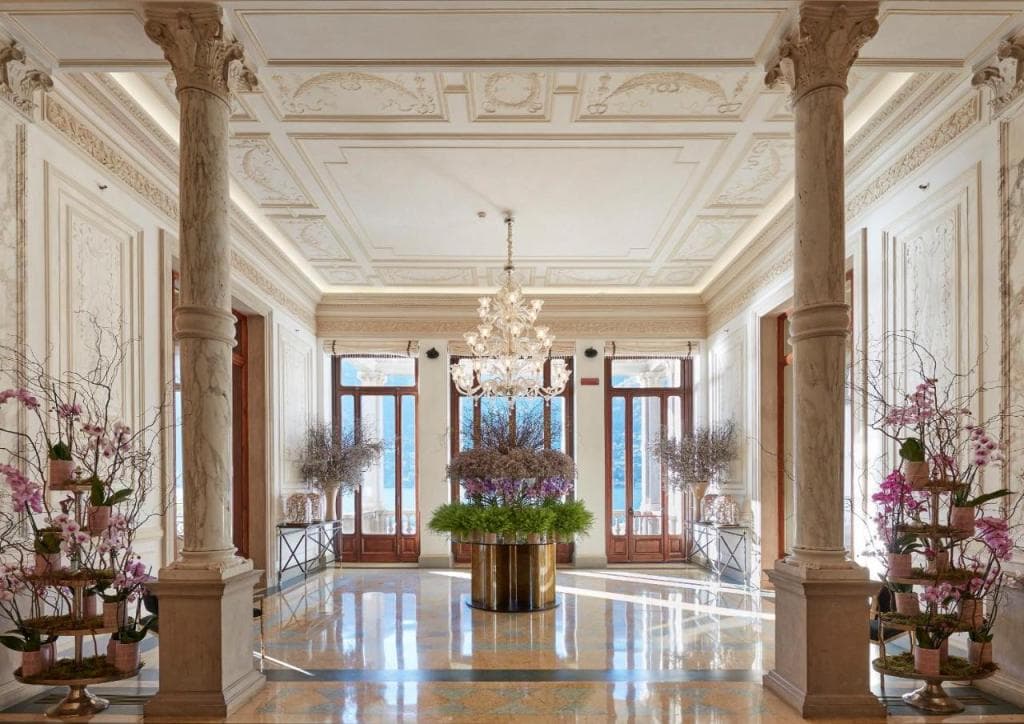
The second indicator is architectural authenticity. Several of the lake's most respected properties occupy original 18th and 19th-century villas. In these buildings, the suite categories frequently correspond to the original principal rooms, which means ceiling heights of four meters or more, original plasterwork, and proportions that modern construction cannot replicate. The trade-off is that historic buildings carry constraints on soundproofing and climate control that purpose-built hotel towers do not.
A third consideration is boat dock access. At Lake Como, the ability to leave a property directly by water, rather than by road, is a material luxury. Properties with private docks and on-call water taxis offer a fundamentally different rhythm of movement around the lake.
How to choose the right luxury suite at Lake Como
The first practical question is view orientation. Suites facing west receive afternoon and evening sun directly; suites facing east are better positioned for morning light. Both have value, but the preference depends on how the guest intends to structure their day.
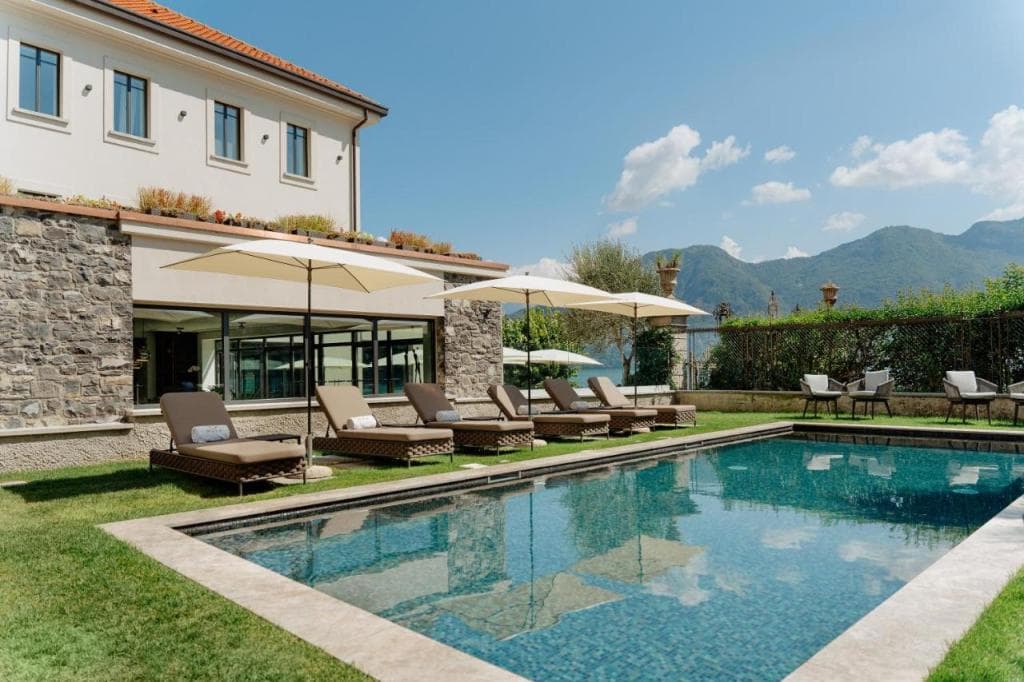
The second question is scale and social atmosphere. Lake Como's best-known properties range from grand hotels with over a hundred rooms to intimate houses with fewer than twenty. A large property offers broader amenities, a more animated pool and dining environment, and the infrastructure to handle complex logistics. A smaller property offers the inverse: quieter corridors, more individualized service, and a sense of occupying the building rather than passing through it.
Terrace privacy is a separate variable from view quality. Some suites with exceptional views have terraces that are visible from adjacent rooms or public areas. For guests who intend to spend significant time on the terrace, the degree of enclosure and the sightline from neighboring rooms should be confirmed before booking.
Travel by water should be factored into the practical itinerary. The ferry network connecting the main towns operates reliably through the season and represents one of the most direct ways to experience the lake's scale. Private boat hire is widely available and allows a degree of itinerary flexibility that road travel along the narrow lakeside roads cannot match.
Why a curated selection by La Suite matters at Lake Como
The luxury hospitality market at Lake Como is not large in absolute terms. The number of genuinely exceptional suite categories across the whole lake can be counted in the dozens rather than the hundreds. But the variance in quality within the category of self-described luxury is significant. A suite facing the hotel car park in a property with a lakefront address represents a very different stay from a corner suite with a wraparound terrace above the water.
La Suite's curation process isolates the variables that determine suite quality: the actual view from the room, the terrace configuration, the architectural character, the service model, and the realistic guest experience at different times of the season. For a destination where the difference between an adequate stay and an exceptional one frequently comes down to a single room category decision, that specificity has practical value.