Best Neighbourhoods for Luxury Stays in Brazil
Ipanema and Leblon, Rio de Janeiro
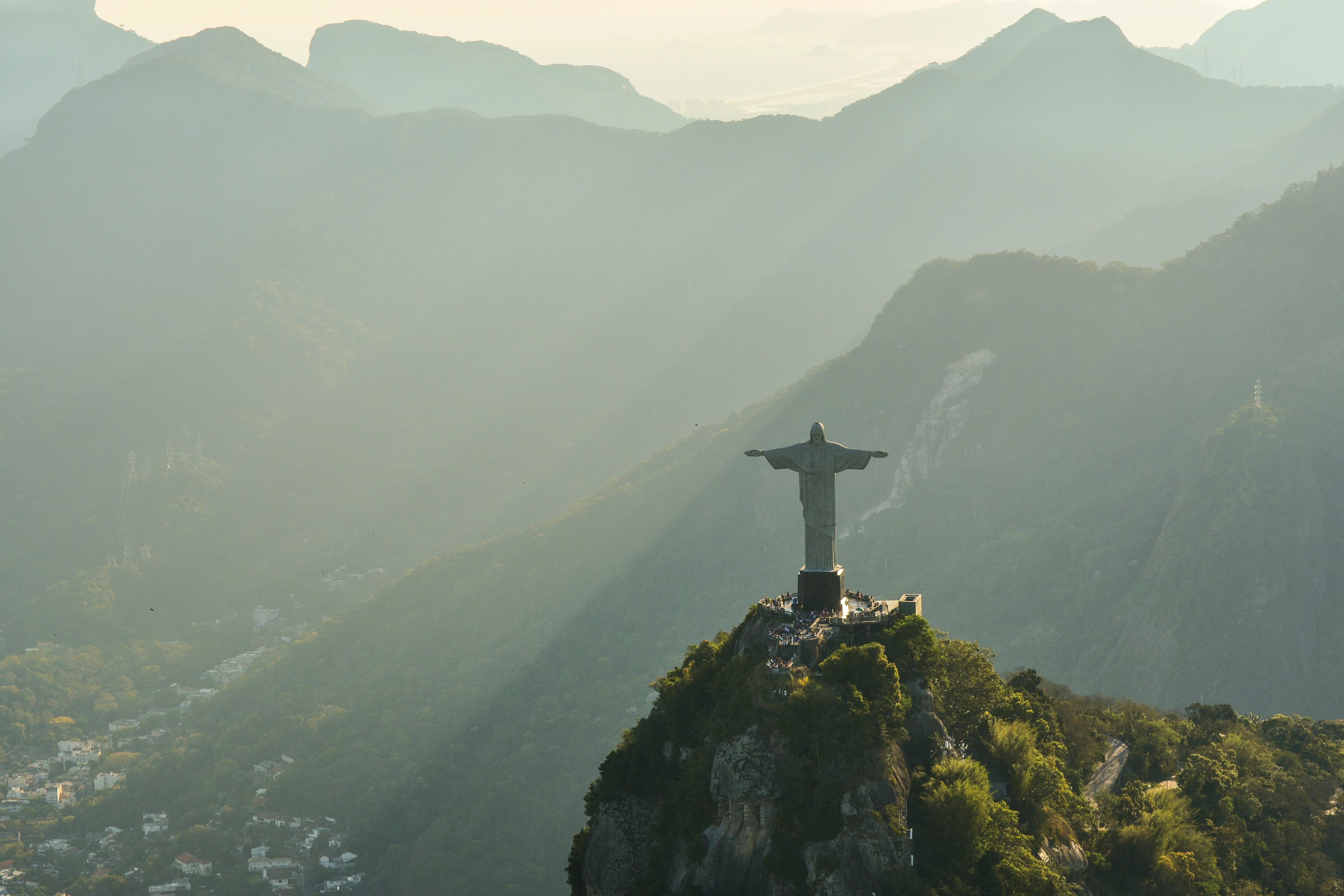
These two adjacent neighbourhoods represent Rio's most refined residential addresses. Facing the South Atlantic, they sit between the Dois Irmãos peaks and the Lagoa Rodrigo de Freitas. The streetscape is low-rise, the population dense with the city's professional class, and the commercial offer (from tailored boutiques to destination restaurants) is proportionate to that demographic. A suite positioned here offers direct access to the beach without the transactional atmosphere of Copacabana. The light in the late afternoon, as it crosses the Atlantic and catches the granite of the surrounding hills, is a consistently noted feature of the district.
Jardins, São Paulo
São Paulo does not offer landscapes in the conventional sense. Its luxury is architectural and social. Jardins (particularly the subdistricts of Jardim Paulista and Jardim Europa) is where the city's private wealth concentrates. The avenues are tree-lined, the galleries and flagship stores are here, and the restaurant density per block rivals any comparable district in Latin America. Properties in this zone prioritise discretion and service depth over spectacle. For travellers arriving for business, art, or gastronomy, Jardins is the correct orientation point.
The Pantanal and Ecological Lodges
Brazil's interior offers a category of luxury that is ecological rather than urban. The Pantanal (the world's largest tropical wetland, straddling Mato Grosso do Sul and Mato Grosso states) supports a form of high-end accommodation built around wildlife access and spatial isolation. These properties are measured by the quality of their guiding, the ratio of staff to guests, and the physical distance from any competing operation. They are not urban amenities with a nature backdrop; they are purpose-built immersion environments for travellers who treat habitat as the primary amenity.
Trancoso and the Bahian Coast
The southern coast of Bahia, centred on Trancoso and Porto Seguro, represents a long-established luxury circuit that predates much of Brazil's contemporary hotel development. The Quadrado (Trancoso's central grass square) is ringed by historic structures that have been converted into private houses and boutique holdings. The aesthetic here is colonial, the pace deliberate, and the clientele largely Brazilian elite interspersed with European visitors. It is not a destination for urban amenities; it is a destination for heat, light, and a particular quality of social removal.
When to Visit Brazil
Brazil spans multiple climate zones, making a single travel season recommendation imprecise. The country straddles the equator and extends deep into the Southern Hemisphere subtropics, meaning the optimal period varies significantly by region.
Rio de Janeiro and the Southeast
The dry season in Rio runs from May through October, with July and August offering the most consistent conditions, lower humidity, temperatures in the low-to-mid 20s Celsius, and reduced rainfall. The summer months from December through March are hotter and wetter, coinciding with Carnival in February or early March. Carnival remains one of the world's most choreographically complex public events and draws international visitors at significant scale, though hotel rates across the city rise accordingly and availability tightens months in advance.
São Paulo Year-Round
São Paulo operates on a different logic. As a business and cultural capital, it functions across the calendar. The São Paulo Art Biennial, held in odd-numbered years at the Ibirapuera Pavilion, draws significant international art world attendance. The city's restaurant and fashion weeks similarly concentrate visitor traffic in specific windows. For non-event travel, April through June and August through October offer the most temperate urban experience.
The Pantanal and Amazon
The dry season (roughly July through October) is when the Pantanal reaches peak wildlife visibility. Receding water concentrates fauna around remaining water sources, making wildlife encounters more consistent. The Amazon, by contrast, offers a different quality of experience in the wet season (December through May), when rivers rise and boat-based access to the forest interior increases. Both ecosystems require forward planning; the best-positioned lodges operate at limited capacity by design.
Local Luxury Standards in Brazil
Brazil does not operate a formal national classification system equivalent to France's Palace designation or the UK's AA star rating. The country uses a star-rating framework administered by the Ministry of Tourism, but this system is largely logistical rather than curated. The market has consequently developed its own informal hierarchies, weighted toward brand affiliation, address specificity, and service-to-guest ratios.
The most reliably credentialled properties in Brazil are those operating under international luxury group flags, specifically those affiliated with groups whose internal standards exceed the national classification system. Beyond brand affiliation, the Brazilian market recognises a category of independently operated properties (particularly in Bahia, the Pantanal, and parts of Minas Gerais) where the distinction comes from ownership-led curation, architectural specificity, and a demonstrable investment in local material culture. These properties are not easily found through aggregators; they circulate through word of mouth and specialist editorial.
How to Choose the Best Suite in Brazil
The decision framework for a Brazilian suite depends primarily on the traveller's purpose. Brazil is not a country where a single property serves all functions.
For urban stays in Rio or São Paulo, the relevant criteria are: floor elevation and orientation (in Rio, an Atlantic-facing room above the tenth floor is a meaningfully different product from a city-view room at ground level), the quality of the food and beverage operation within the property, and the hotel's operational relationship with security, an issue that shapes both the guest experience and the surrounding neighbourhood in ways that differ from European or North American contexts.
For ecological or coastal properties, the key variables are: the guide-to-guest ratio, the property's relationship with its immediate ecosystem (access rights, conservation partnerships, the nature of the terrain traversed), and the physical architecture of the suite itself, specifically whether it has been designed to engage with the surrounding environment or to insulate against it. The best properties in the Pantanal and on the Bahian coast treat the landscape as a structural material.
Travellers should also consider internal travel logistics. Brazil is continental in scale. Rio and São Paulo are served by major international gateways, but properties in Trancoso, the Pantanal, or the Amazon require connecting flights and in some cases road or boat transfers that add hours to the journey. This is not a deterrent; it is a design feature. The distance is part of the arrival.
The Value of Curation in the Brazilian Market
Brazil presents a specific challenge to the independent traveller: the market's scale and geographic spread make undifferentiated search tools structurally inadequate. A platform that returns hundreds of results across Rio de Janeiro alone (sorting by price or star rating) does not assist the decision; it replicates the noise of the underlying market.
La Suite's approach in Brazil is predicated on a small, actively maintained selection. Three properties in the current portfolio does not reflect the country's hotel stock; it reflects the number of properties that meet a consistent standard of spatial quality, service precision, and address credibility. That number will expand as properties are assessed, not as a function of coverage targets.
For a destination with Brazil's complexity (climatic, geographic, social) a curated selection functions as a decision framework rather than a directory. It answers the prior question: given where you are going and why, which property is architecturally and operationally suited to that purpose? That is the question La Suite is built to answer.