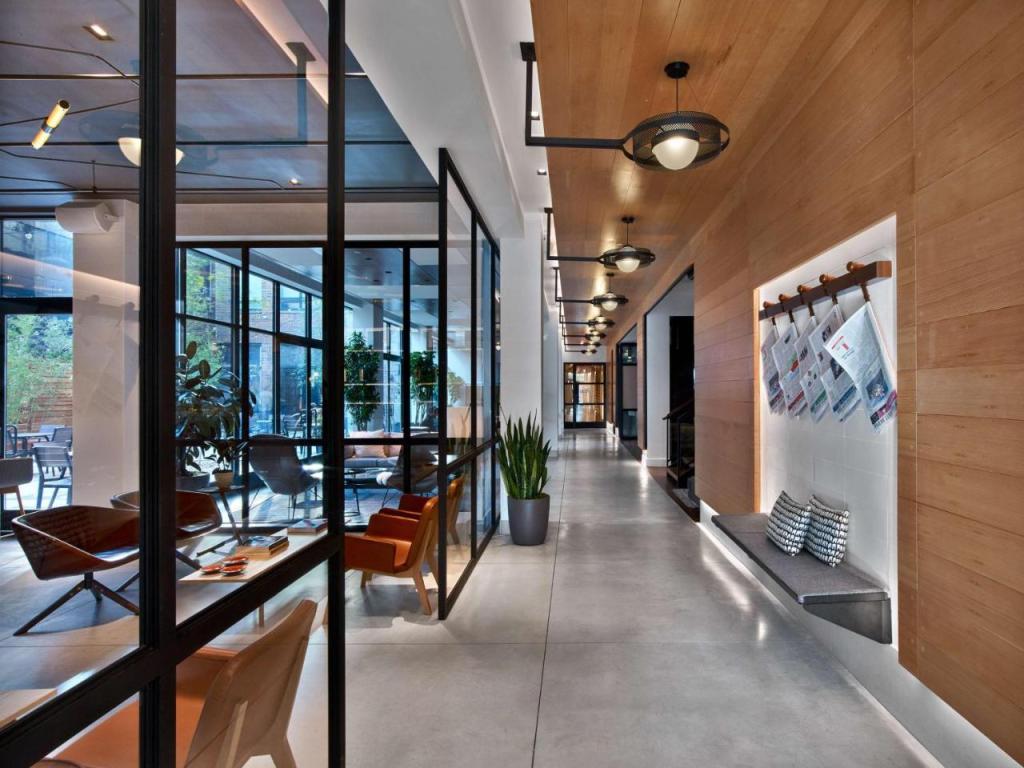
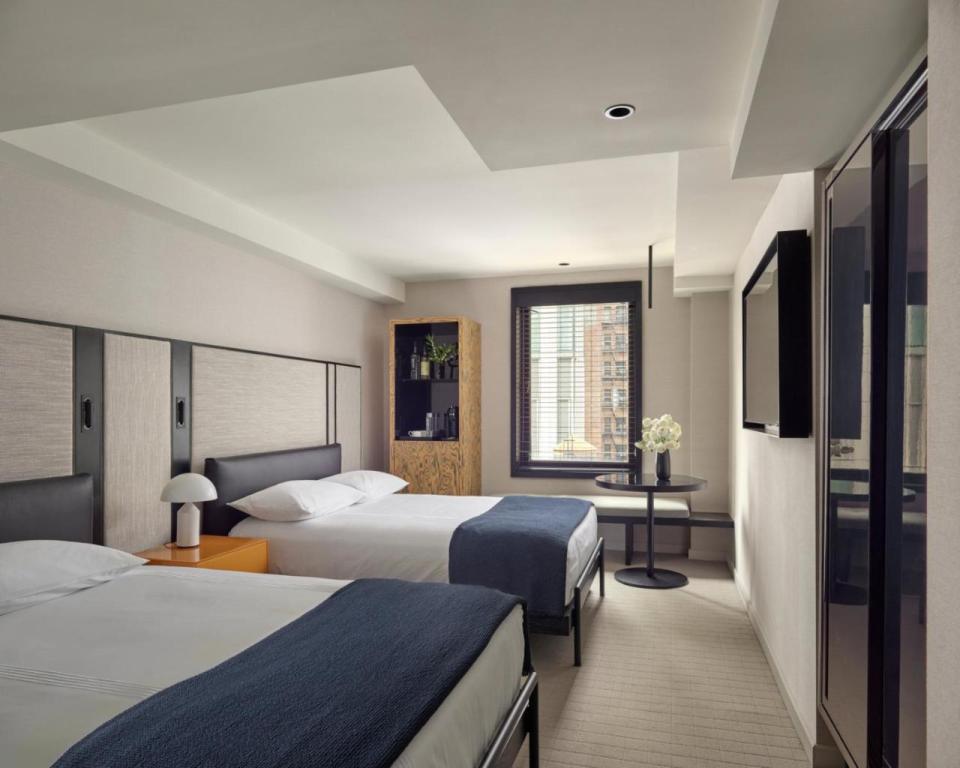
1 Hotel Brooklyn Bridge, New York
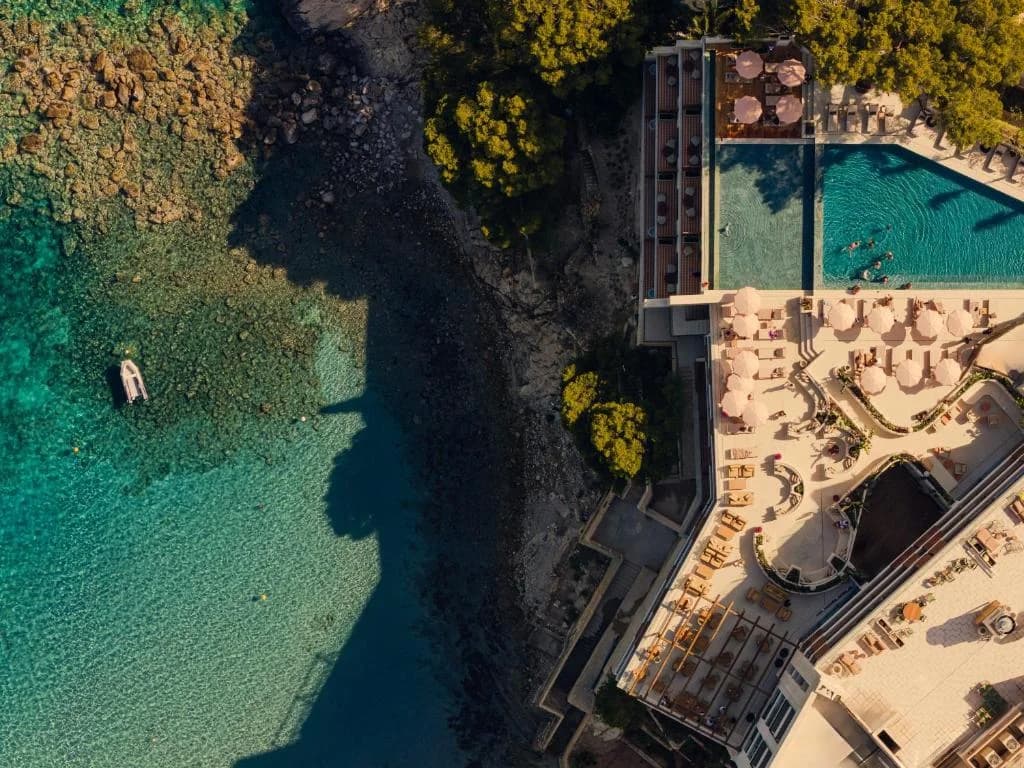
This 10-story, waterfront hotel, 1 Hotel Brooklyn Bridge is located 2113 feet from the Brooklyn Bridge Promenade and is 1056 feet from the East River. Every room has a coffee machine with recyclable p

New York City's geography is precise and consequential. Where you stay determines how you experience the city, and the distinction between neighborhoods is not merely aesthetic but functional.
49 hotels available

This 10-story, waterfront hotel, 1 Hotel Brooklyn Bridge is located 2113 feet from the Brooklyn Bridge Promenade and is 1056 feet from the East River. Every room has a coffee machine with recyclable p

Offering a restaurant and a fitness center, 1 Hotel Central Park is located in New York. Each room here will provide you with air conditioning and a seating area. Featuring a shower, private bathroom

Elegant Accommodations 17John in New York offers a 5-star aparthotel experience with a fitness center, garden, terrace, and free WiFi. Guests enjoy private check-in and check-out, a lounge, and a 24-h

Featuring a bar, Ace Hotel Brooklyn is located in Brooklyn in the New York region, a 10-minute walk from Barclays Center and 2 miles from Brooklyn Bridge. Featuring a fitness center, the 4-star hotel

Located in North Brooklyn, in the Williamsburg neighborhood, this hotel is in close proximity to many dining and shopping destinations. Located right across the river from Manhattan, the hotel is one

Featuring Baccarat crystals in every room, the Baccarat Hotel and Residences is located in New York. Guests can relish in the intricate architecture and design features while enjoying the indoor pool,

Located in New York, a 15-minute walk from National September 11 Memorial & Museum, Casa Cipriani New York has accommodations with a shared lounge, private parking, a terrace and a restaurant. With a

With 2000 pieces of artwork on display and an atrium, this all-suite property is located 1640 feet from the World Trade Center. Each room features a separate living room, 2 flat-screen TVs and an espr

Located on a cobbled street in the SoHo neighborhood, this contemporary design hotel features a beautiful inner courtyard and an on-site terrace restaurant. Free Wi-Fi is available throughout the hote

Well located in the Chelsea district of New York, Faena New York is set 161 feet from The High Line, 1.1 mi from Penn Station and 1.1 mi from Madison Square Garden. The property is around 1.1 mi from

Comfortable Accommodations Fouquet's New York in New York offers comfortable rooms with air-conditioning, private bathrooms, and modern amenities. Each room includes a work desk, mini-bar, and fre

Four Seasons Hotel New York Downtown is located in the heart of Downtown Manhattan in TriBeCa, less than 2297 feet from the iconic Brooklyn Bridge and scenic waterfront Seaport District. The hotel is

With an ideal location on Central Park, this luxurious Midtown Manhattan hotel offers exquisite views and delicious dining. It features spa services and a 24-hour fitness center. JW Marriott Essex Hou

This boutique hotel is located in the Chelsea neighborhood of New York. The 28 Street underground station is 3 minutes’ walk from the property. Free WiFi access is available. Each room at Kimpton Ho

With free transfers to Wall Street and Broadway theaters available twice a day, the Lotte New York Palace is located across the street from St. Patrick’s Cathedral. All rooms at this Midtown-Manhattan

Located in Columbus Circle’s Deutsche Bank Center, this hotel is a 2-minute walk from Central Park. It features a 75-foot indoor pool and offers rooms and suites with panoramic views of Central Park,

A glass-and-wood SoHo address built around vertical contrast — intimate street-level bars, a retractable-roof restaurant, and a Hudson-facing rooftop pool.

Step into the center of New York City at New York Marriott Marquis, an iconic hotel located directly in Times Square. This summer, experience the excitement of the world's game as New York and New Jer

Nine Orchard has a fitness center, terrace, a restaurant and bar in New York. This 4-star hotel offers room service, a 24-hour front desk and free WiFi. The hotel features family rooms. Bloomingdales

Featuring an indoor pool and a restaurant, Park Hyatt New York is in New York. Free WiFi access is available. Each room here includes air conditioning and a sitting area. Featuring a bathtub or shower

December transforms Manhattan into a competitive arena for access to the most exclusive suites. Between structural scarcity and exponential demand, luxury hotels reveal the mechanisms governing seasonal luxury.
BY Jules Peulet
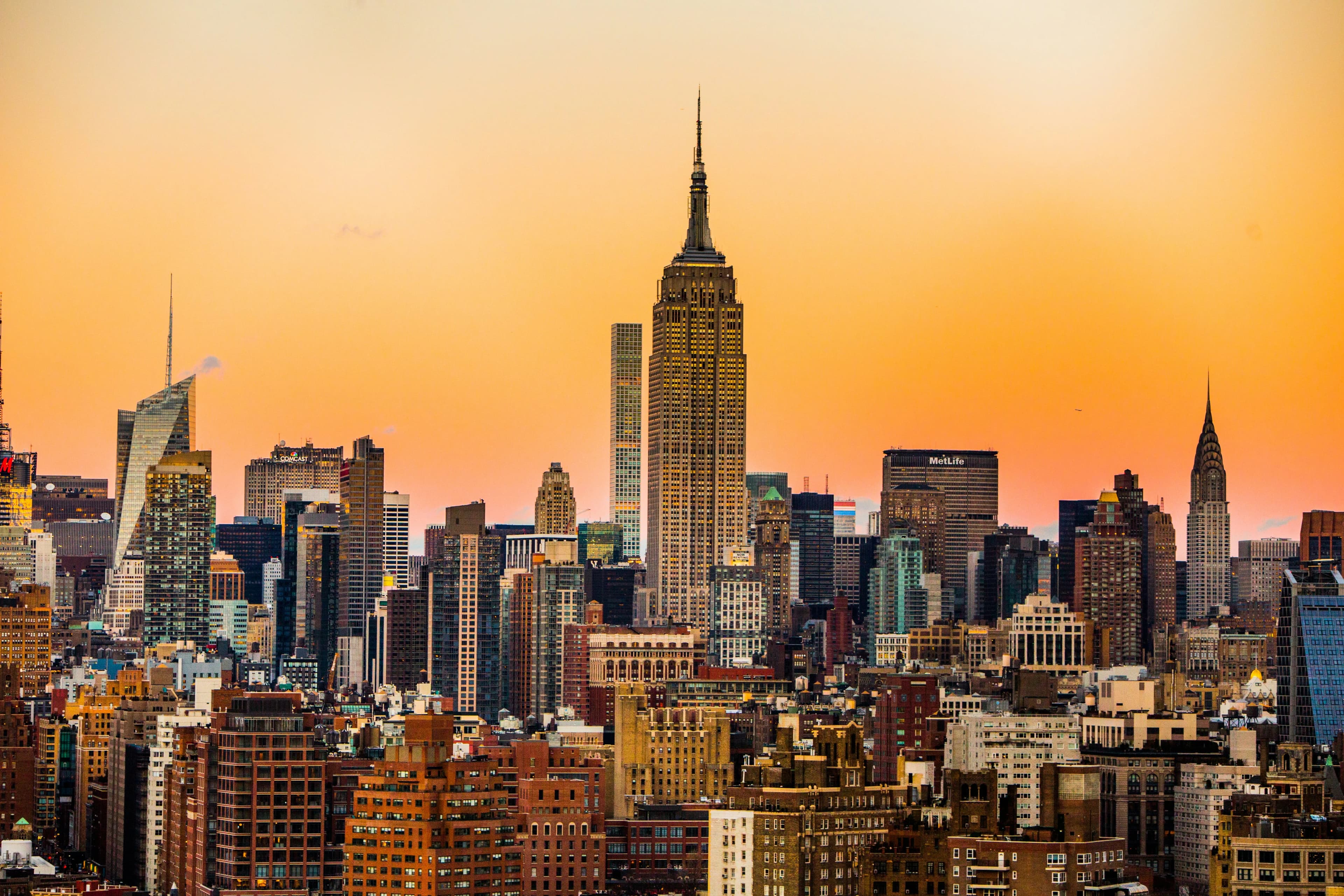
Midtown remains the city's commercial and architectural core. The concentration of landmark hotels along Fifth Avenue and Park Avenue reflects decades of investment in prestige hospitality. Suites here tend toward the monumental: high floors, formal proportions, and skyline exposures that include the Empire State Building and the Chrysler Building. The proximity to Rockefeller Center, Central Park, and major cultural institutions makes Midtown a logical base for travelers whose schedules are structured and demanding.
The stretch of hotels bordering Central Park to the south and along the Upper East Side represents a quieter, more residential register of New York luxury. Suites in this corridor offer park-facing exposures that transform the room into something closer to a private residence. The surrounding streets are calibrated for a particular kind of affluent life: museum mile, auction houses, private galleries, and some of the city's most considered restaurants.
Below 14th Street, the luxury hotel offering has matured considerably over the past two decades. Tribeca in particular attracts a design-literate, culturally engaged traveler. Suites here tend toward loft-influenced proportions, industrial materiality, and proximity to the art world ecosystem of galleries, film, and independent culinary institutions. The aesthetic register is more restrained and contemporary than Midtown, appealing to those who find formal grandeur less compelling than spatial intelligence.
Smaller in hotel density but significant in cultural positioning, the West Village and Chelsea corridor appeals to travelers with an interest in architecture, gallery programming, and the High Line's urban intervention. Suites in this area are often boutique in scale, prioritizing curation over volume.
New York City functions year-round, but the quality of the suite experience shifts meaningfully across seasons.
September and October represent the city at perhaps its most considered. The light changes, the humidity of summer dissipates, and the cultural calendar accelerates with the return of gallery seasons, fashion week, and the opening of major performing arts programming at Lincoln Center and Carnegie Hall. Suite availability at top properties tightens considerably during these months, and advance planning is advisable.
December brings a particular intensity to the city. The visual transformation of Midtown is significant, and the concentration of high-net-worth travelers during the holiday period means that the city's best suites are in high demand. Prices reflect this, and flexibility is limited.
May and June offer a more moderate entry point. The city is fully operational, cultural programming is dense, and the weather permits the kind of deliberate neighborhood exploration that rewards a longer stay. Spring is also when rooftop-adjacent suites and those with terrace access come fully into their own.
January and February are underrated months for the luxury traveler. The city is quieter, suite rates at certain properties reflect reduced leisure demand, and the restaurant scene operates without the competitive pressure of peak season. For those whose interest lies in museums, architecture, and private-access experiences, winter in New York is underestimated.
New York does not operate under a formal state classification for hotel prestige equivalent to the French Palace designation. Instead, the market is self-differentiating, and quality is expressed through a combination of Forbes Travel Guide ratings, AAA Five Diamond recognition, and the reputation of ownership groups and design lineages.
At the highest level, New York suites are characterized by spatial generosity that is genuinely difficult to achieve in a city where real estate is priced per square foot at a global premium. A true luxury suite in this market will typically offer a separated sleeping and living area, bespoke furnishings with identifiable design provenance, and service architectures that include dedicated butler access, private check-in, and curated in-room experiences.
The best properties in the city invest in what might be called experiential infrastructure: direct access to private dining rooms, relationships with cultural institutions, in-suite spa capabilities, and the logistical capacity to manage complex itineraries. The suite itself is, in this context, a platform for a wider engagement with the city rather than simply a place to sleep.
New York also has a meaningful legacy of historic hotel architecture. Properties occupying buildings from the early twentieth century offer a spatial and material quality that newer construction rarely replicates: ceiling heights, plasterwork, window proportions, and a sense of civic weight that is part of the experience.
The first consideration is neighborhood alignment. The question is not simply which hotel has the best suite, but which suite places you in the right relationship to how you intend to use the city. A traveler attending financial meetings in Midtown has different spatial needs than one whose visit is structured around gallery openings in Chelsea or film screenings in Tribeca.
The second consideration is exposure. In a city defined by its vertical scale, the floor level and orientation of a suite determine what you see and hear. A park-facing suite on a high floor in Central Park South is a categorically different experience from a street-level suite in a landmarked Tribeca building. Both have merit; the choice depends on what kind of New York you are there to inhabit.
The third consideration is service architecture. New York's top hotels compete aggressively on the quality of their suite-level service programs. Private arrival, dedicated concierge relationships, and the ability to manage last-minute cultural access are differentiating factors that are worth evaluating before committing to a property.
Finally, consider the suite's relationship to the hotel's food and beverage offering. New York's restaurant culture is among the most demanding in the world, and the best hotel suites provide preferential access to in-house dining experiences that are, in several cases, significant culinary destinations in their own right.
New York's luxury hotel market is one of the most competitive and densely populated in the world. The volume of options, combined with the significant financial commitment involved in booking a high-tier suite, makes independent navigation genuinely demanding. Marketing language is uniform across the sector, and the distinction between a genuinely exceptional suite and one that merely presents well in photography requires access to ground-level knowledge.
La Suite applies a consistent editorial standard to every property in its selection. The criteria are spatial, experiential, and contextual. The result is a curated set of options that reflects the actual landscape of suite excellence in New York City, without the distortions of paid placement or algorithmic bias. For the traveler who approaches a suite booking as a considered decision rather than a transactional one, the La Suite selection provides a reliable and authoritative starting point.
To learn more about New York, check out our New York-style guide to discover more about the city, its history, its architecture, and how to choose the right hotel suite.
And if you’d like to see the city from above, check out our guide to New York’s most beautiful penthouses.
The answer depends on the purpose of the visit. Midtown Manhattan offers the highest concentration of landmark hotel suites with skyline access, while the Upper East Side and Central Park South provide park-facing exposures in a quieter residential register. Tribeca and Downtown appeal to design-oriented travelers who prioritize contemporary architecture and proximity to the city's art and culinary scenes.
For travel during September, October, or December, booking three to six months in advance is advisable, as the city's best suites at top properties fill quickly during peak cultural and commercial seasons. For travel in January, February, or early spring, the window is more forgiving, though specific properties with limited suite inventory can still reach capacity several months out.
A luxury suite in New York typically offers a physically separated living and sleeping area, bespoke design with identifiable provenance, and a dedicated service architecture that may include butler access, private arrival protocols, and in-suite dining capabilities. The spatial differential is particularly meaningful in a city where square footage carries an acute premium, making generous proportions a genuine marker of tier.
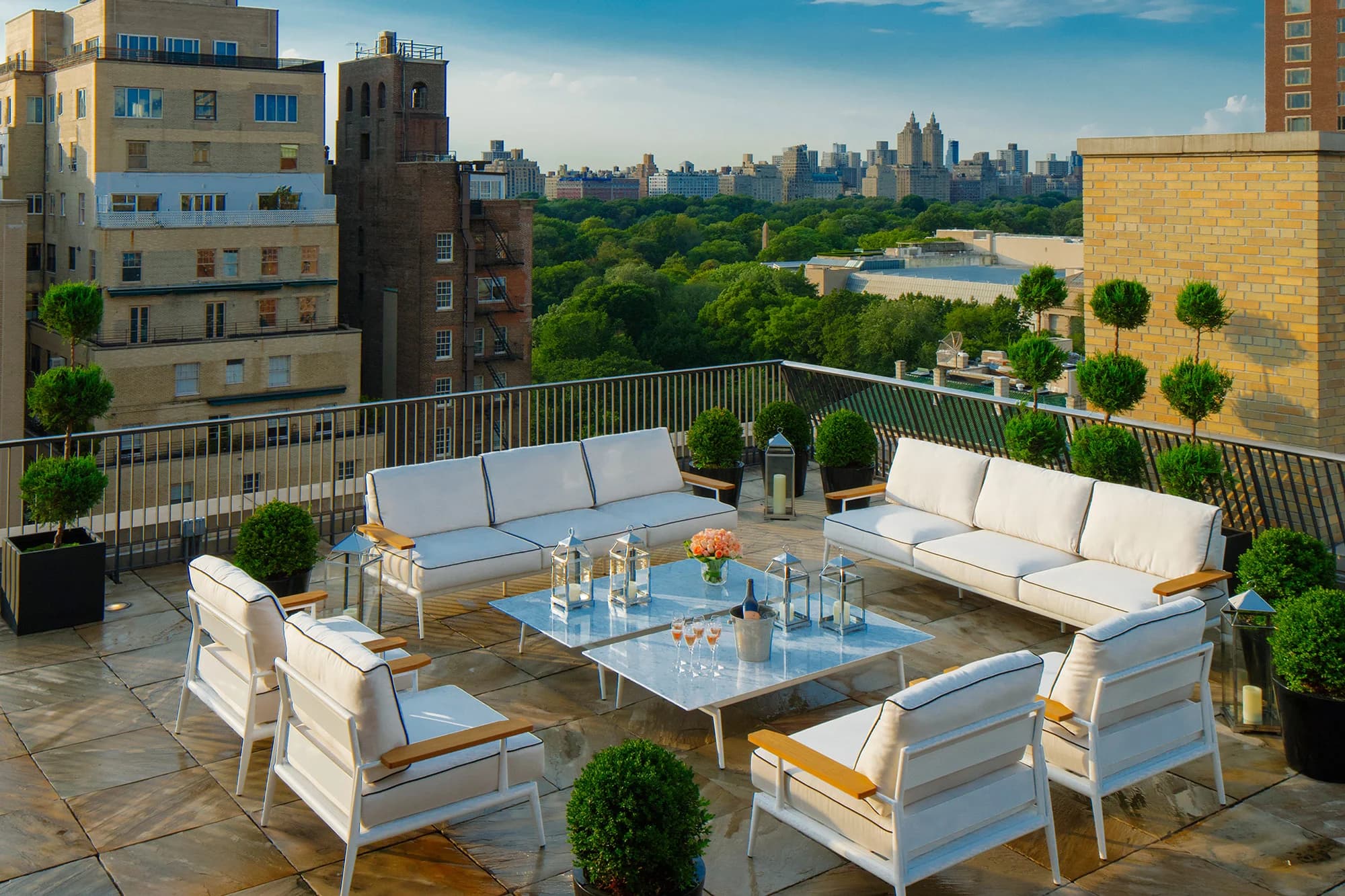
Yes, a select number of properties in New York offer suites with private terrace access, most notably in Midtown and on the Upper East Side. These are among the most sought-after suite configurations in the city given the density of the urban environment, and they command a significant premium. Availability is limited and these suites are typically held at the top of a property's rate structure.
Rates for genuine luxury suites in New York City's top properties typically begin around 2,000 USD per night and scale considerably above that for penthouse-level or flagship suite configurations. Pricing is highly seasonal, with December and September commanding the highest rates, while January and February often offer comparatively accessible entry points at otherwise inaccessible properties.
Several properties along Central Park South and the Upper East Side offer suites with direct park-facing exposures, a configuration that is considered among the most desirable in the city. The specific floor level and orientation determine the quality of the view, and properties in this corridor vary in the proportion of their inventory that qualifies for a genuine unobstructed park aspect. La Suite's curated selection identifies properties where this is a consistent and verified feature.
At the highest level, New York City luxury suites typically include separate living and dining areas, full in-suite dining capability, access to a dedicated concierge or butler, high-specification audio and visual systems, and materials that reflect a coherent interior design brief. The best properties also offer suite-level access to private lounges, spa facilities, and cultural programming relationships with major institutions in the city.
January and February are genuinely undervalued months for the high-end traveler. The city's museums, architecture, and private-access cultural experiences are fully operational, competition for restaurant reservations is reduced, and suite rates at certain properties reflect lower leisure demand without any corresponding reduction in service quality. The city is quieter but no less functional, and for travelers whose interests are intellectual and cultural rather than social and festive, the off-season offers a more considered New York.
Several of New York's most significant luxury hotels occupy early twentieth-century buildings whose architectural qualities, including ceiling heights, plasterwork details, and window proportions, are genuinely difficult to replicate in contemporary construction. Suites within these buildings carry a material and spatial weight that contributes meaningfully to the overall experience. For travelers with an interest in architectural context, the choice between a historic property and a purpose-built contemporary tower is a substantive one.
La Suite applies an editorial framework that evaluates suites on spatial quality, design integrity, service architecture, and experiential positioning within the city. The selection is not influenced by paid placement or algorithmic ranking, and it reflects direct assessment of what distinguishes genuinely exceptional suites from properties that present well commercially but do not meet the same standard at the level of actual guest experience. The result is a focused, reliable reference for travelers who approach suite booking as a deliberate decision.