Where to stay in Tuscany: distinct territories for luxury suite travel
The Chianti Classico corridor
Stretching between Florence and Siena, this is the most architecturally dense part of rural Tuscany. Stone farmhouses converted into high-end properties sit within active wine estates. Guests here are close to both cities without belonging to either. The landscape is productive and legible: vineyards, olive groves, fortified villages. Luxury hotel suites in this corridor tend to occupy historic agricultural structures, often centuries old, with interiors that balance preservation with contemporary comfort.
The Val d'Orcia
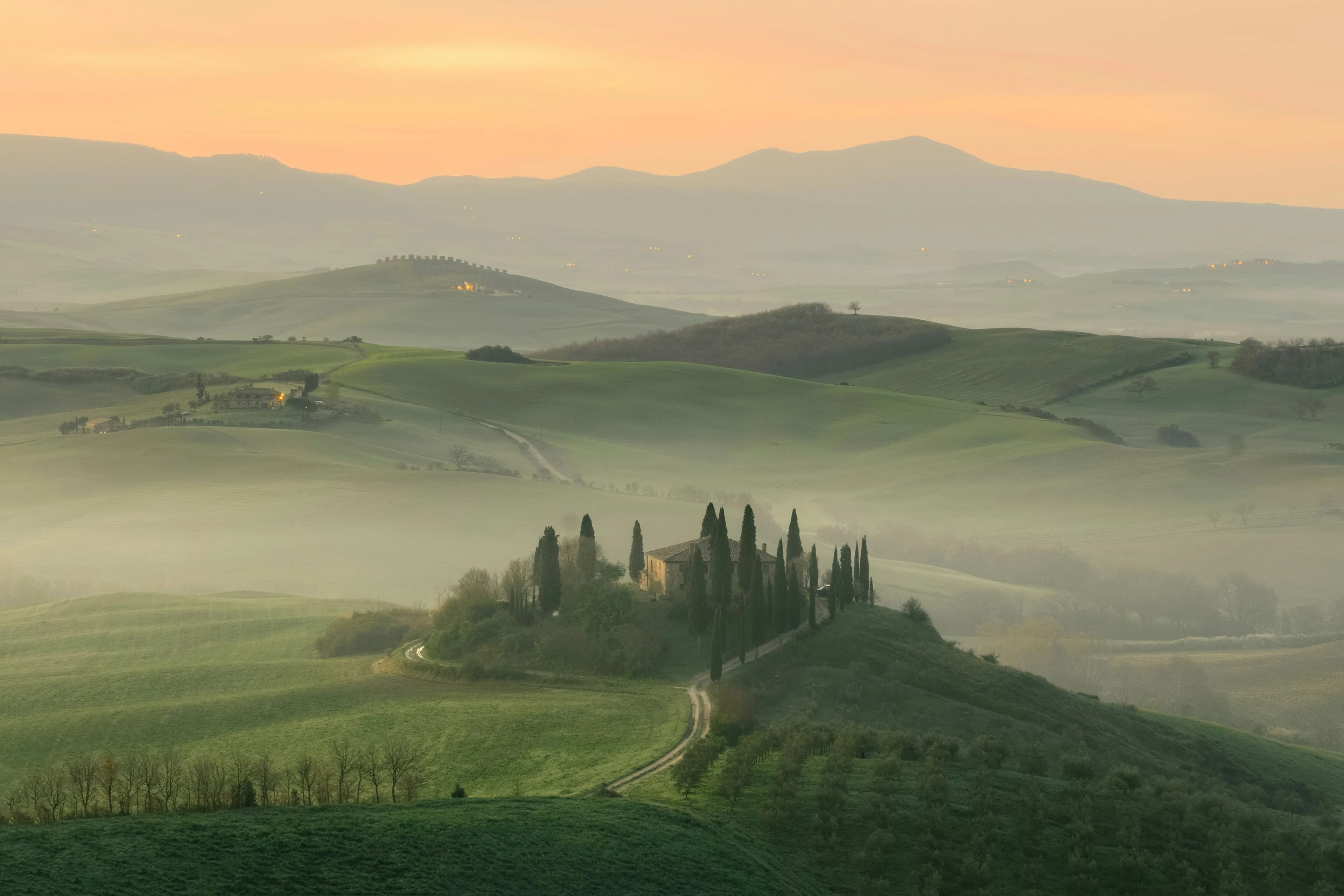
A UNESCO World Heritage landscape, the Val d'Orcia is characterised by its extreme compositional clarity: pale clay hills, isolated farmhouses, the occasional abbey. Properties here are sparse by design. The density of high-end accommodation is lower than in Chianti, which works in favour of those seeking genuine privacy. Staying in a suite within this territory means accepting a slower pace and a landscape that offers very little visual noise.
The Maremma coast
Along Tuscany's southern coastline, the tone shifts. The Maremma combines maritime access with interior wildland, including the Parco Regionale della Maremma. Luxury hotel properties here tend to be newer in form, with architecture that responds to both the sea and the scrubland. Porto Ercole and Punta Ala attract a clientele that mixes Italian and international money, particularly during summer. The register is less cultural and more resolutely physical: sailing, riding, sea access.
The Versilia and the Apuan Alps
Versilia occupies a narrow coastal strip beneath the Apuan Alps, where Carrara marble has been quarried since antiquity. The area around Forte dei Marmi has long been the preferred summer destination of affluent Italian families. The tone here is precise and slightly private, with villas and boutique properties that rarely seek visibility. A luxury suite in this area situates you between the sea and one of Europe's most dramatic mountain backdrops.
When to visit Tuscany for a high-end suite stay
The Tuscan calendar has a clear logic for the discerning traveler. Spring, from April through mid-June, offers mild temperatures, post-harvest greenery, and cultural events without the saturation of peak summer. The light is sharp and northern European travelers find the conditions ideal for both outdoor activity and interior exploration of the region's churches, palazzi, and private estates.
September and October represent the other premium window. The grape harvest (vendemmia) runs from late August through October, and many estate-based properties incorporate access to this process as part of the stay. The landscape shifts to amber and ochre, the temperatures drop to comfortable levels, and the density of visitors decreases sharply from August highs.
July and August remain popular, particularly along the coast, but inland properties can be intensely hot. Those seeking a summer stay should prioritise properties with altitude, serious air conditioning infrastructure, or direct pool access designed for heat. Availability at top-tier suites during this window requires planning well in advance, sometimes six to twelve months ahead for the most sought-after properties.
Winter in Tuscany is underrated. From November through February, the hilltop towns are returned to their residents, many wine estates offer private tastings and cellar access without appointments, and the atmospheric conditions, low mist over the Val d'Orcia, bare vines, frost on stone, produce a landscape that is as compelling as anything in summer. Rates for luxury suites are substantially lower, and a certain category of traveler finds this the most honest version of the region.
Local luxury standards: what defines a high-end suite in Tuscany
Italy does not have a formal national designation equivalent to France's Palace classification for its very top tier, though the government star system extends to five stars and five-star L (luxury). In practice, the properties that operate at the highest level in Tuscany are known by their individual reputations and affiliations rather than by a single official label.
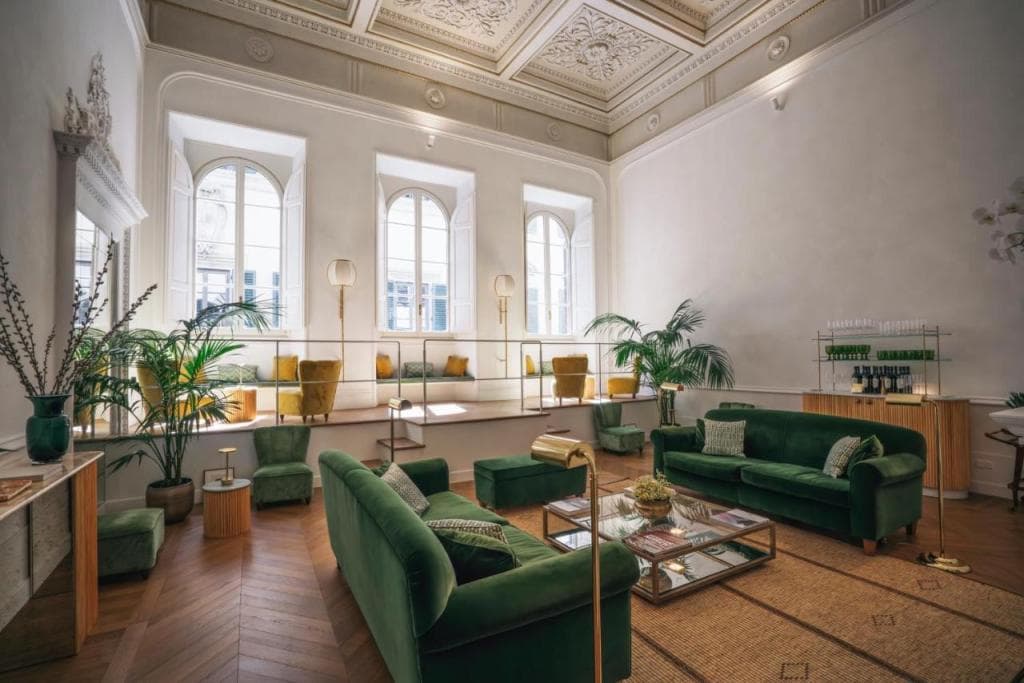
Several distinct typologies define Tuscan luxury hotel accommodation. The first is the converted borgo: an entire medieval hamlet, restored and operated as a single property. These are architecturally significant and offer a spatial experience unavailable in conventional hotels. Suites within a borgo often occupy former watchtowers, granaries, or manor houses, each with a distinct spatial logic.
The second typology is the working estate. Properties attached to active wine, olive oil, or agricultural production offer a form of luxury grounded in the productive life of the land. A suite here comes with access to the production cycle, private tastings, and often direct relationships with the families who have owned the land for generations.
The third is the grand villa, often of Medici or Renaissance origin, converted to hotel use while retaining its frescoed salons, formal gardens, and original furniture. These properties require careful selection: restoration quality varies significantly, and the gap between a well-maintained historic property and one that has been poorly updated is large.
How to choose the right luxury suite in Tuscany
The most important variable is setting. Tuscany's luxury hotel market is geographically fragmented, and a property that reads well on paper may be poorly located relative to what you intend to do. A suite in the Val d'Orcia positions you for landscape and privacy; a suite in Chianti gives you access to Florence and Siena as day trip anchors. These are not interchangeable.
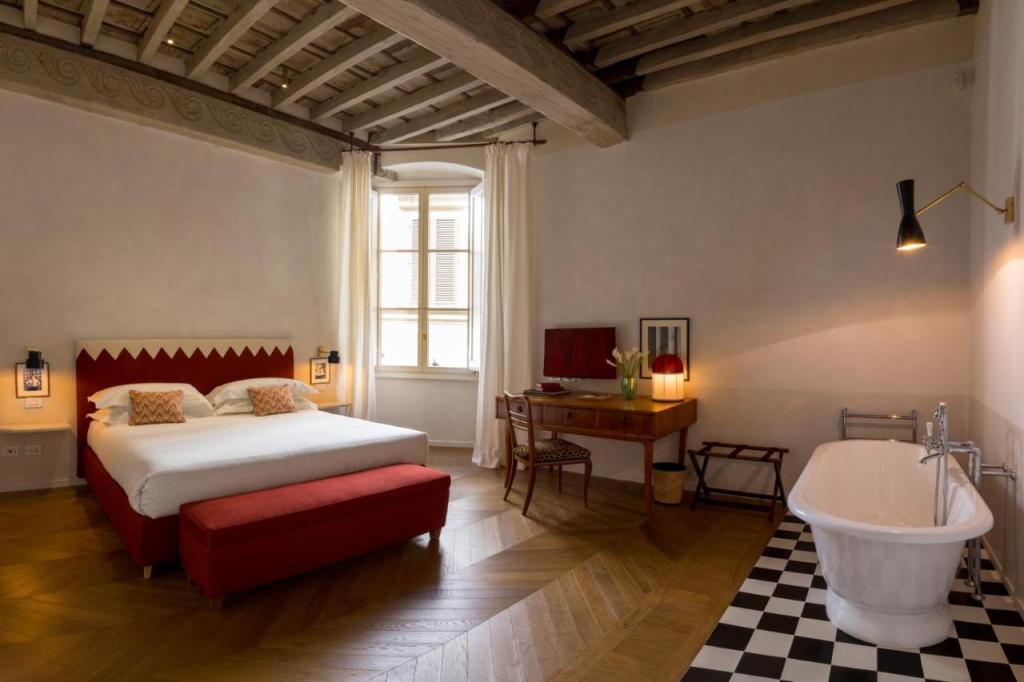
Architecture matters here in ways it does not in newer luxury markets. Tuscany's high-end properties are almost exclusively historic structures, and the quality of restoration, the faithfulness to original materials, the integration of modern infrastructure without visual compromise, is a decisive indicator of a property's overall standard. Stone floors, original beams, terracotta roof tiles, hand-plastered walls: these are signals. Properties that have replaced these with generic five-star finishes represent a different and generally lower standard of execution.
Suite size and orientation deserve particular attention in converted historic buildings. Unlike purpose-built hotels, rooms vary considerably in shape, ceiling height, and natural light. The best suites in Tuscany tend to be former owner's quarters or tower rooms, with outlooks over the estate or valley. Confirming the specific room, not just the category, is standard practice at this level.
Access and transport are practical considerations that affect the quality of the stay significantly. Many of Tuscany's finest properties sit on unpaved roads (strade bianche) several kilometres from the nearest town. A private car or transfer arrangement is not optional; it is essential infrastructure for the stay.
Why a curated selection by La Suite matters in Tuscany
The Tuscan luxury hotel market is large, and the gap between marketing and reality is considerable. Properties of very different quality present themselves in similar visual registers: stone walls, cypress trees, a swimming pool with a view. Without direct editorial knowledge, the distinction between a genuinely exceptional property and a competent but unremarkable one is difficult to make from a website alone.
La Suite applies a consistent editorial standard across its selection: spatial quality, architectural integrity, suite-specific experience, and the capacity of a property to deliver on what the Tuscan landscape actually offers. The curated selection exists to compress the decision process and remove the risk of a poorly matched choice in a destination where the options are numerous and the differences are material.