Best Neighbourhoods for Luxury Suites in the Netherlands
Amsterdam Canal Ring (Grachtengordel)
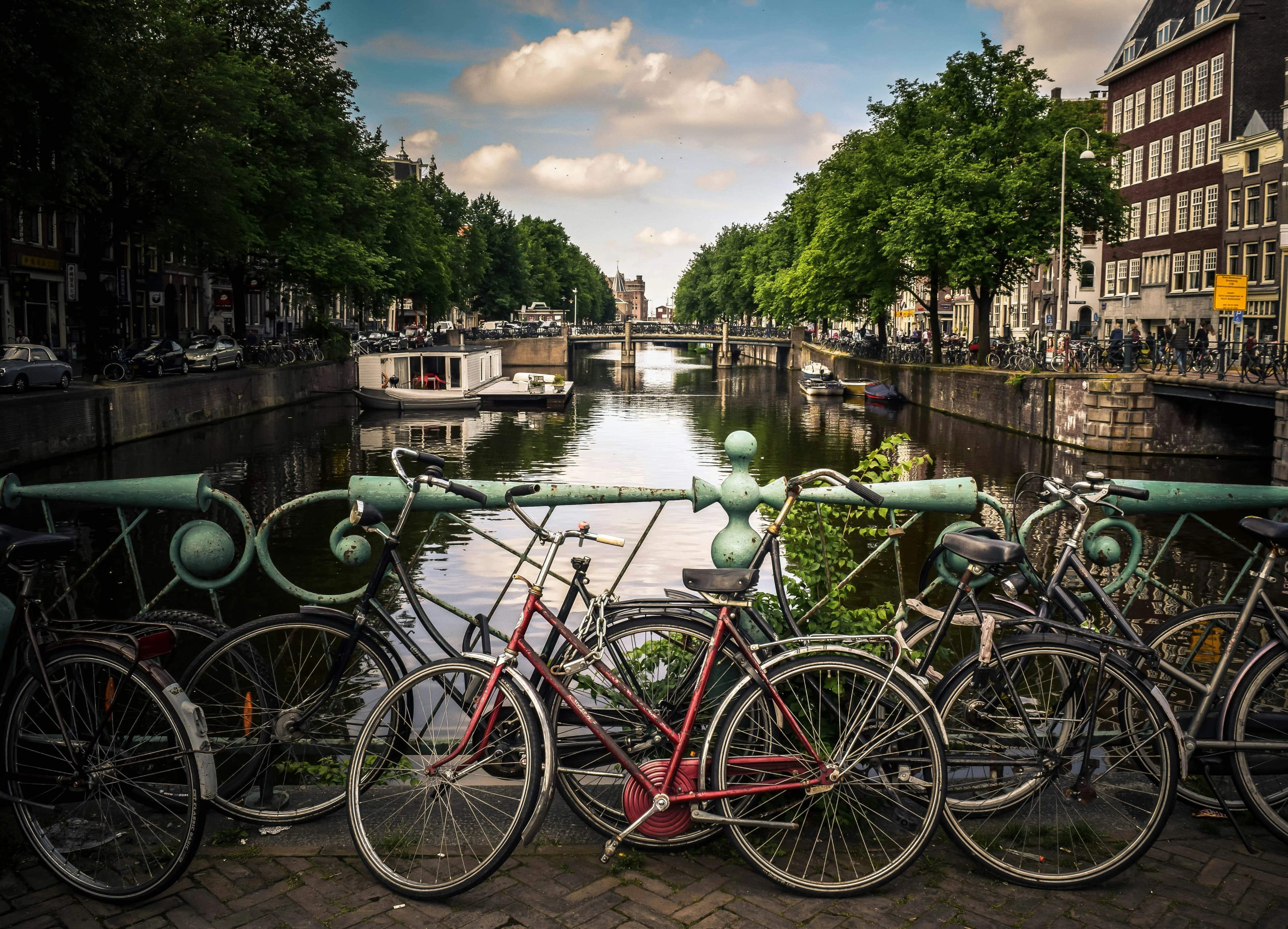
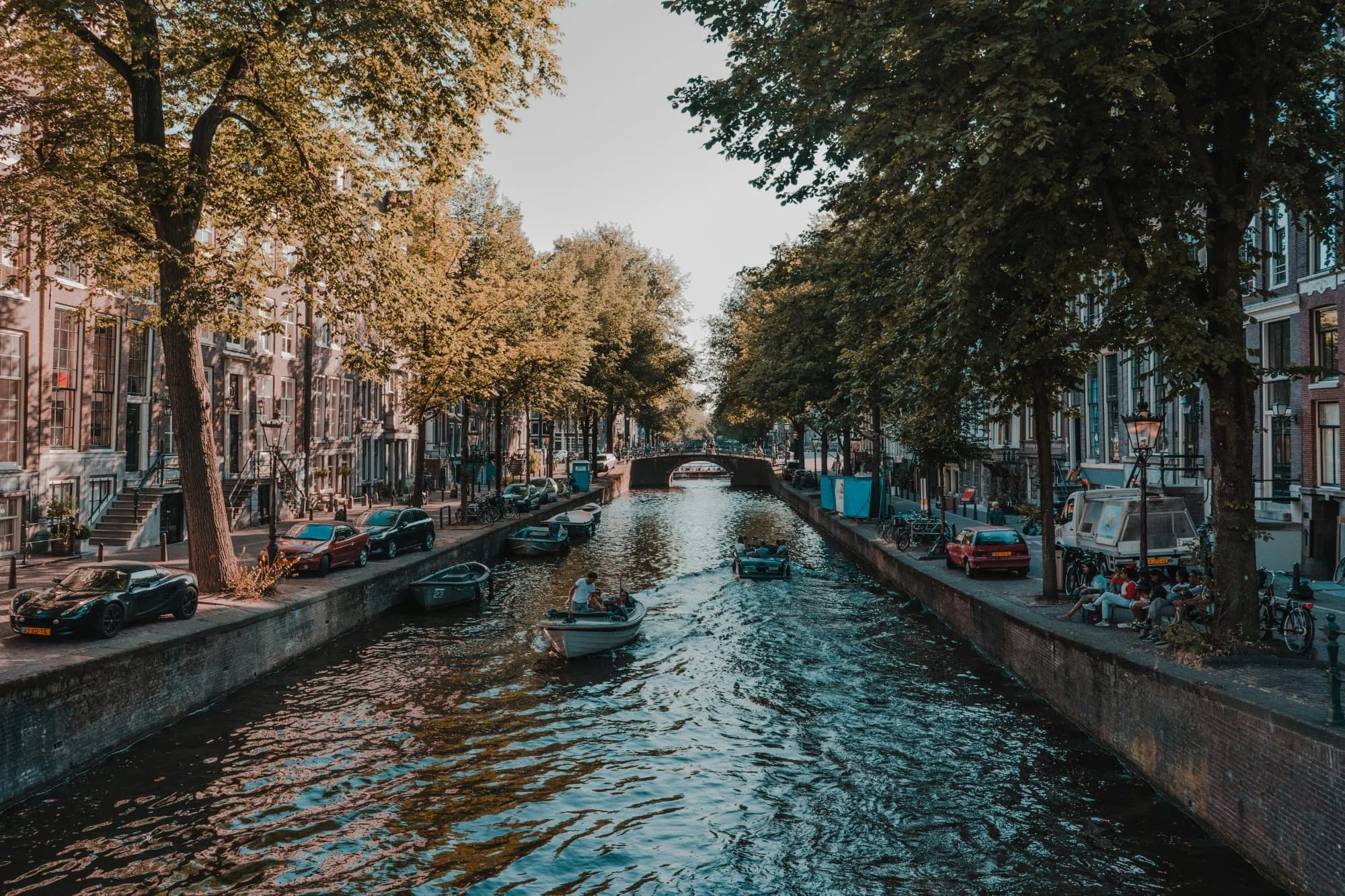
The Canal Ring (a UNESCO World Heritage Site) remains the most architecturally coherent luxury address in the country. The neighbourhood is defined by 17th-century merchant houses with narrow facades, steep internal staircases, and deep, high-ceilinged rooms that open over still water. Properties here operate within historic preservation constraints, which tends to force interior designers toward material quality rather than spatial volume. Guests staying in this district have immediate pedestrian access to the Rijksmuseum, the Nine Streets shopping district, and the Jordaan, the city's most compositionally intact residential quarter.
Amsterdam Museum Quarter and Oud-Zuid
South of the Canal Ring, the Museum Quarter and Oud-Zuid represent Amsterdam at its most bourgeois and spacious. Wide boulevards, early 20th-century architecture, and proximity to Vondelpark and the major cultural institutions characterise this district. Hotel properties here tend toward larger footprints and more generous room proportions than is possible in the historic centre. It is a neighbourhood that rewards those who prefer structure and quiet over the density of the inner canals.
The Hague (Voorburg and City Centre)
The Hague is the seat of the Dutch government and the location of the International Court of Justice. Its luxury hospitality is shaped accordingly, formal, discreet, and oriented toward a clientele of diplomats, senior executives, and institutional travellers. The city's Statenkwartier and the historic centre contain several properties with genuine architectural distinction, operating at a register that Amsterdam's more tourist-facing market rarely matches. The Hague also offers direct access to Scheveningen, the North Sea coastal district, adding a geographic dimension absent from the inland cities.
Rotterdam Centre and Waterfront
Rotterdam is architecturally the most radical city in the Netherlands, rebuilt almost entirely after 1945 and now a consistent reference point for contemporary architecture and urban design. Its hotel market reflects this: properties here tend toward bold structural gestures, deliberate material contrasts, and a self-conscious engagement with the city's identity as a working port and design capital. Travellers with a primary interest in contemporary architecture and design will find Rotterdam the most intellectually honest base in the country.
When to Visit the Netherlands for a Luxury Stay
The Netherlands operates on a compressed seasonal calendar. The shoulder seasons (late April through early June and September through October) deliver the most balanced conditions for high-end travel. Temperatures are moderate, natural light is long and directional, and the major cultural institutions operate at full capacity without the compression of peak summer crowds.
Late April and May coincide with the tulip season in the surrounding bulb-growing regions and with King's Day on 27 April, one of the country's defining civic events. King's Day transforms Amsterdam's streets and canals into a single continuous public gathering, an extraordinary urban spectacle, though one that affects hotel availability and pricing significantly. Advance planning of six to twelve months is advisable for Canal Ring properties during this period.
The Dutch Design Week in Eindhoven, held each October, draws an internationally design-literate audience and applies indirect pressure on the hotel markets of both Eindhoven and Amsterdam. For travellers with a professional interest in design and architecture, this is one of the most substantive events on the European calendar.
Winter in the Netherlands (December through February) is cold, grey, and atmospheric. Canal cities acquire a particular quality in low light, and hotel rates in this period are notably more accessible. Amsterdam Light Festival, running from late November through January, brings large-scale light installations to the city's waterways and bridges, adding a specific visual character to the winter season.
Local Luxury Standards in the Netherlands
The Netherlands does not operate a formal state classification system equivalent to France's Palace designation or the historic grading structures of some other European markets. Dutch hotel classification follows the Benelux Hotel Classification system, which assigns stars up to five based on facility and service criteria, but the five-star category is broad and does not differentiate between properties at the upper margin.
In practice, the operative distinction among luxury properties in the Netherlands is between independently owned boutique hotels (often operating within historic listed buildings) and the flagship European properties of international luxury groups. The former tend to offer greater spatial specificity and architectural authenticity; the latter provide the consistency of service infrastructure that a certain segment of the international luxury market requires.
Dutch luxury hospitality is culturally calibrated toward understatement. Ostentation is not a local value. The finest properties in the country tend to express quality through material selection, spatial proportion, and service precision rather than through overt display. This is a relevant variable for guests arriving from markets where luxury is communicated differently.
How to Choose the Best Suite in the Netherlands
Several practical criteria are worth applying when assessing suite options in this market.
Canal view versus courtyard: In Amsterdam's Canal Ring, canal-facing suites offer the definitive spatial experience but are subject to ambient noise from foot traffic and boat movement. Courtyard-facing rooms are quieter and often more architecturally interesting, occupying the rear of deep merchant house footprints.
Floor position: In historic canal houses, upper floors offer better light and views but require navigating steep, narrow staircases that may not have been modernised. Confirm lift access before confirming a booking if this is a relevant consideration.
Room proportion versus amenity: Smaller boutique properties in listed buildings often cannot accommodate the full amenity suite (separate bath and shower, walk-in wardrobe, dedicated sitting room) that larger modern properties provide as standard in their top category. Establishing priority between spatial character and amenity completeness will determine which direction to move.
Location relative to intended activity: The Canal Ring, Museum Quarter, and Rotterdam centre each serve different travel intentions. A guest whose primary purpose is museum engagement should be positioned differently from one whose visit is primarily business-facing or design-oriented.
The Value of Curation in This Market
The Dutch luxury hotel market is relatively small by European standards, but it contains significant variation in quality, authenticity, and spatial experience that is not immediately apparent from standard booking interfaces. Four properties meeting La Suite's standard are listed, a number that reflects the precision of the selection rather than a limitation of the market.
Curation in this context performs a specific function: it removes the cost of evaluation. Assessing whether a property's suite genuinely delivers on its category positioning (whether its materials are what they appear to be in photography, whether its service model is consistent with its pricing, whether its location functions as described) requires either prior direct experience or a structured assessment process. La Suite applies that process so that a guest arriving in Amsterdam or The Hague for the first time is working from a verified baseline rather than aggregated reviews.
For a country where quality is expressed quietly and where the difference between an exceptional suite and a merely expensive one is often invisible until you are standing in it, the value of that verification is concrete.
Frequently Asked Questions: Luxury Hotel Suites in the Netherlands
What is the best area of Amsterdam to stay in a luxury suite?
The Canal Ring (Grachtengordel) is the most architecturally significant address for luxury accommodation in Amsterdam, offering proximity to the city's primary cultural and commercial geography within a UNESCO-protected urban fabric. The Museum Quarter is preferable for those seeking larger room proportions and a quieter urban context.
Is The Hague or Amsterdam better for a luxury business trip to the Netherlands?
For engagements related to government, international law, or institutional diplomacy, The Hague is the correct base. Its hotel market is calibrated to a formal, professionally oriented clientele with expectations of discretion and reliability. Amsterdam is better positioned for creative industries, finance, and cultural engagements.