Cotswolds
Hotels with Luxury Suites in The Cotswolds
The Cotswolds is not a single place but a collection of micro-landscapes, each with its own social register and architectural personality. Understanding the differences between them is the first step toward choosing the right suite.
21 hotels available

Located in Oxford, 10 miles from Blenheim Palace, Artist Residence Oxfordshire has accommodations with free bikes, free private parking, a garden and a terrace. Offering a bar, the property is located

A centuries-old coaching inn anchoring Burford's High Street — stone-built, quietly authoritative, and positioned at the heart of the Oxfordshire Cotswolds.

This contemporary-chic country house hotel is located in the Cotswolds, surrounded by 55 acres of parkland, woods and meadows. Its gardens have natural springs, lakes, and Victorian cascades. Each ro

Nestled amid 19 acres of gardens and woodland, this 19th century country house Hotel provides the ideal base from which to explore the rolling hills and hidden valleys of the Cotswolds. Set in the bea

Steeped in history and boasting 5 stars with a 90-acre estate, Ellenborough Park is nestled between the Cotswolds’ highest point and the gallops of Cheltenham Racecourse. A sumptuous Cotswold manor h

Nestled in 20 acres of the serene Somerset countryside, Homewood Bath is the ultimate staycation destination. Eclectic, luxurious and slightly eccentric; think grand Georgian country house and grounds

Set in the beautiful Cotswolds countryside, Hyll Hotel is a 14th-century manor house in 54 acres of grounds, providing the perfect base from which to explore the picturesque area. Guests will enjoy s

A recently renovated apartment, Luxury Landmark Stay in the Cotswolds with terrace & parking offers accommodations in Stow on the Wold. This property offers access to a balcony, free private parking,

Set in 65 acres of gardens, wildflower meadows and woodland on the banks of the River Windrush, the Old Swan and Minster Mill offers accommodations located in the Oxfordshire village of Minster Lovell

At the top of Cheltenham’s tree-lined Promenade, this boutique 4-star hotel offers beautifully appointed bedrooms, a restaurant offering fresh local produce and car parking. Queens Hotel Cheltenham is

This Georgian manor house set on the crest of a hill affords stunning 360 degree views of the surrounding area and has an indoor pool hot tub, sauna, aromatherapy steam room, spa treatment rooms & a w

Located in Painswick, 7.2 miles from Kingsholm Stadium, The Falcon Inn provides accommodations with a terrace, free private parking, a restaurant and a bar. This 4-star inn offers free WiFi. The inn f

Located in Witney, 9.3 miles from Blenheim Palace, The Harcourt Arms has accommodations with a garden, free private parking, a shared lounge and a terrace. With free WiFi, this 5-star hotel has a rest

Located in the quintessentially English village that is Broadway in the heart of The Cotswolds, The Lygon Arms is the perfect spot to switch off and relax (with or without your pampered pooch!) Steepe

The Manor House is a stunning 14th-century building set in 365 acres of secluded parkland on the outskirts of Bath. Untouched since the 17th century, the Cotswold village Castle Combe, is home to the

England’s oldest hotel (from 1220) in England’s first capital offers quintessentially English service and hospitality. Experience levels of service that you would find hard to better anywhere in Engla

Elcot Park Hotel has undergone a complete refurbishment and is relaunching as ‘The Retreat’; a newly re-imaged 18th-century country house hotel and community beacon, set in 16 acres of magnificent g

Located in Bath's Royal Crescent, this magnificent 5-star hotel offers a fully equipped gym and a stunning spa, leading out onto a picturesque landscaped garden. It also offers an award-winning restau

The Wood Norton part of the Conde Nast Johansens Collection, is a Victorian Hall originally built in 1897 by exiled French Royalty, the Duc D’Orleans, is now a luxurious hotel steeped in history and c

Thyme is nestled in the rolling Cotswolds hills creating a home away from home: a place to slow down, take Thyme and reconnect with nature. The estate is connected by winding gravel pathways where you

Located in Cirencester and with Cotswold Water Park reachable within 6.6 miles, Wild Thyme & Honey - Cirencester-Cotswolds provides concierge services, non-smoking rooms, a terrace, free WiFi througho
Where to stay in the Cotswolds: distinct areas and their luxury character
The north Cotswolds: manor houses and market town gravitas
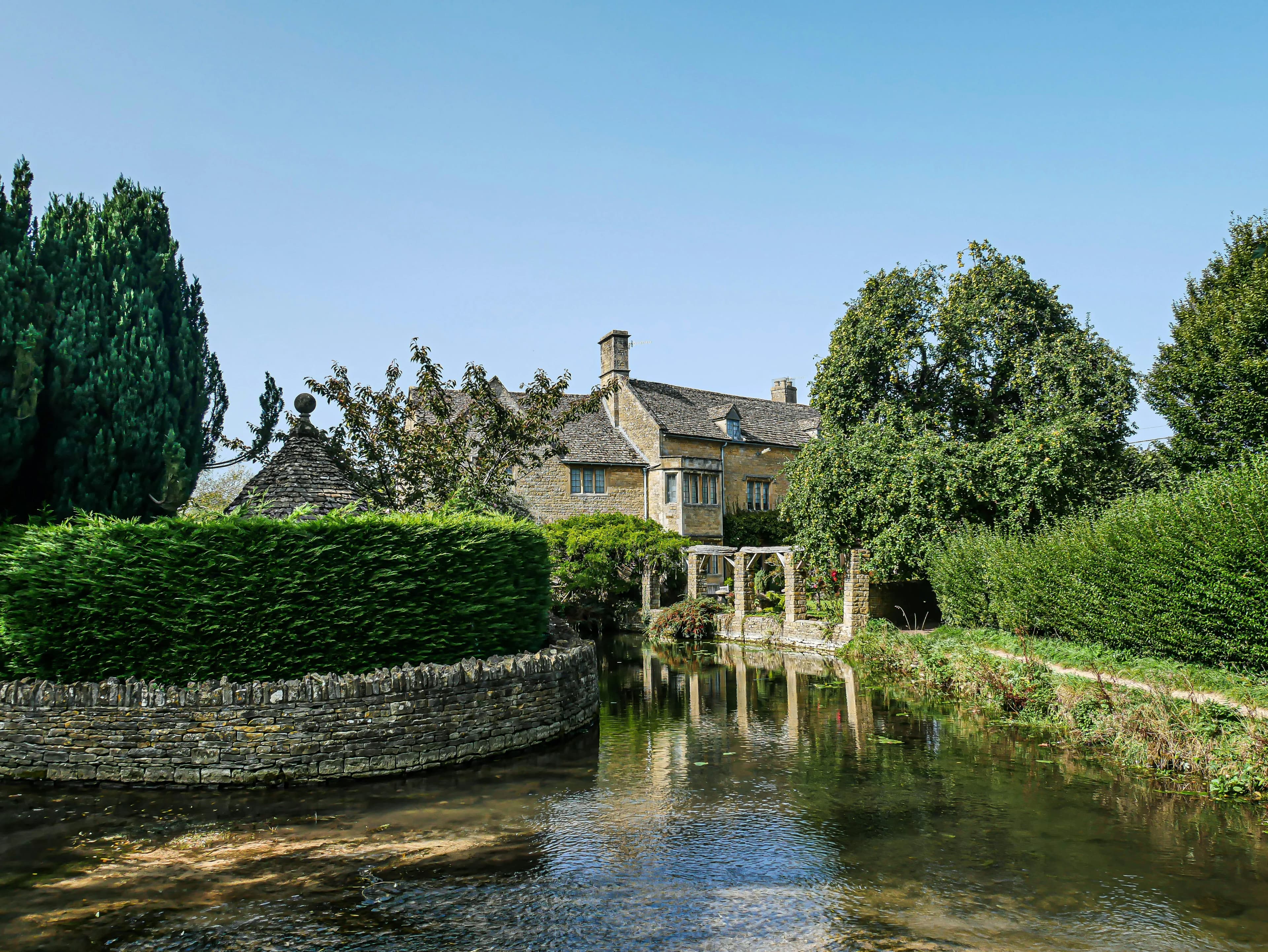
The northern stretch, anchored by towns such as Chipping Campden and Moreton-in-Marsh, is where the landscape feels most theatrical. Dry-stone walls, broad commons, and Grade I listed manor houses define the scenery. This area has historically attracted the British landed gentry and, more recently, London professionals seeking extended countryside retreats. Luxury hotels here tend to occupy converted manor properties with significant grounds, working farms, or former coaching inns refashioned into precision hospitality operations. Suites in this part of the Cotswolds often feature original fireplaces, mullioned windows, and gardens that predate the building of most American cities.
The central Cotswolds: the Slaughters, Bourton-on-the-Water, and Burford
The central villages are among the most photographed in England, and with reason. The River Eye passes through the Slaughters at a pace that feels almost deliberate. Burford's high street descends steeply toward a medieval bridge and draws antique dealers and art collectors in notable numbers. The luxury accommodation here tends toward the boutique: smaller properties, fewer rooms, and a calibration toward privacy and discretion rather than resort-scale amenity. This is the part of the Cotswolds best suited to travelers who prioritise architectural authenticity over comprehensive facilities.
The south Cotswolds: estates, valleys, and the Bath corridor
Moving south toward the Wiltshire border and the outskirts of Bath, the topography shifts. The valleys deepen, the estates grow larger, and the connection to the Georgian spa city adds a cultural layer that the northern villages lack. Properties in this corridor often combine access to the Cotswolds countryside with proximity to Bath's galleries, restaurants, and thermal baths. Suites here tend to occupy purpose-built wings of significant country houses, some dating to the seventeenth century, others to the Regency period.
When to visit the Cotswolds for a luxury suite stay
The Cotswolds operates on a seasonal logic that is worth understanding before committing to dates. Each season offers a meaningfully different sensory and social experience.
Late spring, specifically May and early June, is widely considered the optimal window. The wisteria is in bloom, the kitchen gardens are active, and the summer crowds have not yet arrived. Availability at top properties is still reasonable, and rates reflect a period of transition between shoulder and peak. This is also when the Badminton Horse Trials take place in South Gloucestershire, an event that draws a distinctly affluent equestrian crowd and fills premium accommodation across the region quickly.
Summer (July and August) is the peak period. The villages are busy, particularly at weekends, and the best suites at well-known properties require advance planning of several months. The compensations are significant: long evenings, open-air dining, and a social calendar that includes polo at Cirencester Park and the Wilderness Festival near Cornbury Park in Oxfordshire.
Autumn brings a colour register that the landscape handles exceptionally well. October in particular offers amber-lit mornings, quieter roads, and a return to the working rhythms of the countryside. Shooting season begins in earnest, and several estate hotels offer driven game days as part of a broader stay package.
Winter in the Cotswolds is underrated. The villages under frost or light snow reduce to their essential forms, and the experience of a stone fireplace suite after a walk across frozen fields belongs to a different register altogether. Christmas and New Year periods see strong demand at the flagship properties; January and February offer genuine value at exceptional addresses.
Local luxury standards: what to expect from top-tier Cotswolds hotels
England does not use a formal national designation equivalent to France's Palace classification. The luxury tier in the Cotswolds is instead defined by a combination of factors: AA rosette and star ratings, membership of small luxury hotel consortia such as Relais and Chateaux or the Leading Hotels of the World, and a sustained critical reputation built through publications such as the Times and the Financial Times.
The most consistent marker of quality in this region is the house itself. The Cotswolds' listed building regulations are among the strictest in England, which means that exceptional properties have been forced to develop interior design languages that work with, rather than against, the original architecture. The best suites here achieve something specific: contemporary comfort (plunge baths, heated floors, high-thread-count linens) expressed through a spatial logic that respects seventeenth and eighteenth-century proportions. This is harder to execute than it sounds, and the gap between an average and an exceptional property in the Cotswolds is correspondingly wide.
Expect serious food and beverage programmes. The region sits at the centre of a significant local food economy: Gloucestershire Old Spot pork, smoked eels from the Severn, asparagus from the Vale of Evesham, and cheeses from small producers across the area. The best hotel restaurants here hold multiple AA rosettes and maintain direct relationships with the farms that supply them.
How to choose the right luxury suite in the Cotswolds
Several practical considerations distinguish a well-chosen Cotswolds suite from a disappointing one.
First, assess the building. A converted manor house will offer a different spatial experience from a purpose-built luxury extension. Original rooms in historic properties often come with irregular geometries, lower ceilings in some sections, and acoustics that carry sound between rooms. This is not a flaw in every case, but it is worth knowing in advance. Purpose-built suites in modern wings or converted outbuildings tend to offer larger footprints and more predictable privacy.
Second, consider the grounds. The Cotswolds is fundamentally an outdoor proposition. A suite with direct garden access, or views across parkland rather than a car park or service road, changes the daily quality of a stay in ways that are difficult to quantify but immediately felt. The best properties in the region have invested in their land with the same precision they have applied to their interiors.
Third, think about the distance to activities. The Cotswolds is not compact. Driving from one end of the AONB to the other takes well over an hour. Choosing a base that sits within reasonable reach of the experiences you have prioritised, whether that is antique shopping in Tetbury, walking the Cotswold Way, or dining at a specific restaurant, matters for the practical texture of the trip.
The value of curation: why La Suite navigates the Cotswolds differently
The Cotswolds has an unusually wide range of accommodation presenting itself as luxury. The gap between a well-decorated pub with rooms and a genuinely exceptional suite property is significant, but it is not always legible from the outside, particularly for international travelers encountering the region for the first time.
La Suite applies a consistent editorial standard across every property in its selection. The criteria are architectural, spatial, sensory, and operational. A property earns its place in the curated selection not through marketing spend or category labelling, but through the quality of the suite experience itself. For a region as layered and nuanced as the Cotswolds, that kind of applied judgment is not decorative. It is the difference between a good trip and a precise one.

Frequently asked questions
What is the best time of year to book a luxury suite in the Cotswolds?
Late May and early June offer an optimal balance of good weather, active gardens, and manageable visitor numbers. Autumn, particularly October, is also highly regarded for its colour and quieter roads. Winter stays in well-chosen properties offer genuine atmosphere and better availability at premium addresses.
Are Cotswolds luxury hotels typically located in historic buildings?
The majority of high-end properties in the Cotswolds occupy converted manor houses, coaching inns, or country estates dating from the seventeenth to nineteenth centuries. English listed building regulations mean that most significant structures have been preserved in good condition, and the best hotel operators have invested considerably in sensitively integrating modern comfort within original architecture.
How far in advance should I book a luxury hotel suite in the Cotswolds?
For peak summer weekends and the Christmas and New Year period, booking three to six months in advance is advisable at the most sought-after properties. For spring and autumn stays, four to eight weeks' notice is often sufficient, though specific suite categories at smaller boutique properties can sell out earlier than general room inventory.
What distinguishes a top-tier Cotswolds suite from standard countryside accommodation?
The defining markers are spatial quality, the architectural character of the building, access to private outdoor space, and the standard of the food and beverage programme. The best suites in the region offer original period features alongside contemporary specifications including freestanding baths, bespoke furnishings, and direct garden or parkland access.
Which part of the Cotswolds is best for a private and secluded luxury stay?
The central and southern Cotswolds, particularly the area around the Slaughters and the valleys approaching the Wiltshire border, tend to offer smaller, more discreet properties with an emphasis on privacy. The north Cotswolds offers larger estate properties with significant grounds, which also delivers seclusion at a different scale.
Do luxury Cotswolds hotels offer access to outdoor activities and country pursuits?
Most high-end estate properties in the Cotswolds either operate or can organise traditional country pursuits including driven shooting, fly fishing, falconry, and horse riding. Walking access to the Cotswold Way and the wider AONB footpath network is available from virtually every property in the region. Polo at Cirencester Park is a seasonal addition for summer visitors.
What food and dining standards can I expect at a luxury hotel in the Cotswolds?
The region sits within a productive local food economy including Gloucestershire Old Spot pork, Vale of Evesham asparagus, artisan cheeses, and seasonal game. The best hotel restaurants hold multiple AA rosettes and maintain direct farm relationships. In-suite dining is available at the principal luxury properties, typically drawing from the same kitchen programme as the main restaurant.
Is the Cotswolds a practical destination for international travelers arriving from London?
The Cotswolds is accessible from London in roughly ninety minutes to two hours by car, depending on the specific destination within the AONB. Train services connect London Paddington to Kingham, Moreton-in-Marsh, and Charlbury, making the northern Cotswolds particularly accessible without a vehicle. Several luxury properties offer transfer arrangements from London or from Birmingham Airport.
How do I identify a genuinely high-end suite in the Cotswolds versus standard premium accommodation?
The most reliable indicators are membership of recognised quality consortia such as Relais and Chateaux or Leading Hotels of the World, sustained AA star and rosette ratings, and the physical quality of the building and its grounds. A curated selection from a specialist platform such as La Suite applies a consistent editorial standard across these criteria, which is particularly useful in a market where self-described luxury is widespread.
What architectural styles should I expect from luxury suites in the Cotswolds?
The dominant material is Cotswolds limestone, a warm honey-coloured oolitic stone that gives the region its distinctive visual character. Most heritage properties feature mullioned windows, flagstone floors, and original fireplaces. Interior design in the best properties navigates a balance between period architectural features and contemporary specifications, avoiding both pastiche and the kind of modernisation that erases the character of the building.