
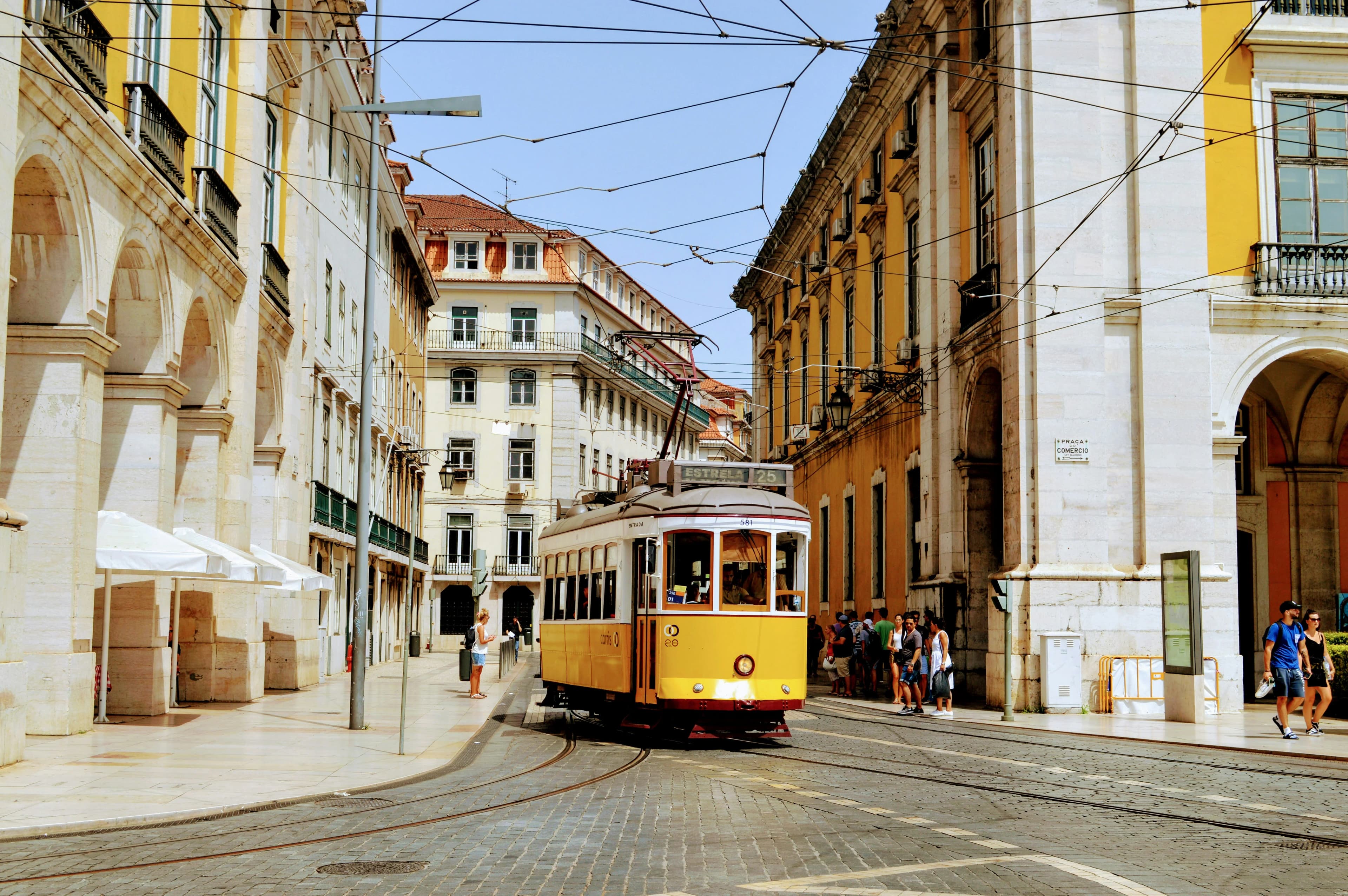
Lisbon
Hotels with luxury suites in Lisbon
Lisbon rewards those who choose their base deliberately. Each quarter carries its own architectural register and social frequency, and the choice of neighbourhood shapes the entire character of a stay.
Destinations near Lisbon
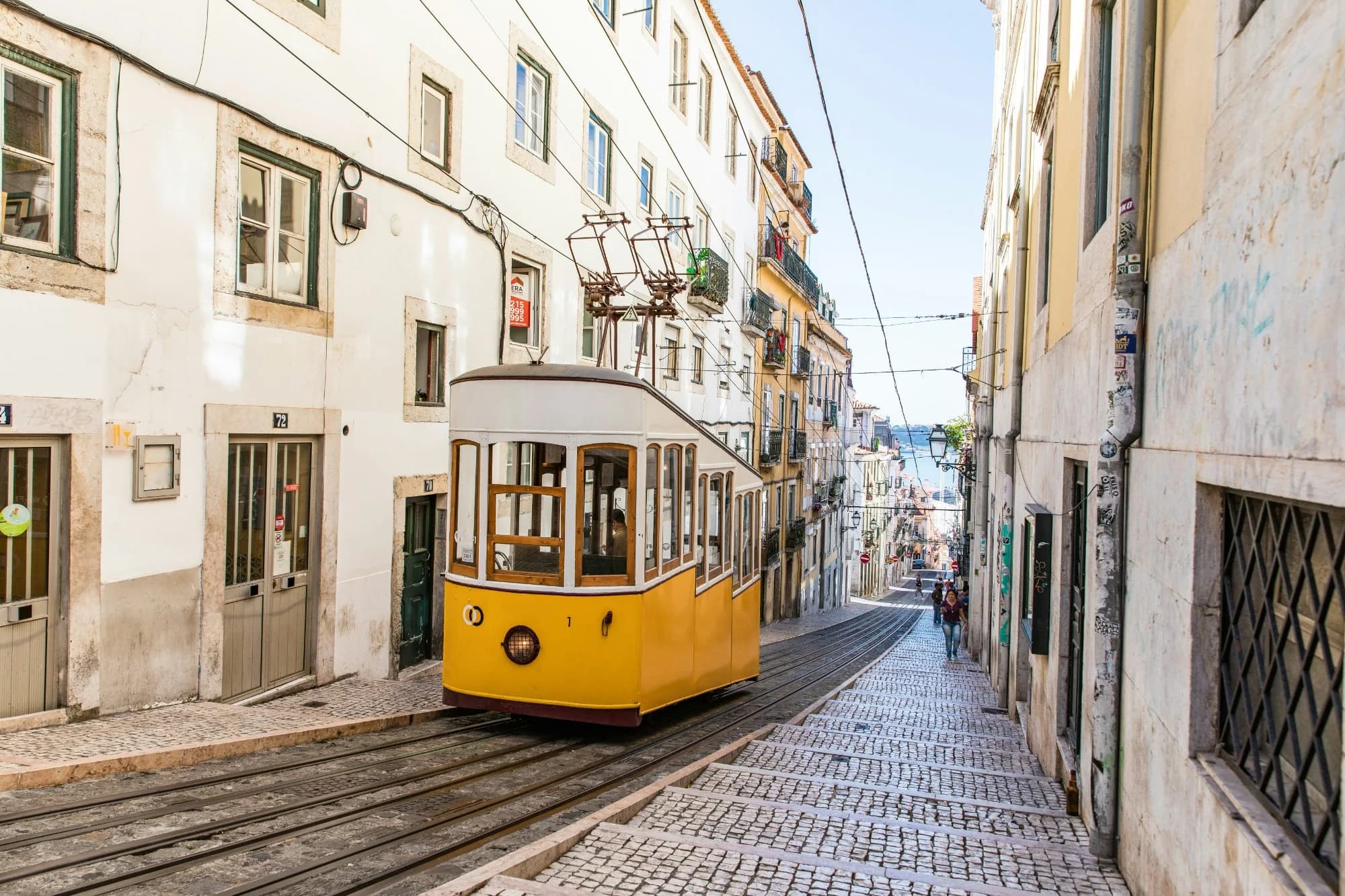
The distinct neighbourhoods of Lisbon for luxury suite stays
Avenida da Liberdade
The city's principal boulevard functions as Lisbon's closest equivalent to a grand Haussmannian axis. Wide pavements, tiled mosaic sidewalks, and a concentration of flagship fashion houses make this the most legible luxury corridor in the city. Luxury hotels along this avenue typically occupy either late-19th-century palatial buildings or purpose-designed contemporary structures. Suites here deliver urban scale, formal interiors, and proximity to the city's commercial and cultural core.
Chiado
Chiado is Lisbon's intellectual and aesthetic quarter, rebuilt after the 1988 fire largely under the direction of architect Álvaro Siza Vieira. Bookshops, contemporary art galleries, and some of the city's most considered restaurants occupy its neoclassical streetscape. Properties in this zone tend toward restrained, design-forward interiors. For the culturally literate traveler, a suite in Chiado positions the entire itinerary within walking distance of the city's most serious creative institutions.
Príncipe Real
Príncipe Real carries the quiet authority of old money. Its 19th-century palaces, antique dealers, and garden squares attract a residential population that values discretion over spectacle. Boutique luxury hotels in this quarter tend to occupy converted aristocratic townhouses, offering suites with ceiling heights, original stonework, and private terraces that no new-build can replicate. This is the neighbourhood for those who find conventional hotel grandeur imprecise.
Bairro Alto
Bairro Alto operates on two registers: a daytime calm defined by independent studios and ateliers, and an evening energy centred on its dense network of small restaurants and bars. Suite properties here are rare, which makes those that exist genuinely selective choices. The neighbourhood suits travelers who want proximity to Lisbon's informal dining culture without sacrificing the spatial standards of a serious luxury hotel suite.
Alfama
Alfama is Lisbon's oldest surviving quarter, a Moorish-origin labyrinth of narrow lanes descending toward the river. Its association with fado, its castle, and its uninterrupted roofscape make it visually distinct from any other part of the city. Suites with terrace views over Alfama and the Tagus represent some of the most atmospheric accommodations in Portugal. The tradeoff is reduced pedestrian connectivity, which suits those with a slower, more contemplative travel rhythm.
Baixa
The Pombaline Baixa, reconstructed on a rational grid following the 1755 earthquake, is Lisbon's civic centre. Its geometry is severe and deliberate. Properties here offer immediate access to the waterfront Praça do Comércio and the city's main transport connections. Suites in this zone tend toward classical formality and are particularly suited to travelers combining leisure with professional commitments.
When to stay in Lisbon
Lisbon's climate is among the most temperate of any European capital, which extends the viable luxury travel window considerably. The city receives more annual sunshine hours than most of its continental counterparts, with mild winters rarely dropping below 10 degrees Celsius.
Spring (March to May) is the most considered choice: light is excellent, crowds remain manageable, and the city's public gardens are at peak condition. This period also coincides with a concentration of cultural programming, including the typically lively architecture and design events that draw an internationally-minded audience.
June brings the Festas de Lisboa, a city-wide series of neighbourhood celebrations centred on the feast of Saint Anthony on June 13th. This is genuinely atmospheric but also the point at which central Lisbon becomes significantly more crowded. Suite availability at premium properties tightens from late June through August, and rates reflect that pressure.
September and October represent a second window of quality: temperatures remain warm, the summer mass has dispersed, and the city returns to a pace more compatible with considered exploration. For those interested in Portuguese wine culture, this period coincides with harvest season in the Douro and Alentejo, making Lisbon an effective base for day or overnight excursions into the wine-producing interior.
Winter (November to February) is underestimated. Rates at luxury hotels drop considerably, suite availability is at its most open, and the city retains its essential character without the seasonal overlay. Those who know Lisbon well often prefer this period precisely for its clarity.
Understanding luxury hotel standards in Lisbon
Portugal does not operate the French Palace classification, but Lisbon has developed its own identifiable tier of luxury accommodation. The city's top properties cluster around two architectural categories: converted historic palaces or noble residences, and purpose-designed contemporary hotels built to international five-star specification.
The converted palace category is particularly relevant to Lisbon. The city retains a substantial stock of 18th and 19th-century aristocratic buildings, some of which have been transformed into small luxury hotels with suite inventories of genuine character. These properties offer original plasterwork, azulejo panels, private courtyards, and ceiling heights that reflect their original function as residences for the Portuguese nobility.
Contemporary luxury hotels in Lisbon, concentrated along Avenida da Liberdade and the waterfront, tend to operate to a more standardised international specification: consistent service protocols, spa infrastructure, rooftop pools, and suites designed for both aesthetic coherence and professional functionality.
The distinction matters when choosing. A traveler seeking spatial drama and historical texture will likely find the converted palace category more satisfying. A traveler prioritising service consistency and amenity depth will find the contemporary properties more reliable. La Suite's curated selection across Europe addresses both registers without conflating them.
How to choose the right suite in Lisbon
Several practical considerations specific to Lisbon should inform the selection process.
First, topography. The city's hills mean that properties positioned on elevated ground (particularly in Príncipe Real, Bairro Alto, or Alfama) will typically offer terrace or balcony views of the Tagus and the wider city. These views are architecturally significant and worth prioritising. Properties in the Baixa or along the flat avenue corridor offer a different spatial logic, more urban and less panoramic.
Second, noise profile. Bairro Alto generates significant late-night pedestrian noise during the warmer months. Suites in converted buildings with original thick stone walls handle this better than those in lighter modern constructions. This is a detail worth verifying before confirming a reservation.
Third, access. Lisbon's historic districts are not fully navigable by car, and several streets in Alfama and Bairro Alto are inaccessible to standard vehicles. Properties in these areas manage arrivals differently, and the logistics are worth understanding in advance, particularly for travelers arriving with significant luggage or requiring regular vehicle access.
Fourth, suite typology. In converted palaces, suites are often individually configured around the existing architecture rather than built to a standardised plan. This means that a corner suite in one property may be architecturally exceptional, while the equivalent category in another is simply a larger room. La Suite's editorial process addresses this distinction directly.
Why curation matters in Lisbon's luxury hotel market
Lisbon's luxury hospitality market has grown rapidly over the past decade, expanding the quantity of properties presenting themselves as premium options. This expansion has made the selection process less straightforward, not more. The distance between a property that performs well commercially and one that delivers a genuinely exceptional suite experience is considerable, and that distance is not reliably communicated by standard booking platforms or star ratings.
La Suite's curated selection for Lisbon applies editorial criteria that prioritise the quality of the suite experience itself: the spatial standard, the architectural coherence, the service precision, and the relationship between the property and its immediate neighbourhood. The result is a deliberately short list. For a city as architecturally and culturally specific as Lisbon, that specificity in curation is the correct approach.
Frequently asked questions
What are the best neighbourhoods in Lisbon for a luxury hotel suite stay?
The most considered choices are Avenida da Liberdade for classical boulevard grandeur, Príncipe Real for discreet palace-conversion properties, and Chiado for design-forward hotels with strong cultural proximity. Alfama suits those prioritising rooftop views over the Tagus, while Baixa offers civic-scale formality near the waterfront.
When is the best time to book a luxury suite in Lisbon?
Spring (March to May) and autumn (September to October) offer the best combination of climate, cultural programming, and suite availability. August is the highest-demand period, when rates peak and the city's pace becomes less suited to considered travel. Winter delivers the most open availability and the most competitive rates at premium properties.
What distinguishes a luxury hotel suite in a converted Lisbon palace from a contemporary hotel?
Converted palace properties offer original architectural features including azulejo tile panels, carved stonework, private courtyards, and irregular suite configurations shaped by the building's historic fabric. Contemporary luxury hotels deliver standardised service infrastructure and consistent amenity depth. The choice depends on whether spatial drama or operational reliability is the primary requirement.
How does Lisbon's topography affect the luxury suite experience?
Properties on elevated ground in Alfama, Príncipe Real, or Bairro Alto typically offer terrace views across the Tagus estuary and the city's roofscape. This is architecturally significant and genuinely affects the experience of the suite itself. Flat-corridor properties along the Baixa or lower Avenida da Liberdade offer a more urban, less panoramic spatial context.
Is Lisbon considered a serious luxury travel destination compared to other European capitals?
Lisbon has established itself as a mature luxury destination, with a concentration of five-star properties, a strong contemporary restaurant culture, and a design and architecture scene of international standing. It competes credibly with Barcelona, Rome, and Copenhagen for the culturally literate luxury traveler, while retaining a quieter, less saturated quality that distinguishes it from larger capitals.
What should I know about noise and privacy when choosing a luxury suite in Lisbon?
Bairro Alto generates significant pedestrian noise during warmer evenings, and this affects properties with lighter building envelopes. Converted stone palaces in Príncipe Real and Alfama typically provide better acoustic insulation due to original thick-wall construction. Verifying the suite's position within the building and its street-facing orientation is a practical step before confirming.
Are there luxury hotel suites in Lisbon with private terraces or outdoor space?
Yes, particularly in properties positioned on elevated ground or occupying converted aristocratic buildings. Suites with private terraces overlooking the Tagus or the city's historic roofscape exist across several Lisbon neighbourhoods. This feature is worth specifying directly when making a reservation, as terrace availability varies by suite category within the same property.
How does Lisbon compare to other Portuguese destinations for a luxury suite stay?
Lisbon offers the most concentrated selection of internationally-operated luxury hotels in Portugal, with a broader suite inventory than the Algarve or Porto. It also provides the most diverse architectural range, from Pombaline neoclassical buildings to contemporary design properties. For those exploring Portugal more broadly, Lisbon functions effectively as both a destination in itself and a base for excursions into the Alentejo or Sintra.
What type of traveler is a Lisbon luxury suite best suited to?
Lisbon suits the culturally motivated traveler who values spatial quality, architectural context, and a city that rewards walking and observation. It is particularly well matched to those with an interest in contemporary art, independent restaurants, and design. The city's relatively compact scale and pedestrian character make it well suited to extended stays where the suite functions as a genuine home base.
How does La Suite curate its selection of luxury hotels in Lisbon?
La Suite applies editorial criteria focused on the quality of the suite experience itself rather than on commercial performance metrics or aggregate review scores. This covers spatial standard, architectural coherence, service precision, and the relationship between the property and its neighbourhood. The result is a deliberately short list that reflects the genuine top tier of Lisbon's luxury suite market.
Our latest articles about Lisbon
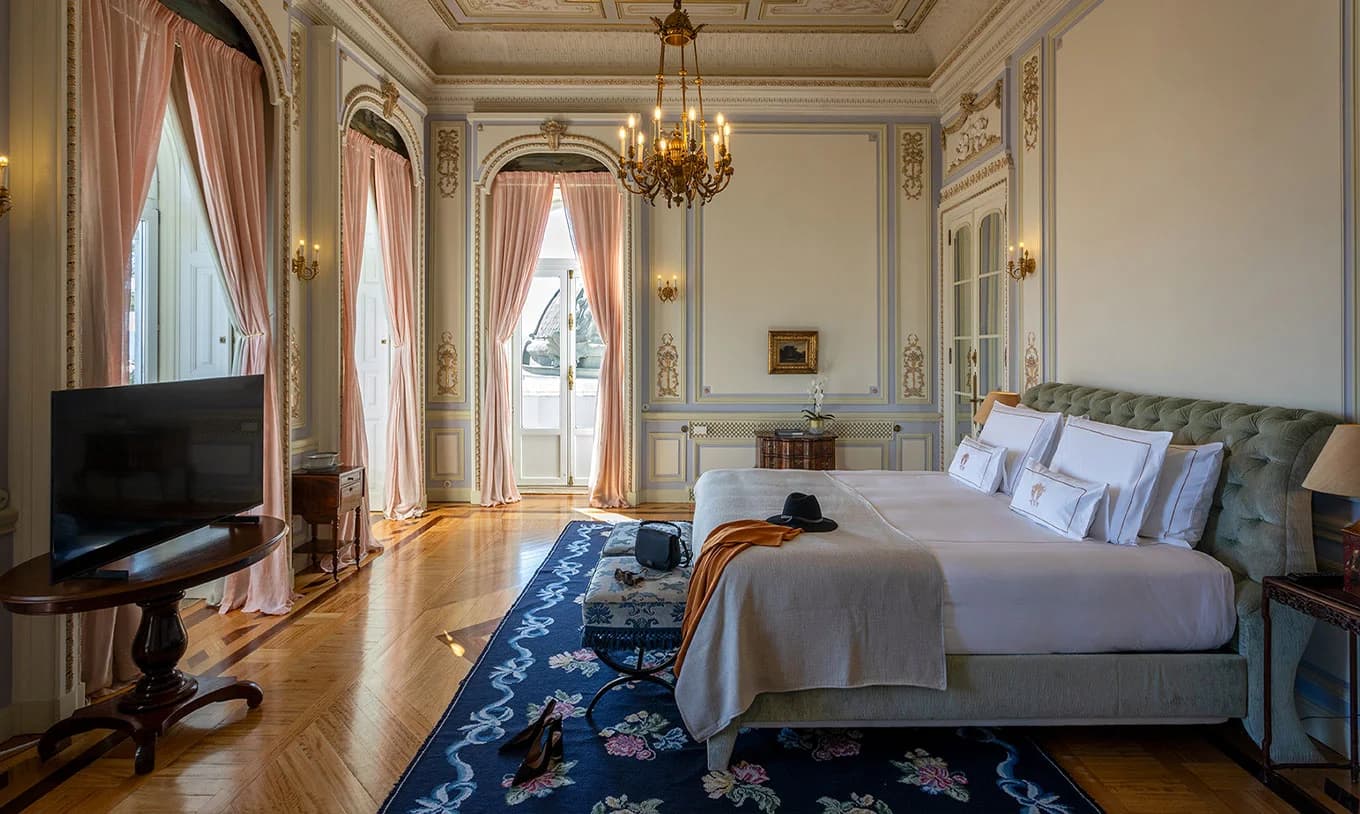
Lisbon: The Finest Suites in Portugal's Capital
Lisbon possesses a light found nowhere else. Portugal's capital, nestled against seven hills and overlooking the majestic Tagus River, is a city where the melancholy of the past mingles with vibrant contemporary energy. Long considered a sleeping beauty, Lisbon has awakened to become one of Europe's most coveted and elegant destinations. From the bustling energy of Chiado to the majestic tranquility of Avenida da Liberdade, choosing the right retreat is essential to capturing the soul of this fascinating metropolis. At "La Suite", we believe luxury resides in visual experience, the refinement of materials, and the exclusivity of space. We have walked the cobbled streets and opened the doors of the finest establishments to offer you a discerning selection. From cozy hideaways under the rooftops to 19th-century palaces, here is our curation of the most beautiful hotel suites to experience Lisbon at its finest.
BY Jules Peulet
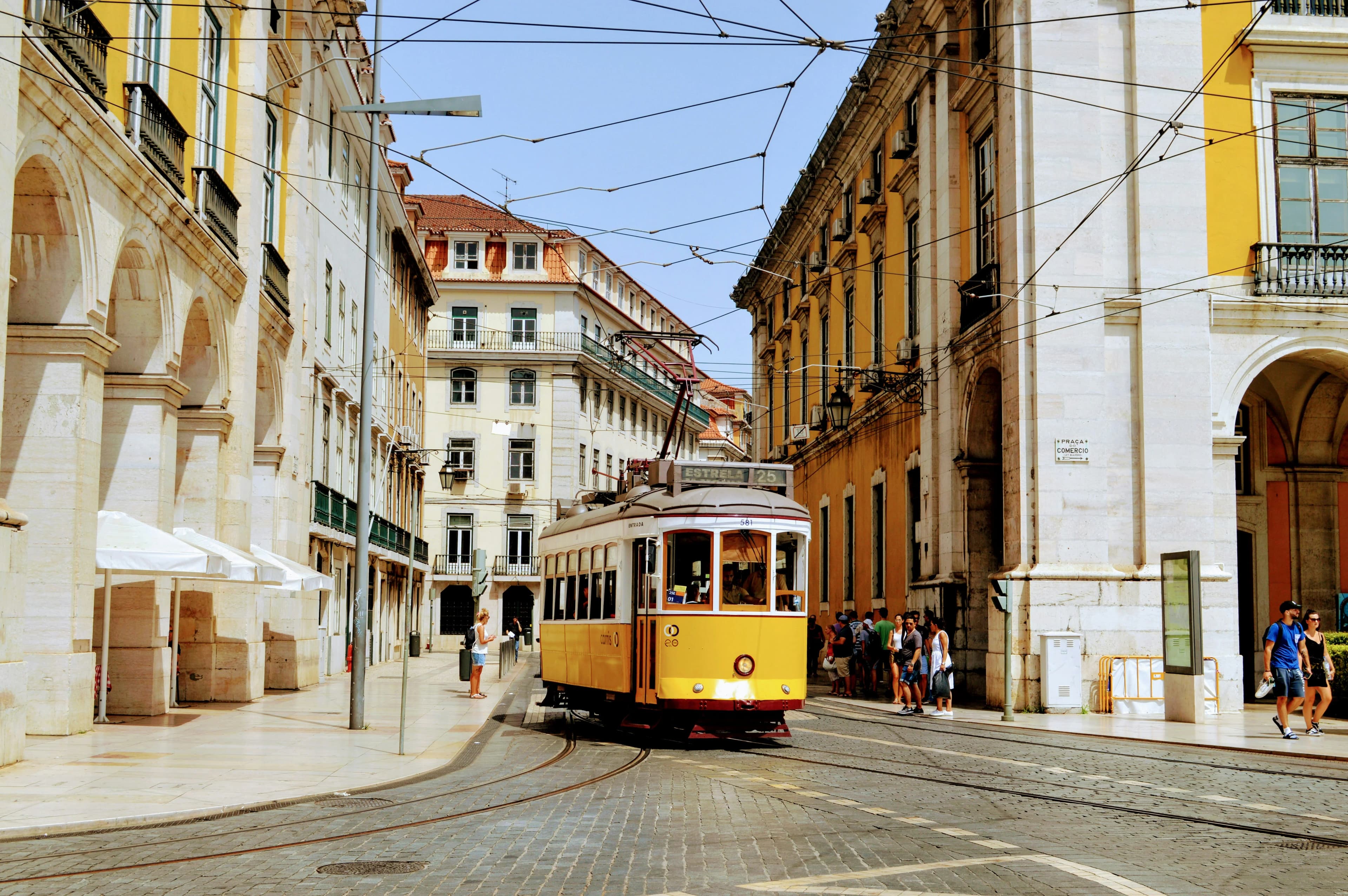
The Best Luxury Hotels in Lisbon and Their Finest Suites
Discover our selection of the most exceptional luxury suites in Lisbon. Explore historic Pombaline palaces, contemporary minimalism, and spectacular views of the Tagus River.
BY Jules Peulet