The distinct character of Cairo's luxury quarters
Zamalek and the Nile-facing addresses
Zamalek, an island district in the middle of the Nile, has long functioned as Cairo's most diplomatically significant residential neighbourhood. Its tree-lined streets, early twentieth-century villas, and relative quiet make it a preferred base for travelers who want proximity to the city without total immersion in its density. Hotels positioned along the Nile Corniche in this corridor offer suites with direct river orientation, a spatial and sensory advantage that fundamentally changes the quality of an overnight stay.
Giza and the Pyramids plateau
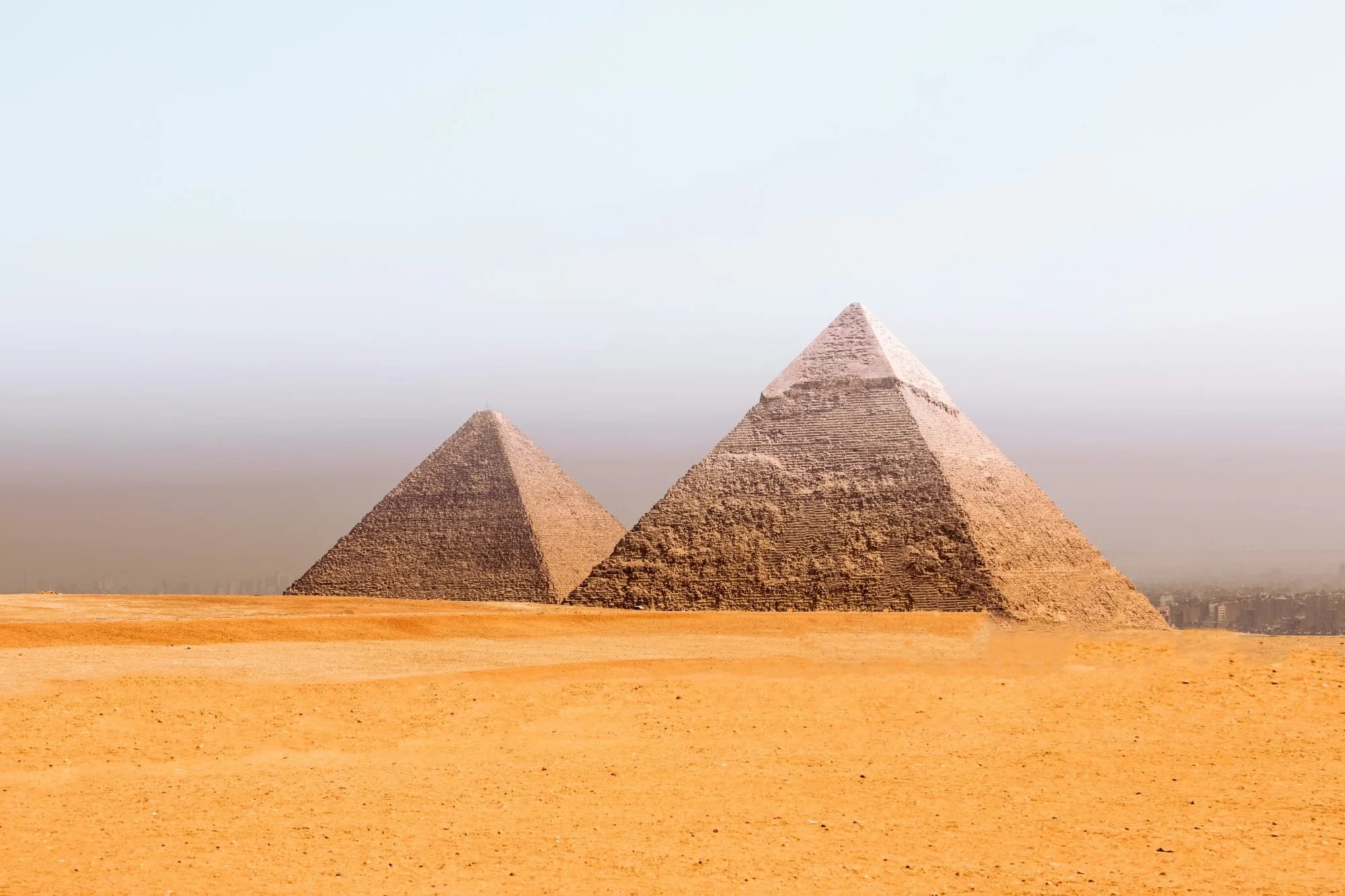
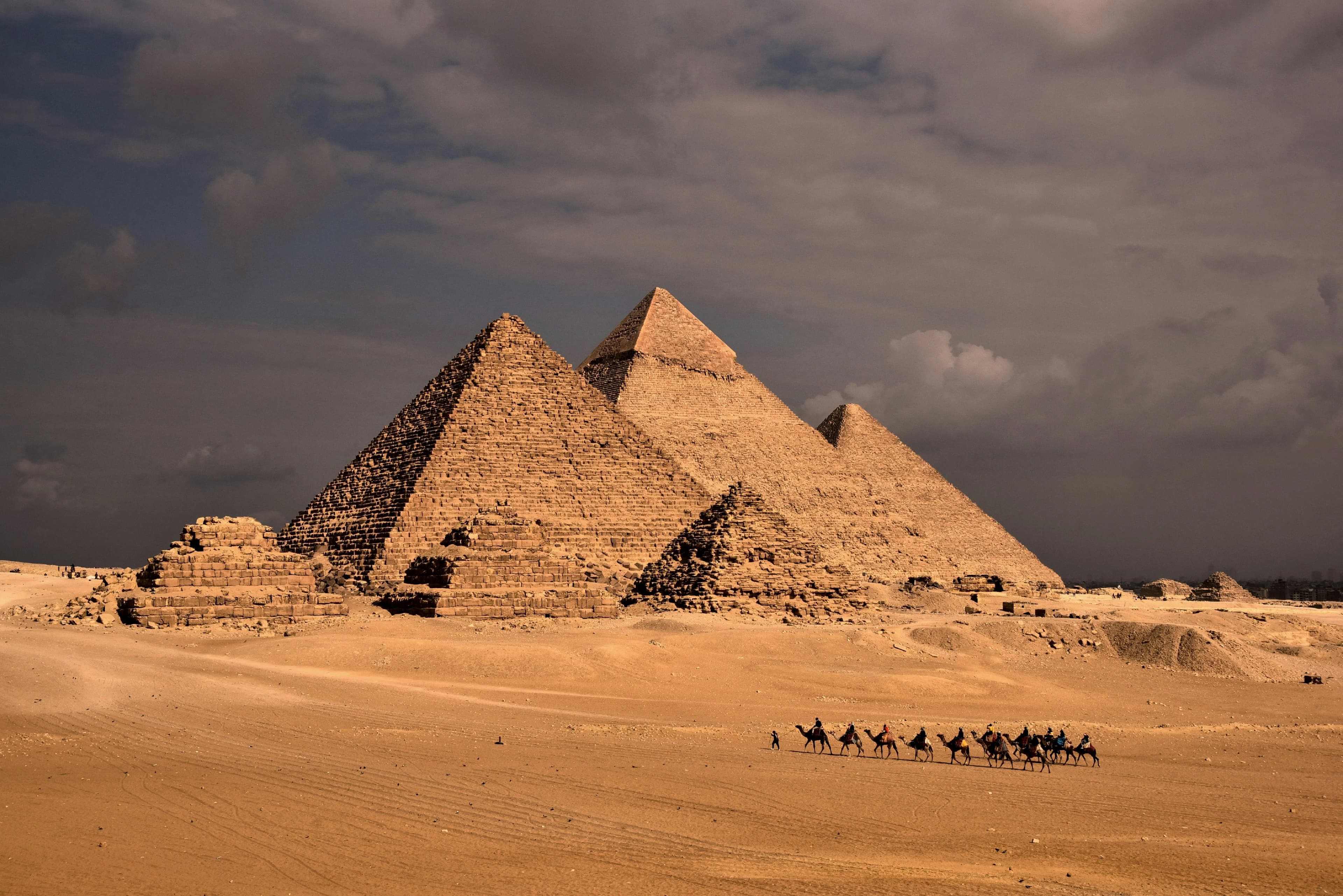
The area adjacent to the Giza Plateau represents one of the most architecturally specific luxury hotel environments anywhere in the world. A suite with an unobstructed view of the Pyramids of Khufu, Khafre, and Menkaure is not a decorative amenity. It is a verifiable geographic fact that places the traveler in direct visual dialogue with structures built over four and a half thousand years ago. Properties in this zone command their position seriously, and the best suites are oriented and designed to make that relationship the central feature of the room.
Downtown and Garden City
The historic downtown core, built largely during the nineteenth and early twentieth centuries under Khedive Ismail's modernization program, contains some of Cairo's most architecturally significant hotel buildings. Garden City, the residential quarter immediately south of downtown, borders the Nile and houses several historically prominent properties whose suites carry a specific period atmosphere: high ceilings, wide terraces, and a physical connection to the era when Cairo was one of the most cosmopolitan cities in the Mediterranean world.
When to visit Cairo for a suite stay
Cairo's climate imposes a clear logic on travel timing. The city sits at the edge of the Sahara, and summers are extreme: temperatures between June and August regularly exceed 38 degrees Celsius, making outdoor engagement difficult. The optimal window for a high-end visit runs from October through April, when temperatures are moderate, the light is clear, and the city's cultural and social life is at its most active.
The period between November and February represents the peak of the international luxury travel season in Egypt. Archaeological sites are accessible in reasonable comfort, the Nile is navigable for private excursions, and major cultural institutions, including the Grand Egyptian Museum near Giza, operate at full programming capacity. Ramadan, which moves through the calendar annually, transforms the city's rhythm in ways that experienced travelers often find compelling: the nights become intensely social, the food culture reaches a particular richness, and the atmosphere in the older quarters of the city carries a specific density that is unlike any other time of year. Suite availability tightens during this period, and advance planning is advisable.
Local luxury standards: what to expect from Cairo's top hotel suites
Egypt does not operate a formal national hotel classification system equivalent to the French Palace designation, but the international luxury tier in Cairo is anchored by properties affiliated with the major global groups, several of which have maintained a presence in the city for over a century. These are not interchangeable addresses. The oldest properties carry institutional histories: they have hosted heads of state, served as operational bases during significant political moments, and accumulated an architectural character that newer constructions cannot replicate.
At the suite level, Cairo's best rooms tend to operate in two registers. The first is the grand historic suite: large floor plans, period furniture, and a deliberate emphasis on continuity with the property's own history. The second is the contemporary luxury suite, typically found in newer towers along the Nile or in the New Cairo district, where the design language is international and the emphasis falls on technology, space, and panoramic views. Both have legitimate claims on the discerning traveler's attention, and the choice between them is a matter of what kind of experience the trip is meant to deliver.
Service standards at Cairo's top properties are high and distinctly formal. Butler service, private transfer coordination, and dedicated concierge access to archaeological sites, including timed entry to the Pyramids and the Egyptian Museum, are standard offerings at the suite level. For travelers planning to extend their stay into Egypt more broadly, these concierge networks are practically valuable: the logistics of moving between Cairo, Luxor, Aswan, and the Red Sea coast are complex, and a well-resourced hotel suite team makes the difference between an itinerary that works and one that does not.
How to choose the best suite in Cairo
The most consequential decision in selecting a Cairo suite is positional. View orientation matters here in a way that is specific to this city. A Nile-facing suite and a city-facing suite in the same property are fundamentally different experiences. Similarly, a Pyramid-view suite in Giza and a suite without that orientation are not comparable products despite sharing a price bracket. This distinction should be the first variable in any selection process.
The second consideration is the relationship between the property's age and the traveler's priorities. Historic properties in Garden City or on the Corniche offer spatial generosity and period character. Contemporary properties in the new districts offer different spatial efficiencies and a design vocabulary more aligned with international contemporary standards. Neither is superior in absolute terms. The question is fit.
A third consideration is practical: Cairo is a large city with significant traffic, and the distance between a suite's location and the sites or appointments that matter most to a trip should be factored into the decision. Giza is not adjacent to downtown. Islamic Cairo, with its medieval architecture and the Khan el-Khalili market, is geographically distinct from the Nile Corniche. Understanding the city's spatial logic before choosing a base is not a minor detail. For travelers also exploring the wider Africa region, Cairo often serves as an entry or exit point, making the choice of property and its proximity to Cairo International Airport a relevant logistical factor.
The value of a curated selection in Cairo
Cairo's hotel market contains a large number of properties across every category. At the top of that market, the options are fewer, but the differences between them are significant and not always visible from a standard booking interface. Suite-level offerings vary in orientation, floor plan, included services, and the specific access they provide to the city's most significant sites.
La Suite's approach to Cairo is the same as its approach to every destination it covers: the selection is not exhaustive. It is precise. Each property in the curated list has been assessed against a consistent set of criteria covering space, design integrity, service architecture, and experiential value. For a traveler allocating serious time and resources to a Cairo visit, that precision is not a convenience. It is the starting point for a trip that performs as intended. Explore the full La Suite selection for Egypt to identify the suite address that fits the specific character of your itinerary.