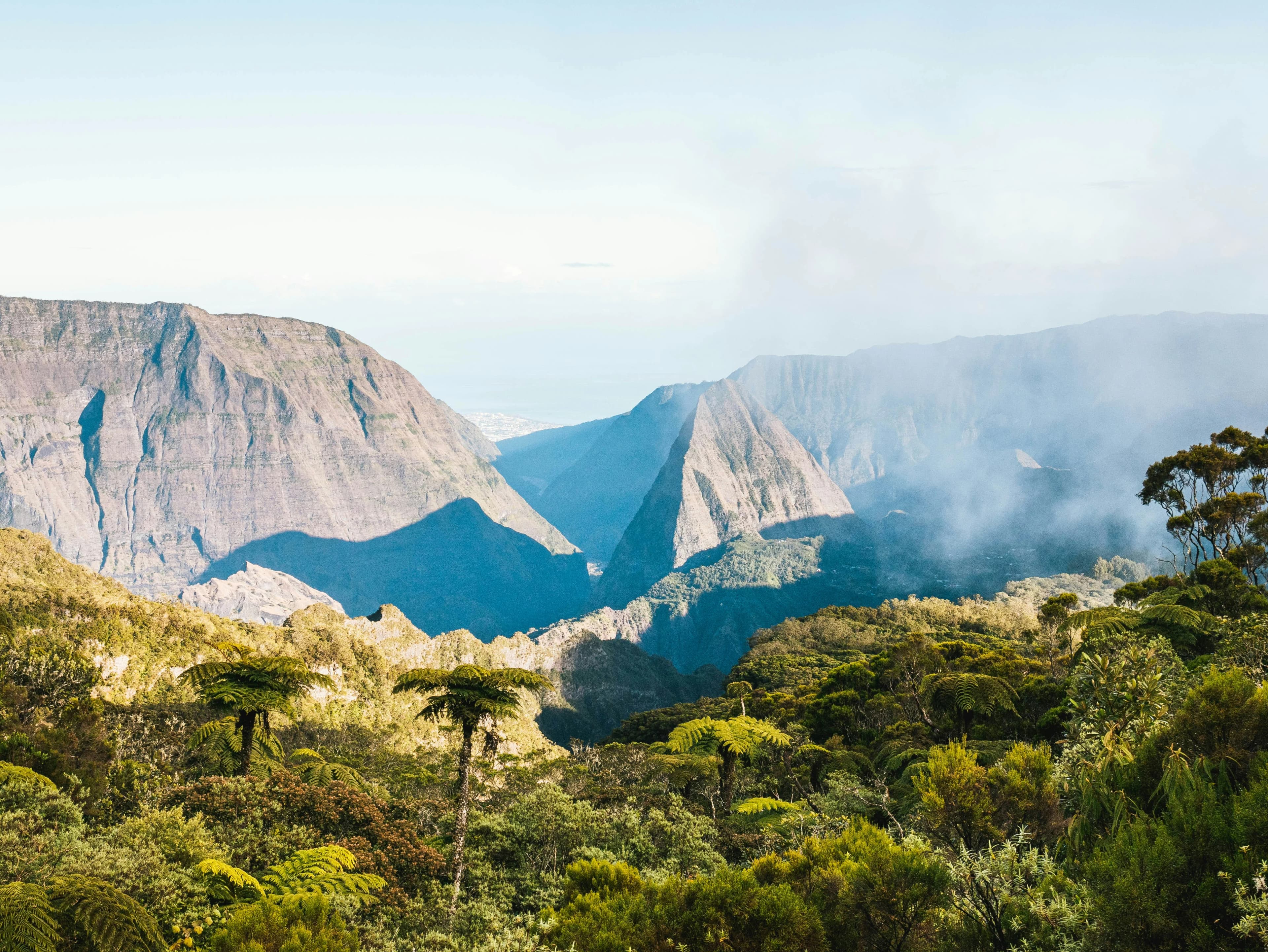
Saint-Paul and the western coast of Reunion Island
The town itself carries a different energy from the resort corridors further south near Saint-Gilles-les-Bains. Saint-Paul has administrative weight and genuine civic life. The weekly seafront market, one of the most authentic on the island, draws locals rather than tourist coaches. The colonial-era cemetery, partially claimed by the sea and home to the tomb of the pirate La Buse, adds a layer of historical strangeness that few tropical destinations can offer. Staying near Saint-Paul means engaging with Reunion on its own terms.
Best areas to stay around Saint-Paul
The bay and seafront
The linear seafront of Saint-Paul, shaded by filaos trees, offers a calm and local atmosphere. Properties positioned here give direct access to the market, the waterfront promenade, and the kind of unhurried morning that defines a certain style of island travel. The pace is deliberate. The scale is human.
The hillside interior and cirques access
Saint-Paul serves as a practical gateway toward the island's dramatic interior. The three cirques of Reunion, Mafate, Cilaos, and Salazie, are classified natural sites of exceptional geological character. A suite positioned in the elevated zones west of the coastal plain allows travelers to move between coast and highland within a single morning. This dual access is rare, and for the architecturally curious traveler, the contrast between volcanic plateau and Indian Ocean coastline is one of the defining experiences Africa and its island territories can offer.
Between Saint-Paul and Saint-Gilles
The corridor running south from Saint-Paul toward Saint-Gilles contains some of the most considered residential and hospitality development on the island. Properties here tend to combine contemporary Creole architecture with garden landscaping that takes the volcanic soil seriously. For travelers seeking a luxury hotel suite with refined design credentials and coastal proximity, this stretch rewards careful selection.
When to visit Saint-Paul
The western coast of Reunion Island benefits from a dry season running broadly from May through November. During these months, the trade winds ease, temperatures settle between 22 and 27 degrees Celsius, and rainfall is minimal. This is the period when a suite with an outdoor terrace or private pool earns its full value.
The austral summer, from December through March, brings heat, humidity, and the possibility of tropical cyclones. Reunion sits within an active cyclone zone. Travel during this period is not inadvisable, but it requires flexibility and a clear understanding of the meteorological context. Some of the island's most dramatic natural spectacles occur precisely during this season, including intensified activity at the Piton de la Fournaise volcano.
July and August represent peak season. Availability at the most sought-after properties contracts significantly, and advance planning becomes essential. The shoulder months of May, June, September, and October offer the most favorable balance of conditions, availability, and competitive rates.
Local luxury standards: what to expect from top-tier suites in Reunion
Reunion Island does not operate within the same luxury hotel taxonomy as metropolitan France or the Maldives. There is no official Palace designation here. The island's high-end hospitality landscape is shaped instead by a smaller number of boutique properties, owner-operated villas, and intimate hotels that draw on Creole architectural heritage, volcanic stone, hardwoods, and indoor-outdoor spatial logic.
The best suites in this context are defined less by square footage and more by their relationship to the landscape. A terrace that opens directly onto a lychee garden, a private plunge pool positioned to frame the volcanic ridge, a bathroom finished in local basalt: these are the markers of quality that matter here. International chain hotels exist on the island, but the most memorable experiences tend to come from properties that treat the Reunionese environment as the central design brief rather than a backdrop.
Creole cuisine is a genuine point of distinction. Any serious luxury property in this territory should be engaging with local ingredients: Bourbon vanilla, palm hearts, Cilaos lentils, and the seafood of the Indian Ocean. A suite stay that does not connect to this culinary context is missing something essential.
How to choose the best suite in Saint-Paul and Reunion Island
The first decision is elevation versus coast. Coastal suites offer proximity to the beach, watersports, and the seafront rhythm of daily Reunionese life. Elevated suites in the highlands or on the slopes above Saint-Paul provide cooler temperatures, extraordinary views, and a quieter sensory environment. Neither is objectively superior. The right choice depends entirely on how you intend to use the space.
The second consideration is architecture. Reunion's built heritage includes colonial Creole houses with covered verandas, volcanic stone construction, and contemporary villas that use the topography rather than flatten it. Travelers with a strong architectural sensibility will find the island's design register genuinely interesting. Properties that have made serious decisions about materiality and spatial arrangement tend to deliver more memorable stays than those that have defaulted to generic tropical luxury signifiers.
Privacy is a consistent priority for suite travelers. On a small island with significant residential density in the coastal zones, genuine seclusion requires deliberate selection. Properties with independent villa structures, private garden access, and discreet arrival sequences represent the upper tier.
Why curation matters in this destination
Reunion Island is not widely indexed by mainstream luxury travel platforms. The properties that perform best here are often not the ones with the largest marketing budgets. They are the ones operated by people who understand the island deeply and have made specific, uncompromising decisions about their product.
The curated selection by La Suite is built on direct knowledge of this territory and its hospitality landscape across Africa and the Indian Ocean. Rather than surfacing every available option, we identify the properties where the suite experience is genuinely distinctive: where the design, the service approach, and the relationship to the natural environment align. For a destination as specific and as rewarding as Saint-Paul and the western coast of Reunion Island, that kind of editorial filtering is not a convenience. It is the difference between a good trip and a defining one.