Understanding Dhaka as a luxury destination
The luxury hospitality sector in Dhaka has developed significantly over the past decade, driven by the growth of the garment and textile industries, which bring a steady stream of international buyers, executives, and diplomats. This business-travel infrastructure now serves the discerning leisure traveler equally well: full-service properties, attentive staff ratios, and suites designed for both productivity and recovery.
Best areas to stay in Dhaka
Gulshan and Banani
These two northern neighborhoods constitute Dhaka's diplomatic and corporate quarter. Wide, comparatively navigable roads, international restaurants, embassies, and the city's most reliable high-end hotel infrastructure are concentrated here. For travelers prioritizing comfort, security, and ease of movement, Gulshan and Banani represent the logical base. The Gulshan lake system offers a degree of visual calm that is rare in the broader urban fabric.
Uttara
Positioned closer to Hazrat Shahjalal International Airport, Uttara is a planned residential district that has attracted newer hotel development. It is the practical choice for travelers with tight layover schedules or those using Dhaka as a regional transit point. Suite quality here leans toward the functional and modern rather than the character-rich.
Motijheel and old Dhaka
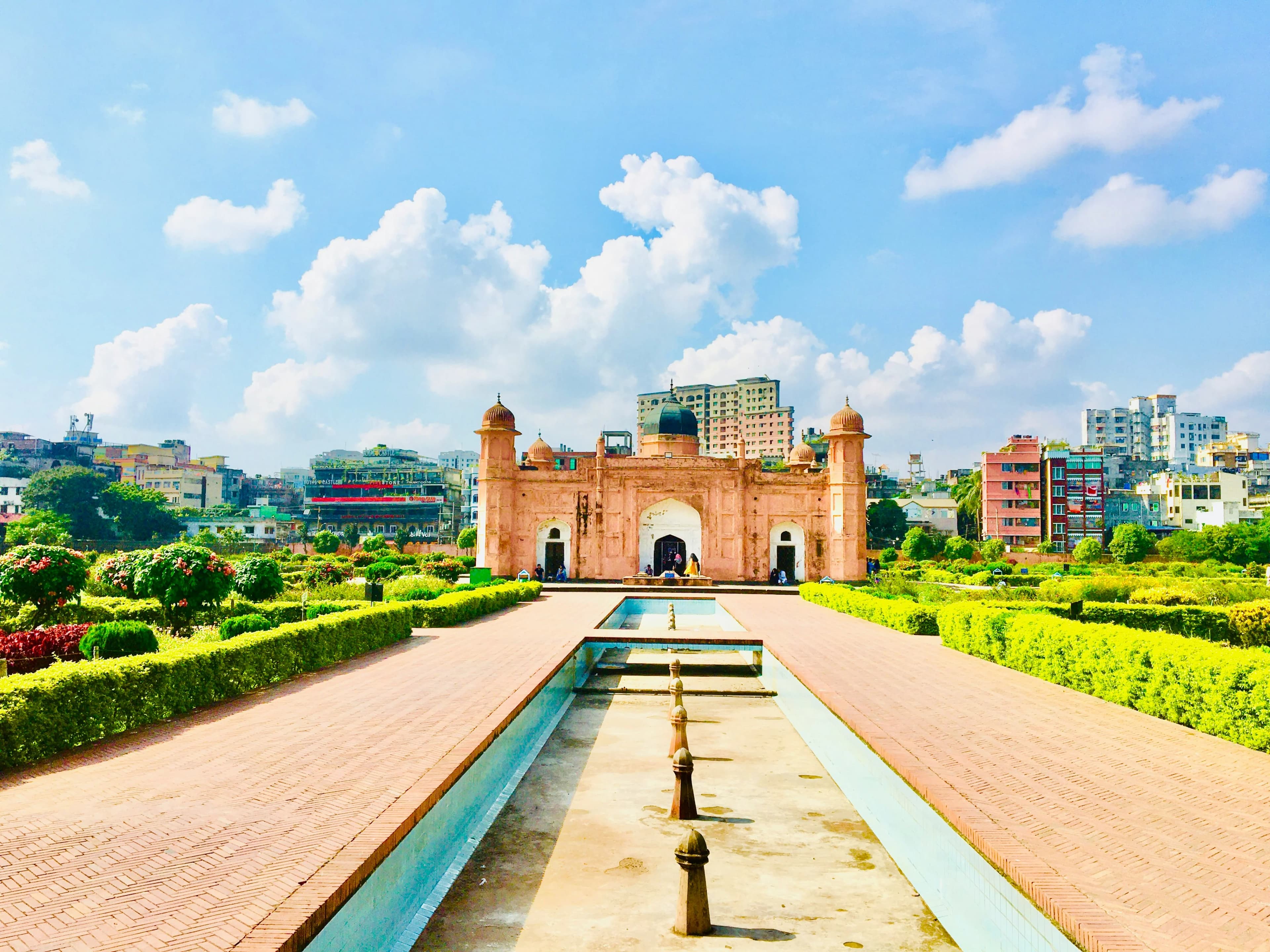
The historic commercial core and the labyrinthine lanes of old Dhaka sit to the south. This is where Mughal-era mosques, the Ahsan Manzil pink palace, and the concentrated chaos of the city's river trade are found. Luxury hotel infrastructure here is limited, but for travelers interested in the cultural and architectural record of the city, proximity to this area is worth weighing seriously against comfort trade-offs.
When to visit Dhaka for a suite stay
Bangladesh has a tropical monsoon climate. The optimal window for visiting Dhaka runs from November through February, when temperatures are moderate (typically between 15 and 25 degrees Celsius), humidity is lower, and the city's outdoor life is most accessible. This period coincides with the busiest business travel season, so advance planning for luxury hotel suites is advisable.
March through May brings a sharp rise in heat and humidity. The monsoon arrives in June and persists through September, bringing significant rainfall that affects road conditions across the city. October marks the transition back toward the dry season and can offer reasonable conditions with fewer international visitors competing for top-tier rooms.
There are no internationally recognized luxury travel events in Dhaka in the manner of, say, Art Basel or Paris Fashion Week. However, the Dhaka International Trade Fair (held annually in January) draws significant business footfall, and suite availability at premier properties can tighten during this period.
Local luxury standards: what to expect from a top suite in Dhaka
Bangladesh does not operate a formal hotel classification system equivalent to France's Palace designation or Thailand's star-grading framework. In practice, the upper tier of Dhaka's hotel market is defined by a handful of internationally affiliated five-star properties and a small number of independently operated boutique addresses.
At the suite level, expect spacious layouts designed with the business traveler in mind: separate living and dining areas, high-speed connectivity, and executive lounge access. Amenities such as dedicated butler service, in-suite dining from full kitchens, and spa access are available at the leading properties. The standard of hospitality in top Dhaka hotels is consistently noted by international visitors as a genuine differentiator: attentiveness is cultural, not performative.
Local cuisine, when presented at the suite level, can be a genuine highlight. Bengali food is one of South Asia's most distinct culinary traditions, built around river fish, mustard, and aromatic rice preparations. A property that curates this experience within its dining program is one worth prioritizing.
How to choose the right luxury suite in Dhaka
Several practical considerations shape the suite-selection process in Dhaka specifically.
First, location relative to your itinerary matters more here than in most capital cities. Traffic in Dhaka is among the most congested in the world. A suite in Gulshan that places you 20 minutes from your primary appointments is fundamentally different from one in Motijheel that places you 90 minutes away at peak hours. Build your base around your actual schedule.
Second, assess whether the property has reliable generator backup and water systems. Power interruptions, while less frequent at top-tier hotels than in the general city, are a real variable. Leading luxury hotels manage this seamlessly, but it is worth confirming independently.
Third, consider floor elevation and suite orientation. In a city without iconic skyline views, the appeal shifts toward interior design quality, courtyard outlooks, and pool-facing positions. Ask specifically about noise attenuation if the property sits adjacent to a major road.
Finally, check the property's ground transportation infrastructure. Top Dhaka hotels maintain dedicated vehicle fleets and can navigate the city's complex traffic patterns with driver knowledge that a general ride-hailing service cannot replicate.
Why curation matters when choosing a suite in Dhaka
Dhaka is not a destination where the luxury hotel market is self-evident to the outside observer. The gap between a property that markets itself as five-star and one that genuinely delivers at suite level can be significant. Review platforms aggregate opinions across all traveler types and all price points, making it difficult to extract a reliable signal for the discerning traveler.
La Suite approaches this differently. The curation process for Bangladesh is built on verified standards: spatial quality, service architecture, and the specific experience of staying in a suite rather than a standard room. The result is a selection that saves time and eliminates the risk of a misaligned stay in a city where the margin for error, given the logistical complexity, is low.
For travelers approaching Dhaka as part of a broader Asia itinerary, the curated selection by La Suite ensures that each property anchor along the route meets the same consistent threshold, regardless of how developed the local luxury market happens to be.