CHONGQING MANQUE MANSION, Chongqing
CHONGQING MANQUE MANSION features a garden, terrace, a restaurant and bar in Chongqing. The property is located 2.6 miles from Chongqing University of Posts and Telecommunications, 3 miles from Luohan

Chongqing is frequently misread by international travelers. Often categorized alongside China's more visited cities, it operates on its own logic: a direct-controlled municipality covering terrain equivalent to a small country, with a population and density that make it one of the most complex urban environments in the world. Its culinary identity, centered on Sichuan peppercorn and a distinctive hot pot tradition, is among the most regionally specific in China. Its architecture ranges from elevated bridges and cable cars threading between residential towers to carefully restored historic districts along the riverbanks. For the luxury traveler, this complexity is the draw.
6 hotels available

CHONGQING MANQUE MANSION features a garden, terrace, a restaurant and bar in Chongqing. The property is located 2.6 miles from Chongqing University of Posts and Telecommunications, 3 miles from Luohan

Located in Chongqing and with People's Liberation Monument reachable within 3.6 miles, Conrad Chongqing has concierge services, non-smoking rooms, a fitness center, free WiFi and a restaurant. Offerin

Located in Chongqing, a few steps from Chaotianmen Square, InterContinental Chongqing Raffles City by IHG has accommodations with a fitness center, free private parking, a terrace and a restaurant. Fe

Well situated in the center of Chongqing, The Lixury Hotel, in The Unbound Collection by Hyatt - Liberation Square has air-conditioned rooms, a fitness center and a restaurant. Featuring a bar, the ho

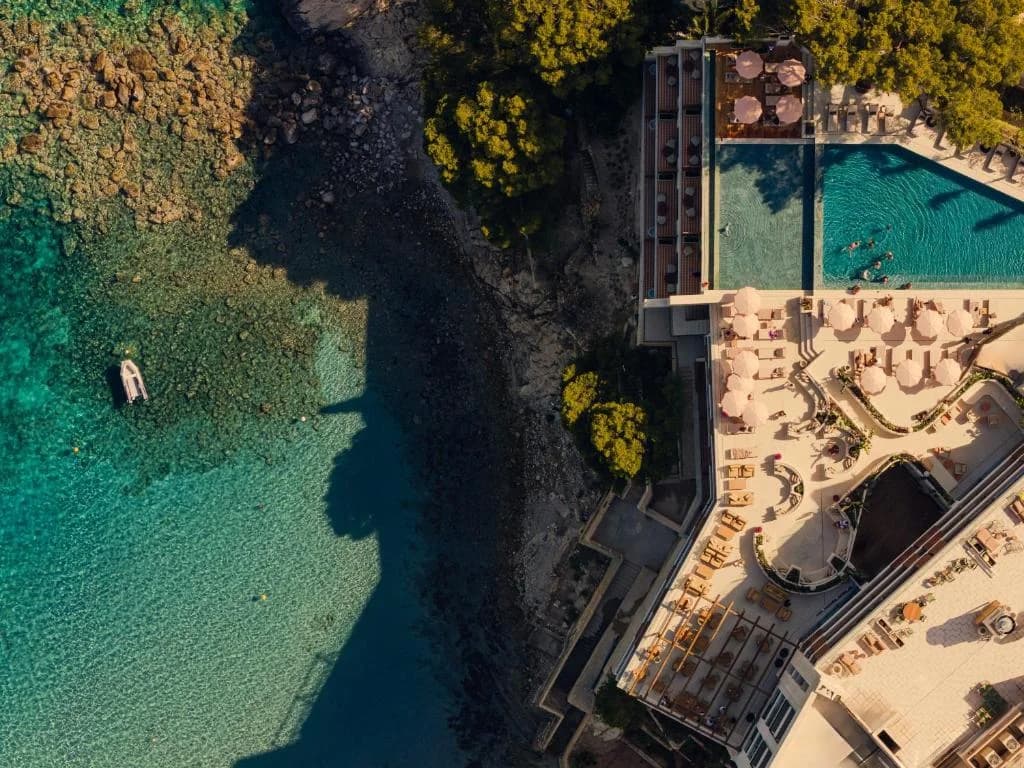
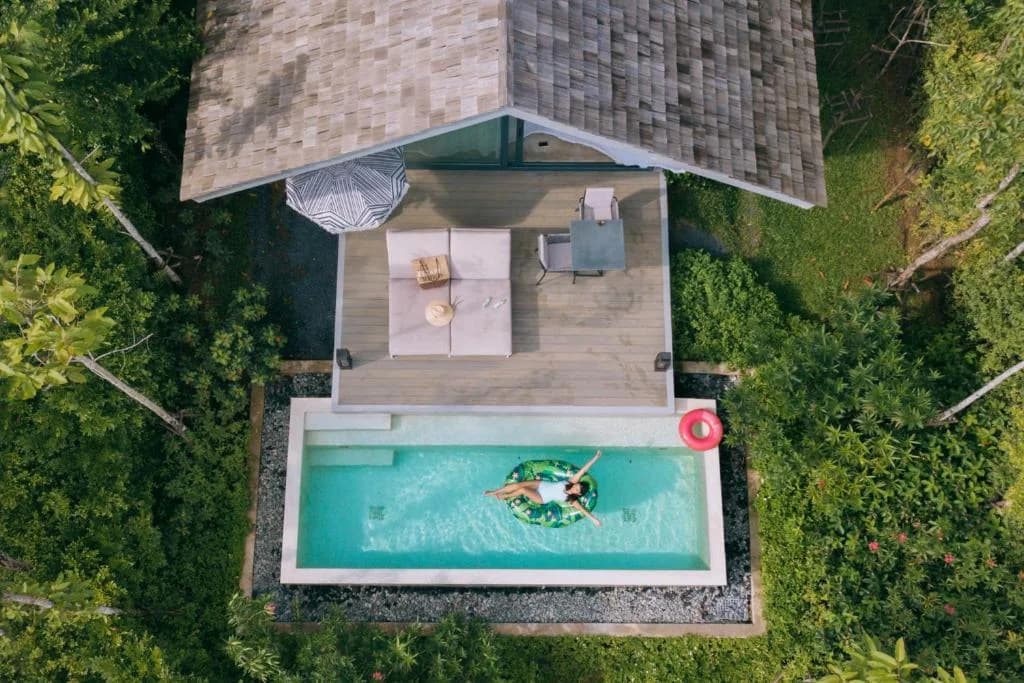
Xanadu.chongchongshan has a shared lounge, terrace, a restaurant and bar in Chongqing. The property features a year-round outdoor pool, sauna, hot tub and garden. The private bathroom is equipped wit
Ideally set in Chongqing, 重庆溯山1946度假酒店 has air-conditioned rooms, a garden, free WiFi and a terrace. The property has a snack bar, as well as a restaurant serving Chinese cuisine. The property provide
The central business district surrounding Liberation Monument represents Chongqing's commercial and cultural core. Luxury hotels here position guests within walking distance of the Hongyadong stilt house complex, high-end retail, and the elevated walkways that define the city's pedestrian experience. Suites at this elevation capture panoramic views across the river confluence and the illuminated skyline after dark, which in Chongqing is considerable in its scale.
Across the Yangtze, the south bank offers a different perspective on the city. Nanbin Road runs along the riverfront, lined with restaurants and lit by the northern skyline. Properties here provide a visual remove from the density of the central peninsula, with direct views of the towers and bridge structures that define Chongqing's silhouette. For travelers prioritizing views and relative quiet, this corridor is architecturally coherent and well-served by high-end dining.
The hillside areas around Eling Park and the upper districts of the city retain a slower pace. Historic architecture, including early twentieth-century buildings from Chongqing's wartime capital period, coexists with newer boutique properties. This part of the city suits travelers who want proximity to cultural sites, including the Great Hall of the People and former diplomatic residences, without the commercial density of the central district.
Chongqing's climate is distinctive and worth planning around. The city is frequently overcast and humid, earning the informal designation of one of China's four furnace cities during summer. July and August bring intense heat and high humidity, conditions that make the controlled environment of a well-appointed suite considerably more relevant than in temperate destinations.
The optimal windows for visiting are spring, from March to May, and autumn, from September to November. During these months, temperatures are moderate, fog is present but manageable, and the city's outdoor spaces, including river cruises along the Yangtze, are at their most accessible. The Chinese National Golden Week holiday in early October brings significant domestic tourism; travelers seeking privacy and availability should plan outside this window or book well in advance.
Winter in Chongqing is mild by northern Chinese standards and the persistent fog creates a particular atmospheric quality that many find architecturally compelling. This is a less conventional time to visit but suits the traveler who prefers reduced crowds and a more contemplative experience of the city.
China's luxury hotel classification system operates alongside international brand standards. The national five-star designation (五星级酒店) provides a baseline, but in Chongqing, as in other major Chinese cities, the most relevant properties are those operated under internationally recognized flags with global service standards, or independent properties that have made a deliberate design and service investment.
Suites in Chongqing's top-tier properties typically emphasize panoramic views as a primary feature, given the dramatic topography. Floor-to-ceiling glazing oriented toward the river confluence or the night skyline is a common architectural decision. Spatial generosity tends to be considerable, reflecting Chinese luxury hospitality norms where scale is part of the proposition. Dining within these properties often integrates local culinary traditions at a refined level, with access to serious Sichuan cuisine as a cultural baseline rather than an afterthought.
Travelers should also expect strong in-room technology infrastructure and attentive butler or concierge services oriented toward both international and domestic business guests, as Chongqing remains a significant commercial hub for western China.
The primary consideration when selecting a luxury suite in Chongqing is orientation. The city's topography means that the view from any given room changes significantly depending on which direction it faces and at what elevation it sits. River-facing suites at height capture the full breadth of the Yangtze bend; city-facing suites reveal the layered density of the urban form. Both are architecturally valid choices, but they offer fundamentally different experiences.
A second consideration is access to the city's culinary culture. Chongqing hot pot is a defining experience and ranges from highly casual to carefully staged. Proximity to respected local establishments, or properties with serious in-house Sichuan programs, is worth prioritizing. Finally, travelers arriving primarily via international connections should note that Chongqing Jiangbei International Airport serves as a major western China hub, and transfer time to central properties varies meaningfully depending on traffic and district.
Chongqing's hotel market reflects the city's rapid development: a large volume of properties has opened across the city in the past two decades, ranging from internationally recognized luxury brands to locally operated five-star establishments with variable service standards. Navigating this landscape without local or specialist knowledge is time-consuming and carries meaningful risk of misalignment between expectation and experience.
La Suite applies a consistent editorial framework to identify which properties in Chongqing genuinely deliver on the suite experience: spatial quality, view orientation, service calibration, and access to the city's cultural offer. The curated selection by La Suite is designed to remove ambiguity and ensure that the traveler's first decision, which property to choose, is also the right one.

Chongqing offers a combination of dramatic river topography, a distinctive culinary culture rooted in Sichuan tradition, and a layered urban form that rewards exploratory stays. It is one of China's most architecturally complex cities, with a scale and visual character that set it apart from more frequently visited destinations. For the luxury traveler, it represents a less conventional but highly rewarding choice in the Chinese interior.
Spring, from March to May, and autumn, from September to November, offer the most comfortable conditions for visiting Chongqing. Summer is extremely humid and hot, which makes the controlled environment of a suite more valuable but the outdoor city less accessible. Travelers should avoid the Chinese National Golden Week in early October if privacy and suite availability are priorities.
Chongqing's top-tier suites tend to emphasize topographic drama, with view orientation toward the Yangtze and Jialing river confluence as a primary feature. The market is less international in its visitor composition than Beijing or Shanghai, and properties here cater substantially to a high-end domestic Chinese clientele. Service standards at internationally flagged properties are broadly comparable, while the cultural and culinary offer is distinctly more regional in character.
The Jiefangbei central peninsula offers immediate access to cultural landmarks and elevated city views. The south bank along Nanbin Road provides a quieter position with panoramic views back toward the skyline. The Eling hillside district suits travelers interested in historic architecture and a slower pace. Each area has a distinct spatial logic, and the choice depends on whether the traveler prioritizes access, views, or cultural proximity.
Chongqing Jiangbei International Airport is one of the major aviation hubs in western China, with direct connections to a number of Asian cities and an increasing number of long-haul routes. Transit from the airport to central districts takes between 30 and 60 minutes depending on traffic. The city also connects to the national high-speed rail network, making it accessible from other major Chinese cities for travelers combining Chongqing with broader itineraries.
Chongqing is the origin point of one of China's most recognizable culinary traditions, centered on its distinctive hot pot style, which uses Sichuan peppercorn and chili oil at a level of intensity specific to the region. Top-tier luxury hotels typically offer in-house Sichuan dining programs alongside international options. Outside the hotel, the city has a dense restaurant culture ranging from neighborhood institutions to carefully curated modern interpretations of local cuisine.
View orientation is the most significant architectural variable in Chongqing: suites facing the river confluence offer a different experience from those facing the city skyline, and elevation plays a meaningful role in what is visible. Service language capacity, proximity to cultural sites, and the quality of the in-house culinary program are also relevant selection criteria. A specialist curation platform provides clearer comparison across these variables than general booking channels.
Chongqing has a well-documented reputation for persistent fog and overcast conditions, particularly in winter and early spring. At high elevations, suites can occasionally sit within or above the fog layer, which creates a specific atmospheric quality rather than simply obscuring views. This is a feature that some travelers find compelling rather than limiting, particularly those drawn to the city's more contemplative character. Planning around seasonal patterns helps manage expectations.
Chongqing has seen significant luxury hotel development over the past two decades, driven by its status as a major commercial and logistics hub for western China. International hotel groups have established a presence alongside locally operated five-star properties. The result is a broad market with variable standards, where the distinction between properties that genuinely deliver a suite experience and those that offer scale without service depth is not always visible from standard booking platforms.
Yes. Chongqing is the traditional departure point for Yangtze River cruises toward the Three Gorges, making it a logical base for travelers combining a city stay with river travel. Several high-end cruise operators depart from the city, and the combination of a suite base in Chongqing with a curated river itinerary is a coherent luxury travel structure for the region. The city's transport connectivity also supports extensions to Chengdu and other Sichuan destinations.