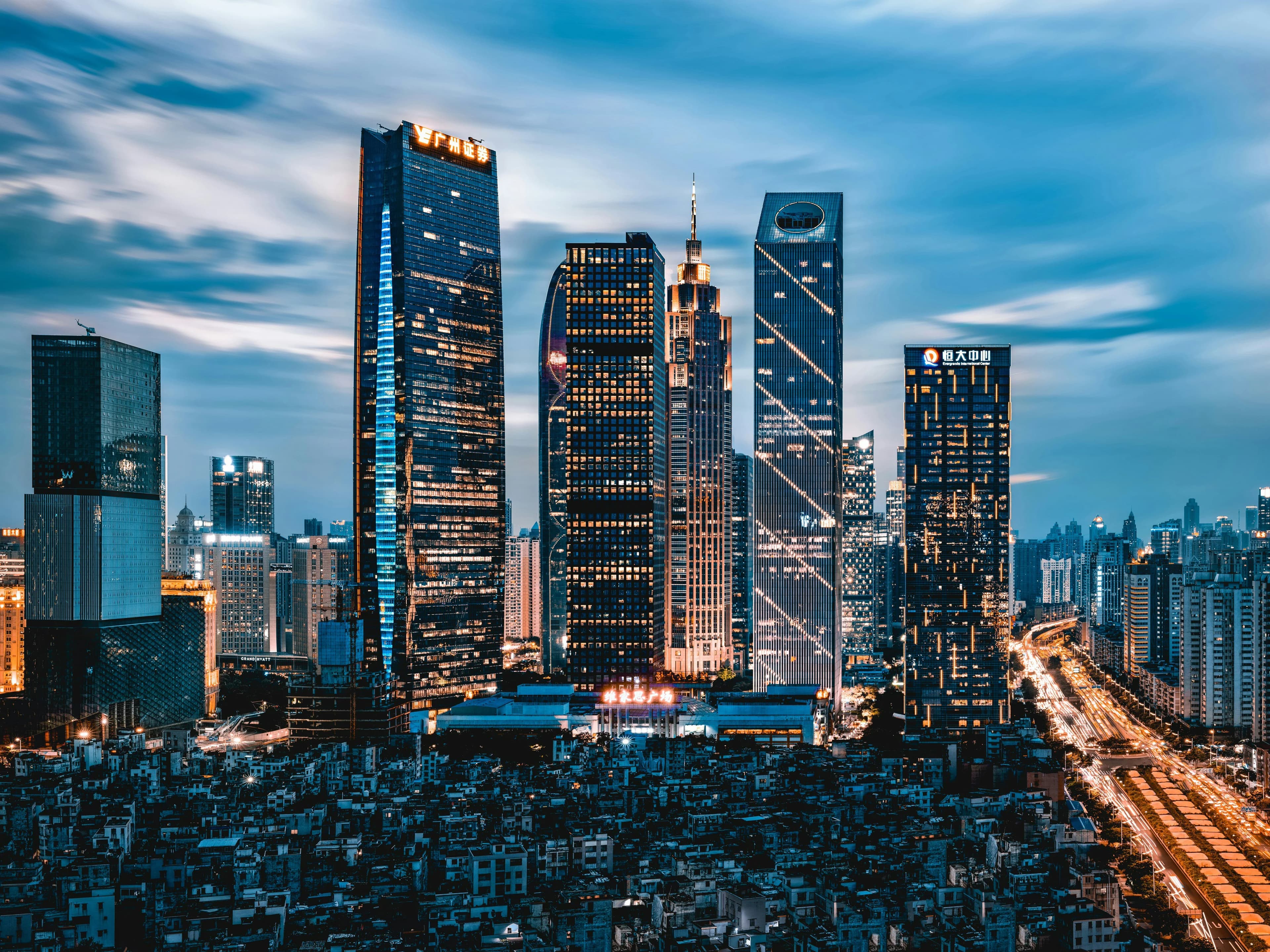
Understanding Canton as a luxury destination
The luxury hotel market in Canton reflects this duality. International brands operate flagship properties alongside locally rooted establishments that draw from Cantonese aesthetic sensibilities. Suites in the upper tier of this market tend to be architecturally considered, often positioned for views of the Pearl River or the Guangzhou International Finance Centre skyline. Space, privacy, and design coherence are the operative standards.
Best areas to stay in Canton
Zhujiang New Town
This planned central business district represents the city's most concentrated statement of contemporary ambition. The Guangzhou Opera House, designed by Zaha Hadid, anchors the cultural axis, while the surrounding towers house the headquarters of major financial institutions. Luxury hotels in this district position guests within immediate proximity to both corporate infrastructure and cultural landmarks. Suite views here tend toward the panoramic, with the Pearl River and the Canton Tower framing the horizon.
Tianhe district
Tianhe functions as the commercial and retail spine of modern Canton. It is denser and more kinetic than Zhujiang New Town, with a concentration of high-end shopping, dining, and corporate activity. Properties here serve a traveler who values immediate access to the city's commercial metabolism. The scale of development in Tianhe means that upper-floor suites offer genuine vertical separation from street-level activity.
Shamian Island and Liwan district
For travelers drawn to historical texture, Shamian Island preserves a compact urban fabric of colonial-era architecture, a legacy of Canton's role as the primary port of entry for European trade from the 16th century onward. The Liwan district adjacent to it contains some of the city's most intact traditional Cantonese streetscapes. Luxury accommodation in this zone is more limited, but properties that do occupy this area offer a quieter, more architecturally layered experience.
Haizhu and the Pearl River corridor
The Pearl River waterfront has become an increasingly curated zone, with urban renewal projects creating riverside promenades and cultural venues. Properties positioned along this corridor offer a sensory contrast to the inland districts: the river imposes a natural scale on the cityscape that reduces the density characteristic of Canton's interior neighborhoods.
When to visit Canton
Canton's climate is subtropical, which shapes the visitor calendar considerably. The period between October and March represents the most comfortable window for extended stays. Temperatures are moderate, humidity drops to manageable levels, and the city operates at a pace that rewards deliberate exploration. Spring, from March to May, brings warmer temperatures before the summer monsoon season arrives.
The Canton Fair, formally the China Import and Export Fair, is held twice annually in April and October. It is one of the largest trade fairs in the world, drawing hundreds of thousands of buyers and exhibitors from across global industries. During these periods, luxury hotel inventory tightens considerably, and advance planning becomes essential for securing upper-tier suites. Travelers arriving outside the Canton Fair windows will find rates more favorable and the city's high-end accommodation more accessible.
The Guangzhou International Light Festival, held in winter, transforms key landmarks and public spaces into large-scale light installations. It has become a significant cultural calendar event that draws regional visitors and reflects the city's investment in public art programming.
Local luxury standards in Canton
China does not operate a designation equivalent to France's Palace label, but the domestic hotel classification system, combined with the operational standards of international luxury brands, establishes a clear hierarchy. Five-star properties in Canton, particularly those operated under internationally recognized luxury brands, maintain service protocols and physical plant standards that are consistent with global benchmarks.
Cantonese hospitality carries specific cultural inflections. Dim sum, the morning and midday tradition of small shared dishes, is treated with seriousness in Canton as its city of origin. Breakfast service in high-end properties often reflects this: a considered dim sum program is a marker of a property that understands its context. Similarly, Cantonese cuisine at the top end is precise, ingredient-focused, and restrained in its use of heavy seasoning, which contrasts with the bolder flavor profiles found elsewhere in China.
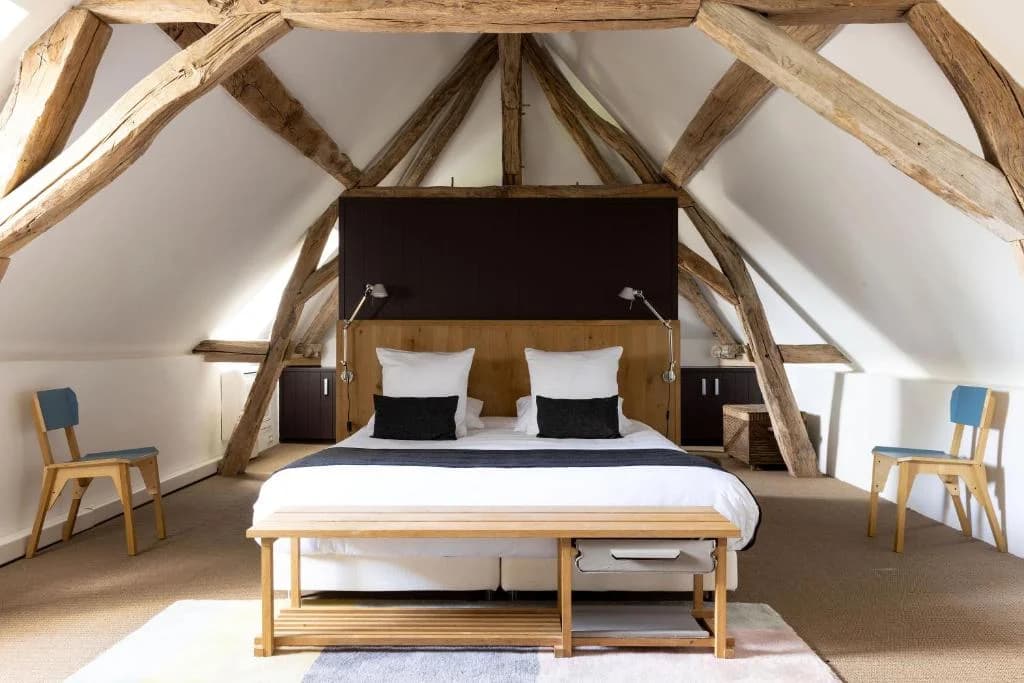
Suite configurations in Canton's leading hotels tend toward generous square footage, reflecting both the international business traveler's expectation of functional workspace and the broader Chinese hospitality norm of spatial generosity for premium guests. Living areas, separate dining spaces, and private terraces are common features in upper-category suites.
How to choose the best luxury suite in Canton
The primary decision axis for suite selection in Canton is architectural context. The city presents two distinct registers: contemporary high-rise properties in Zhujiang New Town and Tianhe, and the smaller-scale, historically inflected options near Shamian Island and Liwan. These are not interchangeable experiences. A traveler arriving for business or corporate engagement will find the former category more operationally convenient. A traveler whose interest is in Canton's historical identity as a trade and cultural capital will find the latter more resonant.
Floor level matters in a city with Canton's density. The difference between a mid-floor suite and an upper-floor suite in a tower property can be significant in terms of light, noise insulation, and the quality of river or skyline views. In properties positioned along the Pearl River, suite orientation is worth examining carefully: east-facing rooms capture morning light and the river's morning character, while west-facing rooms offer evening views over the urban mass.
Connectivity is a practical consideration that affects the experience materially. Canton is served by Guangzhou Baiyun International Airport, one of the busiest in China, and by Guangzhou South Railway Station, a major hub on the national high-speed rail network. Proximity to these transit nodes, or the quality of a property's transfer logistics, is a legitimate factor in suite selection for travelers managing complex itineraries.
The value of curation in Canton's luxury market
Canton's hotel market is large and varied. The city hosts dozens of five-star properties, and the gap between a technically classified luxury hotel and a genuinely considered luxury suite experience is wider than the star rating implies. Factors including suite design coherence, the quality of in-room materials, the ratio of staff to guests, and the property's relationship to its immediate urban context all determine whether a stay is transactional or genuinely restorative.
La Suite applies a curation framework built on these distinctions. The selection process prioritizes properties where the suite itself functions as a spatial and experiential argument, not merely as an enlarged standard room. In a city as commercially dense as Canton, that kind of editorial filtering has real value. It removes the noise from the decision and presents only the properties where the investment in a suite translates directly into a higher quality of presence in the city.