Suzhou and its place in Chinese luxury travel
The city's reputation for craft is inseparable from its character. Suzhou silk, recognised for centuries as among the finest produced anywhere in China, and Suzhou embroidery, a tradition requiring years of apprenticeship, establish a material culture that influences the better properties here in tangible ways: room textiles, decorative screens, and architectural detailing that reference the local craft vocabulary rather than generic five-star conventions.
For travellers exploring China with a focus on cultural immersion and spatial quality, Suzhou represents one of the most coherent luxury destinations on the mainland. It belongs to a broader Asia circuit that prizes historical depth alongside modern comfort.
Best areas to stay in Suzhou
The classical garden district
The historic centre, anchored by gardens such as the Humble Administrator's Garden and the Lingering Garden, is the natural base for travellers whose primary interest lies in classical Chinese landscape architecture. Properties positioned here allow guests to enter the gardens at opening or remain after peak hours, when the quality of light and the relative quiet of the spaces reveal their full compositional logic. Accommodation in this zone tends toward restored courtyard structures or buildings that engage directly with the garden aesthetic through internal water features, planted courtyards, and layered spatial sequences.
Suzhou Industrial Park and Jinji Lake
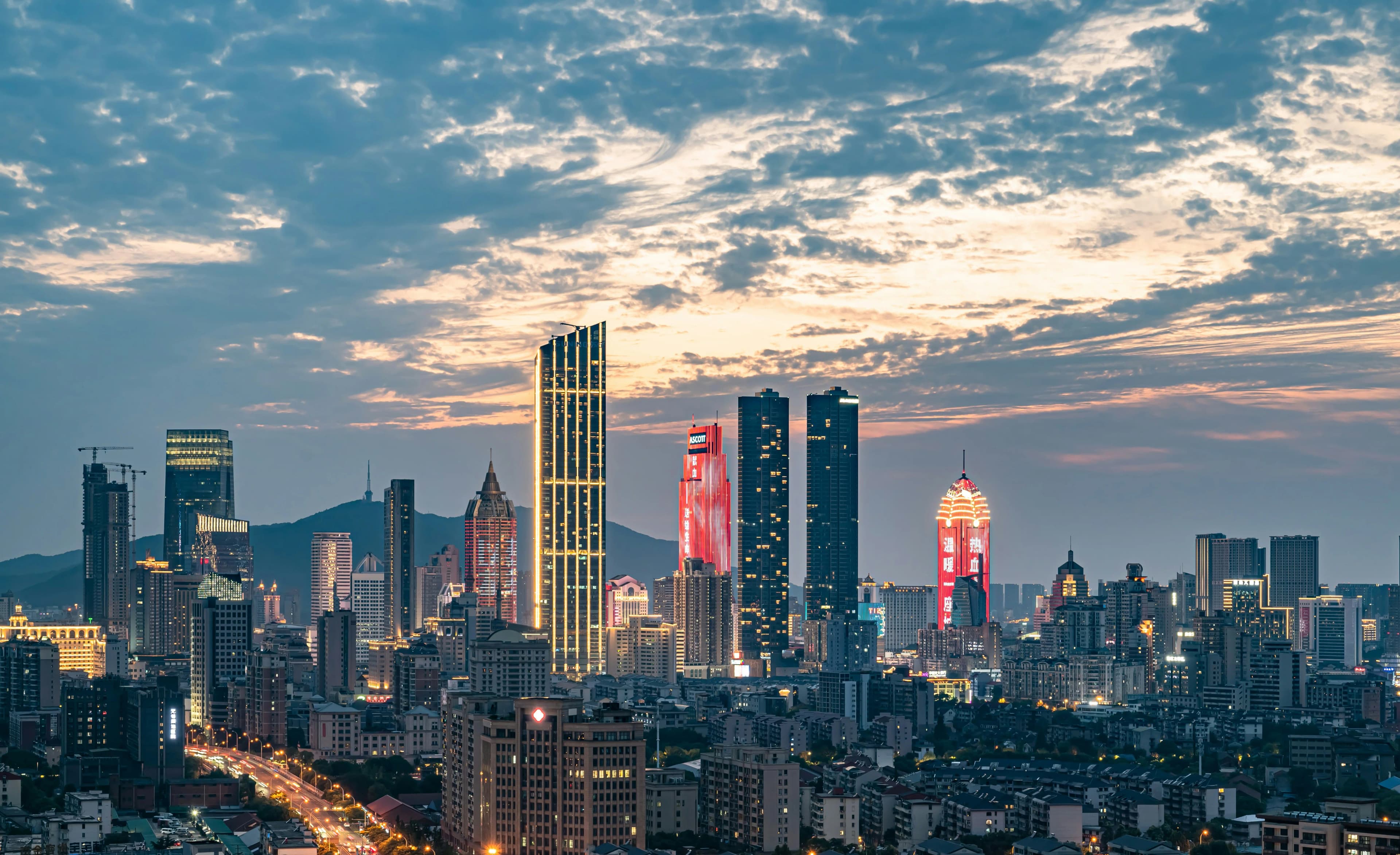
To the east of the old city, the Suzhou Industrial Park district, developed from the 1990s onward in a joint venture between Chinese and Singaporean authorities, presents a different residential and hospitality character entirely. Jinji Lake, at its centre, hosts a number of the city's most architecturally contemporary properties, with lake-facing suite configurations, large-format glazing, and amenity programming oriented toward the business and international leisure traveller. The contrast with the garden district is complete and intentional: both have a coherent logic, and the choice between them defines the character of the entire stay.
Tongli and the water towns periphery
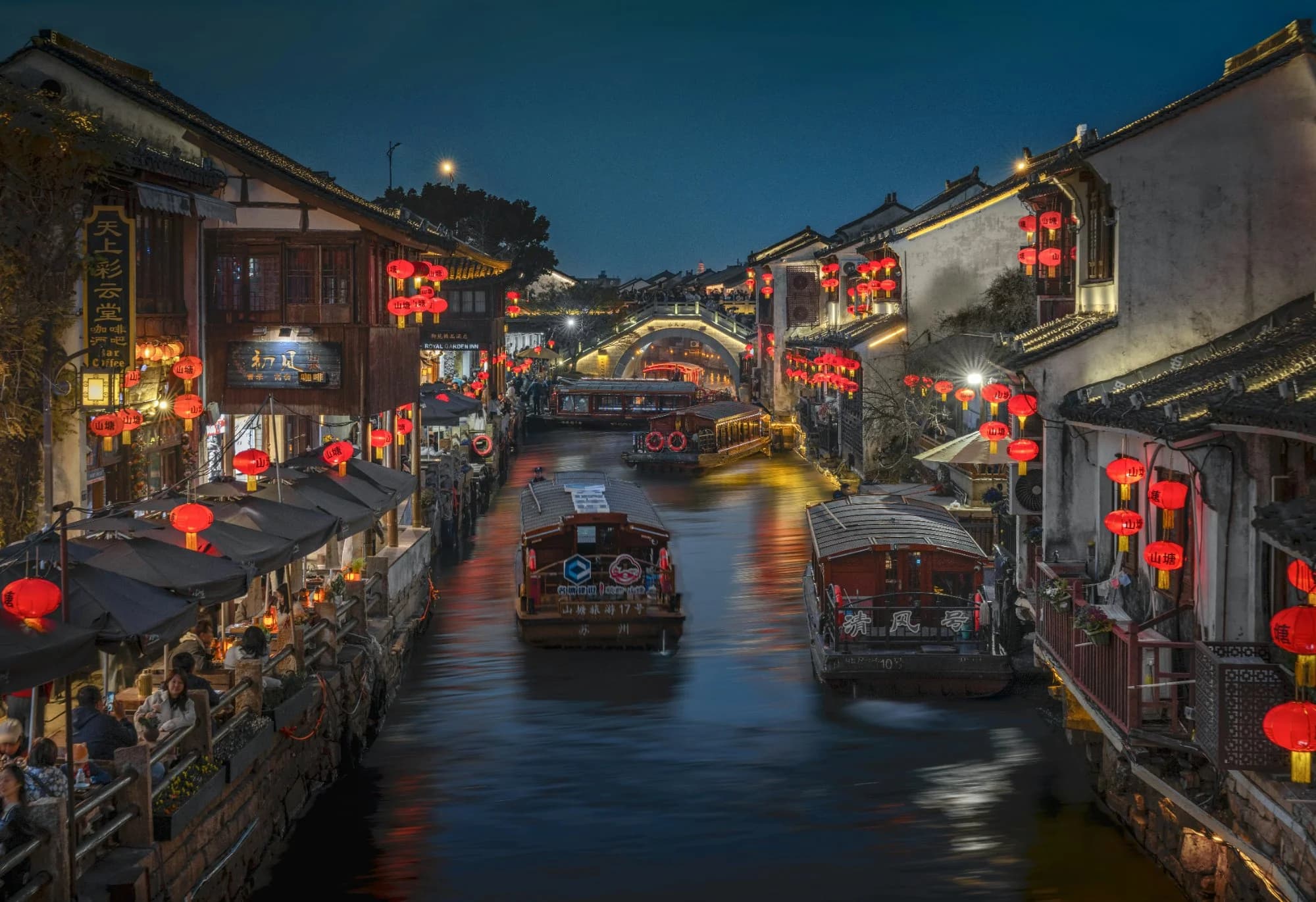
The broader Suzhou prefecture incorporates several canal towns of significant cultural interest, including Tongli, Zhouzhuang, and Xitang. Boutique properties in these settings offer a more isolated experience, with accommodation often occupying restored Ming or Qing dynasty merchant houses set directly above the waterways. These are not conventional luxury hotel environments, but they offer spatial and historical conditions that more standardised properties cannot replicate.
When to visit Suzhou for a suite stay
Suzhou's climate follows a pattern common to the Yangtze Delta: humid subtropical, with four distinct seasons. Spring, running from late March through May, is widely considered the optimal period: temperatures are moderate, the garden plantings reach peak condition, and the city's cultural calendar is active. Autumn, from October through mid-November, offers comparable conditions with the addition of autumn foliage in the garden interiors.
Summer (June through August) brings sustained heat and high humidity alongside the plum rain season in June and early July, when rainfall can be persistent. Winter is mild by northern Chinese standards but can feel damp and grey. Suite availability is generally strong outside the Golden Week holidays in early October and early May, when domestic tourism peaks sharply and rates reflect that demand. Travellers with flexibility are advised to avoid these windows unless reservations are made well in advance.
Local luxury standards: what to expect from top-tier suites in Suzhou
Suzhou does not have a formal prestige classification equivalent to the French Palace designation, but the Chinese five-star hotel standard (administered under the national tourism grading system) provides a baseline. The properties that consistently perform above this baseline in Suzhou tend to share several characteristics: meaningful engagement with the city's garden and craft heritage in their spatial design, suite configurations that prioritise natural light and interior garden or water views, and service models drawn from the classical Chinese hospitality tradition of attentiveness without intrusiveness.
In practice, the finest suites in Suzhou will often feature private courtyard access, Suzhou embroidery or silk textile detailing in soft furnishings, and bath configurations that reference the classical Chinese bathing tradition. Spatial generosity is standard at this tier: suite footprints tend to be substantial, and the separation between living and sleeping functions is carefully maintained.
The city's position as a historically significant cultural centre also means that several properties have invested in on-site cultural programming: private garden tours, silk weaving demonstrations, and access to conservation workshops are offered by the better addresses as extensions of the guest experience rather than as scheduled group activities.
How to choose the right suite in Suzhou
The first decision is architectural register. Suzhou offers a genuine choice between the classical courtyard typology and the contemporary high-rise configuration, and these are not equivalent experiences. The classical typology offers proximity to the old city's gardens and canals, with interiors that engage the traditional spatial vocabulary of screens, courtyards, and layered views. The contemporary typology offers larger footprints, panoramic lake views, and amenity infrastructure (spa, pool, fitness) at a scale that heritage properties cannot always provide.
Travellers visiting primarily for the gardens and cultural heritage are better served by properties within or adjacent to the historic district. Travellers combining business or requiring comprehensive amenity access will find the Jinji Lake district more functional. Families or groups may find that the water town properties, with their multiple interconnected structures, offer a spatial flexibility that neither of the city alternatives provides.
Suite selection should also account for season: north-facing courtyard suites that are composed and cool in summer can feel cold and damp in winter. Properties in Suzhou's older building stock do not always offer heating and cooling at the standard of newer constructions, and this is worth confirming before booking.
Why curated selection matters in Suzhou
Suzhou's hospitality offer spans a wide range of quality and character, from globally branded five-star towers to independent boutique properties with uneven service infrastructure. The gap between a property that engages authentically with the city's cultural and spatial heritage and one that deploys classical Chinese motifs as surface decoration is significant, and it is not always legible from standard booking platforms.
La Suite's curation process for Suzhou prioritises properties where the relationship between spatial design, local craft heritage, and guest experience is coherent and intentional. The selection for China as a whole applies the same editorial discipline: every listed property has been assessed against the standards that the destination's cultural weight demands. For travellers approaching Suzhou as part of a wider Asia itinerary, the La Suite selection provides a consistent editorial framework across markets where local knowledge is essential to making a sound choice.