Understanding Zhangjiajie as a luxury destination
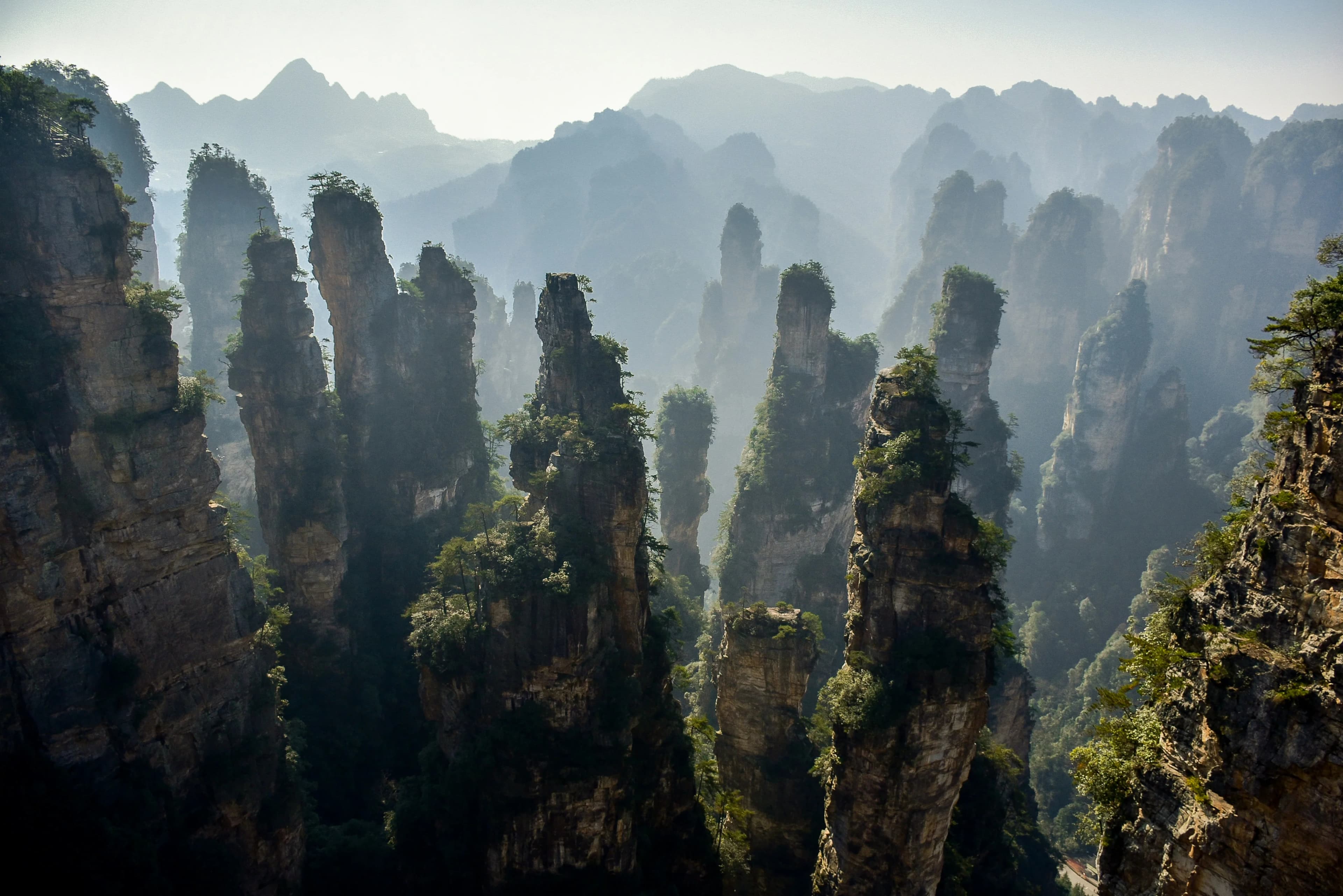
Luxury here is not defined by the density of services per square metre. It is defined by position. A suite with an unobstructed terrace view of the Avatar Hallelujah Mountain, or a room elevated above the cloud line at a ridge-facing property, offers a form of privilege that no city hotel can replicate. The discerning traveler who books through China's curated selection on La Suite understands this distinction instinctively.
Best areas to stay in Zhangjiajie
Wulingyuan district
The Wulingyuan district is the primary accommodation zone for travelers visiting the national park. Properties here offer the shortest access times to the main park entrances and the Suoxi Valley nature reserve. For suite travelers, the key consideration is elevation and orientation: higher-positioned properties capture morning mist and the characteristic cloud inversions that make the sandstone pillars appear to float. This is a geographically specific luxury that cannot be approximated from lower-lying hotels.
Tianmen Mountain area
Tianmen Mountain, located closer to Zhangjiajie city proper, offers a distinct experience from Wulingyuan. The mountain is famous for its 999 steps, the natural arch known as Tianmen Cave, and one of the world's longest cable car routes. Properties in this zone appeal to travelers who prefer to split their visit between the national park and the more dramatic vertical terrain of Tianmen. Suite accommodation here tends toward contemporary Chinese architecture, with glass and steel used to maximise the vertiginous views.
Zhangjiajie city centre
The city of Zhangjiajie itself functions primarily as a transit hub, with an international airport and rail connections. Travelers who require a more complete urban infrastructure alongside their natural excursions may choose to base themselves here, accessing the park by car or organised transfer. The luxury hotel offer in the city centre is more conventional, though some properties have invested significantly in suite-level rooms with refined interiors and full-service amenities.
When to visit Zhangjiajie
The optimal windows for visiting Zhangjiajie are spring (April to May) and autumn (October to November). During these months, temperatures are moderate, the forest is either flowering or turning amber, and visibility in the park is generally clear. Spring brings the characteristic low mist that creates the most photographed atmospheric conditions, with pillars emerging from cloud cover in the early morning hours.
Summer (June to August) brings humidity and heavier rainfall, which can obscure views and make some paths challenging. However, the park takes on a particular intensity in green during these months, and suite travelers who prefer solitude may find crowd levels more manageable on weekday visits. Winter sees occasional snowfall, which transforms the landscape entirely: the pillars dusted in white present a dramatically different visual register. The park remains open year-round, though certain cable car services may be suspended in severe weather.
There are no major international luxury events tied to Zhangjiajie in the conventional sense. The destination attracts culturally curious, architecturally literate travelers rather than those following a social or commercial calendar. For travelers exploring Asia broadly, Zhangjiajie often sits within a longer itinerary combining Hunan's cultural heritage (Fenghuang ancient town, Changsha's contemporary art scene) with the natural spectacle of Wulingyuan.
Local luxury standards and what to expect from top suites
China's hotel classification system operates on a five-star scale, with a small number of properties achieving the informal designation of ultra-luxury through international brand partnerships or independent positioning. In Zhangjiajie specifically, the luxury tier is smaller than in tier-one Chinese cities such as Shanghai or Beijing. The competitive advantage of the best properties here lies not in breadth of facilities but in specificity of experience.
The finest suites in Zhangjiajie are designed around the view as the primary architectural element. Floor-to-ceiling glazing, private terraces oriented toward the pillars, and the deliberate use of natural materials (local stone, dark timber, unfinished concrete) connect the interior to the geological landscape outside. Spa services in leading properties often incorporate traditional Chinese wellness practices: tuina massage, herbal treatments derived from Hunan's medicinal plant traditions, and in some cases private hot spring access.
Service standards at internationally affiliated properties are consistent with global luxury hotel norms. At independent properties, the experience may be more variable, which is precisely why a curated approach matters in this destination. Travelers who book through La Suite's selection for China benefit from pre-vetted quality standards applied specifically to this geographic and experiential context.
How to choose the best suite in Zhangjiajie
The most important variable in selecting a suite in Zhangjiajie is orientation. Not all rooms marketed as having park views are created equal: the angle, elevation, and distance from the primary pillar formations determine the quality of the view significantly. Request precise room positioning information before confirming any booking, and ask specifically whether the terrace or balcony faces the Wulingyuan core zone or a secondary forested hillside.
A second consideration is access. The national park is large, and different entrances serve different zones. A property convenient to the Zhangjiajie Forest Park north entrance is not necessarily convenient to the Tianzi Mountain scenic area. Clarify your intended itinerary before selecting a base, and factor in the time cost of internal park transport, which can be substantial during peak periods.
Travelers with specific wellness or dietary requirements should communicate these in advance. English-language service proficiency varies between properties, and the most seamless experiences at this destination come from properties with dedicated guest relations staff who can manage cross-cultural communication with precision.
Why curation matters in Zhangjiajie
Zhangjiajie presents a genuine challenge for the independent luxury traveler: the market contains properties at radically different quality tiers, often presented with similar visual language (dramatic views, natural materials, mountain imagery). Without a reliable editorial filter, the risk of selecting a property that underdelivers on suite quality, service consistency, or positional advantage is real.
La Suite's curated selection for this destination applies the same criteria used across its global portfolio: architectural integrity, suite spatial standards, service calibre, and the specificity of the experience on offer. In a destination where the landscape is the primary luxury asset, the role of curation is to identify which properties genuinely harness that asset, and which merely approximate it. For travelers visiting Zhangjiajie as part of a broader Asia itinerary, this editorial clarity is the difference between a memorable stay and a logistically complicated one.