Understanding Bombay as a luxury destination
The city's luxury hotel offering reflects this layering. Properties along the seafront carry the weight of colonial-era architecture, while newer developments in the business districts offer a more clinical, globally legible luxury. Neither is superior; they serve different purposes depending on how a visitor intends to use the city.
Best areas to stay in Bombay for a luxury suite
South Bombay (SoBo)
South Bombay remains the geographic and historical core of the city's prestige. The Colaba and Churchgate neighborhoods, the seafront promenade of Marine Drive, and the proximity to landmarks such as the Gateway of India position this area as the default choice for travelers whose primary interest is architectural, cultural, or social. Suites in this part of the city often occupy heritage buildings or properties with direct sea views, and the surrounding streets offer access to the city's best galleries, antique dealers, and restaurants without requiring significant transit.
Bandra and the western suburbs
Bandra, particularly its western edge, has consolidated its position as the city's creative and social center over the past two decades. The hospitality offer here tends toward contemporary boutique properties rather than grand landmark hotels, but several deliver suite-level privacy and design intelligence. For travelers whose itinerary involves the film industry, the art scene, or extended stays that require a residential quality, this corridor is increasingly relevant.
Lower Parel and the mill district
The former textile mill district of Lower Parel has been systematically redeveloped into a zone of high-end retail, corporate headquarters, and internationally branded hotels. The architecture is modern and the surrounding infrastructure is designed for efficiency. Suites here are suited to travelers with a business primary purpose who require proximity to corporate Bombay while maintaining a standard of accommodation that does not compromise on space or finish.
When to visit Bombay for the best suite experience
Bombay's climate divides the year sharply. The monsoon season, which runs from approximately June through September, brings significant rainfall and high humidity. While this period has its own atmospheric quality, it limits outdoor activity and can affect transit across the city. Suite availability is generally higher during this window, and rates reflect the reduced demand.
The optimal period for a Bombay visit runs from November through February, when temperatures are moderate and the city's event calendar is at its most active. The Kala Ghoda Arts Festival in February draws an internationally significant audience to South Bombay, while the period around Diwali, which falls between October and November depending on the lunar calendar, offers a particular intensity of the city's social life. These windows require advance planning, as suite inventory at the most sought-after properties compresses quickly.
March through May brings rising temperatures before the monsoon arrives. This is a workable period for travelers who prioritize lower occupancy rates and are comfortable with heat, and it can represent meaningful value at properties that ordinarily have constrained availability.
Luxury standards and what to expect from top-tier suites in Bombay
India does not operate a nationally standardized prestige classification equivalent to France's Palace designation, but Bombay's leading hotels are benchmarked against international standards through their affiliations with global luxury groups and through the practical expectations of a guest base that travels extensively. The city's top properties maintain service ratios, suite dimensions, and food and beverage standards that are directly competitive with the best addresses in Southeast Asia and the Middle East.
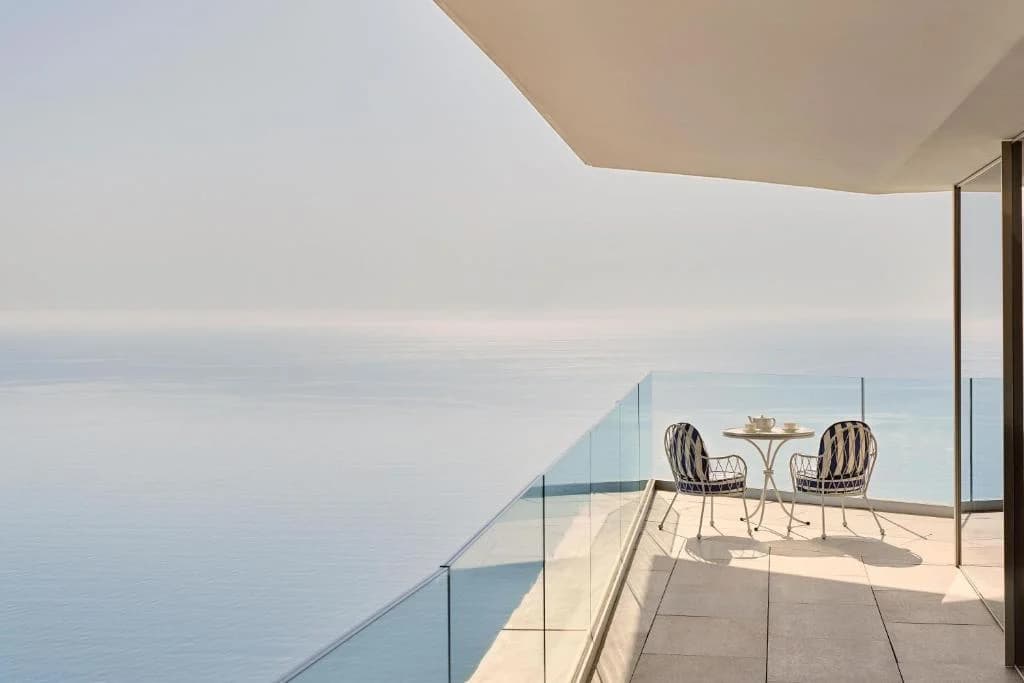
Suites in Bombay's premier properties typically offer significant square footage relative to the city's own compressed spatial logic. Sea-facing rooms carry a particular premium, as the view of the Arabian Sea or the Back Bay functions as both a visual and psychological counterpoint to the density below. Butler service is standard at this level, and several properties offer suite-specific amenities including private dining, in-suite spa treatments, and direct access to dedicated lounges.
The city's top hotels also function as social infrastructure. Their restaurants, bars, and lobbies are active meeting points for Bombay's business and creative communities, which means that staying at the right address carries a social utility beyond the room itself.
How to choose the right luxury suite in Bombay
The primary variable in choosing a suite in Bombay is geography, because the city's scale and traffic patterns mean that location determines daily practicality as much as it determines atmosphere. A suite in South Bombay places the traveler within walking distance of the city's heritage core but at a remove from the newer commercial and creative districts. A suite in the western suburbs reverses this equation.
The second variable is architectural character. Bombay's heritage properties offer a particular quality of space: high ceilings, deep verandas, and materials that carry historical specificity. Contemporary properties offer a different logic: cleaner lines, more controlled environments, and technology integration that older buildings cannot always accommodate. Neither is a compromise; the choice reflects what kind of context the traveler wants to inhabit.
Sea views, while consistently desirable, are not universally available. Properties set back from the waterfront compensate with courtyard views, city panoramas, or a quieter acoustic environment that can itself be a luxury in a city of Bombay's intensity.
Why a curated selection matters in Bombay
Bombay's hotel market has expanded considerably over the past decade, and the range of properties that use the vocabulary of luxury is wide. Not all of them deliver on the substance. The gap between a property that presents well in photography and one that functions at the level of a genuine luxury suite experience is significant, and it is not always visible in standard booking interfaces.
La Suite's curated selection for Bombay applies the same editorial standard used across every destination on the platform: direct knowledge of the properties, assessment of suite-specific qualities rather than general hotel ratings, and an understanding of what a particular type of traveler needs from a particular type of city. In a market as layered and rapidly changing as Bombay, that specificity is not a convenience; it is the difference between an adequate stay and a considered one.