Why Seogwipo commands attention from suite travelers
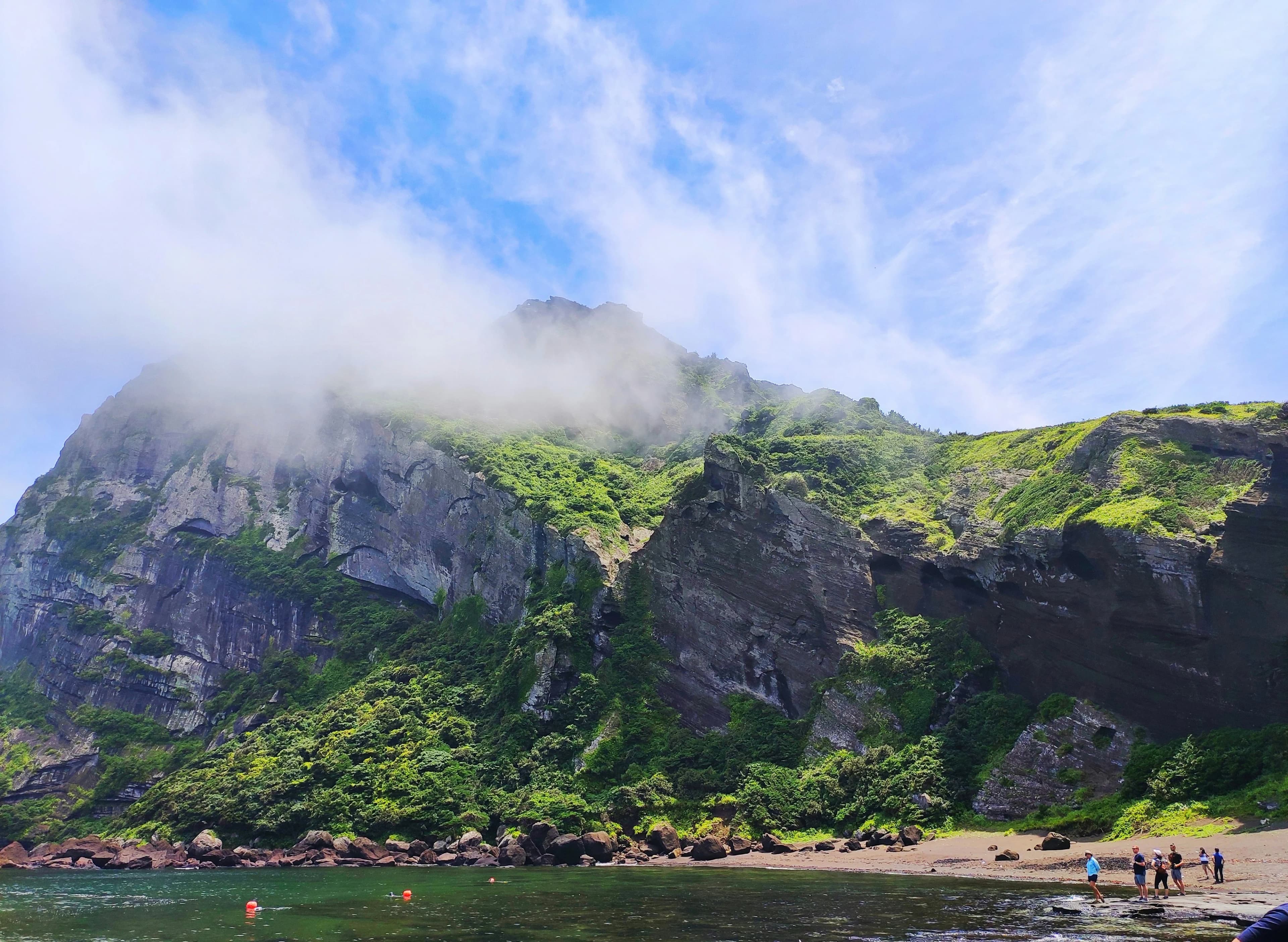
Seogwipo also sits closest to Hallasan, the dormant shield volcano that rises to 1,950 metres at the centre of Jeju. Proximity to this landscape shapes the character of the city's finest properties, which tend toward horizontal architecture, generous terracing, and material palettes drawn from local stone and timber. Travelers exploring South Korea who seek an alternative to Seoul's vertical intensity will find Seogwipo's spatial logic deeply restorative.
Best areas to stay in Seogwipo
The coastal cliff corridor
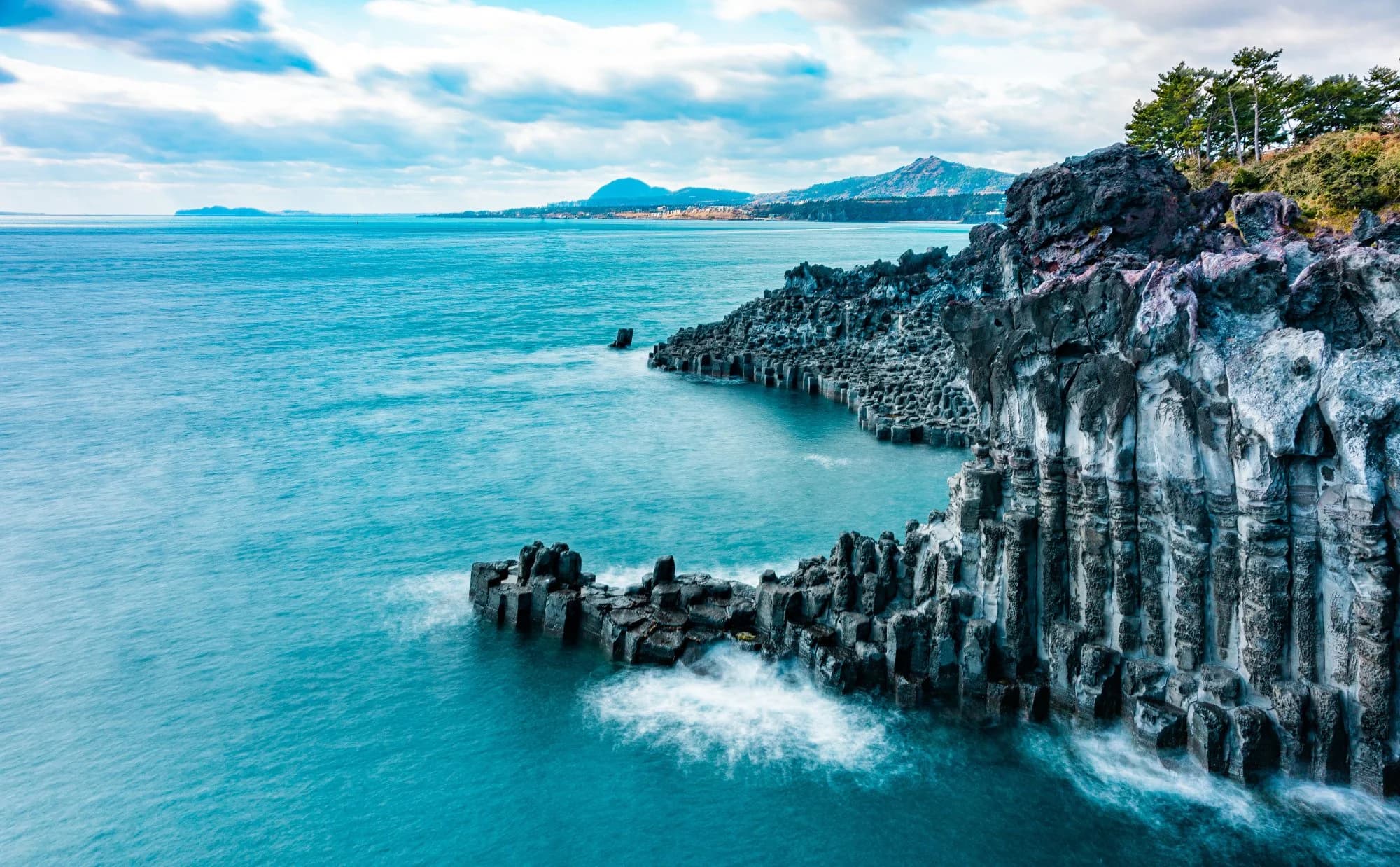
The stretch of coastline running west from Seogwipo port toward Jungmun offers the most concentrated access to Jeju's premium hospitality infrastructure. Jungmun Resort Complex, developed over decades as a planned leisure district, houses several of the island's most architecturally considered properties. The Pacific-facing exposure means suites here receive light throughout the afternoon and evening, and the sound landscape is dominated by ocean rather than traffic.
Seogwipo city centre and Olle Trail access
Travelers who prefer walkable urban proximity over resort isolation tend to position themselves closer to the city's working waterfront. This area provides access to Jeju Olle Trail routes, the network of coastal footpaths that has become a significant cultural institution since its founding in 2007. A suite positioned here allows the guest to move between curated interior comfort and the island's pedestrian culture without requiring a vehicle.
Inland and Hallasan-adjacent
Properties set further from the coast and closer to Hallasan National Park offer a different atmospheric register: cooler temperatures, denser vegetation, and near-total quiet. This corridor suits travelers whose primary interest is in Jeju's volcanic natural heritage rather than sea views. The Asia luxury circuit increasingly includes Jeju's inland terrain as a counterpoint to the region's more conventional beach destinations.
When to visit Seogwipo
Jeju Island operates on a subtropical climate classification, but Seogwipo's southern exposure gives it the warmest and most consistently temperate conditions on the island. The optimal windows for suite travel are spring (March through May) and autumn (September through November). Spring brings the island's famous camellia and cherry blossoms, along with the Jeju Fire Festival held annually at Jeongwol Daeboreum. Autumn delivers clear skies, reduced humidity, and the harvest season for citrus, which infuses the local food culture with seasonal specificity.
Summer (June through August) is peak domestic tourism season. Korean families and young travelers from Seoul fill the island's resorts, and suite availability at the finest properties tightens considerably. Those who travel in this window should secure reservations well in advance. Winter, while quieter, can bring strong winds from the northwest and occasional snowfall on Hallasan, conditions that suit a particular kind of guest: one who values empty landscapes and the island's off-season character.
Local luxury standards: what to expect from top-tier suites in Jeju
South Korea does not operate a formal state classification system equivalent to France's Palace designation, but the domestic market applies its own rigorous hierarchy. Properties affiliated with the major Korean conglomerate hotel brands (Lotte, Shilla, Hyatt, and Signiel) set a consistent technical standard. Service culture in Korean luxury hospitality is notably attentive and highly formalised, with staff training programmes that emphasise anticipation over reaction.
In Seogwipo specifically, the most considered luxury hotel suites distinguish themselves through spatial generosity and material quality rather than decorative elaboration. Expect stone bathing areas using Jeju basalt or premium Korean marble, floor-to-ceiling glazing oriented toward the ocean or mountain, and in-suite dining programmes that reflect the island's distinctive food culture: abalone, hairtail fish, black pork, and the fermented and pickled preparations that characterise Jeju's table. The haenyeo tradition (the island's female free divers, whose practice was inscribed on the UNESCO Intangible Cultural Heritage list in 2016) informs a broader cultural identity around the sea that the best properties translate into genuine hospitality programming.
How to choose the right suite in Seogwipo
Ocean-facing versus garden or mountain orientation
The first decision is directional. Seogwipo's most coveted suites are those oriented south and west toward the Pacific, but properties facing Hallasan offer a categorically different experience: one defined by geological mass and altitude rather than horizon. Neither is superior; the choice reflects the traveler's primary sensory priority.
Resort campus versus standalone property
Jungmun's resort district offers the full-service campus model, with multiple dining options, spa facilities, and on-site programming. Smaller boutique properties closer to the city or inland provide more intimate scale and often more direct engagement with local culture. The traveler seeking a luxury suite for an extended stay may prefer the campus model's self-containment, while those visiting for shorter periods often find the boutique format more editorially coherent.
Seasonality and advance planning
Spring and autumn suite allocations at Seogwipo's leading properties are taken quickly by both domestic Korean travelers and an increasing number of international guests. For travel during cherry blossom or citrus harvest periods, a planning horizon of three to four months is standard practice at the upper tier of the market.
The value of curation in a destination still emerging internationally
Seogwipo and Jeju Island are well-established within the Korean domestic luxury market but remain underrepresented in international suite curation. This creates a specific challenge for the foreign traveler: the volume of available properties does not map cleanly onto quality, and marketing materials frequently overstate the experiential offer. La Suite applies the same editorial framework here as in more internationally legible destinations, assessing properties on spatial standard, service calibre, material quality, and the integrity of their relationship to the local landscape.
The curated selection by La Suite for Seogwipo is deliberately concise. It reflects properties where the suite experience is genuinely distinct from the broader hotel offer, where the architecture responds to Jeju's volcanic and coastal character, and where the guest is positioned to engage with the island on its own terms rather than through a generic resort template. For travelers building a South Korean itinerary that extends beyond Seoul, Seogwipo represents one of the most spatially and culturally rewarding suite destinations in Asia.