Understanding Sathorn as a luxury base in Bangkok
For travelers staying in a Bangkok luxury suite, Sathorn offers a particular kind of access. The BTS Skytrain connects Chong Nonsi and Surasak stations to the broader city. The river is reachable on foot or by tuk-tuk, opening access to Wat Arun, the Grand Palace district, and the network of Chao Phraya Express boats. Silom, Bangkok's dense commercial artery, borders Sathorn to the north and provides restaurants, street markets, and night-life options within a short walk.
The distinct character of different parts of Sathorn
North Sathorn Road
The northern stretch of Sathorn Road is where the district's corporate identity is most pronounced. High-rise offices stand alongside mid-century embassy buildings, and the hotel properties here tend to reflect that duality: polished, international in standard, and oriented toward the business traveler. Suites in this corridor typically prioritize city panoramas and executive-level amenities.
South Sathorn Road and the canal side
Moving south, the scale shifts. South Sathorn Road and the streets that run toward the Khlong Sathorn canal are quieter, more residential, and in some pockets genuinely leafy. This is where several of Bangkok's more design-forward and architecturally distinctive properties are located. The atmosphere is closer to an upscale residential neighborhood than to a hotel district, which suits travelers who prefer discretion over visibility.
The river edge
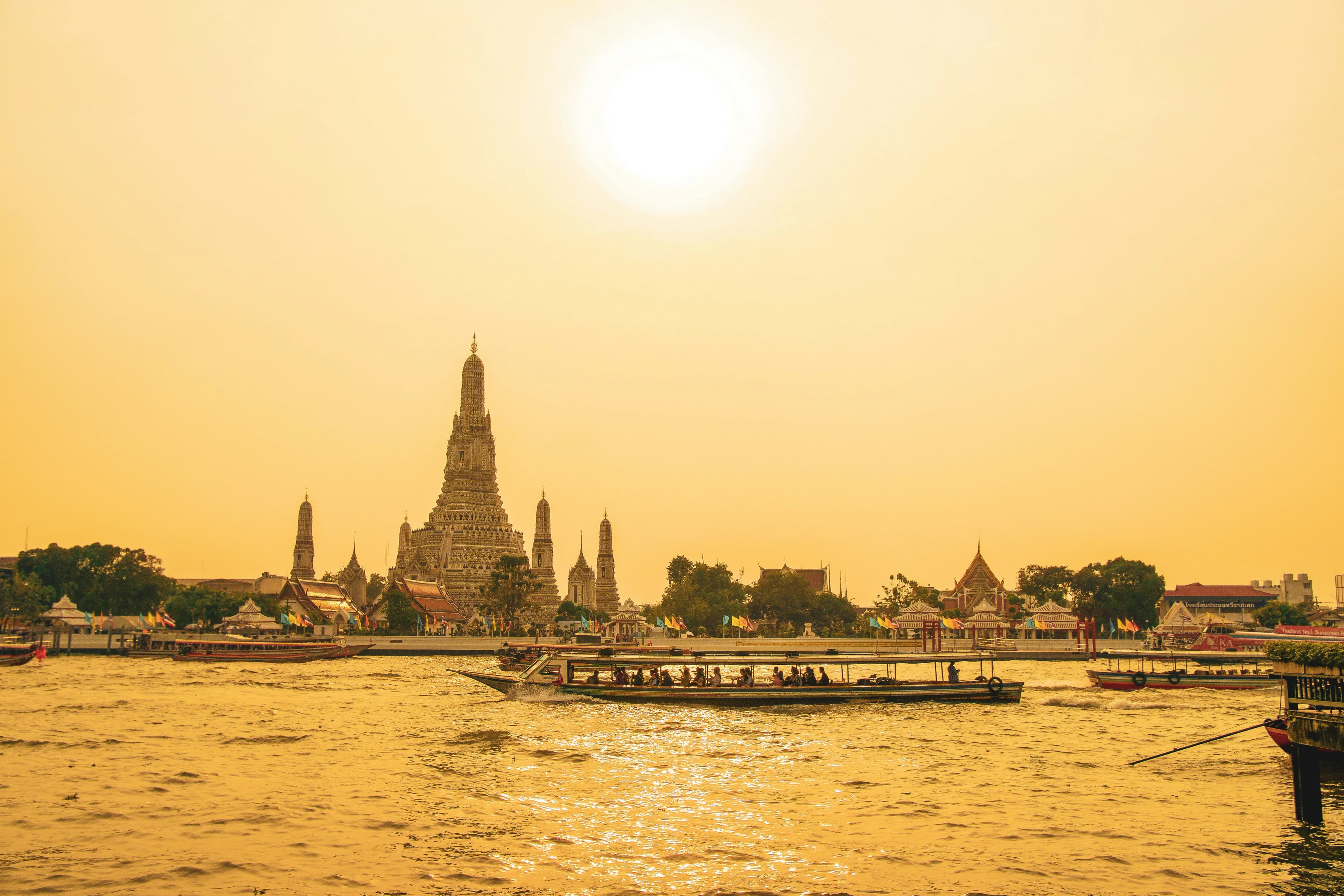
Where Sathorn meets the Chao Phraya, the dynamic changes entirely. River-facing suites in this zone offer one of the most legible views of Bangkok's geography: the sprawling bend of the river, temple rooftops on the opposite bank, and the constant movement of long-tail boats and ferries. This edge is also where some of Bangkok's most established luxury hotels have anchored themselves over the past three decades.
When to stay in Sathorn
Bangkok's climate divides into three seasons. The cool and dry season, running from November through February, is the most comfortable period for travel. Temperatures drop into the low to mid-twenties Celsius, humidity is manageable, and the city's outdoor spaces are genuinely pleasant. This is when suite availability at premium properties tightens, and advance planning becomes important.
The hot season, from March through May, brings temperatures that regularly exceed 35 degrees Celsius. Business travel continues uninterrupted, but leisure travelers tend to avoid this window. Hotels in Sathorn, many of which cater heavily to corporate guests, often have more competitive rates during this period.
The wet season, from June through October, is more nuanced than visitors expect. Rain falls in concentrated afternoon and evening bursts rather than all day. The city remains fully operational, and hotel rates for luxury suites are typically at their lowest. For travelers whose primary interest is cultural or culinary exploration rather than outdoor activity, the wet season can represent excellent value without meaningful compromise on experience.
Key dates to note include Songkran, the Thai New Year water festival, which falls in mid-April and transforms Bangkok's streets for several days. Loy Krathong, typically in November, is a quieter and more visually distinctive festival centered on the river.
Local luxury standards and what to expect from top-tier suites in Bangkok
Thailand does not operate a formal equivalent to the French Palace designation, but the upper tier of Bangkok's hotel market is internationally legible. Properties affiliated with brands such as Four Seasons, Rosewood, Capella, and The Peninsula set the technical benchmark for luxury hotel suites in the city: butler service, dedicated check-in, significant square footage, and a level of finish that reflects the design ambitions of their respective brands.
Beyond branded properties, Bangkok has a growing category of independent and boutique luxury hotels, some of which occupy converted heritage buildings or purpose-built structures with a stronger point of view. In Sathorn, this tends to manifest as hotels that integrate Thai material culture, whether in the use of teak, silk, or traditional craft, into otherwise contemporary architecture. For a broader understanding of luxury hospitality standards across Thailand, it is worth considering how Sathorn fits within the national landscape, where properties range from urban towers to coastal resorts and northern jungle lodges.
Suite categories in Bangkok's top hotels typically begin at around 80 to 100 square meters for a junior or deluxe suite and scale up to full-floor residences exceeding 500 square meters in flagship properties. Private pool suites, common in resort destinations, are less prevalent in Sathorn but do exist in select properties.
How to choose the right suite in Sathorn
The primary consideration in Sathorn is orientation. City-facing suites deliver the Bangkok skyline and its nocturnal drama. River-facing suites offer a more timeless and less urban perspective. Neither is objectively superior: the choice depends on what you want the suite to frame for you during your stay.
A second consideration is the relationship between the suite and the hotel's public spaces. Some properties in Sathorn are designed as self-contained environments with exceptional pool decks, spa facilities, and multiple restaurants. Others are leaner in their offer, with the expectation that guests will engage with the neighborhood. If you are visiting Bangkok for cultural exploration rather than extended periods of in-hotel residence, a property with a strong neighborhood connection may serve you better than one optimized for internal amenities.
For context on how Sathorn compares with other districts across Asia, La Suite's regional curation provides a useful reference point for travelers calibrating their expectations across multiple destinations in a single itinerary.
The value of curated selection in a market like Bangkok
Bangkok's hotel market is large, competitive, and not always easy to navigate. The city has hundreds of properties that describe themselves as luxury, and the gap between marketing language and actual experience can be significant. In Sathorn specifically, the density of corporate hotels means that not every five-star property is well-suited to a leisure traveler who expects privacy, design quality, and a sense of place.
La Suite's approach is to apply consistent editorial criteria to every property in its selection, prioritizing suite-specific quality over general hotel reputation. A property may carry strong brand recognition while offering suites that are underdifferentiated from standard rooms in terms of space or service. Conversely, a less-publicized independent hotel may offer a suite experience that significantly exceeds its category. The curated selection by La Suite is designed to make that distinction clear, so that travelers arriving in Bangkok with specific expectations can match those expectations to the right property from the outset.