Amber Yao Noi, Ko Yao
Elegant Accommodations Amber Yao Noi in Ko Yao Noi offers a 4-star villa with a sun terrace, lush garden, and a year-round outdoor swimming pool. Guests enjoy free WiFi, ensuring connectivity thro

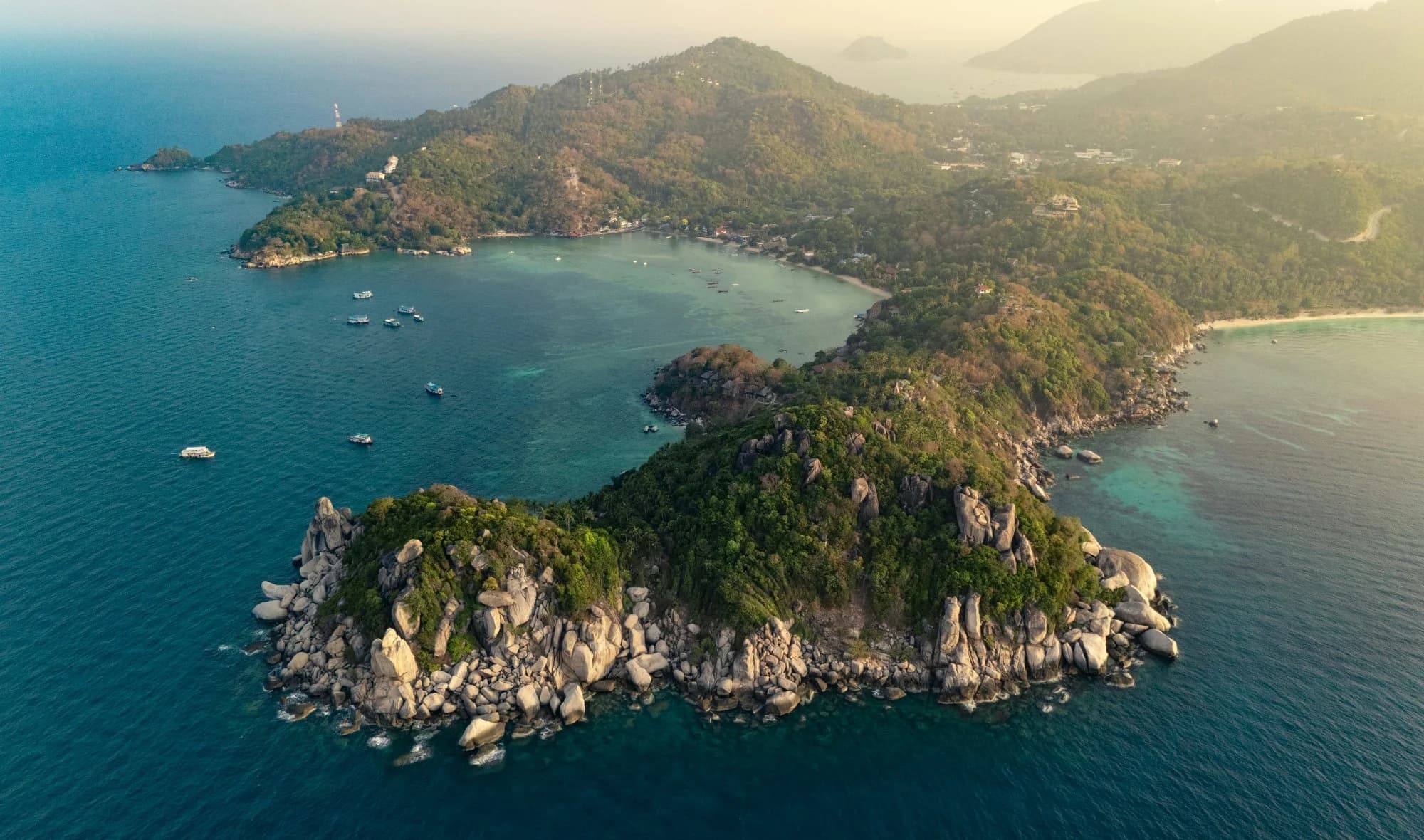
Ko Yao does not operate on the same logic as Phuket or Samui. The twin islands of Ko Yao Noi and Ko Yao Yai are administratively part of Phang Nga province, and they have retained a pace and scale that larger Thai resort destinations abandoned decades ago. The population is predominantly Muslim, and the cultural atmosphere is noticeably quieter, more considered, and more community-oriented than the commercial beach circuits nearby. For the high-end traveler, this context matters: a luxury suite here is not an escape from a busy destination. It is an immersion into a functioning, self-possessed landscape that happens to be surrounded by one of the most visually arresting seascapes in the Andaman.
9 hotels available

Elegant Accommodations Amber Yao Noi in Ko Yao Noi offers a 4-star villa with a sun terrace, lush garden, and a year-round outdoor swimming pool. Guests enjoy free WiFi, ensuring connectivity thro

Prime Beachfront Location Anantara Koh Yao Yai Resort & Villas in Ko Yao Yai offers a private beach area and beachfront access. Guests enjoy stunning sea views and direct beachfront access. Exceptiona

Baan Taranya Koh Yao Yai Resort Plus is located in the tropical rain forest of the Koh Yao Yai Island in Phang Nga Bay. A private beach is only 1312 feet away from the property. The resort offers an o

Adjacent to the beach, Cape Kudu Hotel offers cozy accommodations in a peaceful area of Ko Yao Noi. Guests can indulge in the outdoor pool overlooking endless views of the sea. Rooms at this property

Elixir Resort Koh Yao Yai - SHA Plus is located on Koh Yao Yai Island along Bo Le Bay, 9.3 mi from Phuket. The resort offers free internet access, 2 dining options and an outdoor pool. A chargeable sp

Located close to the beach in Yao Yai Island, Koh Yao Yai Hillside Resort is just a 20-minute from Klonghia Pier. Guests can enjoy sea views while having food or drinks at the on-site restaurant and b

Nestled in the northern tip of the Koh Yao Noi island in Phang Nga Bay, Paradise Koh Yao offers an outdoor salt-chlorinated infinity pool and 250-yards of secluded private beach surrounded by towering

Spread over 24 acres of peaceful natural environment, Six Senses Yao Noi is a quiet retreat away from the city. Surrounded by nature and beautiful landscapes, it offers luxurious air-conditioned villa

Located on Koh Yao Noi, TreeHouse Villas is an adult-only resort boasting spacious air-conditioned villas surrounded by lush tropical forest, cliffs and private beach of Phang Nga. Guests can enjoy a

Mueang Phuket is the district that contains Phuket Town, the island's oldest urban settlement and its administrative and cultural center. Unlike the resort-oriented districts of Kathu or Thalang, Mueang Phuket carries a distinct civic character shaped by centuries of Sino-Portuguese trade influence. The shophouse architecture along Thalang Road and Dibuk Road reflects this layered history in precise visual terms: louvered shutters, pastel facades, ornate column capitals, and interior courtyards that function as private, cooling microenvironments.

Mueang Krabi is not a resort enclave. It is a provincial town with a working river, a daily market, and a skyline interrupted by karst formations rather than hotel towers. This distinction matters for the discerning traveler. Staying in Mueang Krabi places you at the center of the province's logistical and cultural network, within reach of Tiger Cave Temple, the mangrove boardwalks along the Krabi River, and the embarkation points for Railay Beach and the Phi Phi archipelago. A luxury hotel suite in this context is not merely an upgrade in comfort. It is a considered choice to experience Krabi on its own terms, from a position of genuine spatial and sensory quality.

30 km away
Thalang is the largest district in Phuket by land area and the one that carries the most historical weight. The Battle of Thalang in 1785, commemorated by the Two Heroines Monument, gives this district a civic identity that the beach zones of Patong or Karon do not possess. For guests arriving in Thailand with a preference for context over convenience, Thalang rewards deliberate attention. Luxury here is expressed through space, privacy, and proximity to an interior landscape rather than through oceanfront positioning.
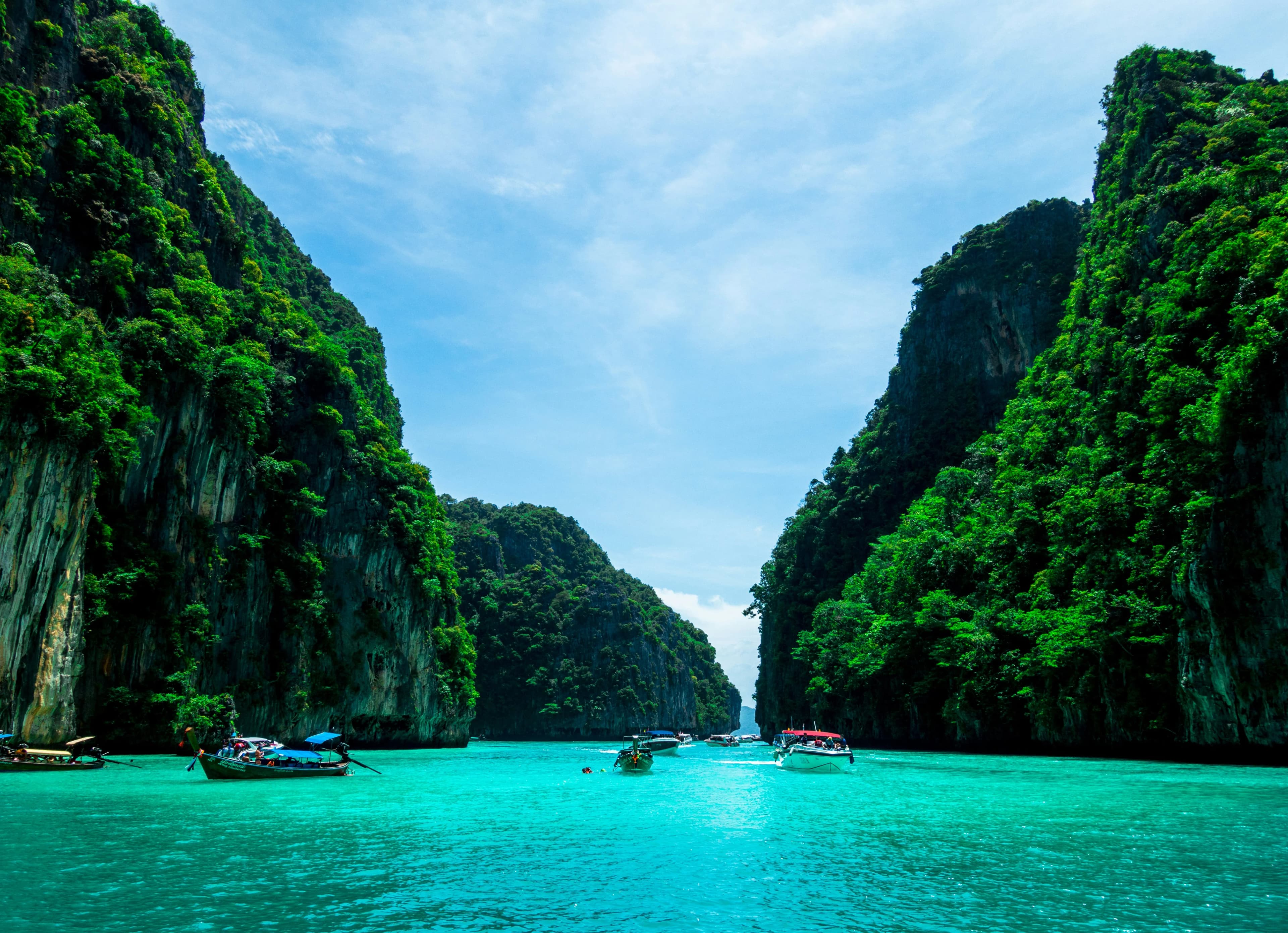
The bay is a UNESCO-listed geological formation, and the silhouette of limestone karsts rising from the water is consistent across every vantage point on the island. Suites with direct bay orientation offer a kind of visual authority that is rare even within Thailand's considerable coastal geography. This is not ambient scenery. It is a foreground condition that frames every hour of the day differently, from the flat grey of early morning water to the amber tones that settle across the bay at dusk.
Ko Yao Noi is the smaller and more developed of the two islands, and it is where the majority of high-end accommodation is concentrated. The eastern coast faces directly onto Phang Nga Bay, and this orientation is the primary consideration for suite selection. Properties positioned along this coast benefit from unobstructed karst views and generally calmer water conditions. The interior of the island is a working agricultural landscape with rubber plantations and rice paddies, which gives the surrounding environment a functional, non-manicured quality that appeals to design-literate travelers seeking authenticity alongside comfort.
Ko Yao Yai is larger, less developed, and significantly quieter. Accommodation options are fewer and the infrastructure is more basic, but for travelers who prioritize total seclusion and a near-absence of tourist activity, it presents an argument. Stays here require a higher tolerance for logistical simplicity in exchange for a level of isolation that is increasingly difficult to source in this part of Asia.
The Andaman Sea operates on a pronounced seasonal cycle, and Ko Yao is directly affected. The dry season runs from approximately November through April, with January and February considered peak months for weather reliability and sea clarity. During this period, suite availability at the top properties tightens, and advance planning becomes essential for travelers with specific room category requirements.
The shoulder months of November and late April offer a useful compromise: reduced competition for the best suite configurations and generally stable weather, with occasional cloud cover that can actually enhance the atmospheric quality of the bay landscape. The monsoon season (May through October) brings heavy rainfall and rough sea conditions that make boat access inconsistent. Some properties reduce capacity or close sections during this period, and the crossing from the mainland ferry points can become unreliable. Travelers considering a wet-season visit should verify operational status and transfer options directly with their property before confirming dates.
There are no major international luxury events or cultural festivals specific to Ko Yao that would constitute a primary travel driver, but the rhythm of local fishing activity and the Islamic calendar shape the island's social texture throughout the year. Ramadan in particular brings a noticeable shift in atmosphere that some travelers find compelling.
Thailand does not operate a formal equivalent to France's Palace classification, but the Tourism Authority of Thailand maintains a hotel star rating system, and the highest-performing properties in Ko Yao generally position themselves as boutique luxury or design-led resorts rather than large-footprint five-star complexes. This is a structural feature of the island rather than a limitation: the local planning environment and the scale of the islands naturally constrain room counts, which tends to concentrate service attention and produce a more considered guest experience.
Suites at Ko Yao's leading properties typically feature private pool configurations, elevated deck structures oriented toward the bay, and interior design that references local craft traditions through material selection (woven textiles, natural stone, reclaimed timber) without becoming decoratively heavy. The architecture tends toward open-plan, with the boundary between interior and exterior treated as permeable. Air conditioning is standard at all serious properties, but the design ethos generally privileges cross-ventilation and shaded outdoor living.
For context on how Ko Yao's suite standards compare across the broader Thai market, La Suite's curated coverage of Thailand provides a useful regional calibration, situating Ko Yao within the full spectrum of the country's high-end accommodation offer. More broadly, travelers who approach this destination as part of an extended regional journey can consult La Suite's editorial coverage of Asia to understand how Ko Yao relates to comparable island destinations across the continent.
The single most important variable in suite selection on Ko Yao is the relationship to Phang Nga Bay. Suites on the eastern coast of Ko Yao Noi deliver the karst panorama that defines the island's visual identity. Properties set further inland or on the western coast offer a materially different experience. Confirm the specific room orientation before committing, and request the precise bay-facing exposure in writing if the property layout is complex.
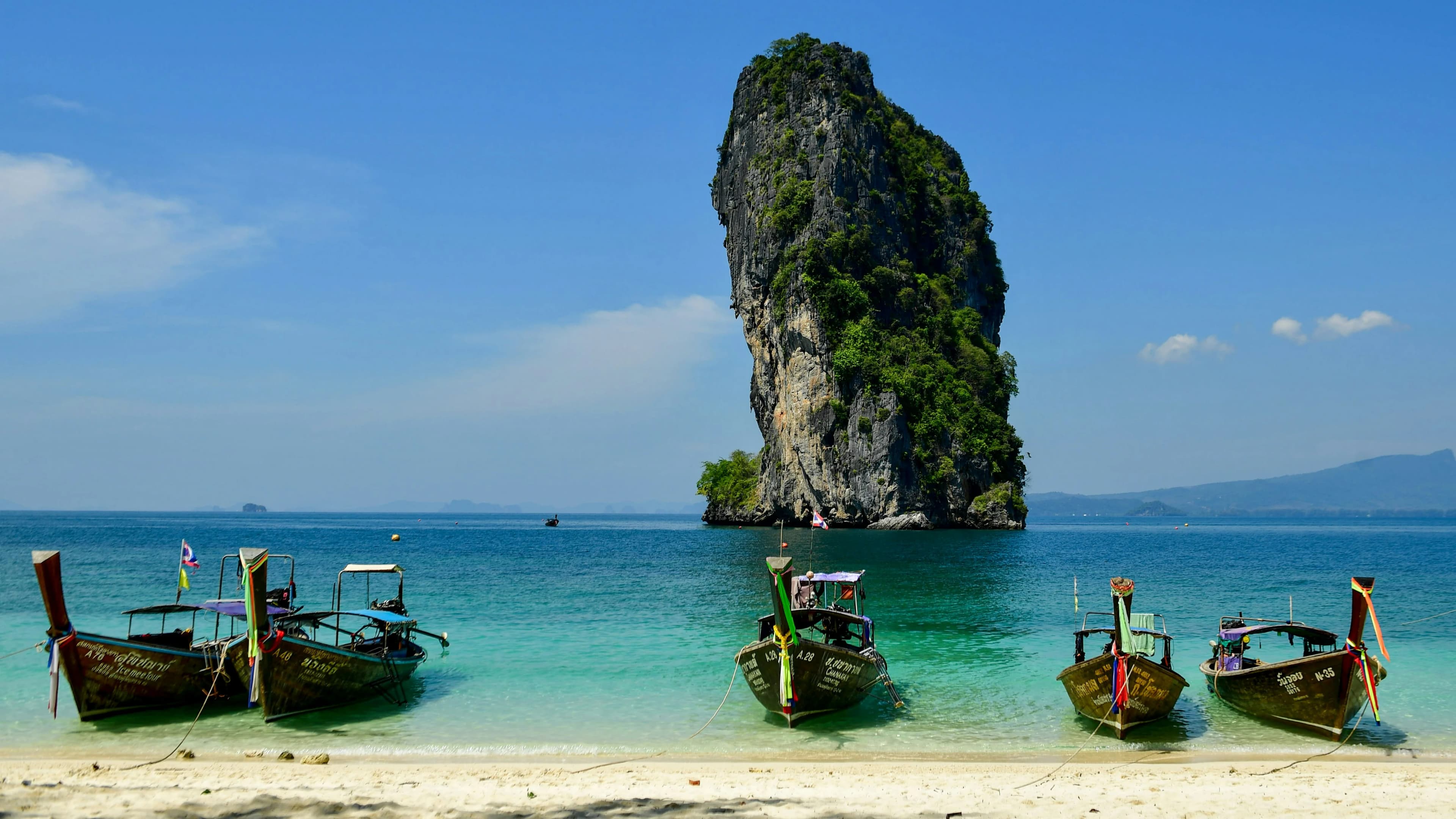
Ko Yao is accessible by longtail boat or speedboat from several mainland departure points, most commonly Bang Rong Pier on Phuket's eastern coast or from Krabi. The crossing is typically 20 to 45 minutes depending on departure point and boat type. Many properties coordinate private transfers, and this is worth arranging at the suite booking stage to avoid the variability of shared boat services during peak season.
Ko Yao's best properties operate at boutique scale, with room counts that support a high staff-to-guest ratio. This has practical consequences for suite guests: service response times are generally shorter, culinary flexibility is higher, and in-suite experiences (private dining, customized excursions, spa treatments delivered to the villa) are more reliably executable than at larger resort complexes elsewhere in Thailand.
Ko Yao's accommodation market is smaller than Phuket's or Samui's, but the quality differential between properties is significant. The island's appeal has attracted a range of operators, and not all positions in the luxury segment deliver equivalent spatial quality, service consistency, or architectural integrity. For a traveler allocating a meaningful portion of a trip to Ko Yao specifically for the quality of the suite experience, undifferentiated search results carry a real risk of misalignment between expectation and reality.
La Suite applies the same editorial filter here as across the full Thailand and Asia coverage: properties are assessed on the architectural quality of the suite envelope, the spatial logic of private outdoor areas, service depth, and the degree to which the experience is coherent with the surrounding landscape. The curated selection by La Suite removes the variable of discovery error and allows the traveler to focus on which specific configuration best matches the parameters of their stay.

The dry season from November to April offers the most reliable weather conditions and clearest water in the Andaman Sea. January and February are peak months for both weather and demand, so suites at leading properties should be reserved well in advance. The shoulder periods of November and late April provide a practical balance between availability and conditions.
The most common route is by longtail boat or speedboat from Bang Rong Pier on Phuket's northeastern coast, with crossings typically taking between 20 and 45 minutes depending on vessel type and sea conditions. Many luxury properties on Ko Yao coordinate private boat transfers directly, which is the most reliable and comfortable option for suite guests. It is advisable to arrange this at the time of booking rather than on arrival.
Ko Yao Noi concentrates the majority of the island group's serious luxury accommodation and offers direct bay-facing orientations that deliver the defining Phang Nga karst panorama. Ko Yao Yai is larger, quieter, and less developed, with fewer high-end options but a more absolute sense of seclusion. The choice depends on whether the traveler prioritizes suite quality and service infrastructure or near-total isolation.
Ko Yao has not followed the commercial development trajectory of Phuket or Koh Samui, and the islands retain a working fishing community, predominantly Muslim in character, that gives the social landscape a distinct and quieter texture. The proximity to Phang Nga Bay's karst formations provides a visual environment that is geologically significant and consistent throughout the day. The combination of landscape scale and low tourist density is the primary differentiator for discerning travelers.
Yes, private pool configurations are standard at Ko Yao's leading luxury properties, typically integrated with elevated deck structures that maximize the bay view orientation. The pool-to-suite relationship at the best properties is treated as an architectural continuum rather than an amenity add-on, with the outdoor living area often exceeding the interior footprint. Confirming the specific pool configuration and bay orientation before booking is recommended.
The dominant design register at Ko Yao's top-tier properties draws on local material traditions: woven textiles, natural stone, reclaimed timber, and open-plan structures that dissolve the boundary between interior and exterior. The architectural approach tends toward restraint rather than ornament, with spatial generosity and landscape integration prioritized over decorative complexity. This design coherence with the surrounding environment is a consistent characteristic of the island's strongest luxury offers.
Ko Yao can accommodate families seeking privacy, space, and a low-stimulation environment, and villa-format suites with private pools are well-suited to this configuration. The island does not offer the organized children's activity infrastructure of a large resort complex, which some families may find limiting. For families whose priority is shared private space and natural surroundings rather than programmed entertainment, Ko Yao is an effective choice.
Ko Yao operates at boutique scale, with a smaller total inventory of high-end suites than Phuket, Samui, or Bangkok, but the quality ceiling at the island's best properties is comparable. The constraint on development imposed by the island's scale and planning environment means that room counts are low and service ratios are generally favorable. La Suite's broader coverage of Thailand situates Ko Yao within the full national luxury accommodation landscape for travelers making comparative decisions.
Bay orientation is the primary variable: suites on the eastern coast of Ko Yao Noi with direct Phang Nga Bay exposure deliver the karst panorama that defines the island's identity, while other orientations offer a materially different experience. Beyond view axis, the quality of the private outdoor space, the staff-to-guest ratio, and the property's transfer coordination capabilities are the most consequential practical factors. Boutique properties with low room counts typically outperform larger complexes on service responsiveness at this destination.
The monsoon season runs from approximately May through October, bringing heavy rainfall and sea conditions that can make boat crossings from the mainland irregular or temporarily suspended. Some properties reduce capacity or close villa categories during this period. Travelers considering a monsoon-season visit should verify the property's operational status, confirm transfer reliability from their departure point, and assess whether the trade-off in conditions is offset by the significant reduction in nightly suite rates that typically accompanies low-season pricing.