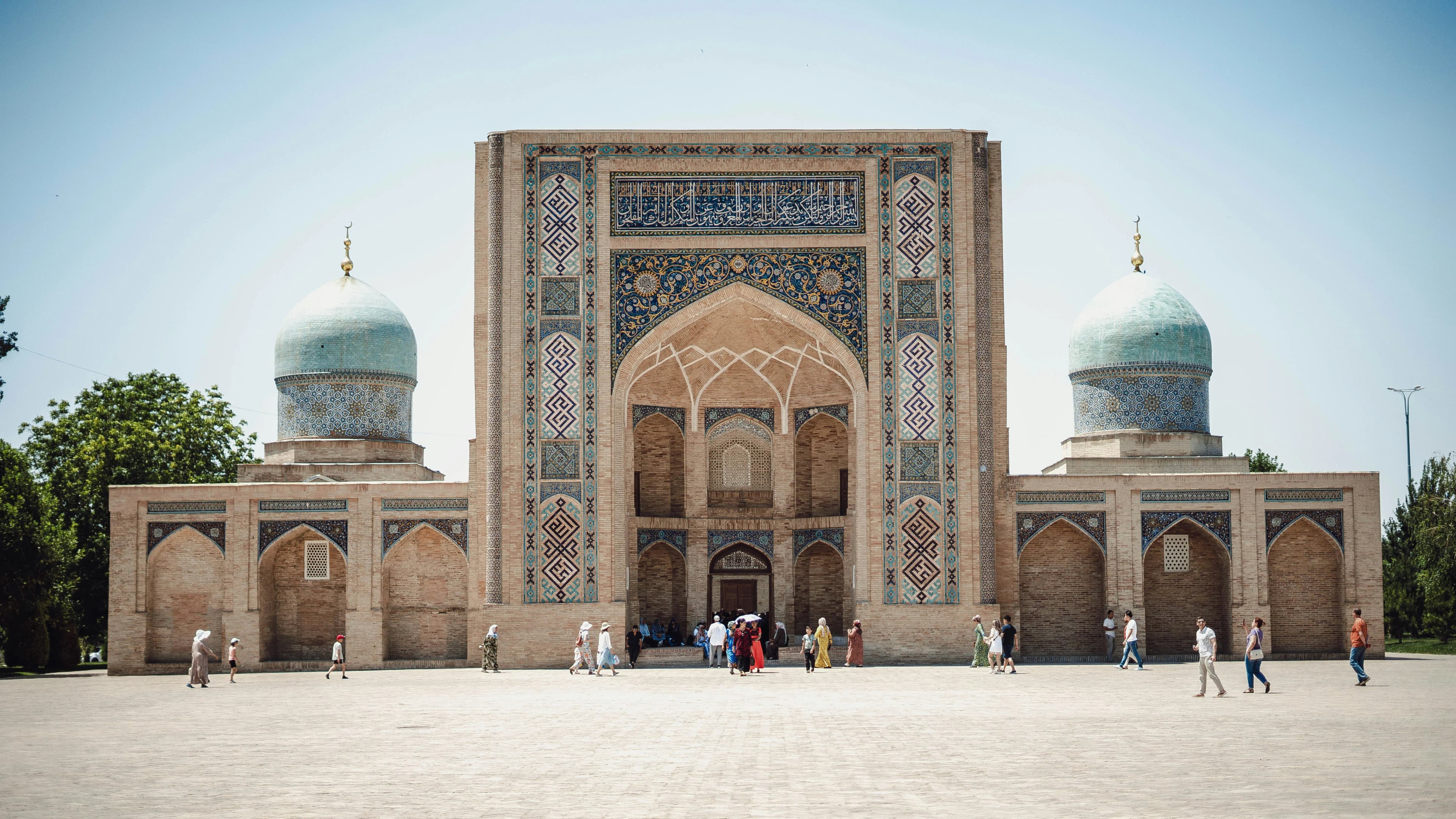
Tashkent as a luxury destination: understanding the urban landscape
For the design-literate traveler, this density of historical reference is not a complication. It is the point. Tashkent does not offer a single aesthetic, but rather a conversation between them. The luxury traveler arriving here benefits from proximity to the Chorsu Bazaar, one of the oldest and most architecturally distinctive markets in the region, alongside the State Museum of History of Uzbekistan and a performing arts scene anchored by the Navoi Opera and Ballet Theatre, a Soviet-era structure of remarkable interior craftsmanship.
Exploring Uzbekistan through the lens of its capital offers a productive starting point: Tashkent connects by high-speed rail to Samarkand and Bukhara, making it a logical base for a broader itinerary through the country's historic centers.
Where to stay in Tashkent: districts and positioning
The Yunusabad and Mirabad corridors
The northern and eastern districts of Tashkent, particularly Yunusabad and Mirabad, concentrate the city's international-standard hotel infrastructure. These zones developed significantly after Uzbekistan's independence in 1991 and accelerated through the reform years following 2016. Properties here offer proximity to business and government centers, with clean sightlines to the city's contemporary face: wide, ordered streets, manicured parks, and the kind of civic quietness that high-net-worth travelers tend to value.
The historic center and Khast Imam quarter
For travelers prioritizing cultural immersion over logistical convenience, positioning near the old city quarter rewards the effort. The Khast Imam ensemble, containing some of the oldest surviving Islamic manuscripts in the world, anchors a neighborhood where scale and pace shift noticeably. Boutique properties in this zone tend toward restored courtyard architecture, with interior spatial qualities that reference traditional Uzbek domestic design: iwan-style covered terraces, tilework, carved wooden details.
When to visit Tashkent for a suite experience
Tashkent operates best as a destination in spring (April to early June) and autumn (September to October). During these windows, temperatures sit between 18 and 28 degrees Celsius, the light is clear, and the city's parks and outdoor spaces are accessible without the intensity of a Central Asian summer, where temperatures routinely exceed 38 degrees Celsius in July and August.
Winter is mild by regional standards, rarely falling below freezing, and carries a quieter quality that some travelers find preferable. Suite availability tends to be more flexible outside the spring and autumn peaks, and rates at higher-tier properties can offer stronger value in the low season.
The Navruz celebrations in March mark the Persian and Turkic New Year and represent one of the most culturally significant periods in the Uzbek calendar. Tashkent's public spaces fill with music, food, and ceremonial performances during this period. For travelers interested in the intersection of culture and calendar, this window offers rare access to local life at a register not visible outside of the season.
Luxury hospitality standards in Tashkent
Uzbekistan does not operate a formal palace classification equivalent to France's Palace label or Italy's five-star L system. The country's hotel classification follows a star-rating system administered nationally, but the meaningful distinction at the top tier is between international chain properties operating to their global standards and locally developed luxury hotels that have emerged from the post-2016 investment wave in Uzbek tourism infrastructure.
The most considered luxury suites in Tashkent typically offer a minimum of 60 to 80 square meters of interior space, with design vocabularies that either reference Soviet-era monumentalism through contemporary material choices or draw directly from Uzbek craft traditions: suzani embroidery, hand-painted tilework, carved gypsum plasterwork. In either case, the better properties treat local craft not as decoration but as structural language.
Butler service, private airport transfer, and multi-room suite configurations are available at the upper end of the Tashkent market. Dining within these properties has also improved materially in recent years, with a growing emphasis on Uzbek culinary tradition at a refined register: plov prepared to regional specification, samsa, shashlik sourced and prepared with attention to provenance.
How to choose the right luxury suite in Tashkent
Historical versus contemporary architecture
The choice between a Soviet-modernist property and a restored traditional courtyard residence is not merely aesthetic. It shapes the sensory and spatial experience of the stay in fundamental ways. Soviet-era luxury hotels tend toward larger floor plates, high ceilings, and an imposing civic scale. Courtyard properties offer compression and intimacy, with natural ventilation systems and the acoustic quality of enclosed garden spaces.
Proximity to transport nodes
Tashkent International Airport sits approximately 12 kilometers from the city center, and the city's metro system, one of the most architecturally celebrated in the world for its station design, connects key districts efficiently. Suites positioned near metro access or with dedicated transfer infrastructure allow the kind of frictionless movement that time-conscious travelers require.
Private access and security considerations
For corporate travelers and those with specific privacy requirements, Tashkent's top-tier properties offer a level of discretion and controlled access that reflects the city's history as a diplomatic posting. Dedicated suite floors, private check-in, and car-service arrangements are standard at the highest tier.
The value of a curated selection for Tashkent
Tashkent sits at an early stage in its international luxury tourism development. The number of properties operating to a genuinely high standard is smaller than comparable capital cities in the Middle East or Southeast Asia, which means the selection decision carries more weight. A single poorly chosen property can materially affect the entire experience of the city.
La Suite applies the same editorial discipline to emerging destinations as to established luxury markets. For a city like Tashkent, where the gap between marketed standards and delivered experience can be significant, curation is not a convenience. It is the difference between a considered stay and a costly miscalculation. The curated selection across Asia by La Suite ensures that every recommendation meets a documented threshold of spatial quality, service standard, and design integrity.