The distinct areas of Fiji and where luxury travelers stay
The Mamanuca and Yasawa Islands
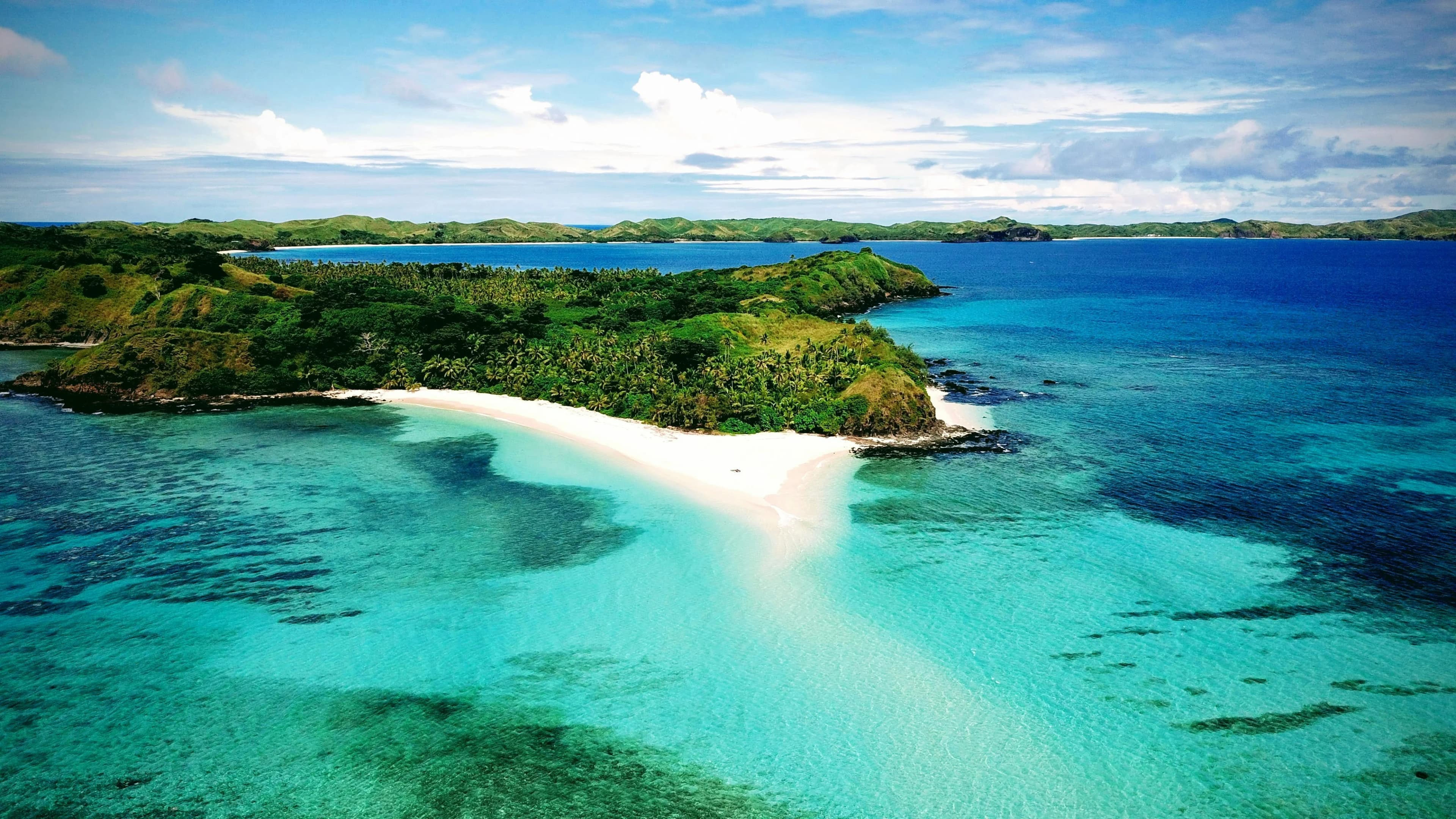
These two island chains, stretching northwest of Viti Levu, represent Fiji's most concentrated offering of private-island and overwater accommodation. The Mamanucas are closer to Nadi and therefore more accessible, while the Yasawas require a longer transfer by seaplane or high-speed catamaran. Both groups are defined by coral reef systems, white sand, and the kind of spatial isolation that is simply unavailable on mainland Fiji. Luxury suites here are typically standalone structures set directly on the beach or above the lagoon, with unobstructed water views and dedicated butler service as a baseline expectation.
The Coral Coast and the main island of Viti Levu
Viti Levu, Fiji's largest island, accounts for the majority of the country's population and infrastructure. The Coral Coast, along its southern shore, hosts a number of resort properties that offer a more connected form of luxury: proximity to towns, access to cultural sites, and a landscape that alternates between reef-facing beaches and dense highland interior. This is a practical option for travelers combining business and leisure, or those making Fiji part of a longer itinerary through the Australia/Pacific region.
Wakaya and Laucala: private island estates
At the furthest end of the exclusivity spectrum sit islands like Laucala and Wakaya, which operate as entirely private resorts accessible only by chartered aircraft. These are not hotels in any conventional sense. They are self-contained ecosystems where the suite is the smallest unit of an entirely curated environment. The ratio of land to guests is extraordinary. These properties define the uppermost tier of Fijian hospitality.
When to visit Fiji for a suite stay
Fiji operates on a tropical climate with two distinct seasons. The dry season runs from May to October, with lower humidity, temperatures in the mid-20s Celsius, and reliable visibility for reef activities. This is the period of peak demand for luxury suites, particularly in the outer island properties, and advance planning of six to twelve months is realistic for the most exclusive inventory.
The wet season, from November to April, brings higher temperatures, occasional cyclone risk, and significantly reduced crowds. Certain properties reduce their rates during this period, and the landscape shifts to a deeper, more saturated green. Travelers comfortable with tropical weather patterns will find this period offers genuine value and a quieter encounter with the islands. The shoulder months of May and November represent a practical compromise for those seeking quality conditions without peak competition for availability.
There are no large-scale annual events that directly shape the luxury hospitality calendar in Fiji in the way that art fairs or fashion weeks do in European destinations. The rhythm here is environmental rather than cultural, and planning around natural conditions is the primary strategic consideration.
Understanding Fiji's luxury hospitality standards
Fiji does not operate a formal national classification system equivalent to France's Palace designation. Instead, the market has developed its own hierarchy, largely shaped by the nature of the property rather than a government-administered star rating.
The most meaningful distinctions in Fijian luxury are structural. A private island resort implies total exclusivity of environment. An overwater bungalow or overwater suite implies direct physical relationship with the lagoon. A beachfront villa implies private outdoor space with direct beach access. These are not merely marketing descriptions. They reflect genuine architectural and experiential differences that affect the quality of the stay.
Top-tier suites in Fiji typically include private plunge pools, open-air bathrooms, dedicated villa hosts or butlers, and custom meal planning. The service culture in Fiji is shaped by the concept of bula, a term that expresses welcome, life, and goodwill simultaneously. At the best properties, this cultural warmth is integrated into the service model in a way that feels authentic rather than performed. Travelers familiar with the more formal service registers of European or Asian luxury hotels will find Fiji's version notably human in scale.
How to choose the best suite in Fiji
The most important decision for a Fijian suite stay is not which property to choose, but which geography to prioritize. The transfer experience alone is a meaningful variable: a seaplane arrival to a remote island sets a fundamentally different tone from a road transfer to a Coral Coast resort. The time and cost of inter-island movement should be factored into itinerary planning from the beginning, not treated as a logistical afterthought.
Consider the ratio of isolation to access. The most remote properties offer the deepest seclusion but require guests to commit fully to on-property experience. Those who want the option of spontaneous exploration, day trips, or cultural encounters may find a property on Viti Levu more suitable, even if the suite itself is equally well-appointed.
The architectural relationship between the suite and the natural environment matters significantly in Fiji. Properties that integrate local materials such as hand-woven pandanus, sustainably harvested timber, and volcanic stone into their interiors tend to offer a more coherent sensory experience than those applying a generic tropical resort aesthetic. This is a detail worth investigating before committing to a booking.
For families, the configuration of private villa compounds with multiple connected structures is a practical consideration. Several Fijian properties offer multi-bedroom suites or adjacent villa clusters that allow for shared privacy without proximity to other guests. For couples seeking maximum seclusion, the single-structure overwater suite or beachfront bungalow remains the defining format.
Why curation matters in a market with significant variation
Fiji's luxury market is not uniform. The gap between a well-marketed resort and a genuinely exceptional suite experience is wide, and the visual language of tropical hospitality makes that gap difficult to detect through surface-level research. Photography of blue water and palm-lined beaches is abundant. What it does not communicate is the quality of materials, the precision of service, the acoustic privacy between structures, or the actual condition of the property.
La Suite curates its selection of Fijian properties based on direct assessment of suite quality, environmental integration, and service infrastructure. With 8 properties currently listed, the selection is deliberately focused. The goal is not to map the entire Fijian market but to identify the properties where a luxury suite stay delivers the experience that motivated the journey in the first place.
For travelers approaching Fiji as part of a broader Pacific itinerary, the editorial context of the Australia/Pacific region on La Suite provides a comparative framework across multiple destinations. This is useful for those allocating time across several island groups or combining Fiji with Australia or New Zealand.
The decision to travel to Fiji at this level is a significant one, in terms of both time and investment. A curated selection by La Suite is designed to make that decision more precise and more confident.