Where to stay in Vienna for a luxury suite experience
The First District: imperial density
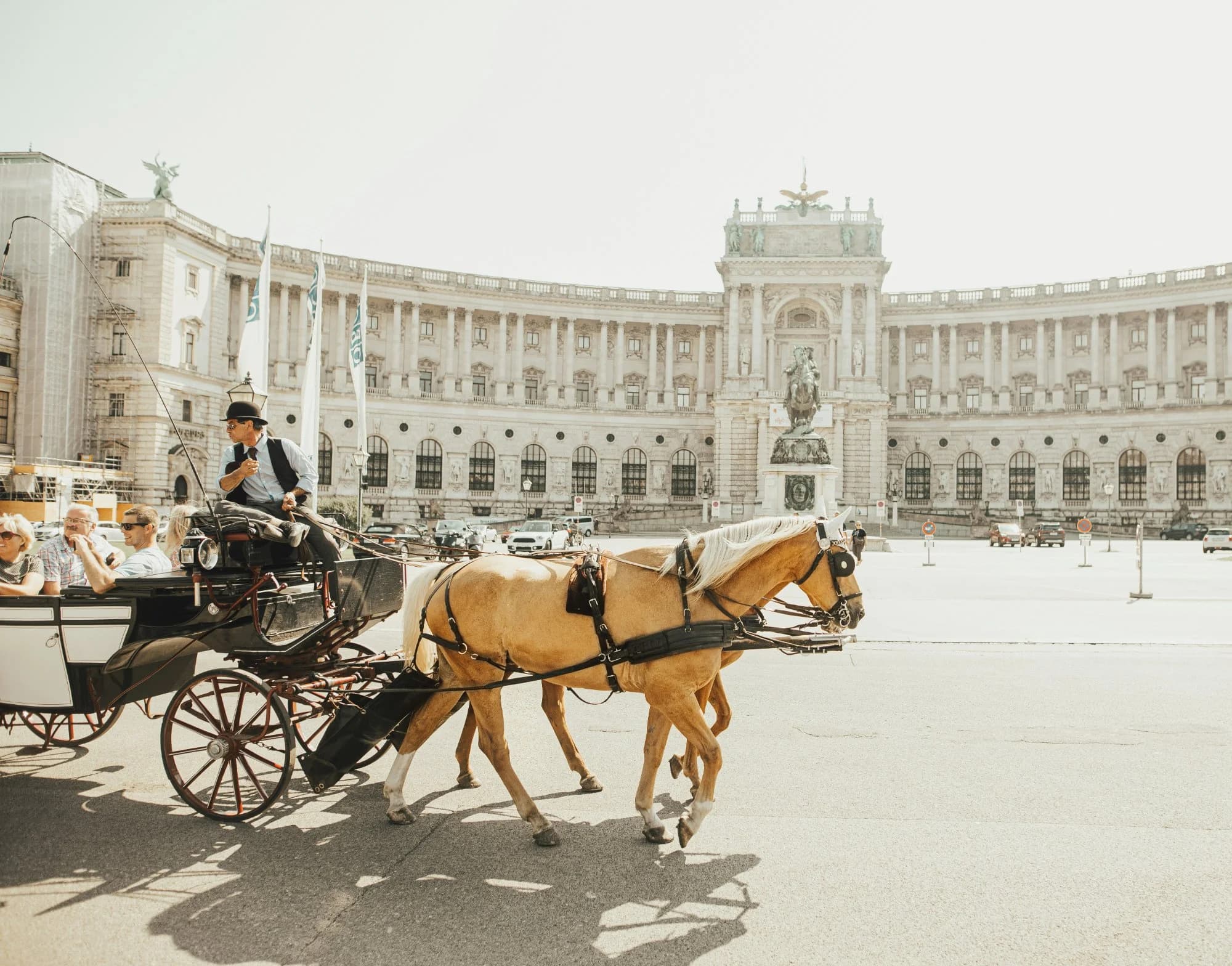
The Innere Stadt, Vienna's historic core and a UNESCO World Heritage Site, concentrates the city's most architecturally imposing streetscapes. Staying here places you within walking distance of the Staatsoper, the Kunsthistorisches Museum, and the Hofburg palace complex. Luxury hotels in this district tend to occupy Ringstrasse-era palaces or Baroque townhouses, with suites that reflect the grandeur of their surroundings. The density of cultural programming in this district is unmatched anywhere in the city.
The Third and Fourth Districts: considered quietness
The Landstrasse and Wieden districts offer a counterpoint to the First: fewer tourists, a more residential rhythm, and a design sensibility that leans contemporary. The Belvedere Palace gardens anchor the Third District, while the Fourth carries traces of early 20th-century Viennese Modernism. Luxury hotel offerings here tend toward the boutique and architecturally precise, with suites designed for guests who prefer a quieter, more editorial approach to the city.
The Ninth District: intellectual heritage
Alsergrund, the Ninth District, is the former territory of Sigmund Freud, Beethoven, and a succession of Viennese intellectuals. It borders the university quarter and the medical campus, and its hotel landscape reflects a more considered, less ceremonial luxury. Suites in this district tend to attract cultural travelers and academics rather than the purely ceremonial visitor.
When to visit Vienna and book a luxury suite
Vienna rewards a specific kind of seasonal attention. Each period of the year offers a materially different city, and suite availability and pricing shift accordingly.
The spring months, from March through May, offer mild temperatures, the reopening of outdoor palace gardens, and a dense schedule of opera and concert programming. This is considered by many to be the most balanced period to visit: the crowds of summer have not yet arrived, and the cultural calendar is at full capacity.
Summer, particularly July and August, draws significant international visitor volumes. Suite rates in major luxury hotels rise accordingly, and early reservation is advisable for guests with specific room or floor preferences. The Vienna Film Festival on the Rathausplatz runs through August and offers an outdoor cultural program of genuine quality.
Autumn, from September through November, is arguable the most sophisticated season for a suite stay. The Vienna Philharmonic and the Burgtheater return from their summer breaks, the light over the Ringstrasse takes on a particular quality, and the city's coffee house culture intensifies. Hotel occupancy eases slightly from summer peaks, and suite selection widens.
Winter in Vienna, particularly December, is defined by the Christkindlmarkt markets and a ceremonial atmosphere that is architecturally coherent with the city's Baroque and Ringstrasse heritage. The Opera Ball season, running from January through early March, represents the apex of Vienna's social calendar, and securing a suite during this period requires significant advance planning.
Understanding Vienna's luxury hotel standards
Austria does not operate a formal Palace designation equivalent to the French system, but Vienna's top-tier luxury hotels maintain standards that are internationally recognized. The city's flagship properties tend to occupy late 19th-century Ringstrasse buildings, purpose-built during the reign of Emperor Franz Joseph I as part of a deliberate urban grandeur project. These structures were designed to project imperial confidence, and the suites within them carry dimensions and ceiling heights that are architecturally exceptional by any contemporary standard.
Beyond the Ringstrasse category, Vienna has a growing category of design-led luxury hotels occupying converted aristocratic residences, former bank buildings, and early 20th-century Modernist structures. Suites in these properties tend to emphasize spatial precision and material quality over historical spectacle, appealing to a guest profile that is more design-literate than ceremony-oriented.
Austrian hospitality culture, informed by the city's coffeehouse tradition and its long history of receiving international diplomatic guests, places significant emphasis on discretion, formality, and anticipatory service. In a Viennese luxury hotel suite, the expectation is that staff understand the city at a level of depth that goes beyond the standard concierge script.
How to choose the right luxury suite in Vienna
Several considerations are specific to Vienna and should inform the suite selection process.
First, the architectural period of the building matters in a city where the built environment is central to the experience. A Ringstrasse-era suite offers high ceilings, period detailing, and a physical connection to the city's imperial narrative. A contemporary conversion offers spatial efficiency and a more curatorial aesthetic. Both are legitimate choices, but they produce materially different stays.
Second, floor level and outlook carry genuine weight in Vienna. Suites facing the Ringstrasse, the inner courtyard of a Baroque palace, or the Belvedere gardens offer views that function as extensions of the cultural experience. Suites facing internal courtyards, while quieter, offer a more private and contemplative character.
Third, consider the suite's relationship to mobility within the city. Vienna's public infrastructure is exceptional, and the U-Bahn connects major districts efficiently. However, guests intending to attend evening opera performances or late-night concerts benefit from proximity to the Staatsoper or the Musikverein, reducing logistical friction at the end of long cultural days.
For travelers exploring the broader Austria itinerary alongside Vienna, the city functions well as both an entry point and a closing chapter. The contrast between Vienna's urban density and the alpine or lake districts of the country is significant, and the choice of suite type in the city can be calibrated to complement rather than repeat the aesthetic register of a rural Austrian stay. Across Europe, few capital cities offer this degree of architectural and cultural specificity within such a walkable perimeter.
Why a curated selection matters in Vienna
Vienna's luxury hotel market is mature and competitive, which means the range of options presenting themselves as premium is wide. Not all of them deliver on the promise at suite level. A property may carry a historic name and a Ringstrasse address while offering suites that are spatially compromised or aesthetically dated. Conversely, a newer boutique property may offer suite experiences of genuine distinction that are less visible in conventional travel media.
La Suite applies an editorial lens to this landscape. The curated selection by La Suite is built on spatial quality, design integrity, service culture, and the specific capacity of a suite to enhance the experience of being in Vienna. The goal is not to list every five-star option in the city, but to identify the properties where the suite itself is the argument for choosing that hotel. In a city as architecturally demanding as Vienna, that distinction is consequential.