




Gulf of Morbihan, France
Hotels with luxury suites in the Gulf of Morbihan
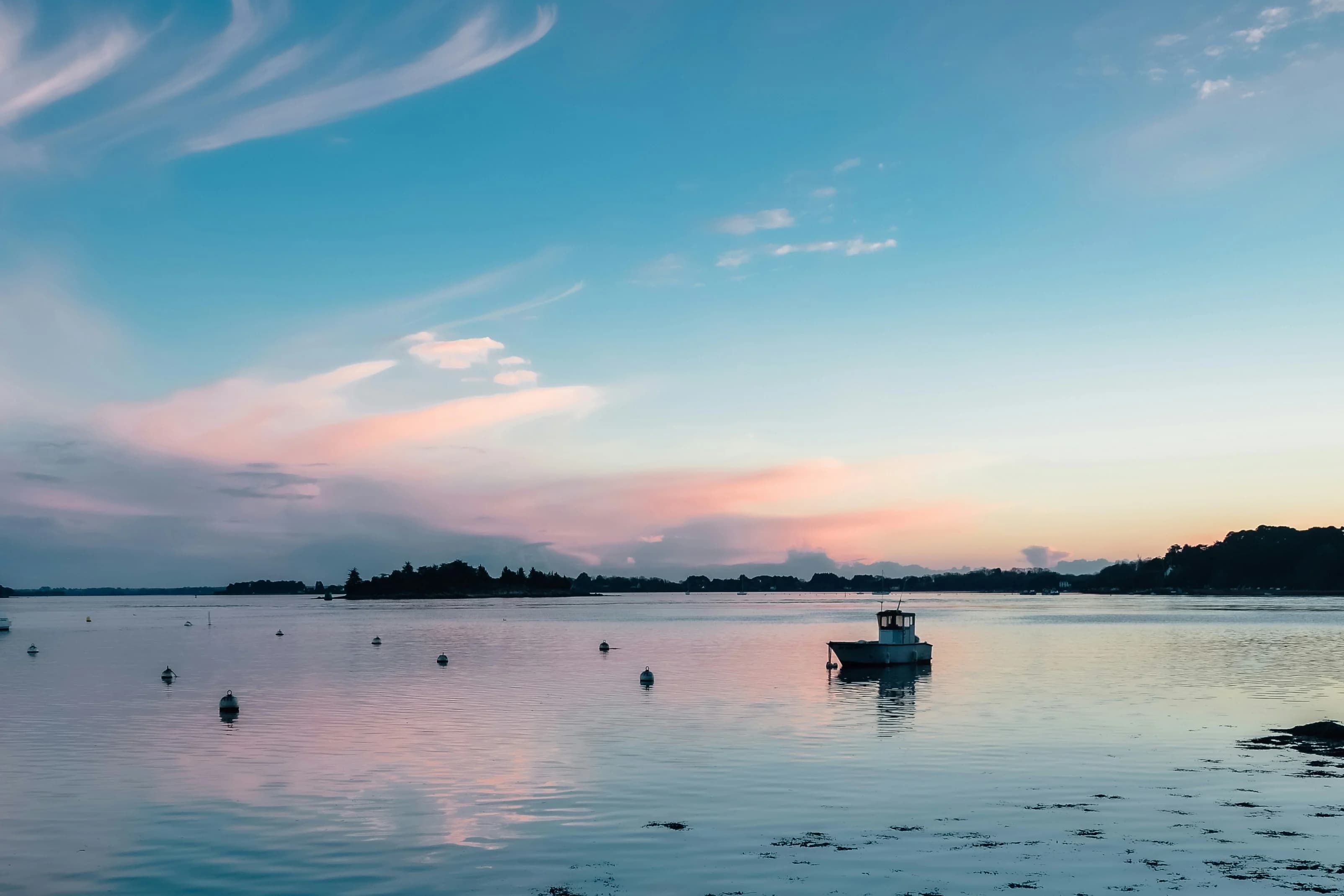
The Gulf of Morbihan is not a uniform coastline. It is a complex inland sea covering roughly 120 square kilometres, and the character of each area within it differs substantially. Choosing where to base yourself is the first architectural decision of any high-end stay here.
Where to stay in the Gulf of Morbihan: understanding the territory
Vannes and the western shore
Vannes is the administrative and cultural capital of the Morbihan department. Its medieval ramparts, cathedral, and covered market define a compact urban centre that functions as a practical gateway to the gulf. The western shore stretching south from Vannes toward Arradon and Larmor-Baden tends to attract properties with direct waterfront access and panoramic orientations toward the islands. This is the area best suited to travelers who want proximity to the gulf's navigable interior without sacrificing access to restaurants, galleries, and transport links.
The Rhuys Peninsula
The Rhuys Peninsula forms the southern boundary of the gulf, separating it from the Atlantic coast of Quiberon Bay. It is a quieter, more exposed stretch of land, historically associated with Château de Suscinio, the former residence of the Dukes of Brittany. The peninsula offers a distinct microclimate, notably milder than the interior of Brittany, and properties here tend to benefit from dual orientations: toward the protected waters of the gulf on one side, and the open Atlantic on the other. For travelers seeking spatial isolation without complete remoteness, Rhuys is the more considered choice.
The islands: Île-aux-Moines and Île d'Arz
The two most accessible inhabited islands within the gulf, Île-aux-Moines and Île d'Arz, are reachable by short ferry crossings from the mainland. Both are car-free environments with a particular quality of silence that is genuinely rare in a European coastal context. Accommodation options on the islands are limited and intimate by necessity. For travelers prioritising complete sensory deceleration, they represent a different category of stay altogether.
When to visit the Gulf of Morbihan for a luxury suite stay
The Gulf of Morbihan operates on a seasonal logic that differs from France's Mediterranean south. Understanding this rhythm is relevant to booking decisions.
Late spring and early autumn: the optimal windows
May, June, and September are broadly considered the most favourable periods for a high-end visit. Temperatures are comfortable for both water-based activities and cultural excursions, the light on the gulf has the particular quality that made the area attractive to painters in the early twentieth century, and the primary tourist infrastructure is fully operational without the density of August. Suite availability at premium properties is generally better in these shoulder months, and pricing reflects that.
Summer: peak season considerations
July and August bring significant visitor volumes to the region, particularly along the Rhuys Peninsula and in Vannes itself. The sailing season peaks during this period, and the gulf hosts several nautical events of note. Reservations for the most sought-after properties should be made considerably in advance. Suite rates typically reach their annual high point between mid-July and mid-August.
Winter and early spring
The off-season in the Gulf of Morbihan is not without its merits. The landscape becomes more austere, the tidal dynamics more dramatic, and properties that remain open often offer more attentive service at reduced rates. For travelers drawn to megalithic sites such as Carnac or the Locmariaquer complex, the cooler months reduce surface congestion substantially.
Luxury standards in Brittany: what to expect from top-tier suites
France maintains a formal hotel classification system, and at its apex sits the Palace designation, awarded by Atout France to properties that meet an extended set of criteria beyond the standard five-star framework. These criteria include architectural significance, service ratios, culinary standing, and cultural contribution. While Palace hotels are concentrated in Paris and the Côte d'Azur, the broader Brittany region has seen consistent investment in high-end hospitality over the past decade.
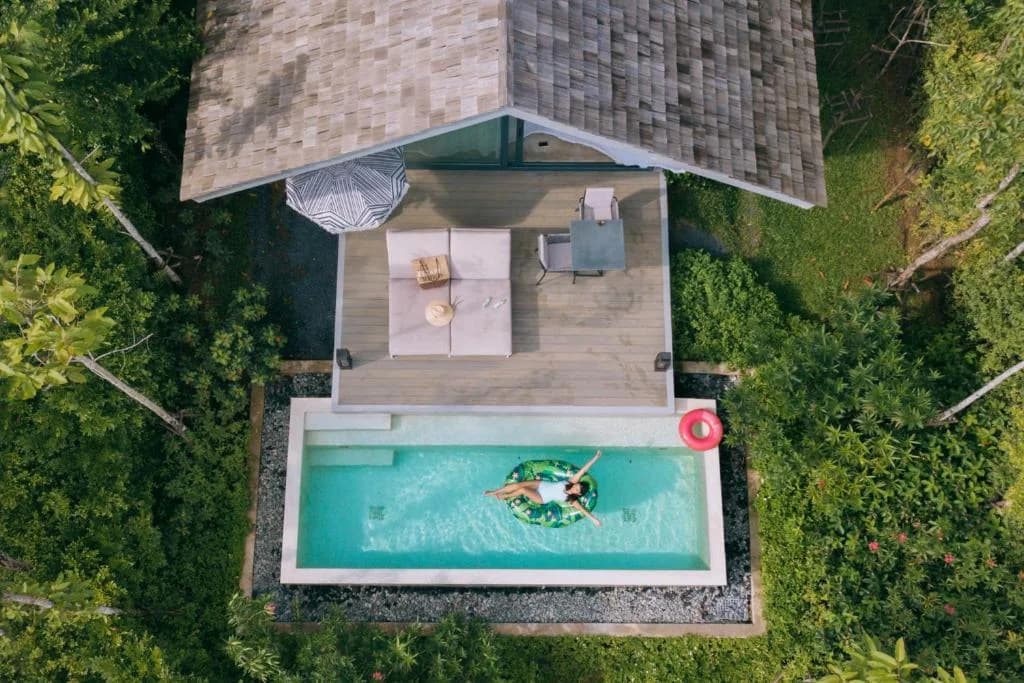
In the Gulf of Morbihan specifically, the most distinguished properties tend to fall into two architectural typologies. The first is the converted manor or château: properties built in local granite, often with direct waterfront gardens, that have been restored with contemporary interiors while preserving their structural character. The second is the purpose-built contemporary hotel: typically lower in scale, designed with an explicit orientation toward the landscape, and conceived around the suite as the primary unit of accommodation.
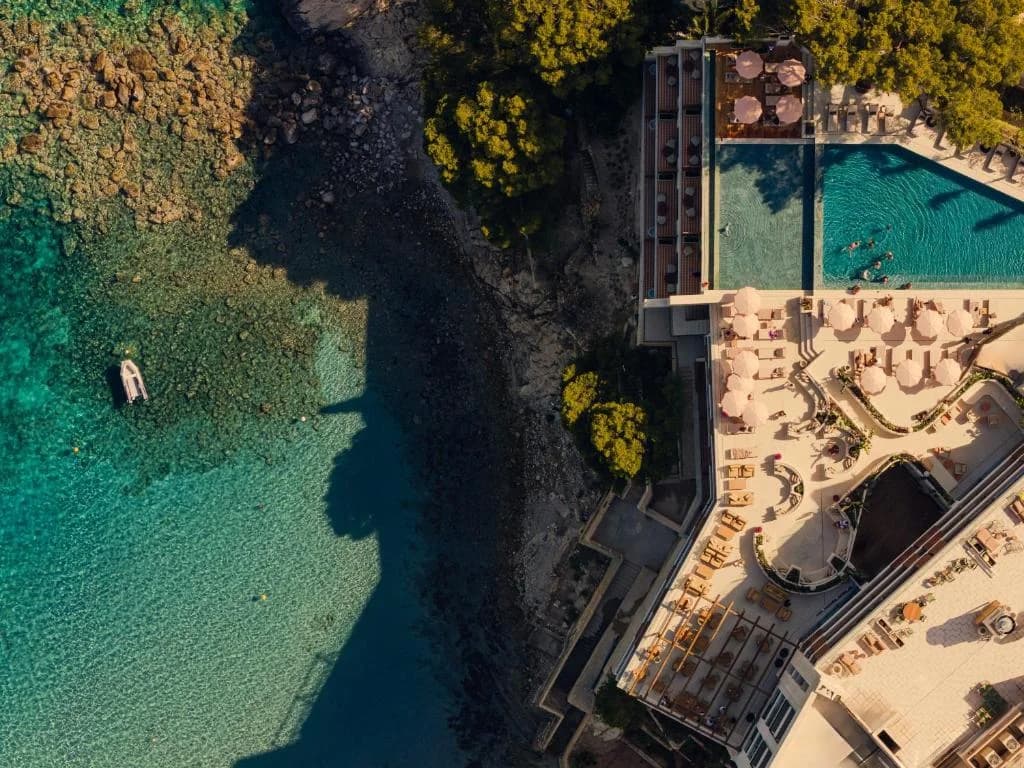
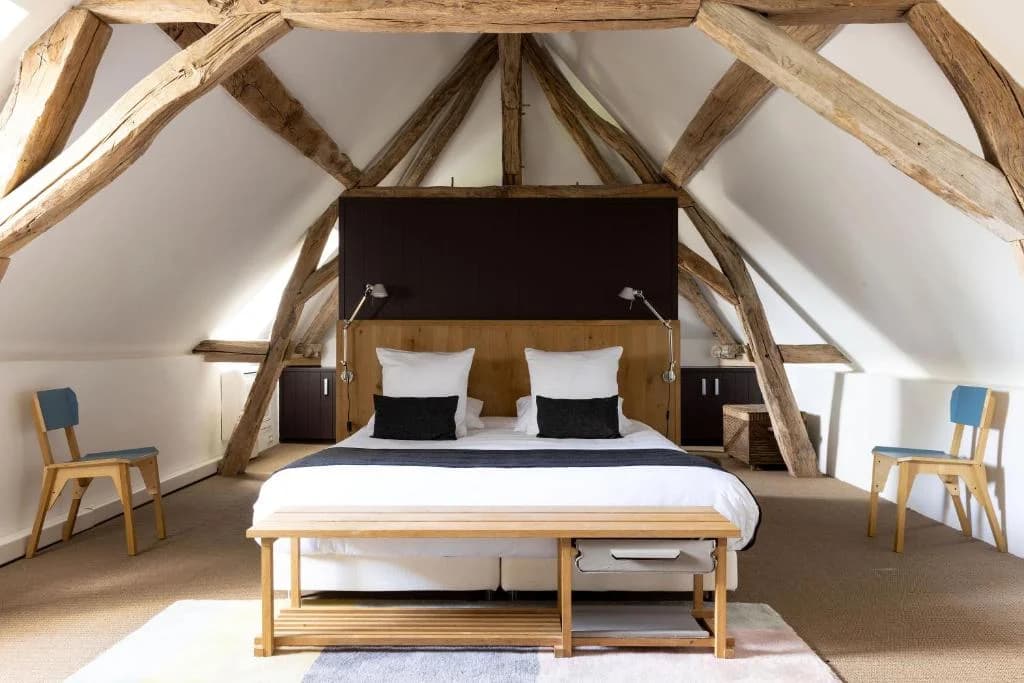
In both cases, the benchmark for a genuine luxury suite in this region includes: a minimum footprint that allows for a distinct sleeping and living area, a private terrace or balcony with an unobstructed view of the gulf or its immediate landscape, materials sourced with regional coherence (stone, linen, oak), and a bathroom that functions as a destination within the room rather than a utility space. Properties with direct access to the water, whether via a private pontoon, a dedicated garden, or a suite-level terrace at water height, occupy a separate category entirely.
How to choose the right suite in the Gulf of Morbihan
Several practical considerations are specific to this territory and should inform the selection process.
Orientation and light
The gulf is oriented broadly east-west, and the quality of light varies significantly depending on which shore a property faces. North-facing suites on the southern shore of the Rhuys Peninsula receive different light conditions than south-facing rooms on the northern shore near Arradon. If light and the quality of the view are primary criteria, it is worth establishing the precise orientation of a suite before committing.
Access to the water
Not all waterfront properties offer meaningful access to the gulf itself. A view of the water from a distance is not equivalent to the ability to board a boat, kayak, or swim from the property's own shoreline. For travelers who intend to engage actively with the gulf's nautical culture, the distinction between a property with a view and one with genuine water access is material.
Proximity to cultural sites
The megalithic alignments at Carnac, the cairn of Gavrinis, the Locmariaquer complex, and the medieval fabric of Vannes are all within reasonable reach of most properties in the gulf. However, distance and road access vary. Travelers combining a suite stay with a structured cultural itinerary should verify transfer times before selecting a base.
Dining and self-sufficiency
The Gulf of Morbihan has a coherent culinary identity built around shellfish (oysters from the Penerf estuary, mussels, spider crabs), locally caught fish, and Breton dairy products. Some of the region's finest dining experiences are found in small, reservation-only restaurants rather than in hotel dining rooms. A suite with a functional kitchen or kitchenette offers additional flexibility for guests who source directly from local markets, which in Vannes and along the peninsula are of consistently high quality.
Why a curated selection by La Suite makes sense here
The Gulf of Morbihan is not a destination with an oversupply of obvious luxury options. It is a territory where the finest properties are often smaller, less marketed internationally, and harder to evaluate from a distance. The gap between a property that photographs well and one that genuinely delivers at suite level, in terms of space, service, material quality, and positional logic, is significant here.
La Suite applies the same editorial criteria to this region as to Paris, the Côte d'Azur, or the Amalfi Coast. The curated selection reflects properties that have been assessed against consistent standards: suite architecture, orientation, service structure, and the coherence between the property's identity and the specific character of the gulf. For a traveler arriving at this destination for the first time, or returning with higher expectations than a previous visit satisfied, that filter is the most efficient starting point.
Frequently asked questions
What is the best area in the Gulf of Morbihan to stay in a luxury suite?
The western shore between Vannes and Larmor-Baden offers the most concentrated selection of high-end properties with direct gulf views and water access. The Rhuys Peninsula is preferable for travelers seeking greater isolation, a milder microclimate, and a dual orientation toward both the gulf and the open Atlantic.
When is the best time to book a luxury hotel suite in the Gulf of Morbihan?
Late May through June and the month of September represent the optimal booking windows. The weather is stable, the gulf is navigable, and suite availability at top properties is better than during the July-August peak. Advance reservations of several months are advisable for summer stays at premier addresses.
Are there Palace-designated hotels in the Gulf of Morbihan?
The Palace designation awarded by Atout France is concentrated primarily in Paris and major resort destinations. However, the Gulf of Morbihan has seen meaningful investment in high-end hospitality, with converted granite manors and purpose-built contemporary properties offering suite-level accommodation that meets rigorous standards of space, material quality, and service.
What should I look for in a luxury suite on the Gulf of Morbihan?
The key criteria are orientation and light, meaningful water access rather than a distant view, suite footprint with distinct sleeping and living zones, and material coherence with the regional landscape. A private terrace facing the gulf is among the most valued features in properties across this territory.
Is the Gulf of Morbihan a suitable destination for a luxury break in winter?
A winter visit offers a markedly different but genuinely worthwhile experience. The tidal dynamics of the gulf are more dramatic, the megalithic sites at Carnac and Locmariaquer are far less congested, and properties that remain open often provide more attentive and personalised service. Suite rates are typically at their annual lowest during this period.
What types of luxury hotel properties are available in the Gulf of Morbihan?
Two main typologies define the high-end offer: converted granite manors and châteaux with waterfront gardens, and contemporary low-rise hotels designed explicitly around the gulf landscape. Both categories can deliver genuine suite-level experiences, though they differ substantially in atmosphere, architectural character, and proximity to cultural sites.
Can I access the islands of the Gulf of Morbihan from a luxury hotel base on the mainland?
Yes. Île-aux-Moines and Île d'Arz are both served by regular ferry crossings from the mainland shore near Larmor-Baden and Port-Blanc. The crossings are short, typically under fifteen minutes, making day visits from a mainland suite entirely practical. Both islands are car-free, which reinforces their appeal as destinations for a quieter, more deliberate excursion.
What cultural experiences near the Gulf of Morbihan complement a luxury suite stay?
The megalithic alignments at Carnac are among the most significant prehistoric sites in Europe, with over three thousand standing stones. The Gavrinis cairn, accessible by boat from Larmor-Baden, contains some of the most elaborately decorated Neolithic stone carvings on the continent. The medieval ramparts and covered market of Vannes, and the Château de Suscinio on the Rhuys Peninsula, complete a cultural itinerary of considerable depth.
What is the local culinary identity around the Gulf of Morbihan?
The region's culinary profile is built around high-quality shellfish, particularly oysters from the Penerf estuary, local mussels, spider crab, and fresh-caught fish from the Atlantic. Breton dairy and artisan products are consistently strong, and the weekly markets in Vannes and along the peninsula are among the best in the department for direct sourcing.
How does La Suite select luxury hotel suites in the Gulf of Morbihan?
La Suite applies a consistent editorial framework that evaluates suite architecture, spatial logic, orientation relative to the landscape, material quality, and the coherence between a property's identity and its specific location within the gulf. The curated selection prioritises properties where the suite itself is the primary design consideration, not an afterthought within a larger hotel structure.