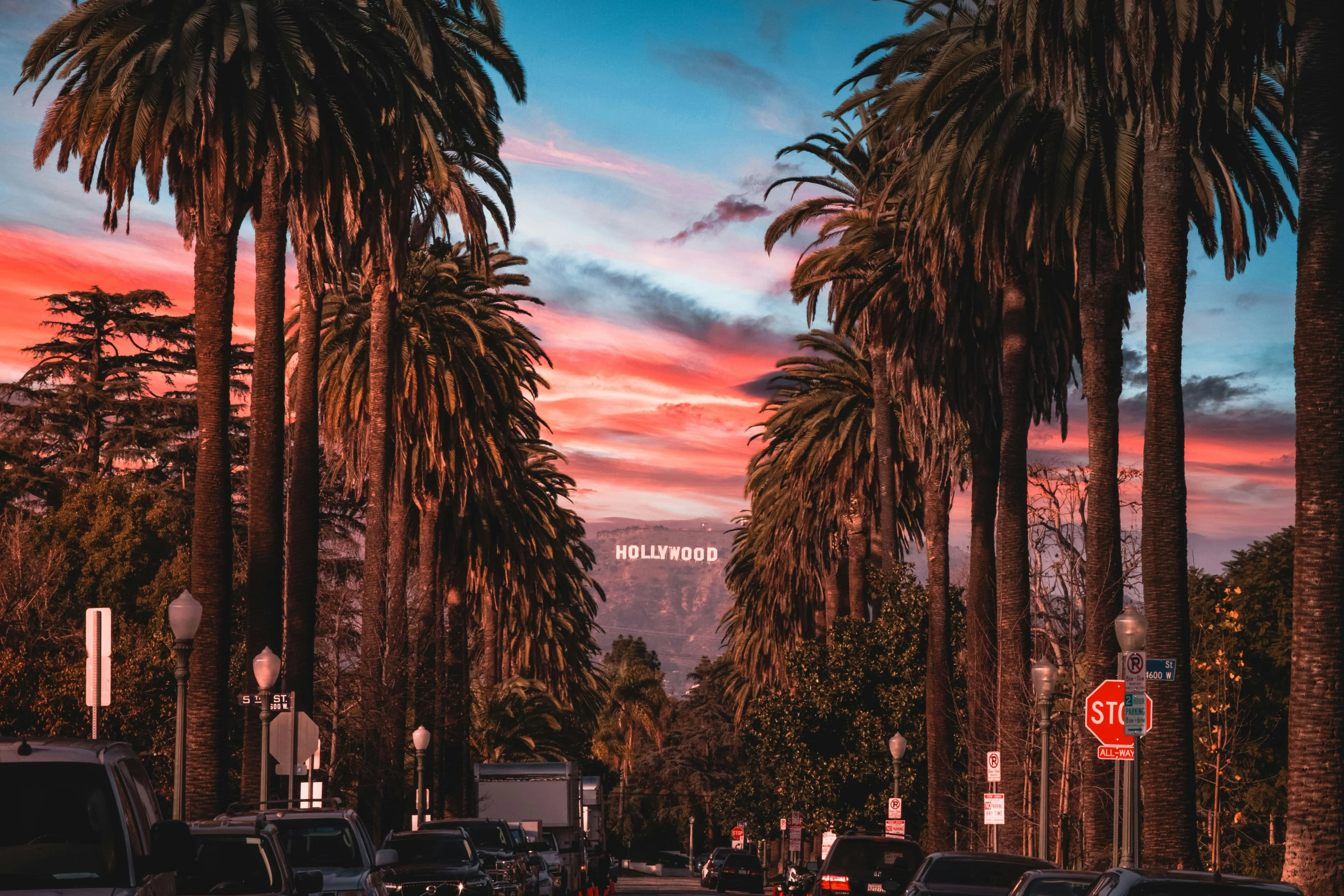
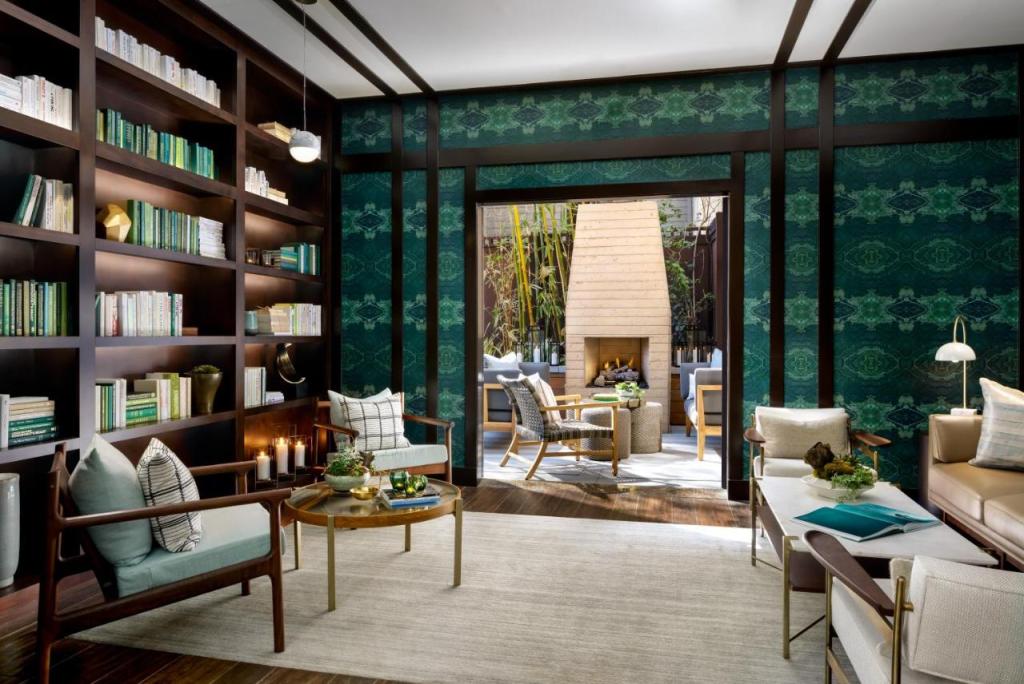
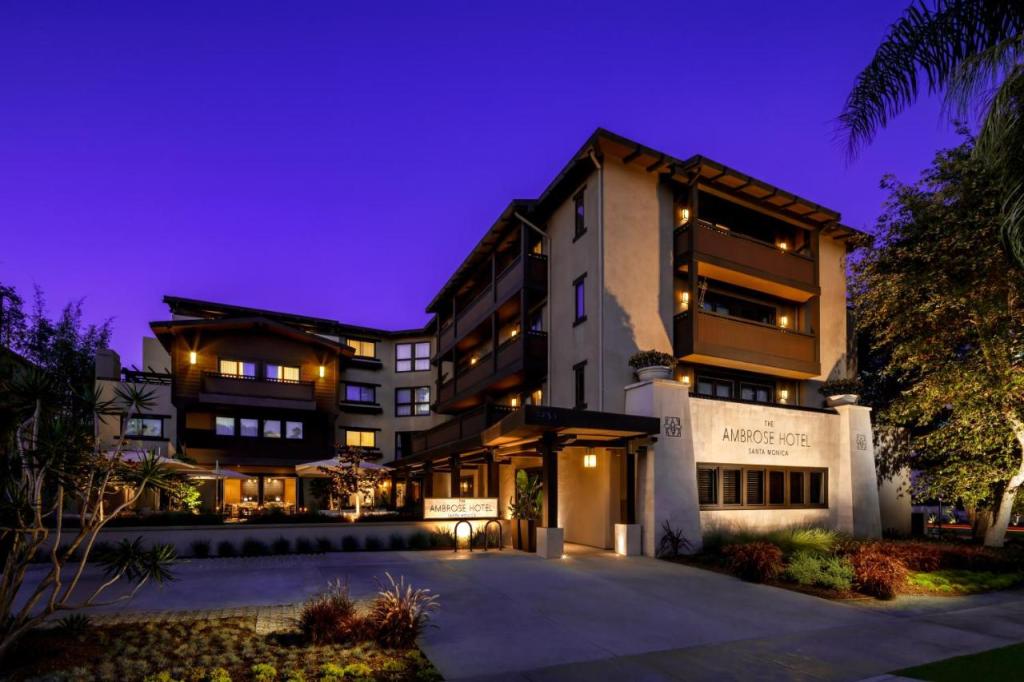
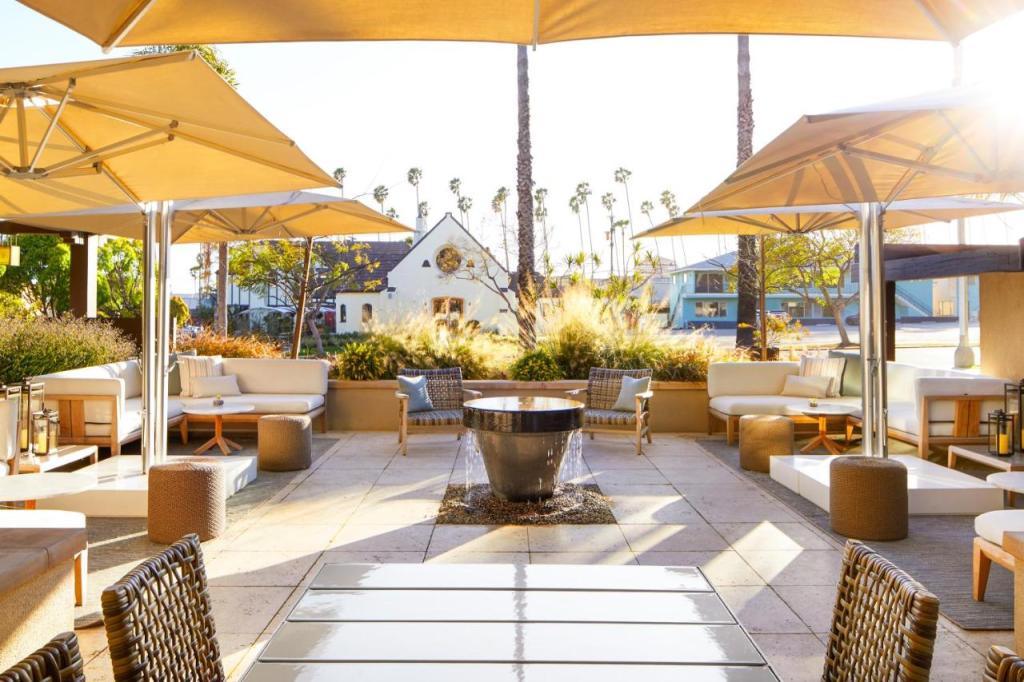
1 Hotel West Hollywood, West Hollywood
Set in Los Angeles, 984 feet from Sunset Strip, 1 Hotel West Hollywood offers rooms with air conditioning and free WiFi. The property is around 2.4 mi from Dolby Theater, 2.4 mi from Hollywood Walk of

Los Angeles resists the logic of conventional city travel. There is no single center to anchor an itinerary, no obvious arrondissement to defer to. The city operates as a horizontal archipelago of neighborhoods, each with its own density of culture, wealth, and design ambition. For the suite traveler, this structure is an advantage rather than a complication. Choosing the right area is, in itself, the first editorial decision of the trip.
39 hotels available

Set in Los Angeles, 984 feet from Sunset Strip, 1 Hotel West Hollywood offers rooms with air conditioning and free WiFi. The property is around 2.4 mi from Dolby Theater, 2.4 mi from Hollywood Walk of

Beverly Wilshire, a 4 Seasons Hotel is located across the street from Rodeo Drive. The hotel features a Mediterranean-style pool and hot tub with private cabanas. The property is in a popular location

Cameo Beverly Hills, LXR Hotels & Resorts is just 15 minutes' walk from the famous Rodeo Drive Shopping District. This family-friendly boutique hotel offers views of Los Angeles, spacious Venetian-ins

Cara Hotel provides rooms in Los Feliz. Among the various facilities of this property are a restaurant and a bar. The accommodations offers a 24-hour front desk as well as free WiFi. Guest rooms in th

Dieses Hotel am Meer in Santa Monica bietet Ihnen 2 hauseigene Restaurants. In jedem Zimmer ist eine Hydrotherapie-Whirlpool-Badewanne vorhanden. Des Weiteren erwarten Sie ein Außenpool und ein Whirlp

Just steps away from the famous Sunset Boulevard, the Chamberlain West Hollywood offers accommodations in the heart of West Hollywood. Guests can enjoy the on-site restaurant & rooftop pool that featu

The Chateau Marmont was built as the first deluxe high-rise apartment complex on Sunset Boulevard, opening its doors in February of 1929. Its gothic charm and old-world European flair were inspired by

Located in Los Angeles, a 11-minute walk from Microsoft Theater, Downtown Los Angeles Proper Hotel, a Member of Design Hotels has accommodations with free bikes, private parking, an outdoor swimming p

Fairmont Century Plaza Los Angeles at Beverly Hills features free bikes, outdoor swimming pool, a fitness center and terrace in Los Angeles. Among the facilities of this property are a restaurant, roo

Offering a full-service spa and rooms with a 42-inch flat-screen TV, this oceanfront hotel is 3 minutes' drive from Santa Monica Beach Park. It features an outdoor pool and hot tub. 24-hour room servi

Located in the center of Los Angeles this luxurious, full-service hotel provides rooms with French doors opening to private balconies. This 5-star hotel features a full-service spa and outdoor pool. T

Elegant Accommodations Rooms feature private bathrooms, city views, and modern amenities. Guests enjoy free WiFi, mini-bars, and private terraces. Exceptional Facilities The hotel offers a rooftop swi

Located in Los Angeles, 2.5 miles from Petersen Automotive Museum, Hotel 850 SVB, West Hollywood, a Member of Design Hotels has accommodations with free bikes, private parking, a shared lounge and a t

This historic, 1950s hotel is located in Bel-Air neighbor of Los Angeles and features rooms with flat-screen TVs. The hotel has a large garden and a full-service spa located on-site. Hotel Bel-Air ro

Elegant Accommodations Hotel Covell in Los Angeles offers a 5-star experience with a terrace, bar, and free WiFi. Guests enjoy air-conditioning, balcony, and city views, and a work desk. Comfortable A

Offering a tranquil outdoor pool and an on-site restaurant, Hotel Figueroa is located across the street from the LA Live entertainment complex, which is home to Cyrpto.com Arena. Iconic Boutique Hotel

Sofitel Los Angeles at Beverly Hills is a stunning 4-diamonds AAA hotel in LA offering elegant luxury accommodations and dramatic decor with an ambiance that combines see-and-be-seen excitement and th

Boasting an outdoor pool, InterContinental - Los Angeles Downtown is located in the Downtown Los Angeles district of Los Angeles. The property has an on-site restaurant and free WiFi throughout. An Am

This artisan hotel is located on a tree-lined side street in West Hollywood's Design District. It offers an on-site restaurant and a pool for guest relaxation. Guest bathrobes are provided in each roo

Nestled on a palm-lined residential boulevard in the heart of Beverly Hills, L'Ermitage Beverly Hills is a luxurious, independent five-star hotel. Renowned for its understated luxury, the hotel is the
The luxury hotel market here reflects that dispersal. Properties range from mid-century modernist estates repurposed as boutique hotels to full-service towers rising above Wilshire Boulevard. The suite offering across Los Angeles is genuinely heterogeneous: some prioritize outdoor living and private terraces, others deliver white-glove urban service at the level of a Manhattan or Mayfair equivalent. Knowing the difference requires context, and that context is what La Suite provides.
The residential enclave of Bel-Air represents one of the most private luxury environments in the continental United States. Hotels in this zone tend toward the estate model: low density, landscaped grounds, and a spatial generosity that is structurally impossible to replicate in denser urban settings. Suites here are often pavilion-style, with direct garden or canyon access. The atmosphere is quiet, emphatically residential, and suited to travelers who want distance from the industry mechanics of central Los Angeles.
West Hollywood functions as the creative and commercial spine of the city's luxury hotel corridor. The Sunset Strip concentrates a high density of design-forward properties within a compact geography, making it the most internationally legible luxury address in Los Angeles. Suites in this zone frequently feature skyline terraces, access to rooftop pools, and proximity to the gallery and restaurant circuit that defines the neighborhood's cultural rhythm. This is the area for travelers whose stay is oriented around meetings, events, or the specific social geometry of the entertainment industry.
Beverly Hills operates on a different register entirely. The luxury standard here is classical and deliberate: grand lobbies, formal service structures, and suites designed to project institutional permanence. The commercial axis of Rodeo Drive anchors a shopping and dining environment that remains among the most concentrated in North America. For travelers who prioritize decorum and a certain legible prestige, Beverly Hills continues to deliver a consistent and high-caliber experience.
The coastal corridor from Venice to Santa Monica offers a counterpoint to the inland luxury model. Suites here trade vertical grandeur for horizontal ease: ocean light, direct beach access in some cases, and an architectural language rooted in California modernism. The pace is demonstrably slower, the cultural offer oriented around wellness, design studios, and the specific outdoor culture of the Pacific coastline. This zone suits travelers who want Los Angeles at its most physically pleasurable and least performative.
Los Angeles operates on a near-year-round schedule by climatic standards, but the quality of the experience shifts across seasons in ways that matter to the deliberate traveler. Late spring (April through June) offers the most balanced conditions: temperatures are moderate, the marine layer that characterizes early summer mornings has not yet settled into its most persistent phase, and the city's cultural programming is typically at its most active.
Awards season (January through early March) compresses the city's social calendar into a dense sequence of events, screenings, and private functions. Hotel suites during this period book early and carry premium pricing. September and October represent a quieter, arguably more refined window: the heat of August has receded, the entertainment industry has returned from its summer rhythm, and the light across the canyon neighborhoods takes on a quality that photographers and architects specifically seek out.
December and the holiday period bring a different dynamic. Beverly Hills and West Hollywood activate a version of themselves that is more formal and celebratory. Suite availability remains reasonable compared to peak awards season, though rates at the most sought-after properties remain elevated.
Los Angeles does not operate within a formal classification system equivalent to France's Palace designation. The market self-regulates through a combination of international brand standards, independent operator reputation, and the very specific demands of a clientele that includes entertainment executives, global investors, and design professionals who have high baseline expectations and limited tolerance for service inconsistency.
The best suites in Los Angeles tend to share several defining characteristics. Outdoor space is treated as non-negotiable: a private terrace, plunge pool, or garden access is a baseline expectation at the top tier, not an upgrade. Privacy infrastructure matters enormously in a city where recognition is both a social currency and a practical concern. Discretion, separate entrances, and the ability to manage one's own schedule without friction are qualities that the best properties engineer into their suite product deliberately.
Wellness integration is a further differentiator. Los Angeles has been central to the evolution of high-end wellness culture, and the suite experience here frequently extends to in-room fitness equipment, dedicated spa access, and nutrition programming that reflects the city's specific dietary culture.
The primary decision is geographic. In a city where transit is still predominantly car-based, the distance between your hotel and your primary activities carries real daily weight. A suite in Santa Monica that requires forty-five minutes of freeway driving to reach a dinner reservation in Silverlake is a structural mismatch, regardless of how well the suite itself performs.
Beyond location, the choice between an estate-model property and a full-service urban hotel reflects a fundamental preference about how one wants to move through a stay. Estate properties deliver privacy, landscape, and a domesticity of scale. Urban properties deliver speed, service density, and proximity to commercial and cultural infrastructure. Both are valid; neither is universally correct.
Architecture is a further axis. Los Angeles has a genuine modernist heritage, and several of its most significant hotel properties are embedded in that lineage. For design-literate travelers, the materiality and spatial logic of a suite is part of the value proposition, not merely its amenity list.
The Los Angeles luxury hotel market is large, geographically dispersed, and unevenly reliable. Marketing language in this city is applied generously and often imprecisely. The gap between a property that presents as a luxury suite destination and one that actually delivers at that level is significant and not always apparent from standard booking interfaces.
La Suite approaches this market with the same editorial discipline applied across every destination in its portfolio. Each property is assessed against consistent criteria: suite-specific quality, service architecture, location relevance, and the degree to which the property understands and serves the specific needs of the suite traveler. The result is a selection that removes noise without removing choice, and that reflects Los Angeles as it actually operates rather than as it presents itself.

Beverly Hills, West Hollywood, and Bel-Air represent the three primary luxury hotel corridors in Los Angeles, each with a distinct character. Beverly Hills offers classical service and institutional prestige, West Hollywood delivers design-forward properties with strong cultural proximity, and Bel-Air provides estate-scale privacy within a residential landscape. The Santa Monica and Venice coastline offers a fourth axis, oriented around outdoor living and Pacific light.
Late spring (April to June) and early autumn (September to October) offer the most balanced combination of favorable climate, cultural programming, and relative suite availability. Awards season from January through early March drives significant demand and pricing at the most sought-after properties, and advance booking during that window is essential. December carries elevated rates but a more formally social atmosphere, particularly in Beverly Hills.
Entry-level luxury suites in Los Angeles typically begin around 1,500 USD per night at well-regarded properties, with top-tier penthouses and private villa suites at the most prestigious addresses ranging from 5,000 to 20,000 USD or more. Pricing is highly variable by neighborhood, season, and suite category, and awards season commands a notable premium across the market.
Private outdoor space (a terrace, plunge pool, or garden access) is a baseline expectation at the luxury level in Los Angeles, not an optional extra. Privacy infrastructure, including discreet entrances and attentive but unobtrusive service, is equally important in a city where a significant share of the suite clientele has specific security and recognition considerations. Wellness integration and the architectural quality of the space are further differentiators worth assessing before booking.
The answer depends entirely on how you intend to use the city. Large full-service hotels in Beverly Hills and West Hollywood deliver service density, a broad amenity infrastructure, and strong proximity to commercial and social hubs. Boutique and estate-model properties in Bel-Air or the canyons offer a fundamentally different experience defined by spatial generosity, landscape, and discretion. Neither category is universally superior; the choice should be determined by your itinerary structure.
Los Angeles has a genuine modernist architectural heritage, and several of its most notable hotel properties are embedded in that lineage, drawing on mid-century design traditions associated with the California school. Some properties occupy or reference structures with significant design histories, and for travelers with an architectural interest, the spatial logic and materiality of a suite is a substantive part of the value proposition. La Suite curates properties where design quality is a consistent criterion.
For stays during awards season (January to March) or major cultural events, booking three to six months in advance is a practical minimum at the most in-demand properties. During the spring and autumn windows, a lead time of four to eight weeks is generally sufficient for most luxury categories, though penthouse and signature suites at the most prominent addresses carry limited inventory and reward earlier planning regardless of season.
The defining characteristics of Los Angeles suite travel are its emphasis on outdoor living, its geographic dispersal across a large metropolitan area, and the specific privacy expectations of a clientele drawn from the entertainment, technology, and global investment sectors. The city's modernist architectural heritage also gives its best properties a spatial aesthetic that is distinct from the more formal traditions of New York or the resort conventions of Miami.
Several properties in Los Angeles are structured to accommodate extended stays of one week or more, particularly in the estate-model properties of Bel-Air and Beverly Hills that operate closer to a residential service model. Suite configurations with kitchen access, separate living areas, and dedicated staff arrangements are available at the top tier of the market, and properties in this category are specifically curated within the La Suite selection.
La Suite applies consistent editorial criteria across every property in its Los Angeles selection: suite-specific quality assessed independently from general hotel rating, service architecture evaluated against the expectations of a privacy-conscious and design-literate clientele, and location relevance mapped against the actual structure of the city rather than generic proximity metrics. The goal is a selection that is genuinely useful to the deliberate traveler, not one that simply reflects marketing spend or brand recognition.