Staying in Athens: a city of distinct neighbourhoods and suite experiences
Kolonaki and the upper city
Kolonaki sits on the lower slopes of Lycabettus Hill and functions as Athens's most architecturally refined residential quarter. The streets are lined with neoclassical buildings, serious galleries, and independent fashion houses. Suites in this district tend to occupy boutique properties or converted mansions. The pace is deliberate. The clientele is local, design-literate, and unhurried. This is the neighbourhood for travelers who come to Athens for culture and wish to remain embedded within it rather than adjacent to it.
Syntagma and the historic centre
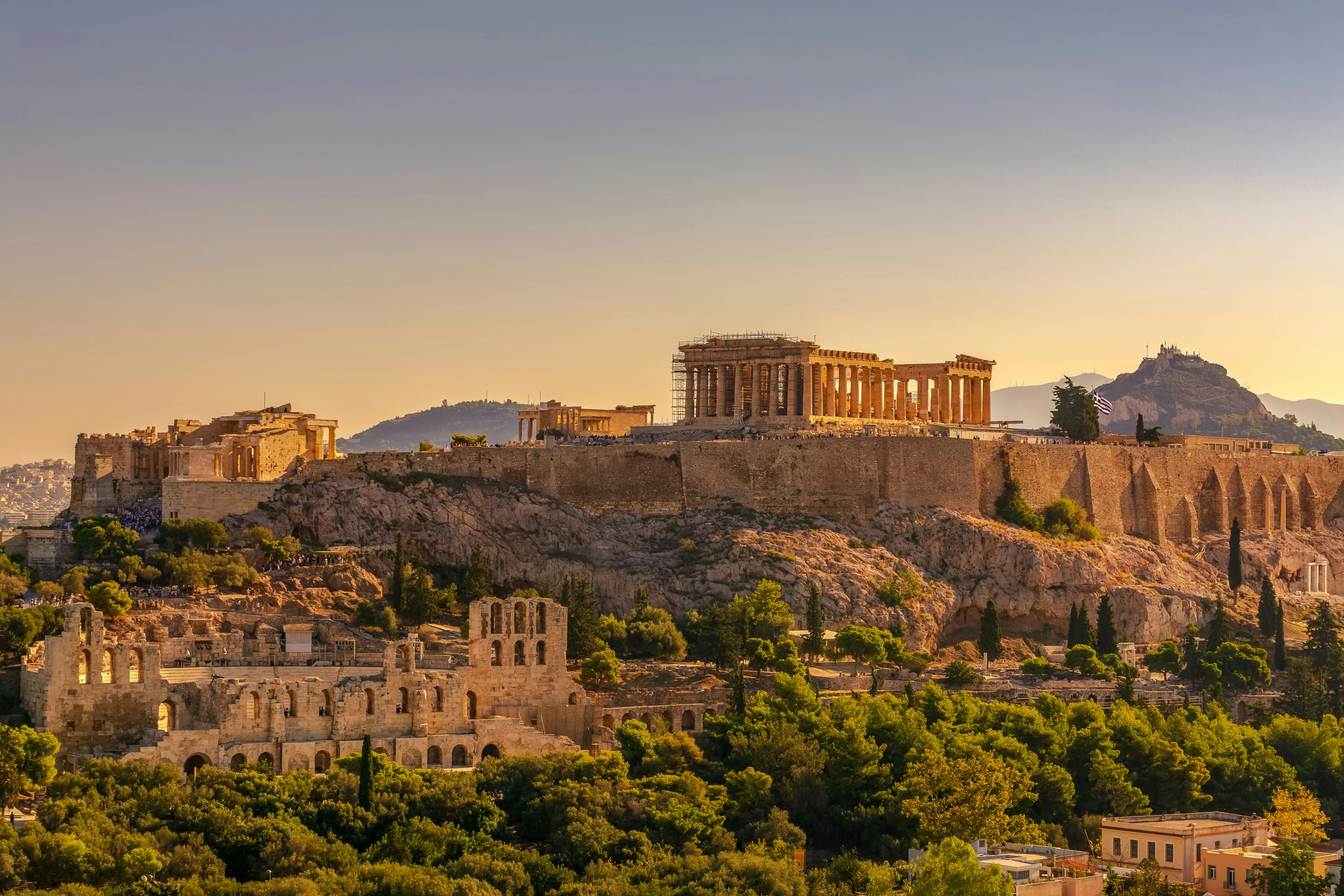
The historic centre, anchored by Syntagma Square and the Greek Parliament, is where Athens places its grandest hotel architecture. Properties here have operated for generations and carry a particular weight: marble lobbies, high ceilings, and corner suites with direct sightlines to the Acropolis or the National Garden. The logic of staying here is proximity, not just to monuments but to the city's operational core: ministeries, embassies, the central market.
Monastiraki and Plaka
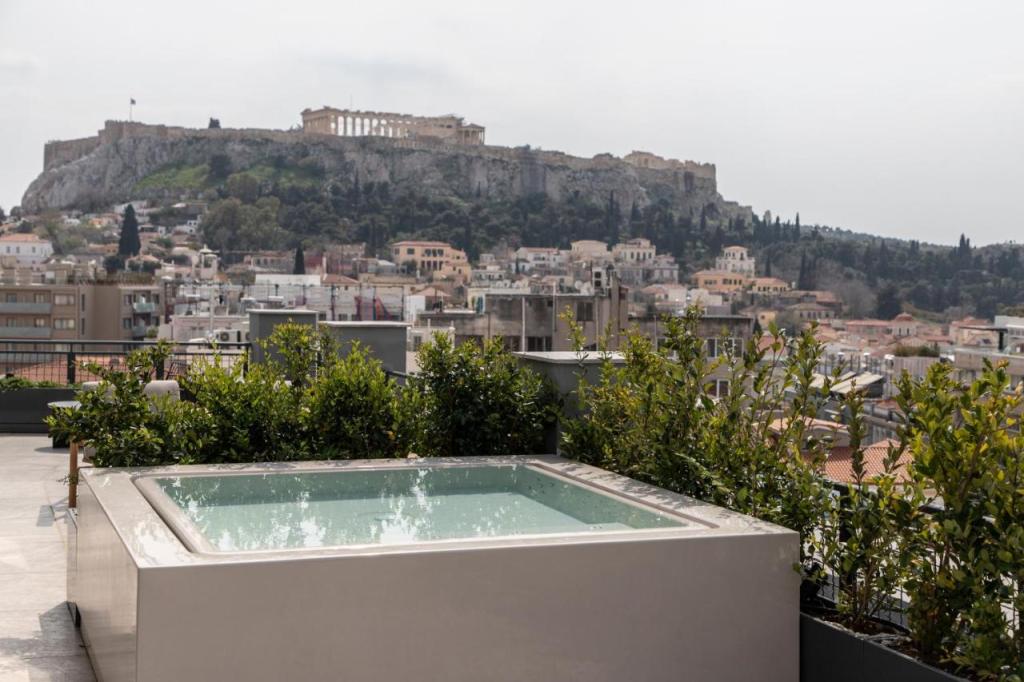
These two adjoining districts sit at the base of the Acropolis rock and represent the most historically dense urban fabric in the city. Staying here places you within walking distance of the Agora, the Temple of Hephaestus, and the principal archaeological sites. Suites in this area are fewer and more intimate. Rooftop terraces with unobstructed Acropolis views are the defining amenity. The architectural language oscillates between Ottoman-era townhouses and Cycladic minimalism.
Vouliagmeni and the Athenian Riviera
South of the city, the Athenian Riviera extends along the Saronic coastline toward Cape Sounion. Vouliagmeni in particular functions as Athens's coastal annex: a district of private beaches, pine forests, and resort properties that operate at a scale impossible within the urban core. Suites here prioritise sea access, outdoor space, and architectural scale over proximity to monuments. The light on the Saronic Gulf in late afternoon is of a quality that explains why painters and photographers have been returning to this coastline for centuries.
When to visit Athens for a suite stay
Athens operates year-round, but the optimal windows for a suite stay are specific. April through early June offers the most temperate conditions: the city is active, archaeological sites are uncrowded, and properties have not yet entered peak summer pricing. The light in May is particularly precise, without the heat haze that settles over the basin in July and August.
September and October represent the other ideal window. The summer crowds have thinned, the sea temperature remains high enough for swimming, and the city's cultural calendar reasserts itself. The Athens Epidaurus Festival, which runs through August, draws international theatre and opera productions to ancient venues including the Odeon of Herodes Atticus. For travelers interested in attending, suite availability in the central districts should be secured several months in advance.
July and August are the peak months. Properties are fully occupied, prices are at their highest, and the city reaches temperatures that make afternoon movement uncomfortable. That said, the Athenian Riviera properties come into their own during this period: the combination of sea access and air-conditioned suite space makes high summer entirely manageable for those positioned along the coast.
Winter, from December through February, is Athens at its quietest and most local. Prices drop significantly, archaeological sites are accessible without crowds, and the city's restaurant and arts scenes operate without tourist dilution. For the right traveler, a winter suite stay in Athens is one of the most underused propositions in European luxury travel.
Understanding luxury hotel standards in Athens
Greece does not operate the French Palace designation system, but Athens has its own hierarchy of prestige properties. At the top tier sit the grand hotels of Syntagma, properties with decades of diplomatic history and a physical scale that smaller boutique entries cannot replicate. Below them, a generation of design-led boutique hotels has emerged, particularly in Monastiraki, Kolonaki, and along the Riviera, that compete on architecture and service precision rather than historical weight.
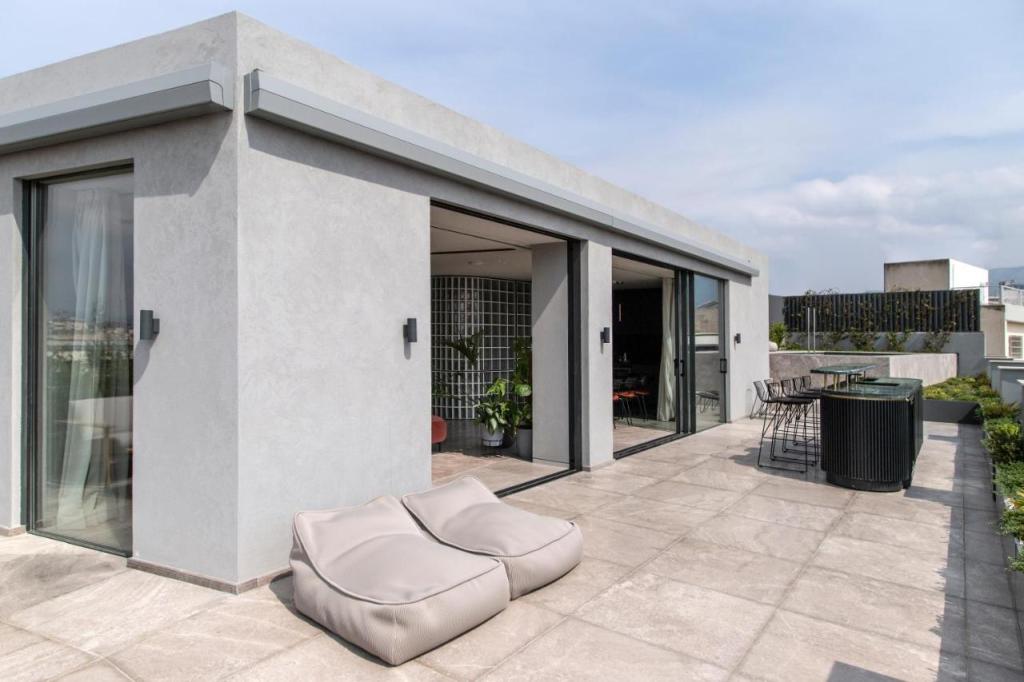
What distinguishes the best suites in Athens is the management of outdoor space. A suite without a private terrace, a rooftop access point, or a direct view toward the Acropolis is operating below the standard that the city's geography makes possible. The Attic sky, particularly at dusk, is an amenity in itself. Properties that understand this position their suite inventory accordingly.
Expect top-tier suites to offer: direct Acropolis or sea views, private terrace or loggia, in-room dining calibrated to Greek culinary traditions (not generic international menus), and access to curated archaeological or private cultural experiences arranged through the concierge. The best properties maintain relationships with private archaeologists, gallery directors, and chefs who do not operate through public channels.
How to choose the right suite in Athens
The first decision is geographical: urban core or coastal. These are genuinely different trips. The urban core positions you within the archaeological and cultural fabric of one of history's oldest cities. The Riviera positions you in a Mediterranean coastal environment with the city accessible as a day excursion. Few properties successfully bridge both.
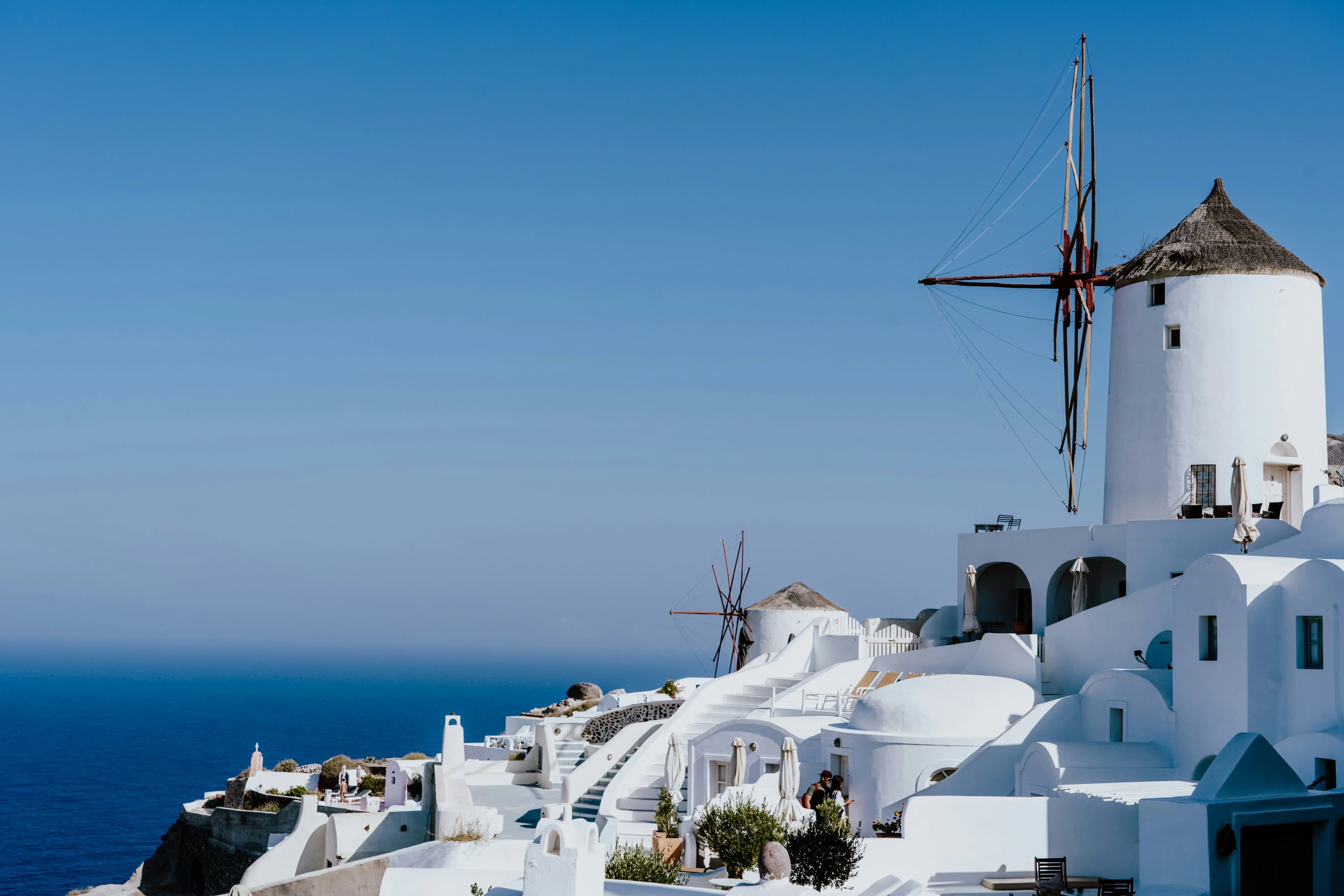
The second decision concerns architectural register. Athens offers suites in grand neoclassical hotels, in converted industrial buildings, in Cycladic-influenced boutique properties, and in mid-century resort complexes along the coast. Each carries a different sensory proposition. The right choice depends on whether you are drawn to historical weight, contemporary minimalism, or the particular geometry of Greek vernacular architecture.
Practical considerations include: suite floor position relative to street noise (central Athens is not quiet), air conditioning specification for summer stays, proximity to the nearest Metro line for archaeological site access, and whether the property's food and beverage operation is genuine rather than perfunctory. Athens has produced some of the most serious restaurant talent in southern Europe over the past decade, and the best hotel suites are connected to that ecosystem.
Why a curated selection by La Suite makes sense for Athens
Athens has a hotel market of genuine complexity. The range between a mediocre five-star property and an exceptional suite experience is wider here than in more standardised luxury markets. Brand recognition alone is not a reliable guide. Some of the most architecturally and experientially serious suites in the city operate under independent flags or under brands with minimal global marketing presence.
La Suite's approach to Greece is built on direct property knowledge and editorial standards that filter for the specific qualities that matter to our audience: spatial generosity, view orientation, service intelligence, and the capacity to connect guests with Athens in ways that go beyond the standard tourist itinerary. The curated selection by La Suite represents properties where the suite itself is considered as architecture, not simply as an upgraded room category.
Athens rewards the traveler who arrives with a clear brief. The city does not reveal its best version to those who choose accommodation by star count or brand loyalty alone. The right suite, in the right neighbourhood, at the right moment in the calendar, makes Athens one of the most compelling urban destinations in the world.