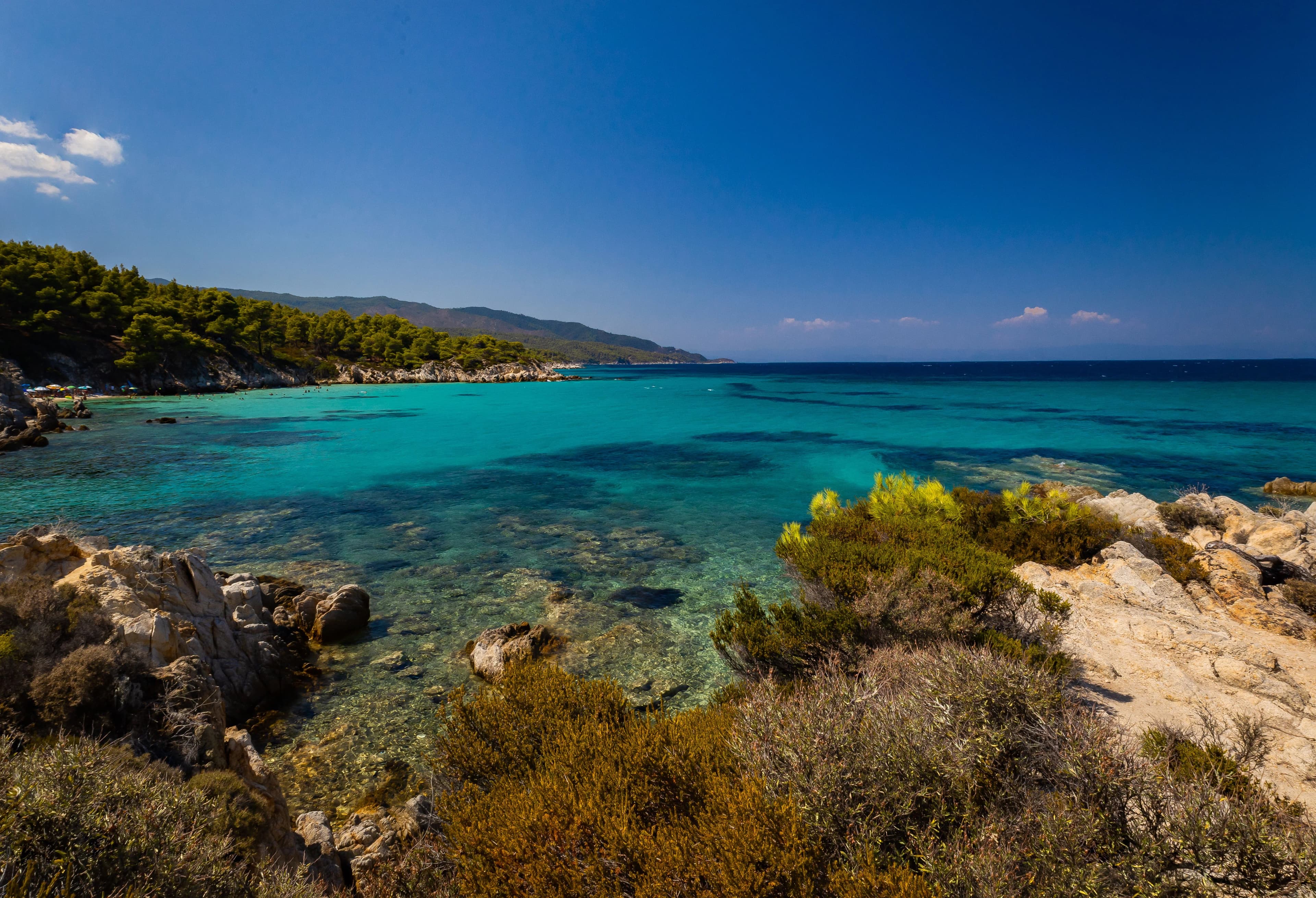
Best areas to stay in the Dodecanese for a luxury suite experience
Rhodes
Rhodes is the largest and most architecturally layered island in the group. The medieval city of Rhodes, a UNESCO World Heritage Site, is one of the best-preserved fortified cities in Europe. Staying within or immediately adjacent to this walled quarter places guests inside living history. Properties here tend to occupy restored medieval or Ottoman-era structures, offering suites with thick stone walls, interior courtyard gardens, and a sense of architectural weight that modern construction cannot replicate. The northern tip of the island around Ixia and Ialyssos attracts a more resort-oriented clientele, while the eastern coast, particularly around Lindos, draws travelers seeking cliff-top villas and views over a near-perfect acropolis bay.
Patmos
Patmos is the quietest and most spiritually significant island in the Dodecanese. The Monastery of Saint John the Theologian dominates the hilltop village of Chora, and its presence sets the tone for the entire island. There are no mass-market hotels here. The accommodation landscape is defined by small, owner-operated properties and private residences, some converted into intimate boutique hotels with suites that prioritize restraint: whitewashed walls, local stone, natural textiles, and silence. For travelers who measure quality by the absence of noise and the presence of intention, Patmos is without comparison in the Aegean.
Symi
Symi is compact and architecturally coherent in a way that larger islands cannot achieve. The neoclassical mansions climbing the hillside above the harbor, painted in ochre, terracotta, and dusty rose, were built during a period of considerable prosperity from sponge trading. Several of these buildings have been carefully restored and operate as high-end accommodation. Suites here are often contained within single heritage buildings, offering a residential quality that larger resort properties cannot match. The island has no airport, which acts as an informal filter on visitor volume.
Kos
Kos offers a different register of luxury, anchored in its classical heritage. The Asklepion, one of the most significant healing sanctuaries of the ancient world, and the plane tree of Hippocrates place Kos within a specifically intellectual tradition of wellness. High-end properties on Kos tend toward the contemporary resort model, with suites designed around pool access, sea-facing terraces, and the island's relatively flat, fertile landscape.
When to visit the Dodecanese for a luxury suite stay
The Dodecanese sits at the southern edge of the Greek island system, and this geography delivers some of the most reliable sunshine hours in Europe. The season extends longer here than in the Cyclades or Ionian Islands.
Late April through early June offers the clearest conditions for travelers who prefer cooler temperatures, lower density, and open availability across most properties. The light in May has a particular quality, sharp and warm without the intensity of high summer, and wildflowers are still present on the hillsides of less-developed islands like Tilos and Halki.
July and August represent peak season. Rhodes and Kos in particular attract significant visitor numbers, and the more considered suite properties book out months in advance. Patmos and Symi remain comparatively quieter even in August, partly due to their geographic and logistical accessibility constraints.
September and October are widely regarded among experienced Aegean travelers as the optimal window. Sea temperatures remain high, the population of day-trippers has thinned, and the quality of light shifts toward a warmer, more golden register. Many boutique properties on the smaller islands extend through October, and some remain open into early November depending on the season.
The Dodecanese largely closes for the winter months. Property availability drops significantly from November through March, and inter-island ferry schedules reduce considerably.
Local luxury standards in the Dodecanese: what to expect from top-tier suites
Greece does not operate a formal palace hotel classification system in the manner of France. The country uses a star-rating system administered by the Greek National Tourism Organisation (GNTO), with five stars representing the top category. Within that five-star tier, there is considerable variation in quality, and the classification does not always capture the distinction between a large resort hotel and a carefully curated boutique property.
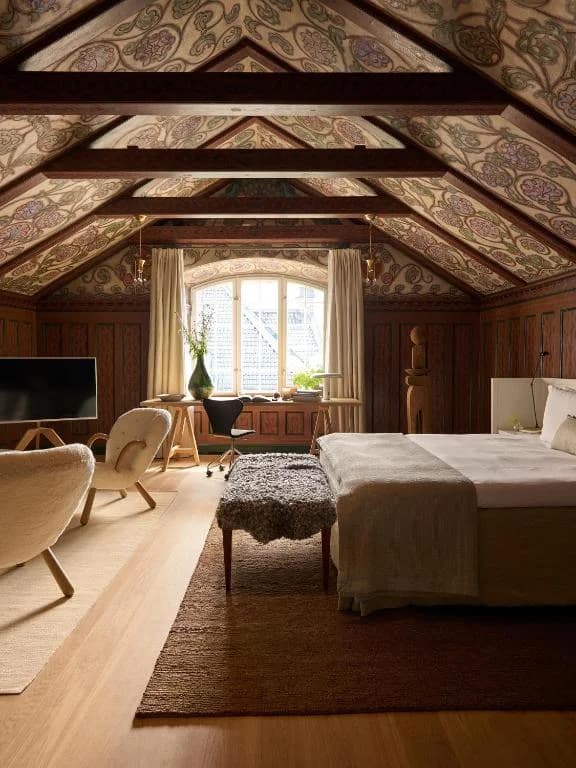
In the Dodecanese context, the most relevant luxury markers tend to be architectural authenticity, spatial generosity, and access to privacy. A suite within a restored medieval building in Rhodes Old Town operates on entirely different terms than a suite in a large contemporary resort on the coast, and neither is universally superior. The choice depends on what the traveler values most: historical immersion or physical amenity.
Many of the finest properties on the smaller islands, Patmos, Symi, Tilos, position themselves as boutique hotels with a deliberately limited number of suites. This scarcity is intentional. Owners prioritize the quality of individual experience over occupancy rates, and this philosophy tends to produce a level of personal attention that larger properties cannot replicate through service training alone.
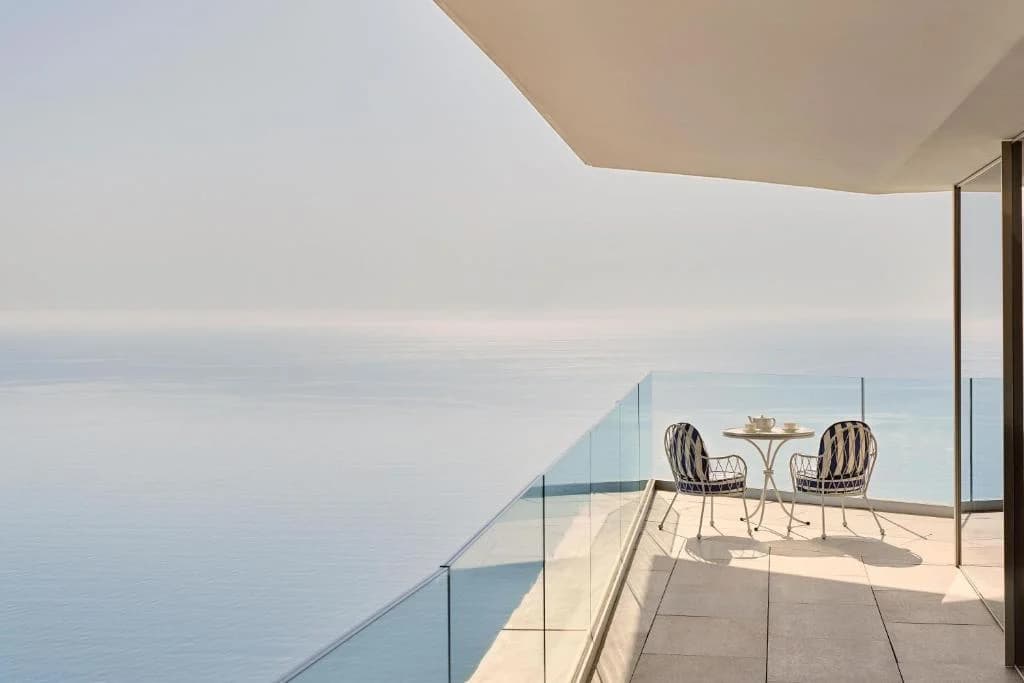
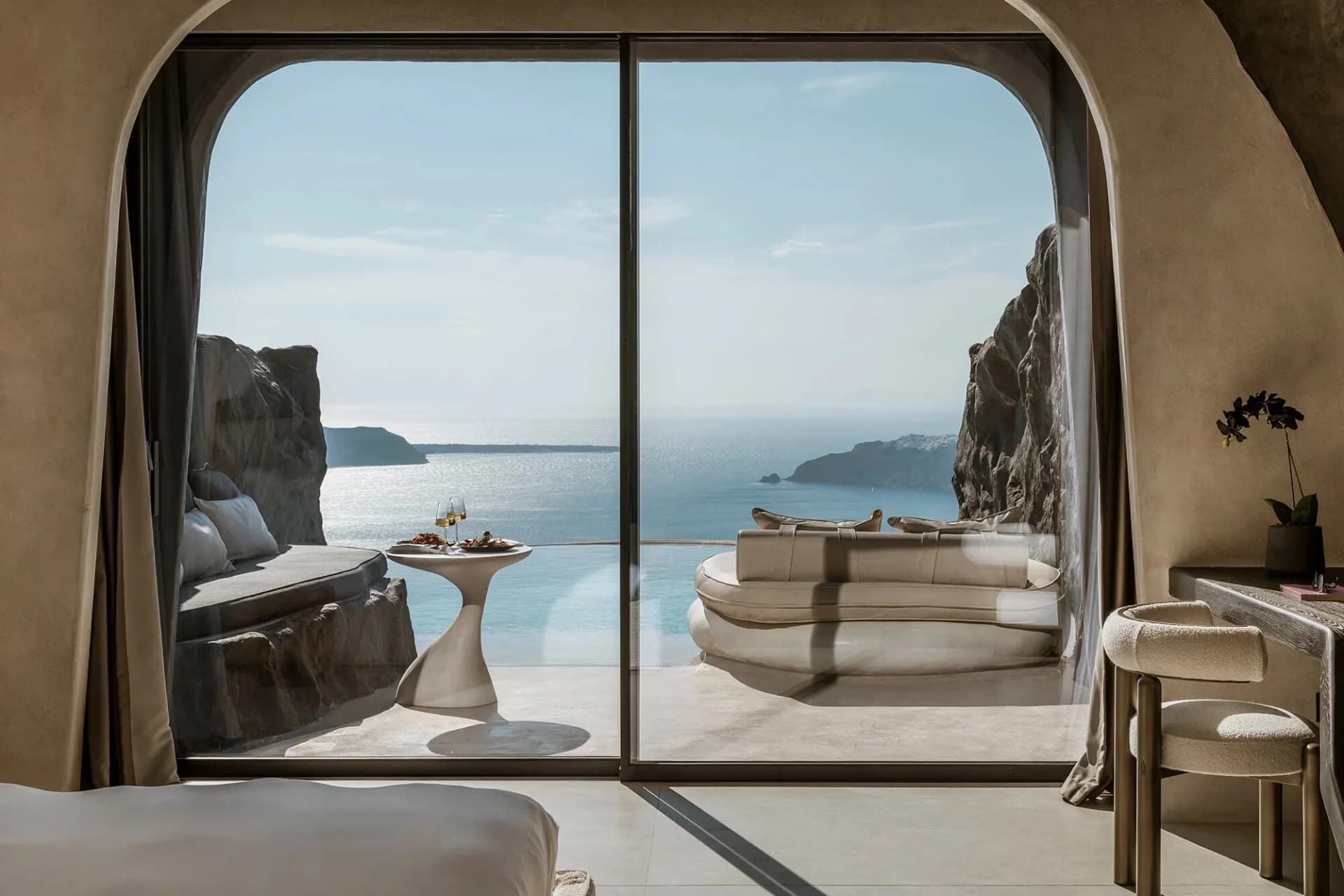
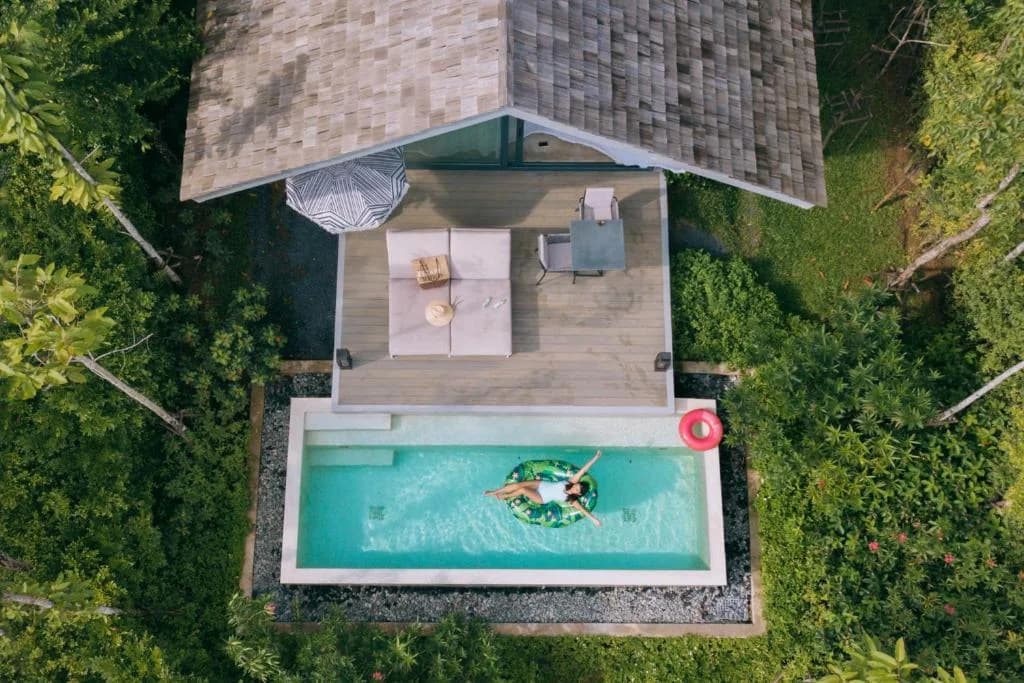
Outdoor space, specifically private terraces, plunge pools, and sea-view access, carries particular weight in this archipelago. In Greece, the relationship between interior and exterior is architectural rather than incidental. A suite that opens onto a terrace with an unobstructed sea view is a fundamentally different product from one that does not, regardless of how the interior is appointed.
How to choose the best luxury suite in the Dodecanese
The first consideration is island selection, and this deserves more thought than is typically given. The Dodecanese islands are connected by ferry, but travel between them is not always quick or convenient. A traveler who wants to cover three or four islands in a week will spend a meaningful portion of that time in transit. A more focused itinerary, spending five or six nights on one or two islands, allows for the kind of unhurried engagement that makes a suite stay genuinely restorative.
The second consideration is the architectural register of the property. The Dodecanese offers a genuinely wide range, from Byzantine and Ottoman-era structures in Rhodes, to neoclassical mansions in Symi, to contemporary design-led hotels on Kos. Each carries a different sensory quality. Stone absorbs heat differently than concrete. A courtyard garden in a medieval building creates a different acoustic environment than a sea-facing terrace. These distinctions matter when choosing where to spend several consecutive nights.
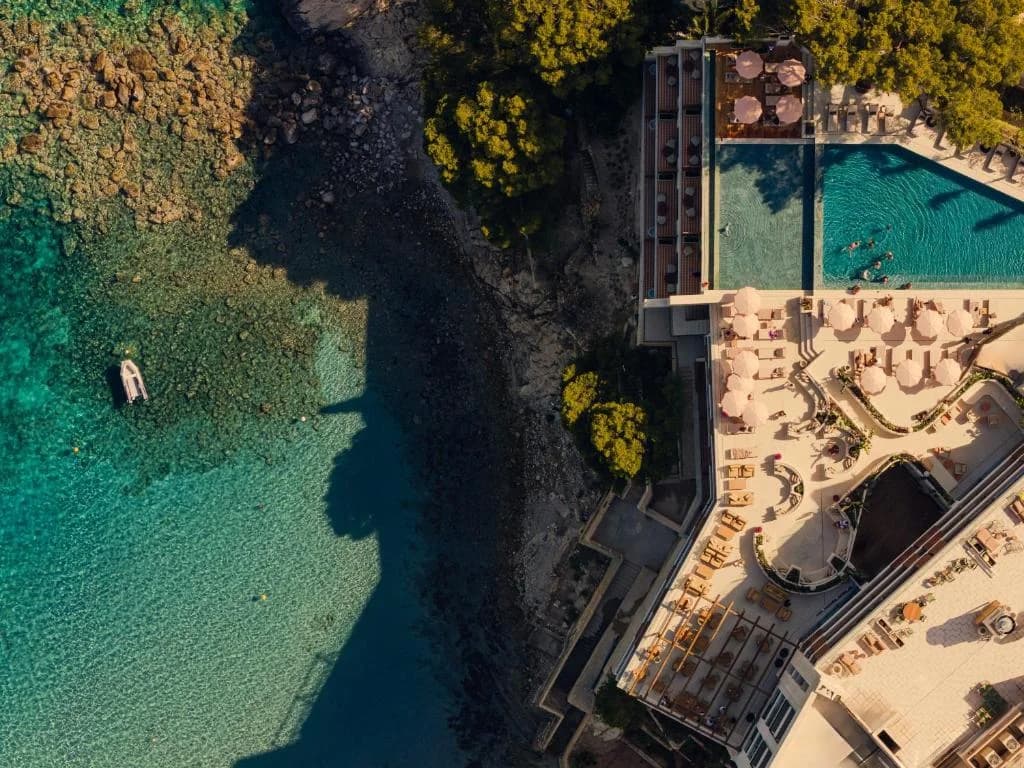
Third, assess the property's relationship to the sea. In an archipelago context, proximity to water is a legitimate luxury variable. Some of the finest suites in the Dodecanese offer direct sea access or private pool terraces above the water. Others are positioned inland or within historic town centers, trading physical proximity to the sea for architectural and cultural density. Neither is the wrong choice, but the preference should be made deliberately.
The value of a curated selection in the Dodecanese
The Dodecanese comprises twelve principal islands and several smaller inhabited ones. The total number of accommodation options across the archipelago is large, and the quality varies considerably. Without a reliable framework for evaluation, a traveler is left navigating an unstructured market in which marketing language frequently obscures product reality.
La Suite applies a consistent editorial standard to every property it includes. The selection criteria focus on spatial quality, architectural integrity, service caliber, and the coherence of the overall guest experience. In a destination as geographically dispersed as the Dodecanese, this curation function reduces the cognitive load of planning and increases the probability of a stay that meets or exceeds expectation.
The curated selection by La Suite across the Dodecanese is built for travelers who have made this kind of trip before and know precisely what distinguishes a considered suite from a merely expensive room.