




Mount Olympus, Greece
Hotels with luxury suites in Mount Olympus, Greece
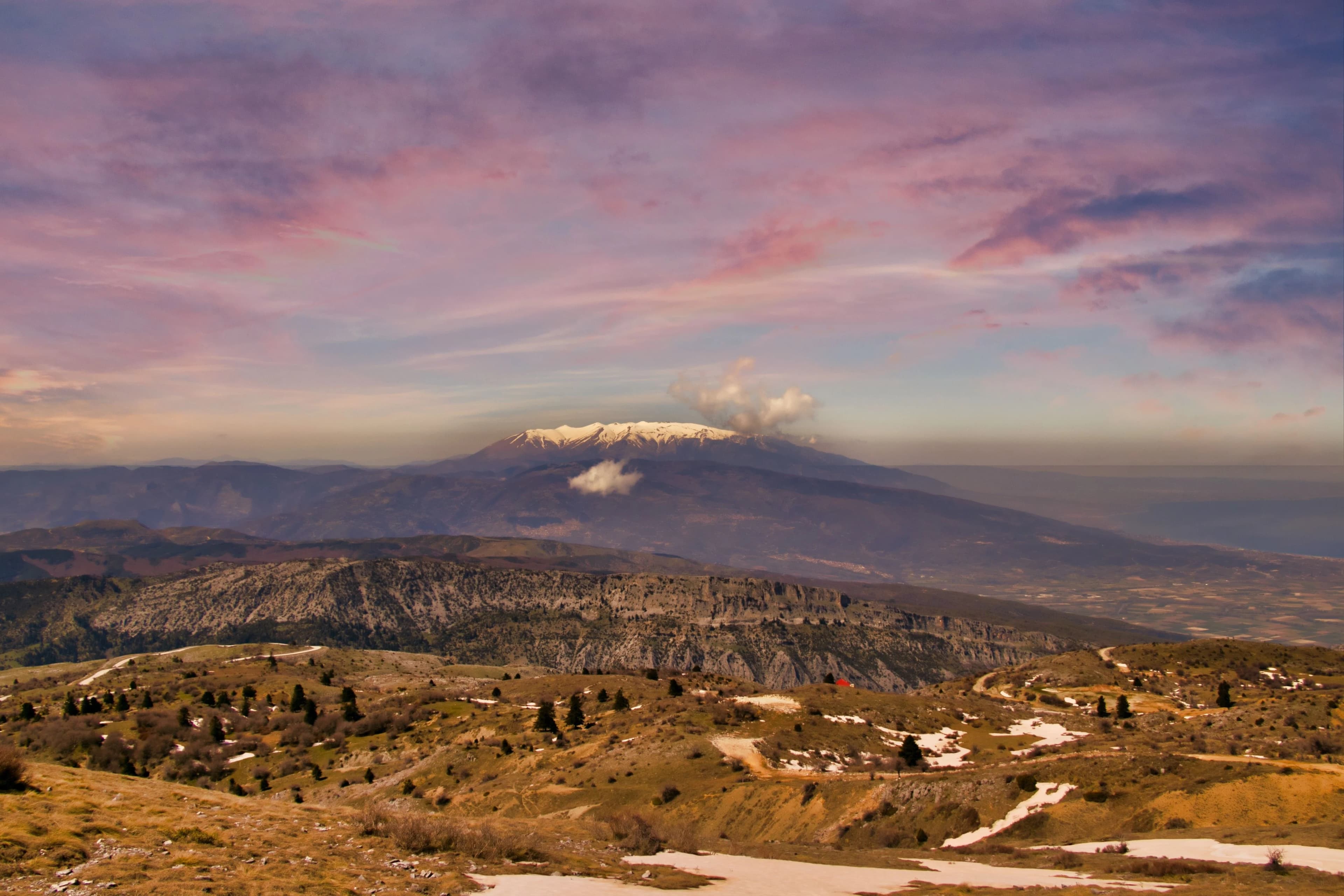
Mount Olympus rises to 2,917 metres at its highest peak, Mytikas, making it the tallest mountain in Greece and one of the most ecologically dense in the eastern Mediterranean. The surrounding territory spans two regional units, Pieria to the south and Larissa to the east, with the town of Litochoro serving as the principal gateway. This is not a resort destination in any conventional sense. The landscape rewards those who arrive with intention: hikers, naturalists, architects of slow travel, and travelers seeking a counterpoint to the Greek coast.
Understanding the Mount Olympus territory
The territory around Olympus belongs to a national park established in 1938, the first in Greece. Dense forests of black pine, beech, and fir cover the mid-altitude zones. The lower slopes open onto olive groves and cultivated plains that face the Thermaic Gulf. The spatial contrast between the vertical drama of the mountain and the horizontal calm of the coastal plain below is one of the defining sensory qualities of this region.
Best areas to stay near Mount Olympus
Litochoro and the mountain base
Litochoro sits at approximately 300 metres elevation, directly at the foot of the national park. It functions as the primary access point for the mountain and holds most of the available accommodation in the immediate area. Properties here benefit from proximity to the main hiking trails, the Enipeas gorge, and direct mountain views. The town has a settled, unpretentious character that appeals to travelers who prioritise landscape access over coastal amenity.
The Pieria coastal strip
Between the mountain and the sea, the Pieria plain extends toward small resort towns including Platamonas and Paralia Katerinis. These coastal positions offer a different register: Aegean light, proximity to the sea, and a more social atmosphere in summer. A luxury suite here provides easy movement between beach and mountain, which suits families or couples with varied interests.
The Larissa approach from the east
Approaching Olympus from the Larissa side, through the Vale of Tempi, offers a more pastoral and less visited perspective. The Tempi valley, where the Pineios river cuts between Olympus and Mount Ossa, carries its own mythological weight as the legendary home of Daphne and Apollo. Properties in this eastern corridor tend toward quieter positioning with deep countryside context.
When to visit Mount Olympus
The peak hiking season runs from late May through September, with June and early July offering the clearest conditions at altitude combined with moderate temperatures at the base. Wildflowers on the lower slopes are most concentrated in May. Summer temperatures in Litochoro remain cooler than on the coast, typically 5 to 8 degrees Celsius lower than Thessaloniki or Athens, which makes July and August genuinely comfortable for mountain-adjacent stays.
Autumn, from September through October, brings reduced visitor numbers, sharp air quality, and excellent light for photography and walking. The forests take on colour through October, particularly the beech zones between 1,000 and 1,500 metres. Winter is characterised by snow above 1,200 metres and considerable silence in the villages. The mountain's association with Zeus and the ancient pantheon makes the off-season here carry a particular atmospheric weight that some travelers actively seek.
There are no major international luxury events in this territory, but the Olympus Marathon, held each September, draws a specific and committed athletic audience. The ancient site of Dion, a Macedonian sanctuary at the mountain's southern base, hosts occasional cultural programming through the summer months.
Local luxury standards and what to expect
Greece does not operate a Palace designation in the formal sense used in France. The country's hotel classification system uses a star rating administered by the Greek National Tourism Organisation, with five stars representing the highest official tier. Within that category, the concept of a boutique luxury property, often family-run, architecturally considered, and oriented toward the natural setting, is increasingly dominant outside Athens and Mykonos.
In the Mount Olympus region specifically, luxury operates differently from island Greece. The emphasis shifts from infinity pools facing the Aegean to properties that engage with altitude, forest, stone, and silence. A well-positioned luxury hotel suite here might prioritise fireplace fittings, natural materials sourced from the region, private terraces with direct mountain sightlines, and access to guided naturalist experiences. The standard of Greek hospitality, characterised by directness, generosity, and a non-performative warmth, applies consistently across the territory.
Gastronomy in this region draws from both the Macedonian interior and the Aegean coast. Local cheeses, mountain herbs, freshwater fish from the Pineios river, and lamb raised on highland pasture represent the honest culinary register of the area. A suite-level stay at a property with serious kitchen investment will reflect these regional ingredients rather than defaulting to pan-Hellenic tourist menus.
How to choose the right suite near Mount Olympus
The primary choice in this territory is positional: mountain-facing or coast-adjacent. A suite at the base of Olympus delivers immediate access to trails and the full vertical drama of the massif. A coastal property in Pieria offers morning swims and evening light over the Thermaic Gulf, with the mountain as a backdrop rather than a foreground. Neither is superior; the decision depends on the rhythm of the trip.
Architecture is a meaningful variable here. The region has a vernacular tradition of stone construction, and properties that engage with this tradition, using local grey limestone, timber, and traditional roof forms, tend to feel more calibrated to the landscape than those that impose an imported aesthetic. Consider whether the suite's materiality connects to its setting or contradicts it.
Altitude and access matter practically. Some properties sit higher on the mountain's flanks and require a vehicle for any movement. Others in Litochoro itself are walkable to the gorge entrance and the town's cafes. For travelers who intend to use the suite as a genuine base for mountain activity, proximity and logistical simplicity are worth weighing heavily.
Why curated selection matters in this destination
Mount Olympus sits outside the main circuits of Greek luxury travel. Most international booking platforms default to coastal inventory: Santorini, Mykonos, Crete. The mountain region's properties, even those of genuine quality, receive less indexing, fewer editorial reviews, and less systematic comparison. This is precisely where a curated selection by La Suite adds direct value.
La Suite applies consistent editorial criteria across all territories, evaluating suite quality, spatial generosity, architectural coherence, and positioning regardless of how commercially prominent a destination is. For a region like Mount Olympus, where the supply of serious luxury hotel suites is limited but the experiential proposition is genuinely distinctive, that curatorial discipline ensures that what is presented reflects actual quality rather than advertising spend. The traveler who chooses this territory over a Greek island is already making a considered decision. The suite they stay in should match that intention.
Frequently asked questions
Are there luxury hotel suites available near Mount Olympus in Greece?
The Mount Olympus area has a smaller luxury accommodation base than Greece's island destinations, but properties of genuine quality do exist in and around Litochoro and along the Pieria coast. Suites in this territory tend to prioritise mountain views, natural materials, and landscape access over resort-scale amenities. La Suite curates the most editorially relevant options across this territory.
What is the best time of year to book a luxury suite near Mount Olympus?
Late spring, specifically May through early July, and early autumn in September and October represent the most rewarding periods for a suite stay near Olympus. Temperatures are moderate, trail conditions are reliable, and the light across the mountain and coastal plain is particularly clear. Summer months are comfortable at altitude but bring higher occupancy.
How does staying near Mount Olympus compare to a Greek island luxury stay?
A suite near Olympus offers a fundamentally different register from island Greece: altitude, forest, stone architecture, and mythological landscape rather than Aegean sea views and coastal social life. The pace is slower, the setting more austere, and the experiential focus tends toward nature, walking, and cultural depth. It suits travelers seeking contrast with the standard Greek coastal itinerary.
What should I look for in a luxury suite at the base of Mount Olympus?
Prioritise suites with direct mountain sightlines, private outdoor space such as a terrace or balcony oriented toward the massif, and interior materiality that engages with the local stone and timber vernacular. Access to the national park trails and the Enipeas gorge is a meaningful practical consideration. Properties with serious culinary investment in regional Macedonian and Pierian ingredients add significant value to the stay.
Is Mount Olympus accessible year-round for luxury travelers?
The lower zones of Olympus and the town of Litochoro are accessible throughout the year. Snow covers higher elevations from November through April, which closes the summit trails but creates a distinct winter atmosphere at the mountain's base. Winter stays suit travelers seeking silence, mountain light, and a non-touristified environment. Suite availability tends to be high and rates more negotiable in the off-season.
What local cuisine should I expect from a high-end hotel near Mount Olympus?
The culinary identity of this region draws from both Macedonian inland traditions and the Pierian coast. Expect lamb and game from highland pasture, local cheeses including graviera and feta produced in the surrounding plains, freshwater fish from regional rivers, and mountain herbs gathered from Olympus's lower slopes. A serious luxury property will source these ingredients directly and present them with regional authenticity rather than generic Greek tourist cooking.
How far is Mount Olympus from Thessaloniki and Athens?
Litochoro, the main gateway to Mount Olympus, lies approximately 90 kilometres south of Thessaloniki and roughly 380 kilometres north of Athens by road. Thessaloniki's international airport is the most practical entry point for international travelers arriving by air, with transfer times of around one hour by car. The Athens to Litochoro journey by train or road takes approximately four hours.
What types of experiences complement a luxury suite stay near Olympus?
Guided hiking into the national park, including day routes through the Enipeas gorge and multi-day ascents toward the Mytikas summit, are the primary activities. The archaeological site of Dion at the mountain's southern base offers direct access to Macedonian antiquity. The Pieria coastline provides beach access within 30 minutes of the mountain base. Agritourism visits to local farms and olive estates offer a quieter, more contemplative complement to the mountain experience.
Does Greece have a formal luxury hotel classification equivalent to the French Palace designation?
Greece does not operate a formal Palace designation. The Greek National Tourism Organisation uses a five-star maximum rating system for hotel classification. Within the five-star category, properties vary considerably in quality, positioning, and character. In mountain destinations like Olympus, the most compelling luxury properties often operate as boutique hotels with strong architectural and culinary identities rather than large resort formats.
Why use La Suite to find a luxury hotel suite near Mount Olympus rather than a general booking platform?
General booking platforms concentrate their editorial and algorithmic resources on high-volume destinations, which means that quality properties in less commercially prominent areas like Mount Olympus receive less visibility and fewer structured comparisons. La Suite applies consistent curatorial criteria across all territories, evaluating spatial quality, architectural coherence, suite positioning, and experiential depth. For a destination where the selection is limited but the stakes of a wrong choice are high, that editorial framework saves time and ensures alignment between the traveler's expectations and what the property actually delivers.