Where to stay in the Italian Lakes: distinct areas and their character
Lake Como
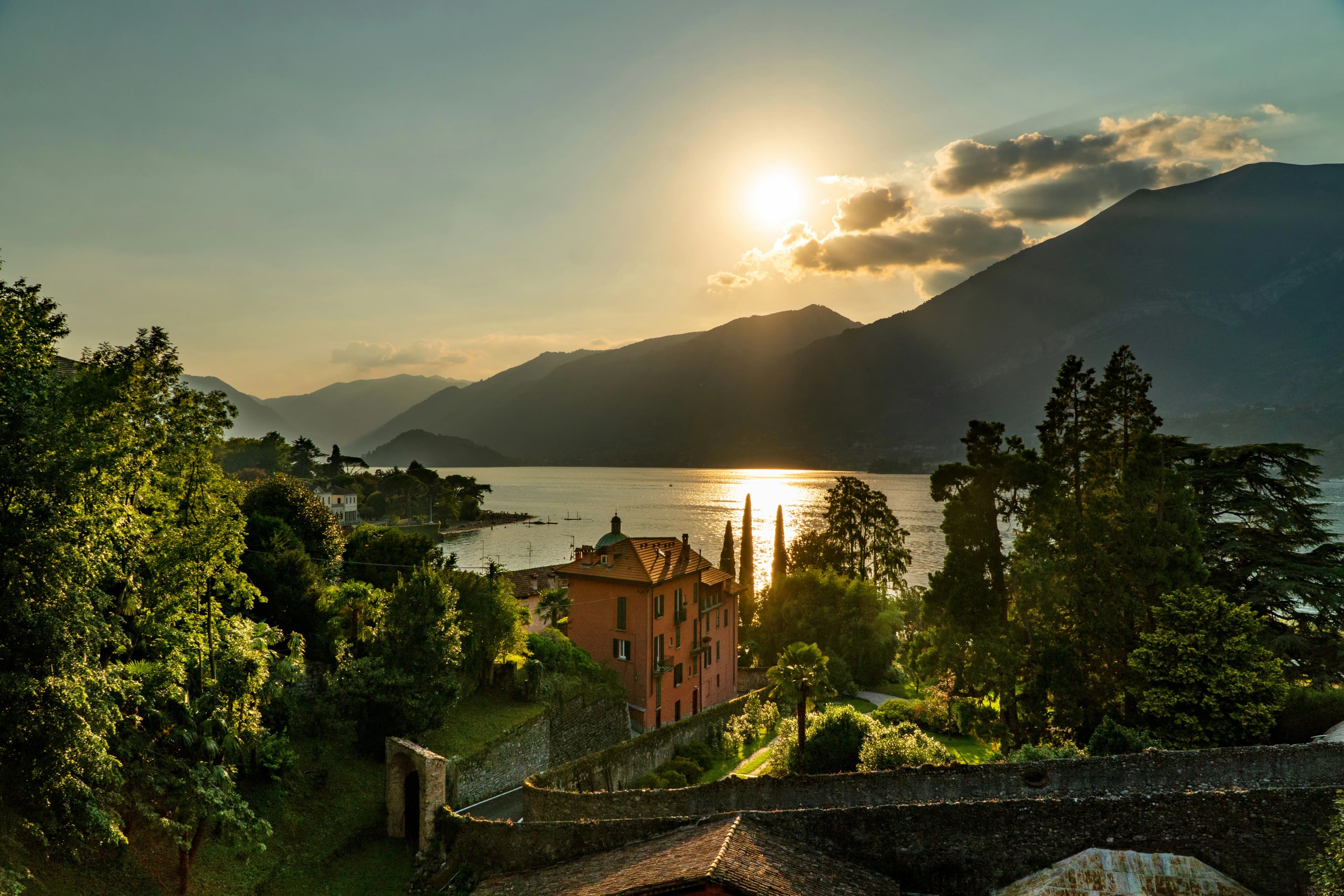
Lake Como is the most architecturally coherent of the Italian lakes. Its narrow, Y-shaped basin is lined with nineteenth-century villas, formal gardens, and ferry jetties that have changed little in silhouette since the Belle Époque. The western shore, particularly the stretch between Cernobbio and Tremezzo, concentrates the grandest historic properties. The eastern shore is quieter, with fewer large hotels and a more residential feel. Bellagio, positioned at the junction of the two southern branches, remains the reference point for first-time visitors seeking the quintessential Como experience. Suites here tend to occupy restored villa structures, with direct lake frontage and period architectural details.
Lake Maggiore
Lake Maggiore extends across the border into Switzerland and carries a slightly more understated register than Como. The western shore, anchored by Stresa, is where the grand hotel tradition is most concentrated, facing directly onto the Borromean Islands. The Piedmontese hinterland gives the region a culinary seriousness that complements long stays. Suites in this area often come with panoramic terraces oriented toward the islands, which are privately owned and open only by ferry.
Lake Garda
The largest of the Italian lakes, Garda operates on a different scale. Its southern shores are broader and more accessible, while the northern end narrows into dramatic cliffs. The western shore, from Sirmione to Gardone Riviera, concentrates the most historically significant properties. Lake Garda also attracts a more active traveler: sailing, cycling, and hiking are integral to the experience here. Suites tend to be larger and more contemporary in design at the northern end, while the southern and western shores offer more classical villa conversions.
Lake Orta and Lake Iseo
These smaller lakes offer a counterpoint to the more frequented destinations. Lake Orta is compact and almost entirely free of mass tourism, with a medieval island at its center. Lake Iseo, bordered by Monte Isola, the largest lake island in Europe by area, attracts travelers seeking discretion over profile. Luxury hotel options here are fewer but often more architecturally considered.
When to visit the Italian Lakes for a luxury suite stay
The Italian Lakes have a defined seasonal rhythm that directly affects both availability and atmosphere at the top end of the market.
April through June represents the most considered window for a luxury stay. The gardens are in full growth, the light is clean and directional, temperatures are mild, and the major properties are operating at full capacity without the peak-summer saturation. This period also coincides with the opening of the major villa gardens, including Villa del Balbianello and the Isola Bella botanical terraces.
July and August bring the highest demand, the warmest temperatures, and the most compressed availability. Premium suites at the leading properties on Como and Maggiore are typically reserved months in advance. Pricing reaches its seasonal apex during this window. The heat, while manageable at altitude, can reduce the pleasure of the formal gardens.
September and October offer a second high-quality window. The water retains summer warmth, the crowds thin considerably, and the light shifts to something cooler and more precise. Rates begin to moderate from late September onward, and the landscape gains a textural quality that rewards those who travel for visual experience as much as warmth.
Most properties close between November and March. Some residences on Lake Garda remain operational year-round due to the lake's microclimate, which is notably milder than the surrounding region.
Understanding luxury hotel standards in the Italian Lakes
Italy does not have a formal national equivalent to the French Palace designation, but the lakes region has developed its own hierarchy of prestige that any informed traveler should understand before making a suite selection.
The grand hotel tradition here dates to the mid-nineteenth century, when European aristocracy and industrialists began commissioning lakefront properties with formal terraces, private boat docks, and interiors furnished to the standards of their primary residences. Many of the leading hotels today occupy these original structures, operating under careful restoration frameworks that preserve ceiling heights, fresco cycles, and period stonework.
The Italian Ministry of Tourism classifies hotels on a five-star scale, with a five-star superior category that informally corresponds to the highest operational standards. Within the lakes region, a small number of properties have additionally pursued or received Leading Hotels of the World or Relais and Châteaux membership, which signals a commitment to architectural and culinary coherence as well as service depth.
Suite categories here typically range from junior suites with partial lake views to standalone villa apartments with private gardens and independent entrances. The most significant suites in the region tend to occupy the principal floor of converted villas, with original floor plans largely intact. Key indicators of quality include ceiling height, the presence of a private terrace with unobstructed water views, and the proximity of service infrastructure without acoustic intrusion.
How to choose the best luxury suite in the Italian Lakes
Selecting a suite in this region requires clarity about what kind of experience you are constructing, because the variables are meaningful.
The first decision is the lake itself. Como rewards those who prioritize architectural density, cultural heritage, and a close-range relationship with the water. Maggiore is better suited to those who value a slower pace, direct access to the Borromean Islands, and the Piedmontese culinary tradition. Garda appeals to travelers combining relaxation with physical activity. Orta and Iseo suit those for whom discretion and scale are primary.
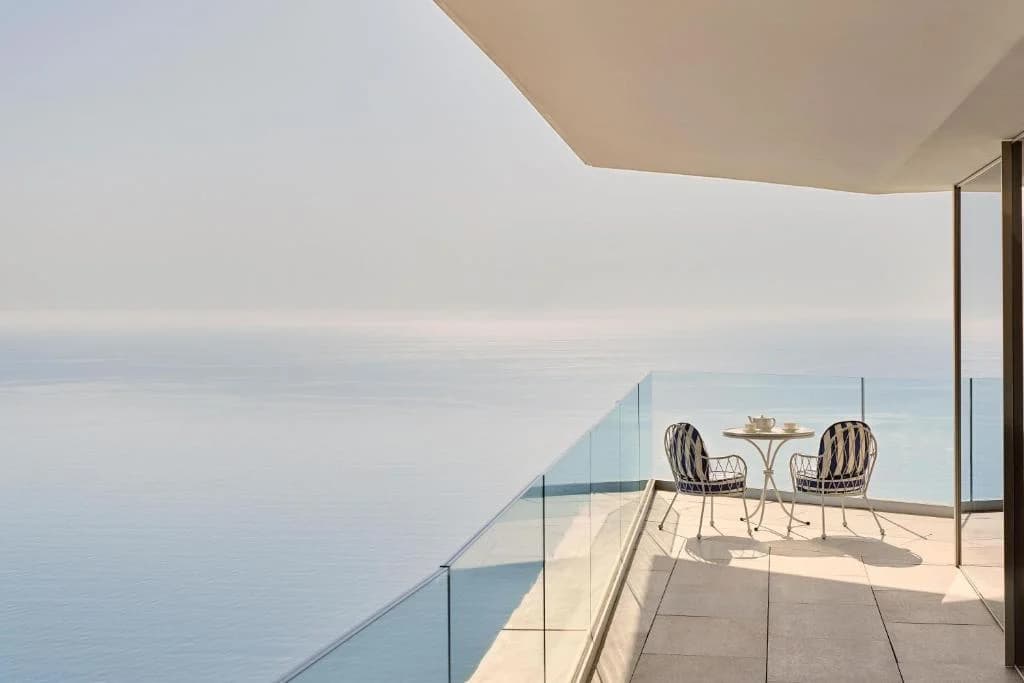
The second decision is orientation. On Como in particular, the distinction between a suite facing the lake and one facing the garden or hillside is significant. Lake-facing suites command a premium that is generally justified by the quality of light and the visual continuity with the water. Garden-facing suites offer greater quiet and, in some properties, direct access to the formal terraces.
The third decision concerns architecture. The lakes region offers both historic villa conversions and purpose-built contemporary properties. The former carry the weight of European cultural history in their structural fabric. The latter tend to offer more resolved contemporary design, better acoustic insulation, and a more consistent service infrastructure. Neither is categorically superior; the choice depends on what you want the room itself to communicate.
Why a curated selection by La Suite changes the process
The Italian Lakes present a surface simplicity that masks a considerable complexity at the suite level. Not all lakefront properties offer the same quality of water view from their suites. Not all historic villas have undergone restoration to the same standard. Not all properties with prestigious affiliations deliver at the individual suite level what their common areas suggest.
La Suite approaches this region with a specific editorial lens: the suite itself, its proportions, its views, its architectural integrity, and the quality of the experience it frames. The curated selection available through La Suite filters out the gap between marketing presentation and physical reality, directing you toward suites that deliver on every dimension. For a region as visually and culturally loaded as the Italian Lakes, that precision matters.