
Casa Monti Roma, Rome
Elegant Accommodations Casa Monti Roma in Rome offers a 5-star hotel experience with spa facilities, a sun terrace, and a lush garden. Guests enjoy free WiFi, a restaurant serving Italian cuisine,

Monti is Rome's oldest rione, a designation that predates modern municipal boundaries and reflects its continuous habitation since antiquity. The neighbourhood was once known as the Suburra, the densely populated district that sat below the imperial forums and served as the commercial and social heart of ancient Rome. Today, its character is shaped by that layered history: medieval churches, Renaissance palazzi and 19th-century residential buildings coexist within a compact area that remains navigable on foot.
5 hotels available

Elegant Accommodations Casa Monti Roma in Rome offers a 5-star hotel experience with spa facilities, a sun terrace, and a lush garden. Guests enjoy free WiFi, a restaurant serving Italian cuisine,

Admire an outstanding view of the Coliseum over breakfast at the rooftop terrace at Hotel Palazzo Manfredi. Rooms here are spacious and offer free Wi-Fi and Sky TV. With such a central location, a 2-

Prime City Center Location NH Collection Roma Fori Imperiali in Rome offers a central position with stunning city views. Piazza Venezia is a 2-minute walk away, while the Colosseum lies 0.7 mi fro

Roma Luxus Hotel offers free WiFi and stylish rooms in Rome's Monti district. Set 984 feet from the Roman Forum, the property also features a bar and an à la carte restaurant. Rooms at the Luxus Hote

Just 656 feet from the Quirinale Presidential Palace, the Spalletti Trivelli is set in a historical villa. It offers a spa, a peaceful garden, and luxurious rooms decorated in a mix of modern and trad
For travelers seeking a luxury suite in Rome, Monti offers an alternative to the more hotel-dense areas around the Spanish Steps or the Vatican. The neighbourhood's scale and residential density mean that properties here tend to be smaller and more architecturally considered, occupying historic buildings that have been converted with care. The result is an experience closer to inhabiting the city than observing it from a distance.
The two main thoroughfares of Monti, Via del Boschetto and Via Urbana, anchor a network of narrower lanes that open onto small piazzas. The neighbourhood's commercial activity centres on independent fashion, ceramics and artisan goods rather than mass-market retail, which preserves a particular kind of quiet that is increasingly rare in central Rome. The proximity to the Basilica di Santa Maria Maggiore and the church of San Pietro in Vincoli (which houses Michelangelo's Moses) gives the area a density of cultural reference that requires no itinerary to encounter.
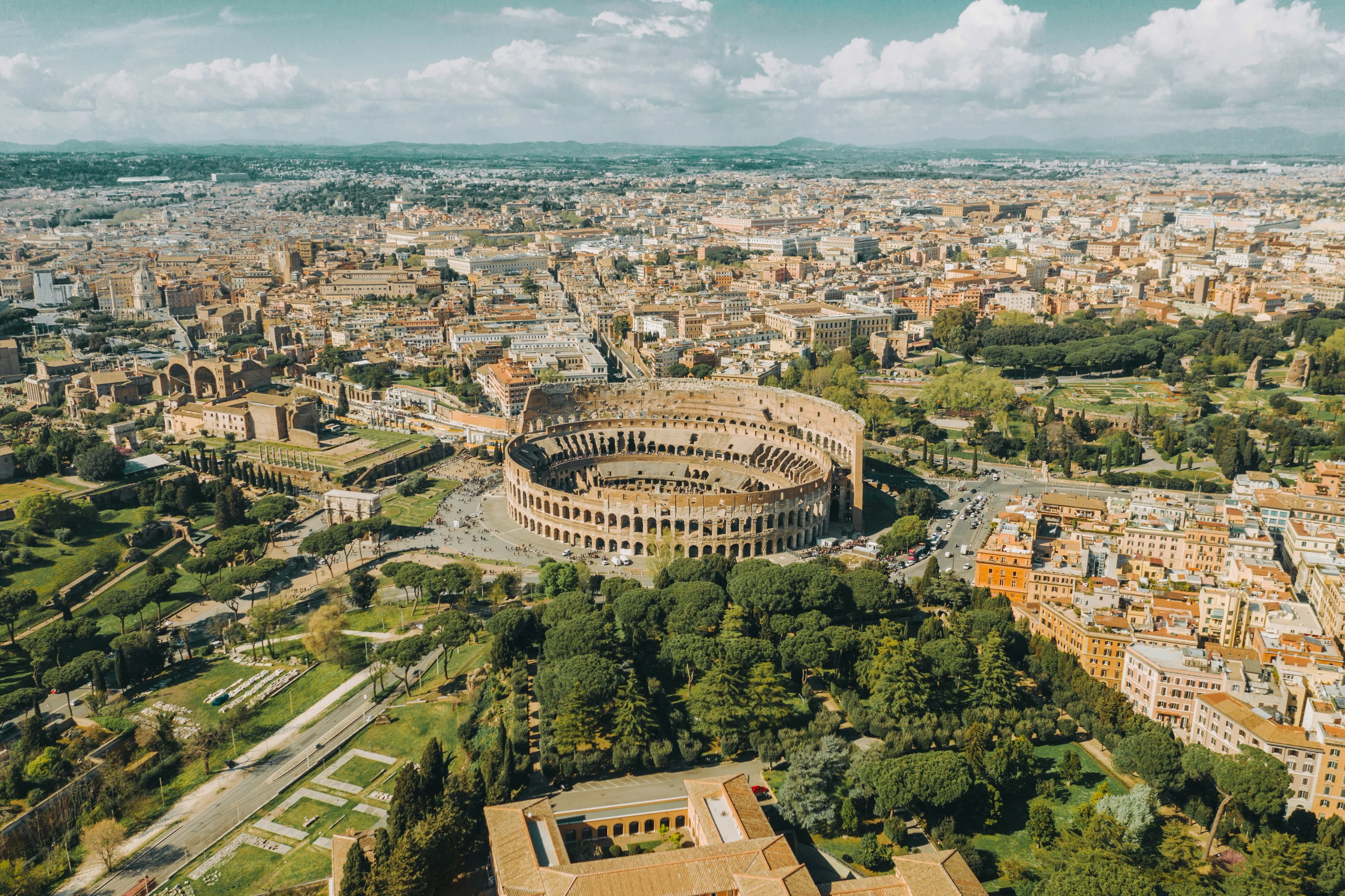
Monti is also within a short walk of the Colosseum and the Roman Forum, two of the most visited archaeological sites in Italy. The practical advantage of this location is significant: early morning access to these sites, before the main visitor flows arrive, is a genuine possibility for guests staying in the neighbourhood.
Rome operates on a broadly bimodal tourism calendar. The spring months (April through early June) and autumn (September through November) represent the periods of most comfortable conditions: temperatures are moderate, daylight is generous and the city's cultural institutions maintain full programming. Monti, as a residential neighbourhood, is less susceptible to the seasonal congestion that affects more tourist-oriented districts, though summer weekends bring a notable increase in foot traffic to its restaurants and bars.
The period around Easter is particularly significant in Rome, with ceremonial and religious events centred on the Vatican but felt across the city. Accommodation demand peaks sharply during this window, and suite availability in smaller Monti properties requires planning well in advance. The quietest period for the neighbourhood is January through early March, when rates tend to soften and the city takes on a more local character.
Italy applies a formal hotel classification system with a five-star ceiling, but within the luxury segment, the most meaningful distinction is between properties that hold the Italian government's five-star superior designation and those that have been recognised under Europe-wide luxury frameworks. Rome also hosts several properties that carry the French-inspired
Monti is distinguished by its residential scale and medieval street structure, which means hotel properties here tend to be smaller and more architecturally integrated than those in more commercial areas. The neighbourhood sits adjacent to the Roman Forum and Colosseum while maintaining a quieter, more local atmosphere. For travelers prioritising privacy and urban texture over proximity to luxury retail corridors, Monti offers a materially different experience of the city.
Monti's small scale and predominantly residential character mean that large luxury hotel chains have limited presence in the neighbourhood. The properties that do operate here tend to be boutique hotels and converted historic buildings, some of which offer suites of significant quality and design integrity. La Suite curates the most relevant options across Rome, including properties in and adjacent to Monti, to help travelers identify the right fit.
Monti sits directly adjacent to the Roman Forum and is within a ten-minute walk of the Colosseum. The Palatine Hill entrance is also accessible on foot from the neighbourhood's eastern edge. This proximity is one of Monti's most practical advantages for travelers who wish to visit these sites at opening time, before visitor volumes increase significantly.
April through early June and September through November offer the most balanced conditions: moderate temperatures, full cultural programming and manageable visitor numbers in the neighbourhood. Easter represents a peak demand period across all of Rome, and suite availability in smaller Monti properties can be limited weeks in advance. January and February offer the lowest occupancy rates and the most direct experience of the neighbourhood's residential character.
Monti's built fabric is predominantly medieval and Renaissance in its street structure, with significant 19th-century residential construction filling much of the area. Luxury properties in the neighbourhood typically occupy converted palazzi or historic apartment buildings, where original ceiling heights, stone floors and decorative plasterwork are retained alongside contemporary fittings. This architectural context is materially different from the purpose-built hotel towers found in other parts of Rome.
Monti is compact and almost entirely navigable on foot. The neighbourhood's main streets connect directly to the Roman Forum, the Colosseum, the Basilica di Santa Maria Maggiore and the commercial centre around Via Nazionale. The terrain includes some incline given the neighbourhood's position between three hills, but distances are short and the street quality is generally good. Most guests staying in Monti find that a car or taxi is unnecessary for the majority of their time in the area.
The Spanish Steps area and the historic centre around the Pantheon offer a higher concentration of large luxury hotels with full amenity stacks, including spas, multiple restaurants and concierge teams. Monti offers a quieter, more spatially intimate alternative, with properties that prioritise architectural character and neighbourhood integration. The trade-off is scale: suites in Monti tend to be found in smaller hotels, which suits travelers who value privacy and specificity over institutional service breadth.
Within the neighbourhood itself, the church of San Pietro in Vincoli houses Michelangelo's Moses, one of the most significant Renaissance sculptures in Rome. The Basilica di Santa Maria Maggiore is a short walk to the east. The Roman Forum, Palatine Hill and Colosseum are all accessible on foot. Monti also has a concentrated independent retail and restaurant scene along Via del Boschetto and Via Urbana, which reflects a more local dimension of Roman culture than the tourist-oriented areas nearby.
Given the neighbourhood's predominantly historic building stock, the most important considerations are ceiling height, natural light and acoustic insulation, as older structures can vary significantly on all three dimensions. Proximity to Via Cavour (the main road bisecting the area) affects noise levels materially. Suites in internal courtyard-facing positions tend to offer the most tranquil environment. La Suite applies these criteria when curating properties in Rome, ensuring that recommendations reflect the specific conditions of each building.
General booking platforms aggregate inventory without applying editorial or experiential criteria to individual properties. La Suite curates specifically within the luxury suite segment, assessing each property against standards of space, design coherence and service quality. In a neighbourhood like Monti, where the gap between a well-converted historic building and a poorly executed renovation can be significant, this level of curation is practically useful rather than merely aspirational.