1926 Le Soleil Hotel & Spa, Sliema
Nestled in a charming town, 1926 Le Soleil Hotel & Spa offers a perfect blend of timeless sophistication and modern luxury. Each room and suite feature bespoke décor, plush furnishings, and modern bat

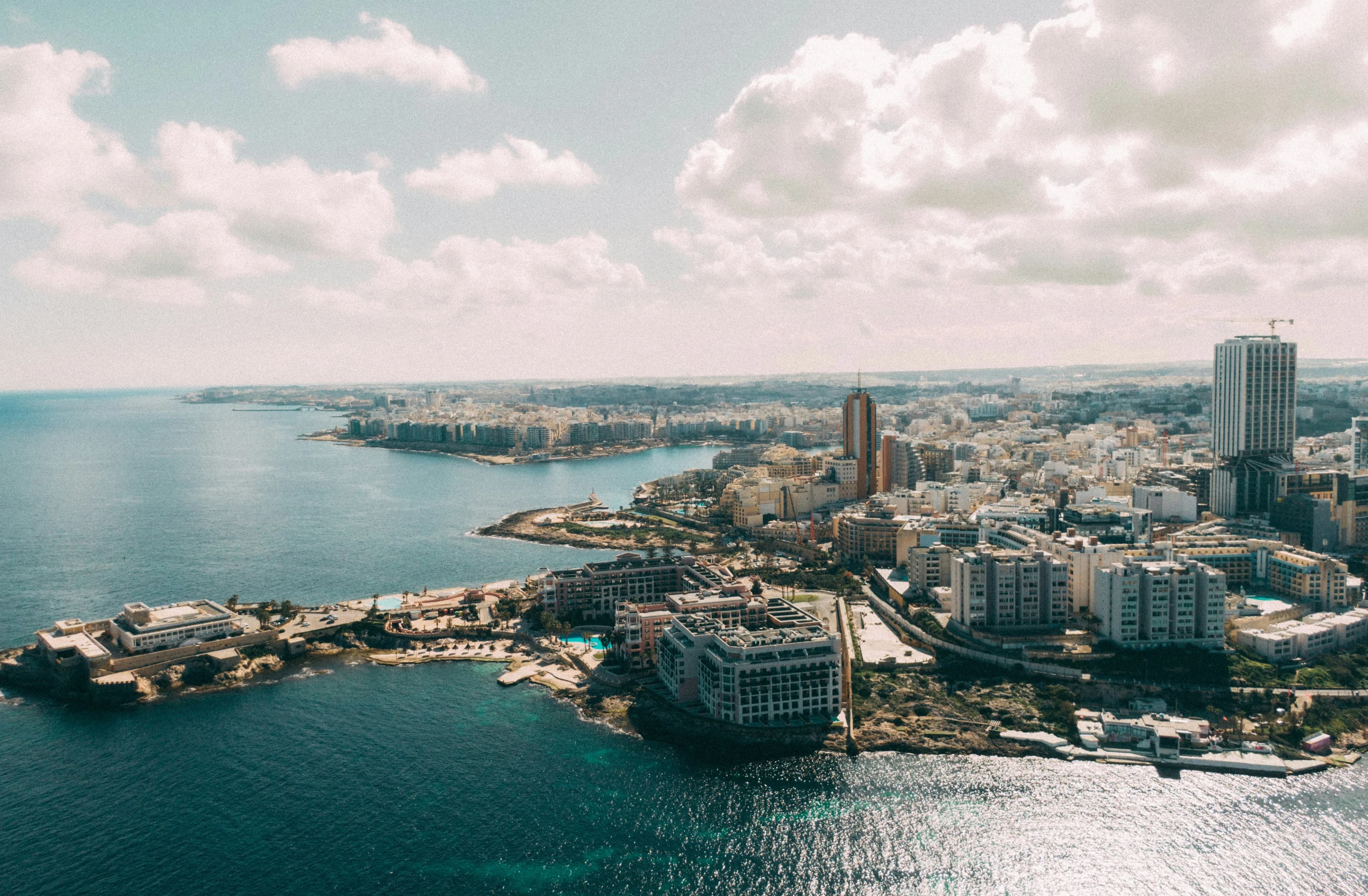
Sliema occupies a particular position in Malta's geography and social fabric. It is not a resort town, nor is it the capital. It functions as the island's commercial and residential centre for those who live and travel well. The Tigne Point peninsula, developed over the past two decades, introduced a genuinely contemporary layer to a district already known for its early twentieth-century limestone villas and Victorian-era seafront. For the suite traveller, this duality is an asset: you are within walking distance of Valletta by ferry, within minutes of St Julian's by foot, and positioned on a promenade that faces the open sea to the north and the Grand Harbour skyline to the south.
5 hotels available

Nestled in a charming town, 1926 Le Soleil Hotel & Spa offers a perfect blend of timeless sophistication and modern luxury. Each room and suite feature bespoke décor, plush furnishings, and modern bat

Elegant Accommodations 1926 Les Bains Boutique Private Spa Suites in Sliema offers adults-only 5-star comfort with a private beach area, rooftop swimming pool, spa facilities, fitness center, sun terr

Elegant Accommodations Barceló Fortina Malta in Sliema offers a 5-star experience with spa facilities, a swimming pool with stunning views, an indoor pool, and a fitness center. Guests enjoy free WiFi

Prime Location Best View Fortina Luxury Suites in Sliema offers a convenient location with stunning sea views. Tigné Point Beach is a five-minute walk away, while The Point Shopping Mall lies 656 feet

Located 328 feet from the seafront in Sliema, Courtyard by Marriott Sliema offers views across to Malta’s capital, Valletta. It features a summer rooftop pool plus an indoor pool with a hydromassage t
Hotels in the area, but in a neighbouring town.

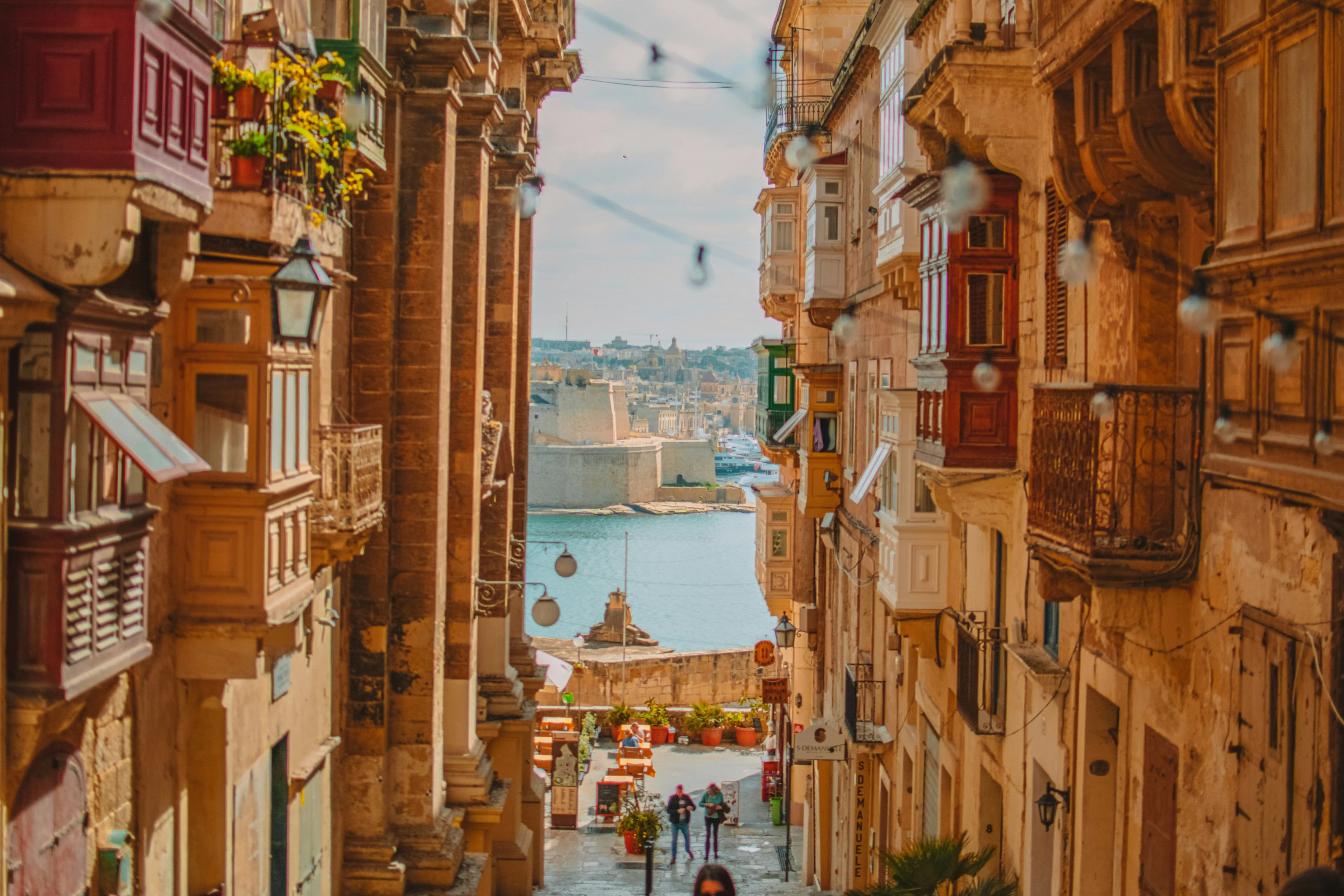
Valletta occupies less than one square kilometre, yet its density of cultural and architectural heritage is exceptional. The city was purpose-built as a fortified capital and has retained its original street plan, making it one of the most coherent Baroque urban environments in the Mediterranean. For the traveller seeking a luxury hotel suite, this means that nearly every address of significance sits within walking distance of the city's major institutions: the Grand Master's Palace, St John's Co-Cathedral, the MUŻA national museum, and the Malta Philharmonic Orchestra's concert hall.

To understand San Ġiljan is to understand what Malta has become for a certain kind of traveler. This is not a sleepy Mediterranean retreat. St Julian's, as it is widely known, functions as the country's most commercially active residential and hospitality quarter, anchored by Spinola Bay on one side and the broader Paceville entertainment zone on the other. Within that frame, there is a genuine luxury tier operating quietly above the noise.

Pembroke occupies a distinct position in Malta's geography and social texture. Originally developed around a British military base, the area retains a measured, ordered character that sets it apart from the denser urban fabric of the island's center. Its coastline faces northeast, toward open Mediterranean water, and the light here is notably clear, arriving without the diffusion caused by surrounding limestone hills. For travelers seeking a luxury hotel suite in Malta, Pembroke offers proximity to the main cultural and historic sites while maintaining a residential quietude that the more commercially developed areas cannot replicate.
The waterfront stretch known as The Strand and Tower Road defines Sliema's public life. Mornings here carry the particular quality of Mediterranean coastal light filtered through salt air, the kind that makes limestone glow amber before 9am. Afternoons belong to the ferries cutting across to Valletta, the cafes set up along the promenade, and the slow rhythm of a town that takes its pleasures seriously.
Tigne Point is Sliema's most architecturally considered quarter. Built on the site of a former British military fort, it now houses high-specification residential towers, a retail complex, and hotel properties with unobstructed views toward Valletta and the open Mediterranean. For travellers prioritising modernity and sea exposure, this is the strongest address in the district. Suites here typically occupy upper floors with panoramic orientations and contemporary finishes that contrast deliberately with the heritage stone visible across the water.
The main promenade corridor, running from Qui-si-Sana point along Tower Road, offers the classic Sliema experience. Properties along this stretch benefit from immediate waterfront access, ferry connections to Valletta, and the ambient energy of Malta's most active coastal walkway. Suites in this zone tend toward larger floor plans within heritage-influenced buildings, often combining original limestone detailing with modern interiors.
Moving one or two streets back from the water, Sliema reveals a quieter residential character. Streets of late colonial-era townhouses, local restaurants preferred by residents over tourists, and significantly lower ambient noise. For travellers who value stillness and neighbourhood authenticity over direct sea views, this pocket of Sliema offers a more considered proposition.
Malta operates on a Mediterranean seasonal rhythm. The peak months of July and August bring intense heat, full hotels, and the highest suite rates. The shoulder seasons of April through June and September through November are, by most assessments, the optimal windows. Temperatures remain warm, the sea is swimmable from May onward, and the island's cultural calendar is active without the compression of high summer.
The Malta International Arts Festival, held annually in July, draws significant cultural traffic to Valletta and the wider harbour area. The Malta Jazz Festival, also in July, takes place at the Grand Harbour. Both events influence availability and pricing across Sliema's hotel inventory. Booking well in advance is advisable if either event aligns with your dates. For travellers focused on design and architecture rather than events, the quieter months of October and November offer exceptional conditions: low crowds, golden light, and full availability across the suite tier.
Malta does not have a formal national palace designation equivalent to France's Palace label. The country's luxury hotel classification follows the standard European star system, with five-star properties concentrated primarily in Sliema, St Julian's, and Valletta. Within that tier, quality variance is real and meaningful. The best suites in Sliema are characterised by generous square footage relative to the island's compact urban fabric, direct sea or harbour views, private terrace access, and interior programmes that integrate local material culture, particularly Maltese stone, hand-woven textiles, and references to the island's layered architectural heritage.
Service standards at the upper end of Sliema's hotel market are genuinely strong. Malta's hospitality sector has matured considerably over the past decade, with several properties investing in dedicated butler programmes, in-suite dining operations, and partnerships with the island's growing fine dining scene. What you will not always find is the kind of ultra-large suite footprint common in Paris or Dubai. Sliema operates at a human scale, and its suites reflect that: refined rather than monumental, precise rather than excessive.
The primary consideration is orientation. Suites facing northwest toward the open sea offer a different experience from those oriented southeast toward Valletta and the Grand Harbour. Both are exceptional, but they produce different atmospheres. The harbour view carries historical and visual density: the fortifications, the domes, the constant ferry traffic. The open sea view is cleaner, quieter, and particularly effective at dawn.
The second consideration is architecture. Sliema has both contemporary tower properties and older converted buildings. The former offer floor-to-ceiling glass, rooftop pools, and a sleek urban register. The latter offer thick stone walls, internal courtyards, and a physical connection to the island's pre-modern identity. Neither is superior in absolute terms. The choice depends on what you want your stay to feel like.
Third, consider mobility. Sliema is well-positioned for the rest of Malta. The Valletta ferry runs frequently and takes under ten minutes. The island's main road network connects from here to Mdina, the Three Cities, and the northern beaches within thirty to forty minutes. A suite in Sliema functions effectively as a central base for a whole-island programme.
Sliema's hotel market is not large, but it is uneven. Within a relatively small number of five-star properties, the gap between a genuinely exceptional suite and a merely acceptable one is significant. Room categorisation, online imagery, and marketing language do not always make that gap visible. This is precisely where a curated selection adds value.
La Suite's approach to Malta focuses on properties where the suite tier is a genuine product, not an afterthought. Across Europe, the suite market rewards informed selection over instinctive booking. In a compact destination like Sliema, where the difference between properties can be a single floor or a 20-degree change in view orientation, that precision matters more than it might in a city with fifty comparable options. La Suite's curated selection is built on exactly that level of specificity.

Sliema is Malta's most urban and cosmopolitan district, combining a Mediterranean waterfront promenade with a concentration of contemporary hotels, fine dining, and retail. Unlike the resort areas of the north or the heritage intensity of Valletta, Sliema offers a balance of modern comfort and immediate access to the island's key cultural sites. For suite travellers, it functions as a genuinely central and design-conscious base.
Sliema suites typically offer one of two distinct orientations: toward the open Mediterranean to the northwest, or toward Valletta and the Grand Harbour to the southeast. The harbour-facing orientation delivers one of the most architecturally compelling urban views in the Mediterranean, with the Baroque skyline of Valletta visible across the water. Both exposures are strong; the choice depends on whether you prioritise open sea light or historical visual density.
The shoulder seasons of April to June and September to November offer the most favourable conditions for suite travel in Sliema. Temperatures are warm, the sea is swimmable from May onward, and hotel availability at the suite tier is significantly better than in July and August. If you are travelling during the Malta International Arts Festival or Jazz Festival in July, book several months in advance.
Sliema operates at a human urban scale, and its suites reflect that. Floor plans tend to be refined and carefully appointed rather than exceptionally large by the standards of Paris, London, or Dubai. The best suites in the district offer private terrace access, sea or harbour views, and high-specification interiors. What they deliver is precision and quality rather than sheer square footage.
Sliema is one of the most practical bases for exploring the whole island. The Valletta ferry departs frequently and takes under ten minutes. The road network connects Sliema to Mdina, the Three Cities, the northern beaches, and the southern temples within thirty to forty minutes by car. A well-positioned suite in Sliema gives you urban comfort and island-wide mobility without compromise.
Malta uses the standard European star classification system without a separate national prestige designation like the French Palace label. Five-star properties in Sliema vary considerably in actual suite quality, service depth, and facilities. The best operations offer dedicated butler service, in-suite dining, and interiors that integrate local materials including Maltese stone and artisan textiles. Independent curation is more reliable than star ratings alone for identifying genuine suite-tier quality.
Yes. The Tigne Point development in particular has introduced contemporary hotel properties with modern architecture, panoramic glazing, rooftop pools, and suite products aligned with international design hotel standards. These properties contrast with older converted buildings in the district that offer thick stone walls and heritage atmosphere. Both typologies exist within Sliema's walkable footprint, giving travellers a genuine choice of architectural register.
Malta International Airport is located near Luqa, approximately 8 to 10 kilometres south of Sliema. By private transfer, the journey takes around 20 to 25 minutes depending on traffic. Taxi and rideshare services are available directly from the arrivals hall. For suite-level travel, pre-arranged private transfer is the standard approach and can typically be organised through the hotel directly.
From Sliema, the Valletta ferry provides direct access to the capital's museums, galleries, St John's Co-Cathedral, and the Renzo Piano-designed Parliament building. The district's own restaurant scene has matured significantly, with several well-regarded addresses on and near the promenade. Malta's food culture draws on Italian, North African, and British influences, with fresh seafood, local cheeses, and ftira (the traditional Maltese flatbread) forming the foundation of serious local menus.
General booking platforms aggregate supply without differentiating meaningfully between suite categories, floor levels, view orientations, or service quality. In a compact market like Sliema, those distinctions are decisive. La Suite curates only properties where the suite tier represents a genuine, considered product, allowing travellers to make an informed choice based on experience and specificity rather than marketing language and averaged review scores.