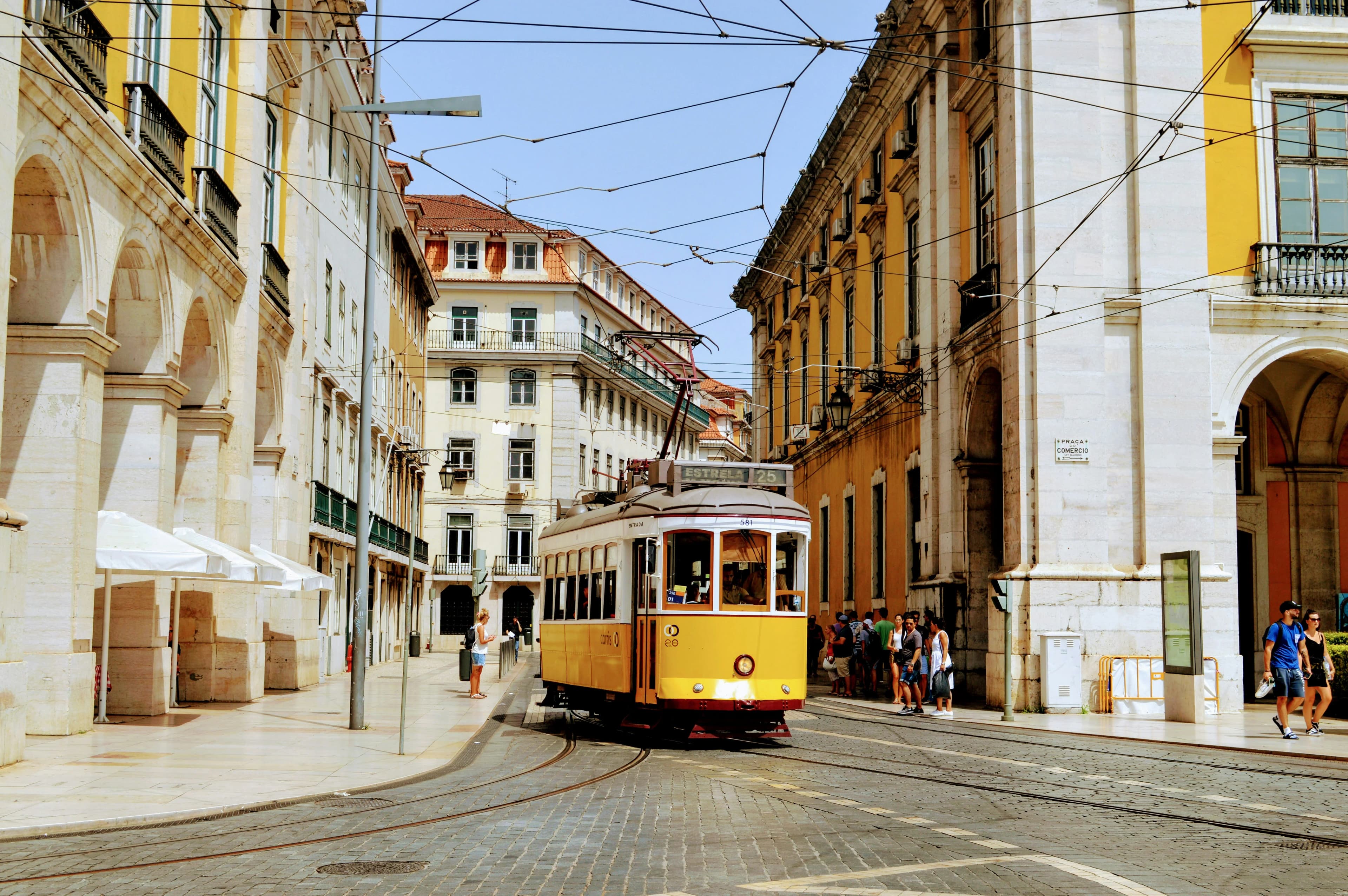
Bairro Alto and its place within Lisbon's luxury geography
Staying in or immediately adjacent to Bairro Alto places a traveller within walking distance of the Museu Nacional de Arte Antiga, the independent bookshops and concept stores of Rua do Carmo, and the kind of restaurant culture that does not announce itself loudly. The luxury of the neighbourhood is largely spatial and atmospheric rather than branded: narrow streets, azulejo-clad facades, and a building stock that dates predominantly to the Pombaline and pre-Pombaline eras.
For travellers also exploring the broader country, Portugal offers a spectrum of suite experiences that extends from the Alentejo plains to the Douro Valley vineyards, each with its own architectural logic and pace.
When to stay in Bairro Alto
Lisbon's climate is one of the most temperate in Europe. The city receives more than 2,800 hours of sunlight annually, which distributes well-considered travel opportunities across most of the calendar year. Spring, from March through May, brings mild temperatures and lower occupancy than summer peaks, making it the period best suited to securing preferred suites with flexibility. The light is precise and photogenic, and the city's terraces and miradouros are accessible without the compression of high season.
June through September brings Lisbon's warmest and driest conditions, along with the Festas de Lisboa in June, a month of street celebrations centred on the Feast of Santo António that transforms the city's older quarters into open-air venues. Bairro Alto is one of the focal points of this period. Suite availability tightens considerably, and rates at the top end of the market reflect that pressure.
October and November represent a second window of quality travel: the heat dissipates, the cultural calendar remains active, and the neighbourhood reclaims some of its off-season quietude. December through February is the least visited period, with occasional rain, but the city's indoor cultural life, its concert halls, museums, and wine bars, continues without interruption.
Understanding luxury accommodation standards in Lisbon and Portugal
Portugal does not operate the same official palace designation that France uses for its top-tier properties. The country's classification system runs to five stars, with the Turismo de Portugal authority overseeing grading standards. Within that framework, a subset of properties in Lisbon carry designations as heritage buildings (imóveis de interesse público or classificados) that impose architectural preservation requirements on any renovation work. This creates an interesting condition for suite design: the finest interiors in historic Bairro Alto buildings must negotiate between contemporary comfort standards and protected structural elements.
The result, when executed with care, is accommodation that carries a material authenticity rarely available in purpose-built luxury hotels. Coffered ceilings, original tile work, wrought-iron balconies, and wide-plank wooden floors become part of the suite experience rather than decorative gestures. At the highest level, suites in this part of Lisbon tend to prioritise spatial proportion and curated materiality over technology-forward amenity packages, though the leading properties integrate both without obvious compromise.
Boutique properties of eight to thirty rooms dominate the Bairro Alto accommodation offer, which means that suite inventory is limited and genuinely competitive at peak periods. This is not a neighbourhood where last-minute availability at the top tier is predictable.
How to choose the right suite in Bairro Alto
The first distinction to make is between suites within converted historic buildings and those in contemporary insertions. Both exist in and around Bairro Alto, and they offer meaningfully different experiences. A suite in a 17th or 18th-century palacete will typically feature higher ceilings, more complex room geometries, and a relationship with the street that is immediate and sometimes audible. A contemporary property designed for the neighbourhood will often prioritise acoustic insulation, controlled light environments, and more standardised luxury amenity sets.
The second consideration is orientation. Bairro Alto's topography means that rooms on upper floors facing west or south frequently offer views across the city's rooftops and, in some cases, toward the Tagus. These aspects command premium pricing and are worth specifying at the time of enquiry rather than assuming from photography.
Third, the neighbourhood's evening character, with its concentration of bars and restaurants operating until late, means that street-level or lower-floor rooms require careful acoustic evaluation. The best suites in the area address this directly, either through building depth, internal courtyard positioning, or high-specification glazing.
Finally, proximity to Chiado should factor into any assessment. The two neighbourhoods share a boundary, and suites positioned at that interface benefit from Bairro Alto's character while gaining immediate access to Chiado's more structured retail and dining offer.
Why curation matters in a neighbourhood of limited inventory
Bairro Alto is not a district where luxury suite supply is deep. The combination of heritage protection requirements, narrow street plans, and the neighbourhood's resistance to large-scale hotel development means that the number of suites meeting a genuine premium standard is small. In this context, aggregating options independently and assessing them against consistent quality criteria is a time-intensive exercise with an uncertain outcome.
La Suite's curated selection for Bairro Alto and the wider Lisbon market is built on direct property assessment rather than user review aggregation. The selection criteria address suite architecture, spatial adequacy, service consistency, and the degree to which a property understands its local context and communicates that understanding through the guest experience. For a traveller whose time in Lisbon is defined and whose accommodation choice will materially shape the quality of the visit, that curation removes significant friction from the decision process.
The neighbourhood rewards considered travel. Its best suites are found by those who approach the search with the same precision they bring to any other significant decision.