Why Bled rewards a suite-level stay
Luxury hotel suites in Bled tend to occupy elevated positions above the lake's southern or western shores, maximising the panoramic geometry of the valley. The best suites offer unobstructed water views, generous terraces, and an architectural calm that mirrors the landscape itself. This is Slovenia's most visited destination, but at suite level, the crowds become irrelevant.
Best areas to stay around Bled
The lakeshore and southern ridge
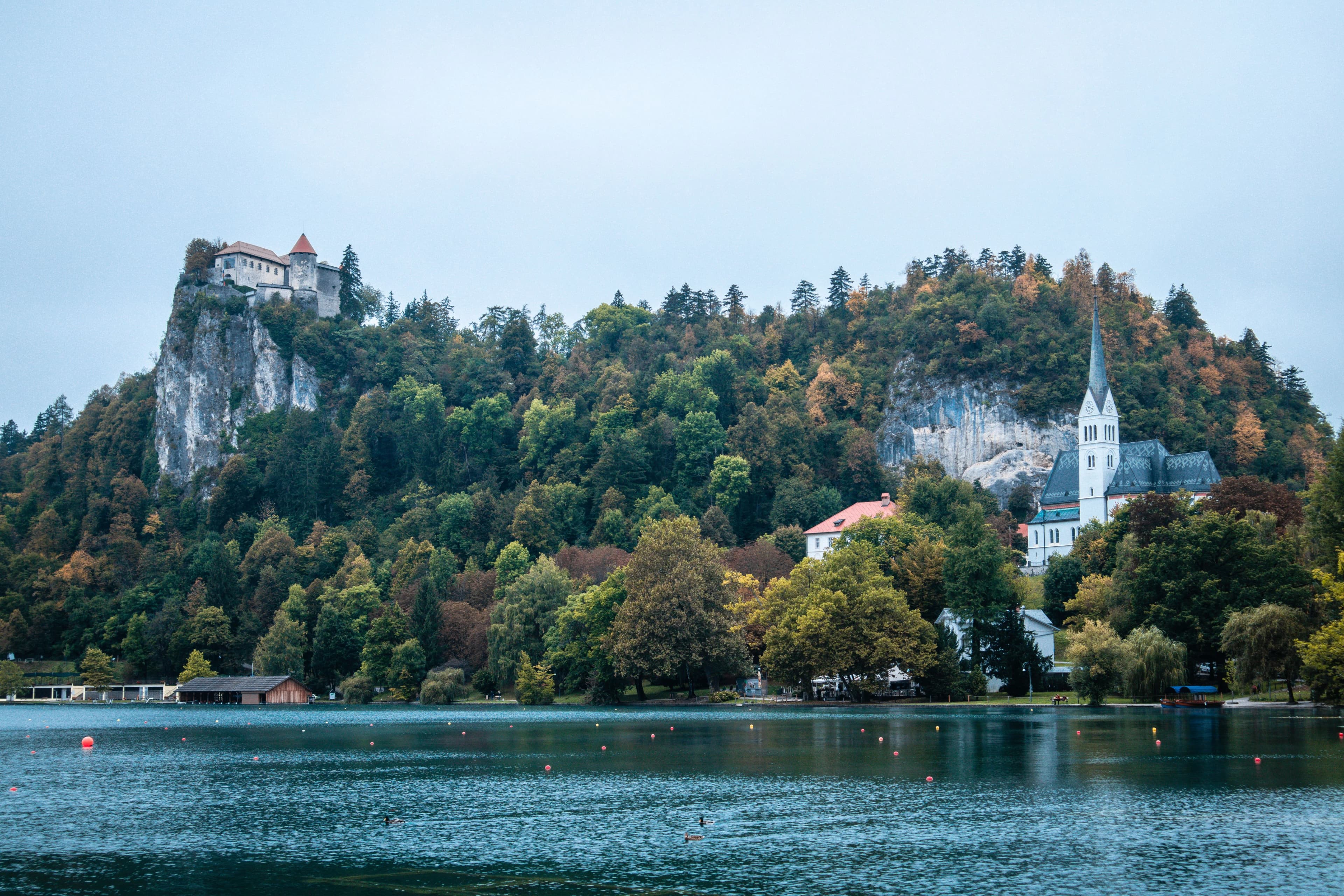
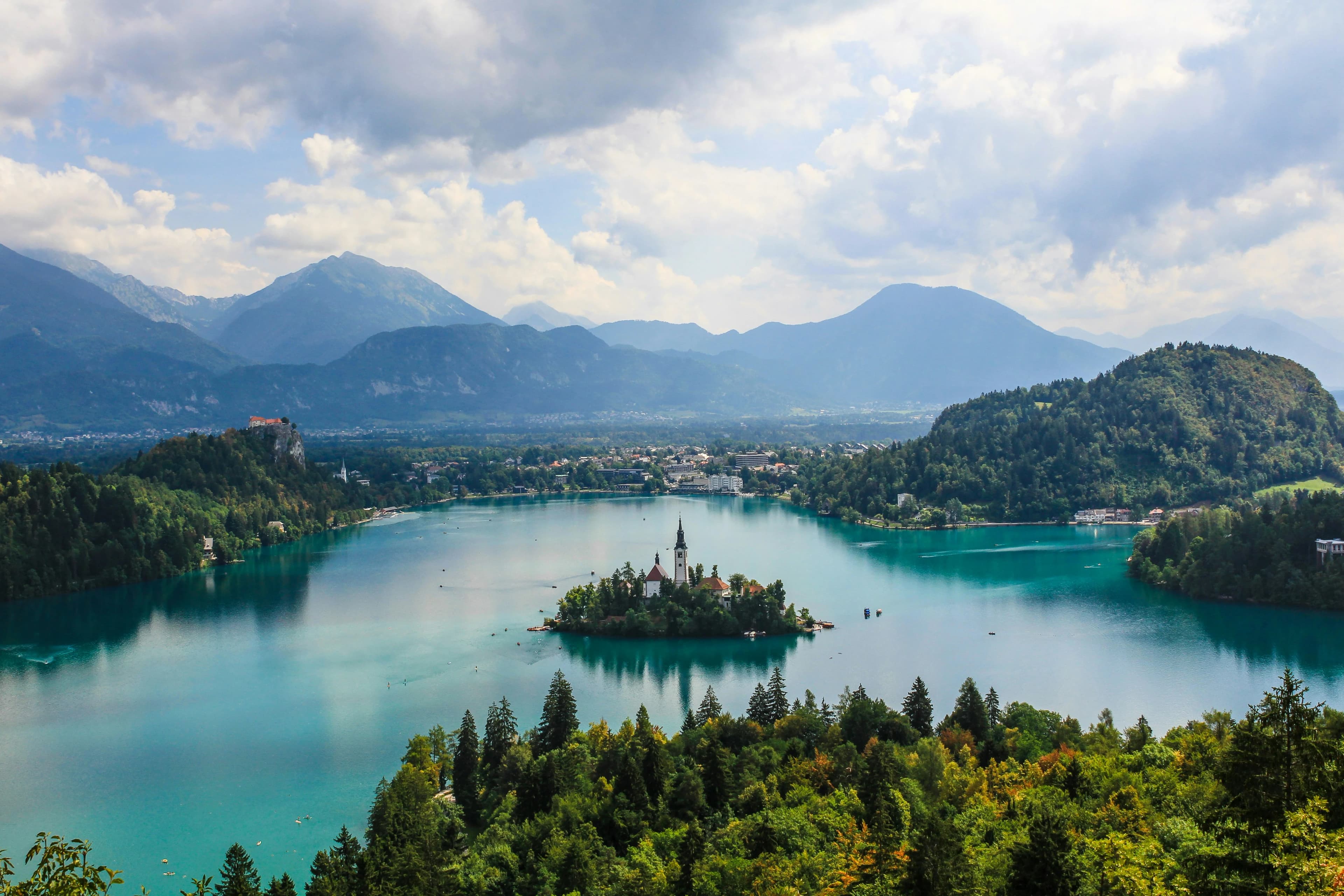
The southern edge of Lake Bled provides the clearest sightlines to Bled Island and the castle. Properties positioned along this ridge benefit from morning light and an uninterrupted panorama across the water. This is where the most established luxury hotels have historically anchored themselves, and for good reason: the visual axis here is essentially perfect.
Bled village and the western bank
The western bank sits closer to the village infrastructure, the rowing clubs, and the access points for Vintgar Gorge. Suites here trade some panoramic sweep for proximity to activity. The atmosphere is slightly more kinetic, suited to travelers who want the lake as a backdrop rather than a focal point.
The Pokljuka plateau and surroundings
Above Bled, the Pokljuka plateau offers an entirely different register. Dense spruce forest, near-silence, and an elevation that keeps temperatures notably cooler in summer. A small number of retreats occupy this terrain. They appeal to travelers seeking complete withdrawal rather than lake views, with cross-country skiing in winter and trail access through UNESCO-protected Triglav National Park in warmer months.
When to visit Bled for a suite stay
Late spring and early summer (May to June)
May and June represent the clearest window for Bled. The lake is cold but visually at its most saturated. Crowds have not yet peaked. Suite availability is relatively strong, and the surrounding trails are accessible without summer heat. This is the season for those who want the landscape without the density of July and August.
Summer (July to August)
Peak season brings higher prices, full occupancy at the best properties, and significantly more visitors on the lake and promenade. That said, the long daylight hours and warm temperatures make the terraces and outdoor spaces of a lake-view suite genuinely liveable. Book well in advance for the premium positions. The Bled Days festival in late July adds a local cultural dimension worth noting.
Autumn (September to October)
September is arguably the most refined month to visit. The light is lower and richer, the forest above the lake turns amber and ochre, and the visitor numbers drop sharply after the school holidays end. Suite rates begin to soften. The lake is still swimmable into mid-September. For travelers who value atmosphere over convenience, autumn is the correct season.
Winter (December to March)
Winter transforms Bled into a quieter, more introspective destination. Snow on the castle, mist over the lake, and the near-absence of tourists create a completely different character. Some properties reduce their offering in low season, so confirming suite availability directly is advisable. Proximity to ski areas in the Kranjska Gora valley makes winter stays genuinely functional for alpine sports.
Local luxury standards: what to expect from top-tier suites in Bled
Slovenia does not operate under a formal prestige label equivalent to France's Palace classification or Italy's historic designations. The country's luxury hotel market is smaller and more selective, which means quality is determined property by property rather than by category. The best luxury hotel suites in Bled are defined by their spatial generosity, their relationship to the view, and the precision of their service rather than by institutional certification.
Expect suites with private terraces positioned above the treeline, interiors that reference Alpine materiality (stone, timber, linen) without tipping into rustic pastiche, and a level of quiet that is structural rather than incidental. The hospitality culture in Slovenia is discreet and competent. Staff tend to be understated rather than performative, which suits the destination's character well.
For context on how Bled fits within the broader European luxury suite landscape, the destination occupies a niche: smaller in scale than the grand Alpine resorts of Switzerland or Austria, but sharper in its visual composition and considerably less crowded at equivalent price points.
How to choose the best suite in Bled
Prioritise the view orientation
In Bled, the view is not an amenity: it is the architecture of the stay. Before confirming a suite, establish precisely which direction the terrace or primary windows face. South-facing rooms capture the island and castle in the same frame. North-facing rooms look toward the Karavanke mountains. Both are valid, but they produce fundamentally different experiences.
Consider access over prestige
The most recognisable property names in Bled are not always the most considered choices. Smaller properties with fewer suites often provide more attentive service and more direct access to the lake. A suite in a boutique property with a private garden-to-water path may outperform a larger hotel's standard lake-view room in every dimension that matters.
Match the suite to the season
A suite with a large terrace is transformative in May through October and largely irrelevant in January. Conversely, a suite with a fireplace, thermal features, and deep-soak bathtub earns its value in winter. Align the specific suite typology with the season you are visiting.
The value of curation in a destination this precise
Bled has a relatively contained hotel market. The number of properties that genuinely deliver at luxury suite level is small, which makes independent research either very quick or very misleading, depending on how you approach it. Review platforms aggregate volume but rarely surface the specific suite within a property that justifies the investment.
La Suite curates the selection for Slovenia with the same editorial discipline applied across Europe: direct knowledge of the properties, suite-specific assessment, and a focus on the experience rather than the brand. In a destination where the margin between a good stay and an exceptional one is often a single room assignment, that specificity matters.