Where to stay in Begur and its surrounding area
The old town of Begur
The historic nucleus of Begur is compact, cobbled, and architecturally coherent. Properties within or immediately adjacent to the old town tend to occupy converted manor houses or modernista villas, offering a sense of enclosure and cultural density. Suites in this zone reward guests who prioritize walking access to local restaurants, the weekly market, and the evening paseo over direct sea proximity.
The calas: Sa Tuna, Aiguafreda, Fornells, and Sa Riera
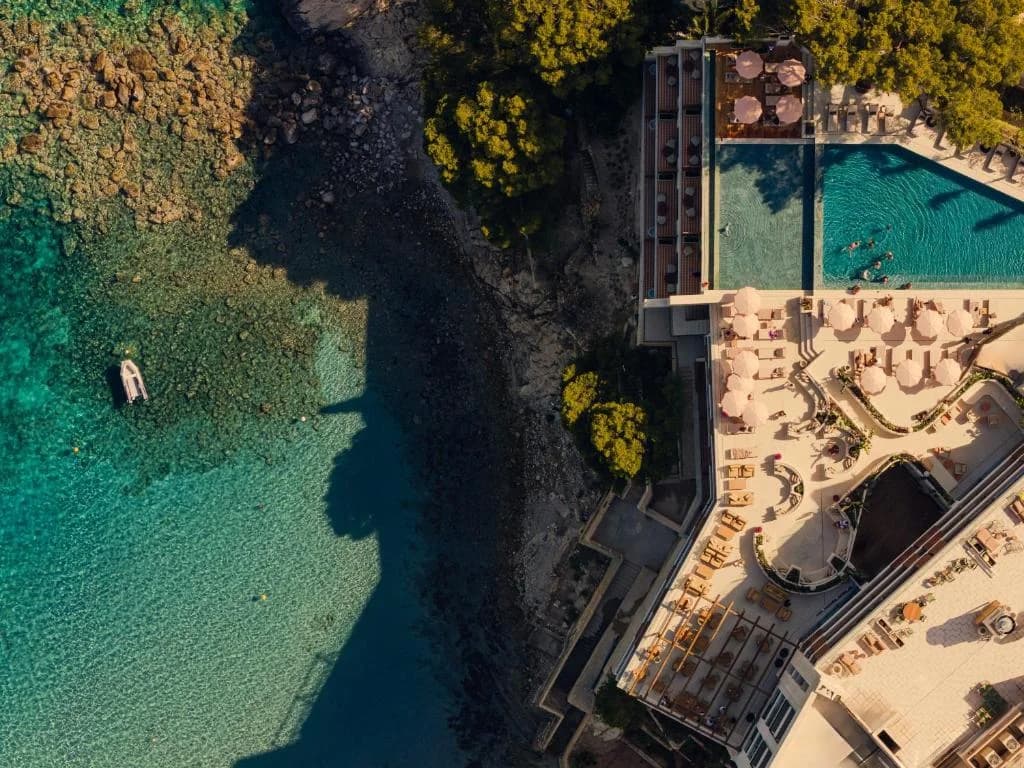
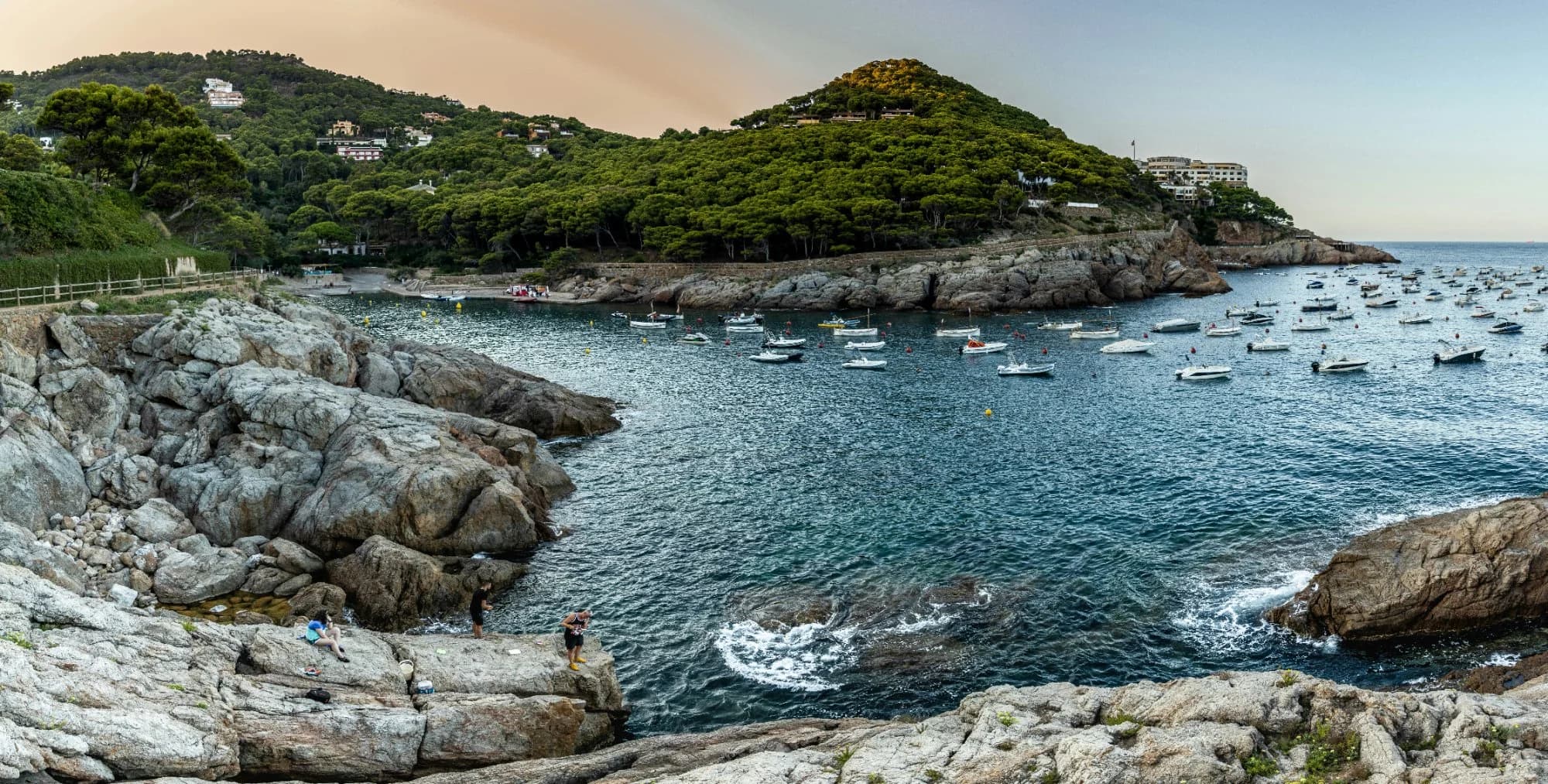
Begur's coastline is distributed across several distinct coves, each with its own character. Sa Tuna is intimate and largely undeveloped, accessible via a narrow road and flanked by a handful of fishermen's houses. Aiguafreda is even more discreet, essentially a single curved inlet with minimal infrastructure. Fornells opens onto a wider bay where traditional fishing boats and small pleasure craft coexist. Sa Riera is the most accessible and consequently the most frequented, though it retains a working village atmosphere that distinguishes it from more commercialized Costa Brava resorts. Luxury properties near these calas typically offer direct or near-direct sea access, which is a meaningful functional advantage on this coastline where parking and path access are genuinely constrained.
The rural periphery
The agricultural land surrounding Begur, stretching toward Pals and the Emporda plain, hosts a different category of property: converted farmhouses and masies set within olive groves and vineyards. These suit travelers whose primary interest is landscape immersion, cycling, and the gastronomic culture of the Alt Empordà, rather than daily beach access.
When to visit Begur for a luxury stay
The Costa Brava operates on a compressed seasonal calendar. July and August represent peak demand, when temperatures consistently exceed 30 degrees Celsius, coastal access becomes significantly more congested, and suite rates at top properties reach their annual ceiling. Availability at well-positioned properties during these months requires advance planning of several months at minimum.
June and September offer a more considered proposition. Temperatures remain comfortable for swimming, the sea has warmed sufficiently, and the rhythm of the coast shifts perceptibly toward a more local cadence. Restaurants operate without reservation pressure, and the visual quality of the light in early autumn is particularly notable for the region.
May and October extend the season for travelers whose priorities are landscape, gastronomy, and cultural engagement over beach access. The Alt Empordà in spring, with almond blossom and the first asparagus of the Emporda plain, is a different experience from its summer iteration, and arguably more rewarding for guests with genuine curiosity about place.
The Cap de Creus natural park, accessible within thirty minutes from Begur, is best explored outside peak summer, when foot traffic on its coastal paths is manageable and the tramuntana wind gives the landscape its characteristic elemental quality.
Local luxury standards: what defines a high-end property in Begur
Spain does not operate the formal palace hotel classification that France applies to its highest-tier properties. The reference framework here is different: quality is read through architecture, discretion, gastronomy, and the calibration of service rather than through an official label.
In the Begur context, the most credible luxury properties tend to share several structural characteristics. First, authentic heritage fabric: a converted masia, a colonial-era villa, or a stone building with documented local history carries more weight than new construction in this landscape. Second, a genuine relationship with the local food culture: the Alt Empordà is one of the most gastronomically significant territories in Spain, home to a long tradition of market-driven cooking and, historically, to elBulli in the nearby bay of Montjoi. Properties that engage seriously with this culinary context rather than offering generic hotel cuisine represent a meaningfully different offer. Third, access architecture: in a town whose coastline is defined by its difficulty of access, a property that has resolved the question of how guests reach the water, whether through private path, shuttle, or reserved access, is delivering a functional amenity that has real value.
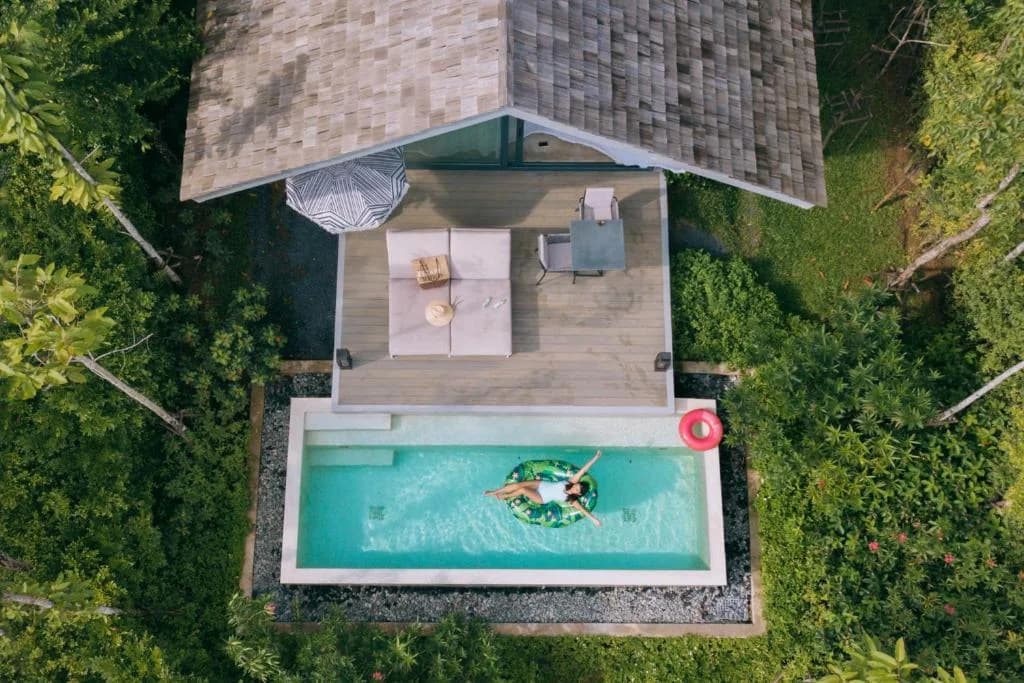
Suite configurations in Begur's top properties typically emphasize outdoor living: private terraces, plunge pools, and direct garden access are more common priorities than floor area alone. The climate and landscape logic of the Costa Brava makes exterior space the primary luxury metric.
How to choose the right luxury suite in Begur
The first decision is positional: old town proximity versus coastal proximity. These are not easily reconciled in Begur's geography, and the choice shapes the entire character of a stay. Guests who want to walk to dinner in the village square and absorb the town's architectural character should orient toward the historic center. Guests whose primary interest is the sea should accept a short transfer and focus on the cala-adjacent properties.
The second consideration is scale. Begur is not a destination for large resort hotels. The properties that fit this landscape are small to medium in size, which means suite inventory is genuinely limited. This scarcity has quality implications: smaller properties tend to deliver more attentive and personalized service, but it also means that preferred room categories require early reservation, particularly for summer travel.
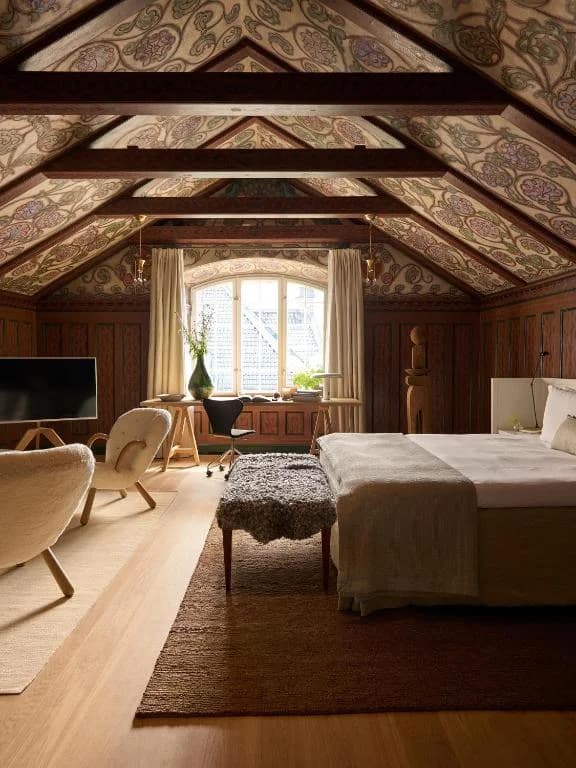
Third, assess the outdoor configuration carefully. A suite with a private pool facing inland has a fundamentally different offer from one with a sea-view terrace, even at comparable price points. Requesting specific orientation and photographic documentation of the actual suite rather than a category representative is a reasonable and advisable practice.
Fourth, consider transfer logistics. Begur is approximately 120 kilometers from Barcelona El Prat airport, typically a 90-minute drive depending on traffic. Girona Costa Brava airport is considerably closer, at roughly 45 minutes, and serves several European carriers. Some properties offer or can arrange private transfer, which is worth clarifying at the point of reservation.
Why a curated selection by La Suite matters in Begur
Begur's accommodation landscape is relatively small in absolute terms, but it is uneven in quality. The combination of high seasonal demand and a heritage property stock that ranges from genuinely exceptional to merely presentable means that undifferentiated search results are an unreliable guide. A curated selection by La Suite applies consistent editorial criteria: architectural authenticity, suite quality, service calibration, and the specific functional attributes that matter to guests who have chosen this coastline deliberately. The result is a shortlist that removes the noise and reflects only the properties that hold up to serious scrutiny. For a destination where the right choice and the wrong choice can feel very different on arrival, that filter has practical value.