Staying in Lavapiés: what to know before choosing a suite
The distinct character of Lavapiés as a base
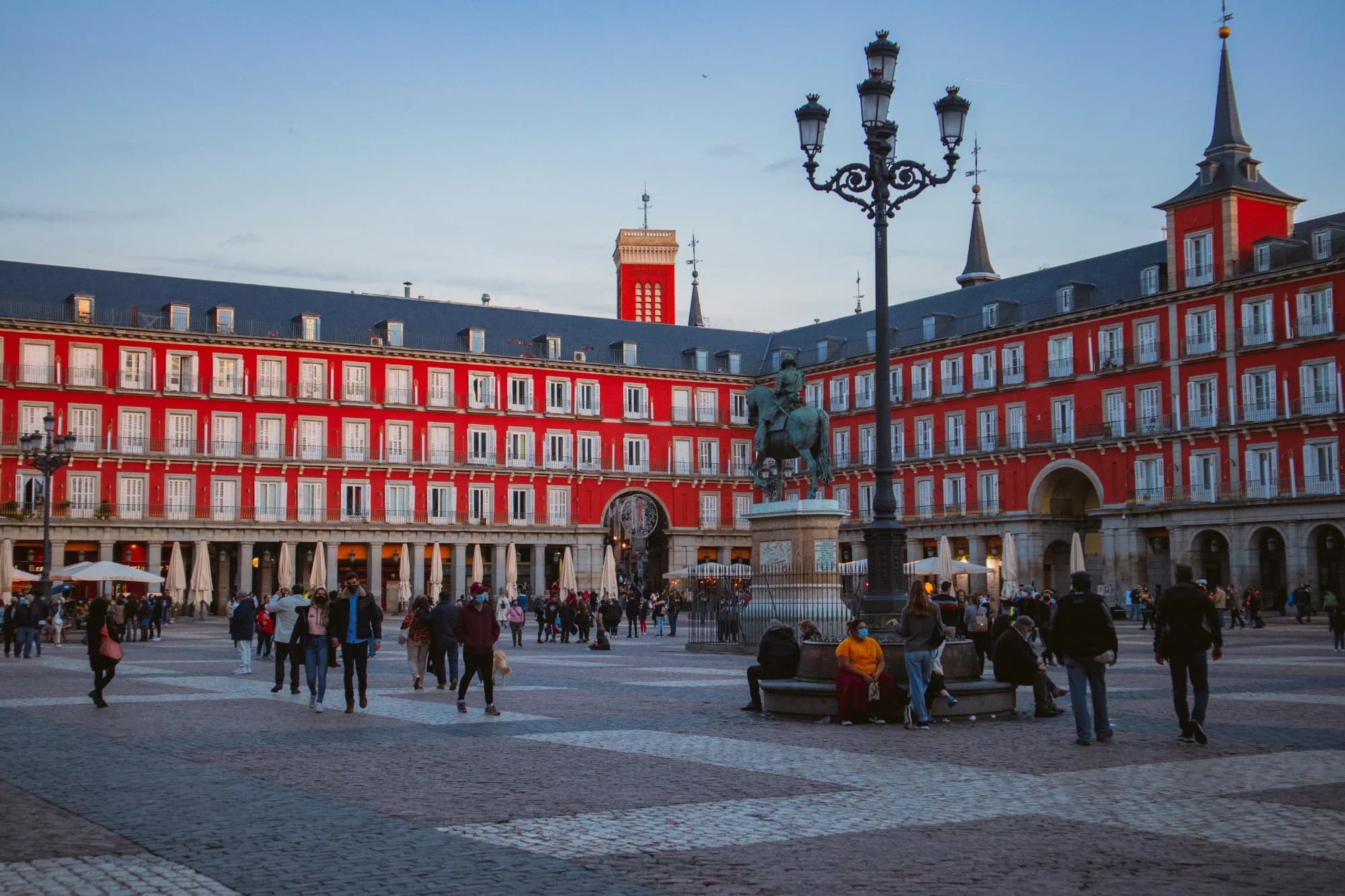
The neighbourhood centres on the Plaza de Lavapiés, a mid-slope square that functions as a social anchor. From there, the streets radiate toward Embajadores, Tirso de Molina, and the edge of the Rastro flea market district to the south. The built environment is predominantly nineteenth and early twentieth century: brick residential blocks, narrow commercial streets, and occasional traces of earlier urban layers. The Reina Sofía museum, housing Picasso's Guernica and one of Europe's most significant collections of modern and contemporary art, sits at the neighbourhood's northern boundary. This proximity is not incidental. Lavapiés has developed a coherent arts infrastructure, including independent galleries, performance spaces, and the Centro Dramático Nacional, that reflects its position adjacent to one of Spain's major cultural institutions.
Connectivity and urban position
Lavapiés is served by its own metro station on Line 3, with direct connections to the Atocha railway terminus, Sol, and the broader Madrid network. Barajas airport is reachable within thirty to forty minutes by metro or taxi depending on traffic. The neighbourhood is walkable to Huertas, La Latina, and the Retiro park perimeter, making it a functional base for travellers who want to move through the city on foot rather than by vehicle.
When to visit Lavapiés
Madrid operates on a climate that is more extreme than most European capitals. Summers are dry and consistently hot, with July and August regularly exceeding 35 degrees Celsius. The city does not empty in the way that Paris or Rome do in August; locals adapt rather than leave. For suite travellers, the more comfortable windows are April through June and September through November. Spring brings moderate temperatures and the full cultural calendar of the city. Autumn is arguably the most functional season for combining museum visits, restaurant reservations, and urban exploration without weather as a constraint.
The Fiestas de Lavapiés, typically held in August, transform the neighbourhood into an open-air cultural programme with street performances, concerts, and communal events centred on the plaza and surrounding streets. Madrid's broader cultural season, including the ARCOmadrid contemporary art fair held in February, draws an internationally informed audience that has historically found Lavapiés appealing precisely because of its distance from the more conventional luxury circuits of the city.
Luxury standards and suite expectations in this context
Spain's hotel classification system uses star ratings administered at the regional level, which means that standards can vary between autonomous communities. Madrid's luxury hotel market is concentrated in properties carrying five stars, with a smaller number holding the Gran Lujo distinction. The Palace category, which carries specific regulatory weight in France, does not have a direct Spanish equivalent, though several Madrid properties have sought affiliation with international luxury consortia such as Leading Hotels of the World or Relais and Chateaux to signal positioning.
In Lavapiés specifically, the accommodation offer skews toward boutique properties and design-led hotels rather than the large-format luxury hotels found on Gran Vía or in the Salamanca district. A luxury suite in this context is more likely to be found in a carefully converted residential building or a compact property with considered interiors than in a grand hotel with ballrooms and extensive conferencing infrastructure. This is not a limitation. For travellers who prioritise spatial quality, design coherence, and neighbourhood integration over lobby scale, it is the appropriate configuration.
What to expect from a high-end suite in Lavapiés
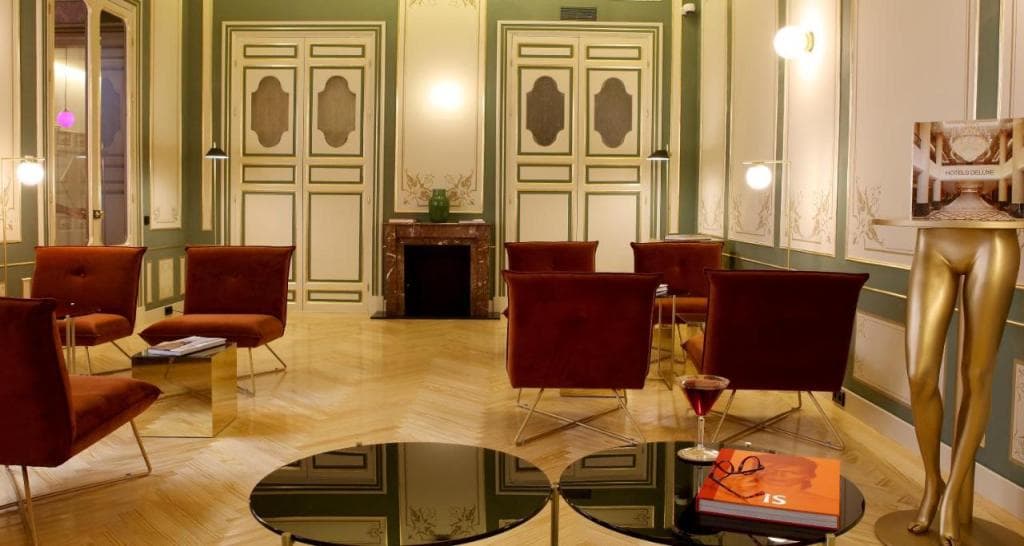
Properties at the upper end of the Lavapiés offer tend to emphasise architectural integrity, local material sourcing, and a reduced room count that supports personalised service. Suites in converted buildings may feature original tile work, exposed structural elements, or double-height ceilings that reflect the neighbourhood's built heritage. The trade-off is that the scale of amenities differs from what a 400-room five-star hotel on a major boulevard provides. Guests who understand that exchange consistently find the intimacy more valuable than the infrastructure.
How to choose the right suite in Lavapiés
Several considerations are specific to this neighbourhood and distinguish it from other Madrid bases. First, street noise: Lavapiés is an active residential neighbourhood with nightlife, markets, and street commerce. Properties with interior-facing suites or substantial acoustic glazing offer meaningfully better sleep quality than those with primary street exposure. Second, access: the neighbourhood's topography involves inclines that some travellers find relevant when selecting a property, particularly in relation to arrival logistics with luggage. Third, proximity to anchors: guests with specific cultural priorities, whether the Reina Sofía, the Rastro market, or the La Latina restaurant cluster, benefit from mapping their suite location against those reference points before confirming a booking.
The question of whether to stay in Lavapiés versus the more established luxury zones of Madrid is ultimately a question of intent. Travellers seeking the operational ease of concierge services scaled to high-volume luxury hotels will be better served elsewhere. Those who want to understand Madrid as a functioning city, and to sleep well while doing so, will find Lavapiés a more honest and often more memorable base.
Why curation matters in a neighbourhood like Lavapiés
The Lavapiés accommodation market contains a wide range of properties across very different quality levels. The neighbourhood's reputation for affordability and authenticity has attracted investment in short-term rental stock and independent hotels that vary significantly in their execution. Identifying which properties consistently deliver on spatial quality, service reliability, and design integrity requires a level of direct knowledge that general booking platforms do not provide. La Suite's curated selection applies the same editorial standards here as it does in more established luxury circuits: every property is assessed on the basis of suite quality specifically, not overall hotel rating. The result is a shorter, more reliable list for travellers who have already decided they want Lavapiés and now need to identify the right property within it.