Where to stay in the Spanish Pyrenees: key areas and their character
The Aragonese Pyrenees
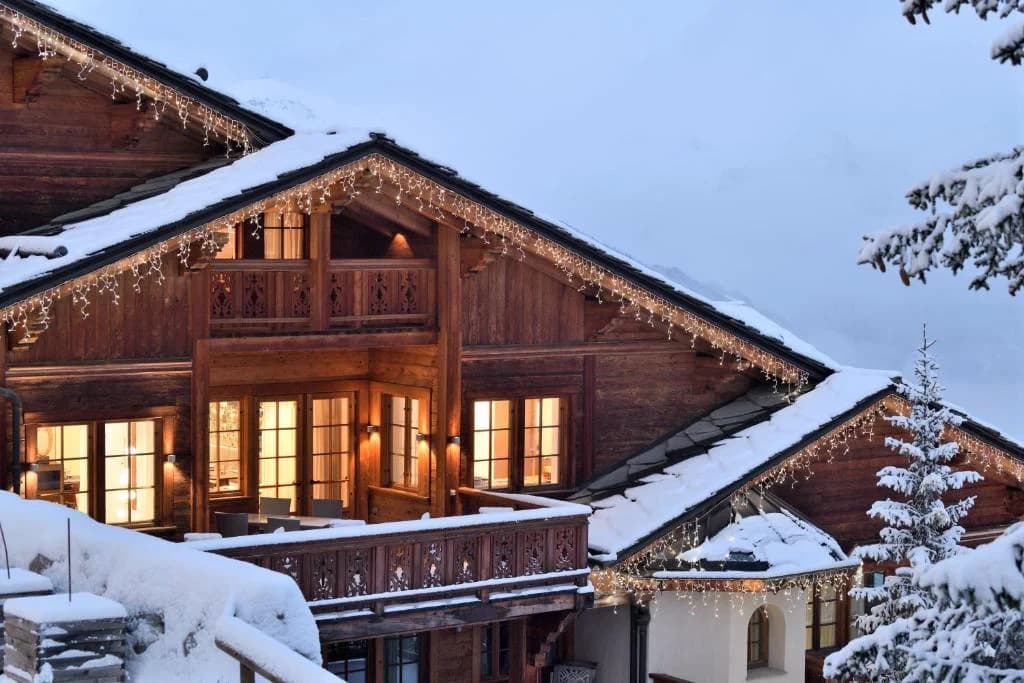
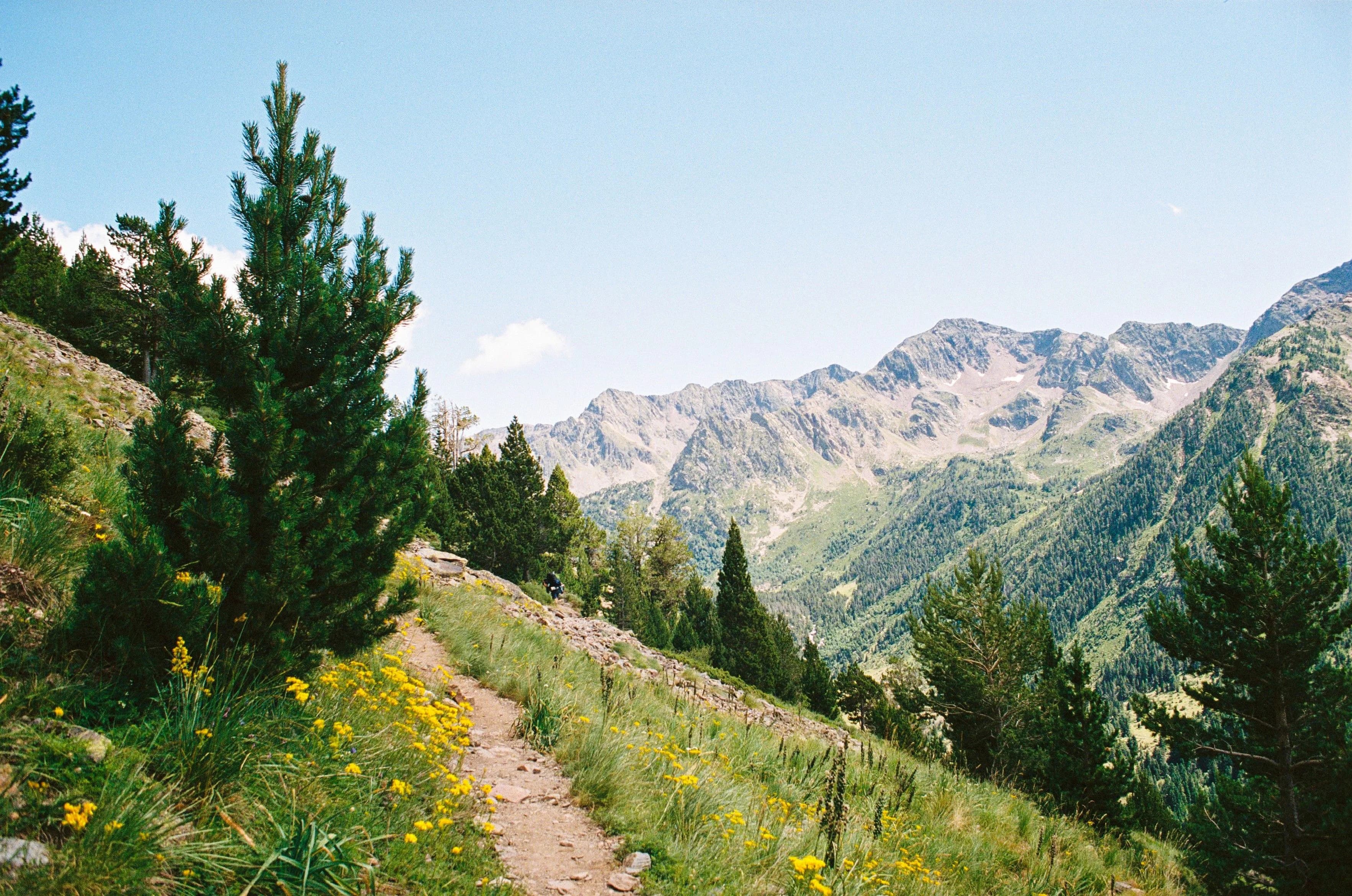
The central sector, anchored around the Ordesa y Monte Perdido National Park and the Hecho and Ansó valleys, offers the most dramatic topography in the entire range. Properties here tend to occupy converted farmhouses known as casas de payés or historic bordas, with thick stone walls and pitched slate roofs that respond architecturally to the severity of the climate. The Benasque valley, at the foot of Aneto (the highest peak in the Pyrenees at 3,404 metres), attracts serious alpinists alongside guests seeking post-exertion comfort. Suite-level accommodation in this zone prioritises thermal facilities, locally sourced material palettes, and direct access to protected natural terrain.
The Catalan Pyrenees
From the Aran Valley in the northwest to the volcanic landscape of La Garrotxa in the east, the Catalan sector presents a more internally connected luxury circuit. The Val d'Aran, administratively part of Catalonia despite its geographic position on the Atlantic watershed, has developed a consistent infrastructure of high-end hotels oriented around the Baqueira-Beret ski area, the most frequented by Spanish royalty and Madrid's professional class. Further east, Cadaqués and the Alt Empordà foothills connect Pyrenean culture with Costa Brava sensibility. Suites in this corridor often combine access to both mountain and coastal environments within a single stay.
The Navarrese and Basque Pyrenees
The western end of the range, where the mountains soften toward the Atlantic and the landscape turns greener and more pastoral, operates on a quieter register. The Roncesvalles pass and the Baztan valley retain a strong sense of pre-industrial Basque and Navarrese culture. Accommodation here is less concentrated, but the properties that do exist at the suite level tend to be deeply embedded in local architectural tradition, offering an experience that is more intimate and less resort-oriented than in the Aragonese or Catalan sectors.
When to visit the Spanish Pyrenees for a suite stay
The region operates on two distinct seasonal peaks, with a quieter shoulder period that many discerning travellers find preferable.
Winter, from December through March, activates the ski infrastructure around Baqueira-Beret, Formigal, and Cerler. Suite availability at the better properties tightens significantly in February, when Madrid and Barcelona families traditionally take their ski week. Booking three to four months in advance for this window is standard practice at the upper tier.
Summer, from late June through August, brings hikers, trail runners, and cultural travellers. The GR11, the long-distance path that traverses the entire Spanish side of the range, draws an international audience. July and August see the highest occupancy across all categories, and the best suites are typically reserved well in advance by repeat guests.
The true quality windows are late spring (May to mid-June) and early autumn (September to mid-October). Alpine wildflowers, reduced visitor density, stable weather for outdoor activities, and full hotel services without peak-season pricing make these months the most coherent choice for a considered suite stay.
Local luxury standards: what defines a high-end suite here
The Spanish Pyrenees do not operate within the same palace hotel culture as Madrid or Barcelona. The luxury register here is defined by restraint, material authenticity, and integration with landscape rather than by urban grandeur or formal service codes.
Several classifications are relevant. The Spanish Parador network includes historic properties in the Pyrenean zone, occupying former monasteries and castles that offer architectural context unavailable elsewhere. These are state-managed and offer a particular kind of institutional gravitas, though the suite product varies considerably by property.
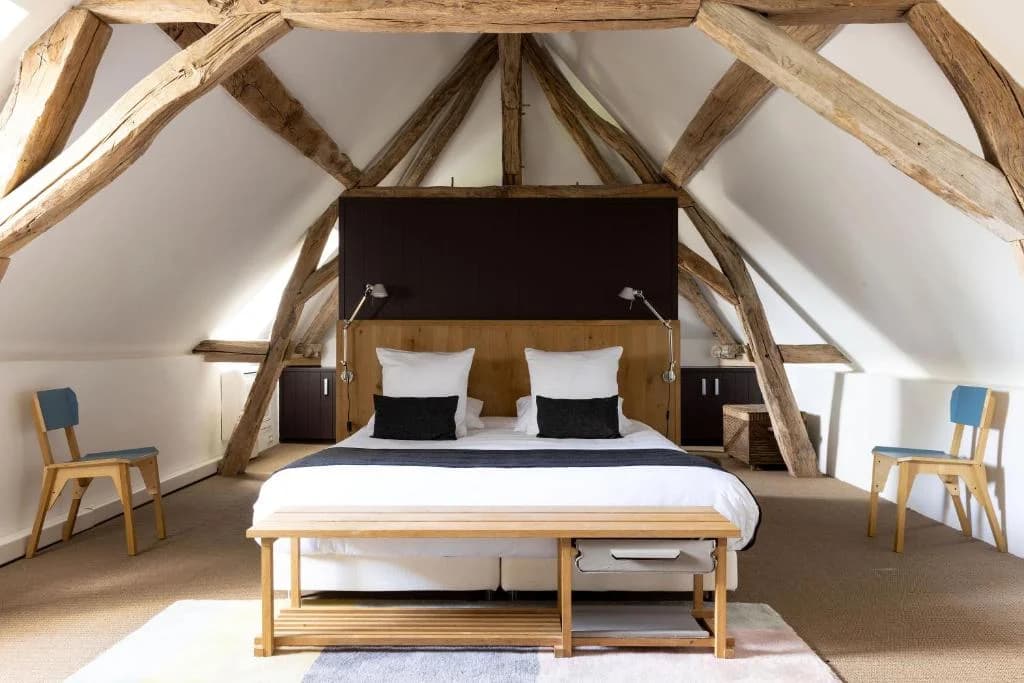
Beyond the Parador network, the most compelling suite-level properties tend to be independently owned conversions: masías (Catalan stone farmhouses), Aragonese manor houses, and post-industrial conversions of former wool mills or mountain refuges. These properties typically offer between four and twenty rooms, with suites that emphasise spatial generosity, exposed stone, and direct outdoor access over decorative elaboration.
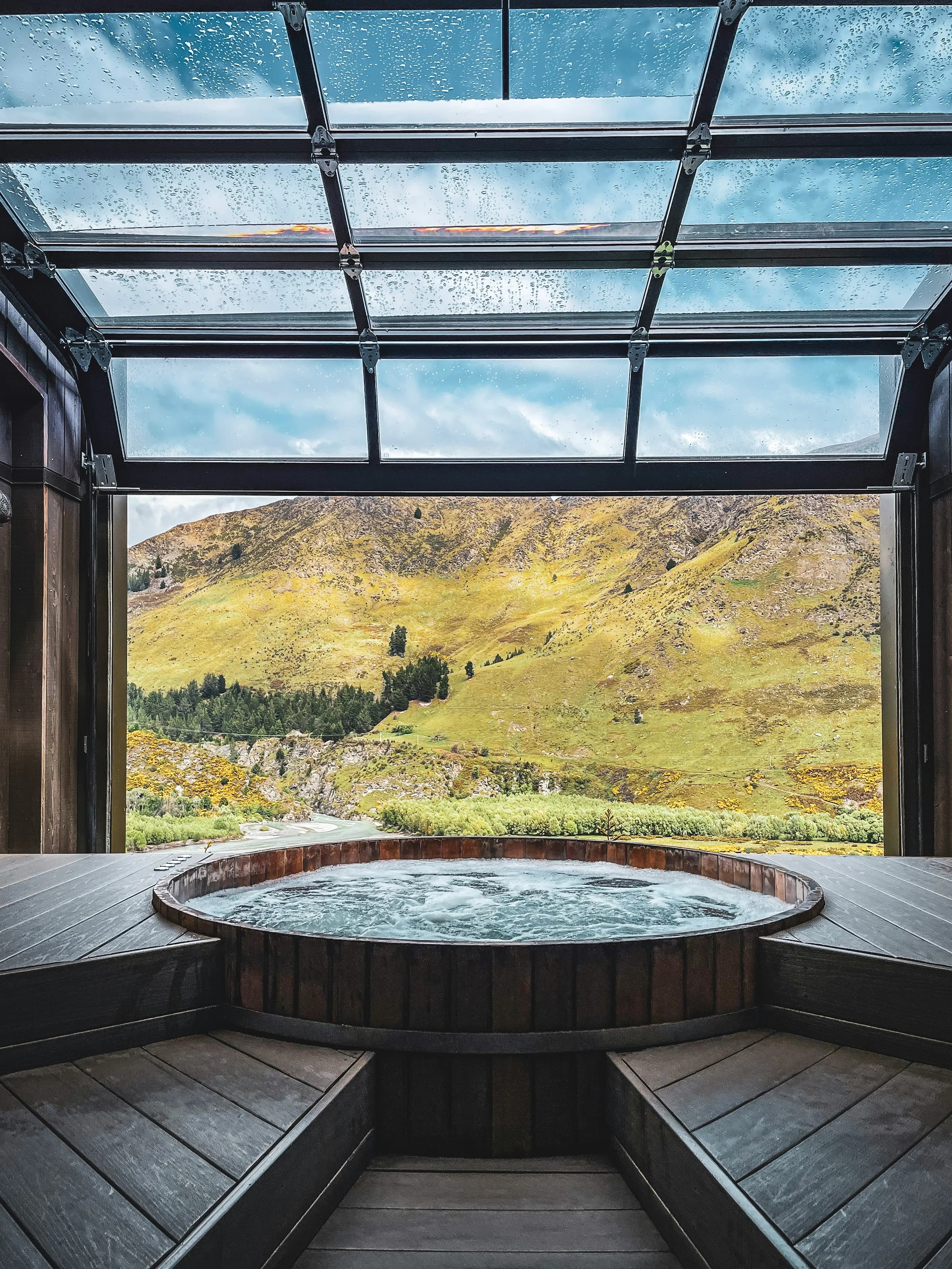
Thermal and spa infrastructure is considered standard at the upper tier, reflecting both the climate (cold evenings persist into June) and the physical nature of the activities the region invites. Properties adjacent to or incorporating natural hot spring facilities, particularly in the Aran Valley and around Lleida, carry a premium.
How to choose the right suite in the Spanish Pyrenees
Several practical distinctions shape the selection process in this region.
Altitude matters functionally, not just aesthetically. Suites positioned above 1,200 metres will experience temperatures below zero from October through April. Properties at this elevation that lack adequate heating infrastructure, fireplaces, or thermal facilities are not suitable for winter stays regardless of their visual appeal.
Access is a genuine variable. Some of the most architecturally distinctive properties sit at the end of single-track mountain roads that require vehicles with appropriate clearance. If arrival by public transport or with mobility limitations is a consideration, valley-floor properties offer a more practical base without sacrificing quality.
The orientation of a suite within a mountain property alters the experience substantially. South-facing rooms with views toward the high peaks receive direct morning light; north-facing rooms in narrow valleys may see limited direct sun in winter months. Requesting specific room orientation at the time of reservation is standard practice at properties that accommodate this level of attention.
Consider the relationship between the property and the activities that define your stay. A suite positioned for skiing access at Baqueira-Beret will have a different operational rhythm than one designed for hiking from the door in the Ordesa canyon. Aligning the property's infrastructure with the actual programme of the visit produces a more coherent experience.
Why a curated selection by La Suite is the most reliable approach here
The Spanish Pyrenees present a research problem specific to the region: the highest-quality properties are often the least visible online. Small, independently owned, and frequently resistant to large booking platform dependency, the best suite-level properties here rely on direct relationships, word of mouth, and selective partnerships.
La Suite operates as a filter designed for exactly this context. Rather than cataloguing every available room in the region, the platform applies consistent criteria around space standards, material quality, setting coherence, and service infrastructure. The result is a selection that removes the noise inherent in generalist platforms and presents only those properties where the suite experience meets the standard the destination demands.
For a region as geographically dispersed and qualitatively uneven as the Spanish Pyrenees, the curatorial function is not a convenience. It is the difference between arriving at a property that understands the luxury suite brief and one that simply charges suite prices.