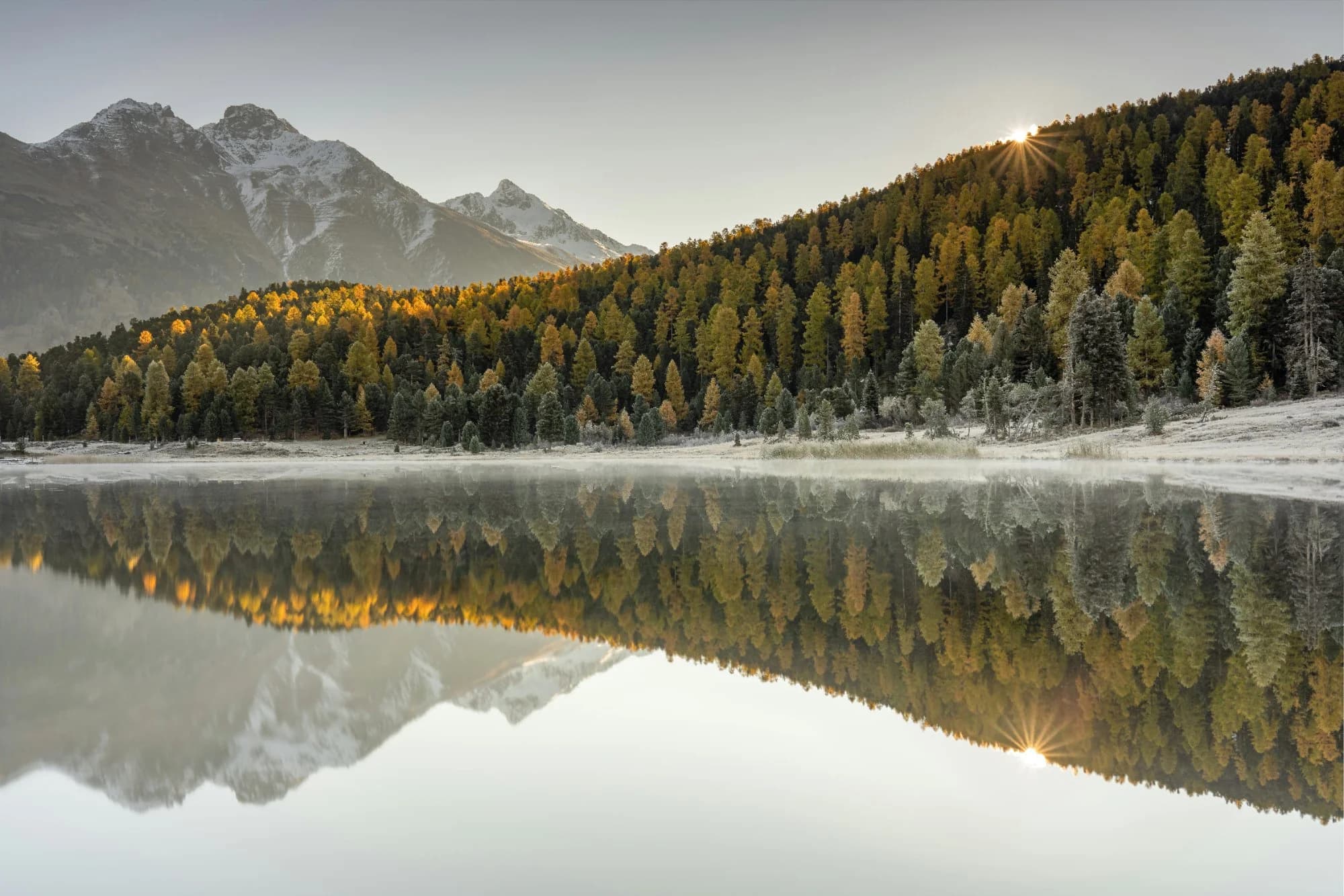
Why Pontresina rewards the deliberate traveller
Travellers arriving here tend to know exactly what they want. They are not looking for a destination that announces itself. They are looking for one that delivers. Switzerland as a whole operates on this principle, and Pontresina is one of its clearest expressions.
Best areas to stay in and around Pontresina
The village centre
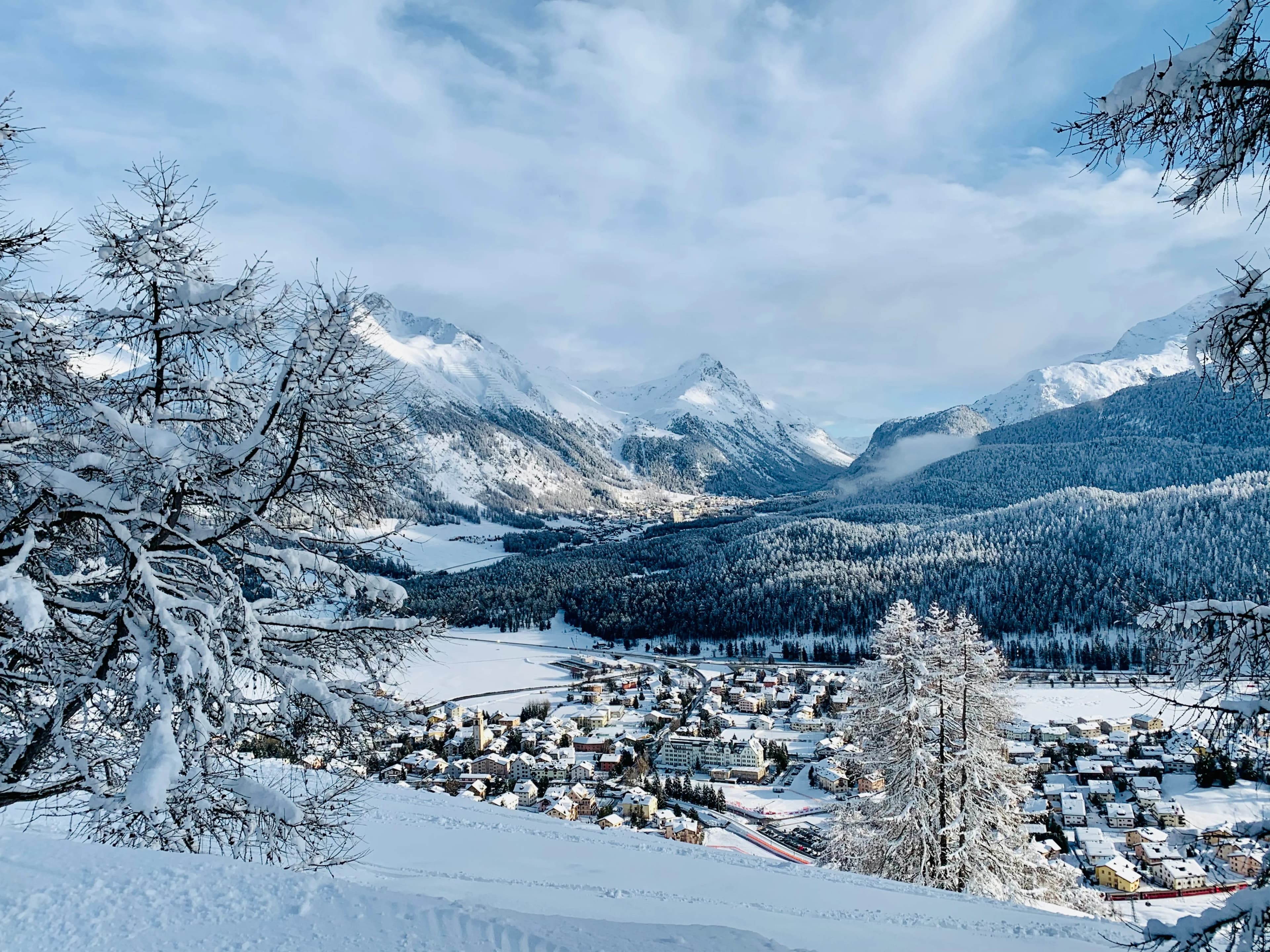
The historic core of Pontresina clusters around the Via Maistra, the main street lined with Engadin-style buildings, independent boutiques, and a handful of long-established hotels. Staying here places you within walking distance of the village's cultural infrastructure: the alpine museum, the Protestant chapel of Santa Maria with its medieval frescoes, and the main trailheads. Suites in this zone tend to occupy heritage buildings that have been carefully modernised, retaining original architectural detail while meeting contemporary expectations of comfort.
The elevated periphery
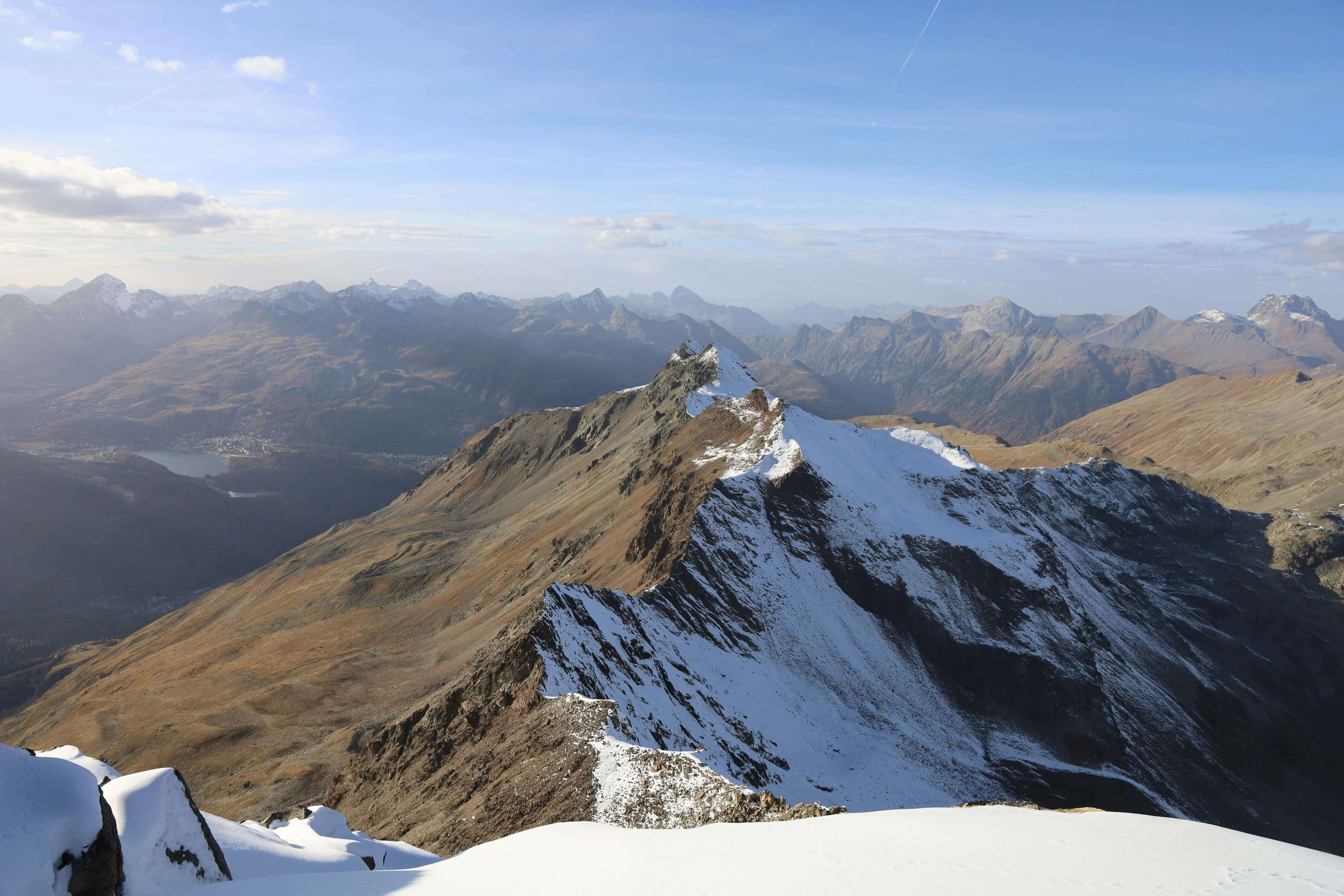
Several properties sit slightly above the village, with direct sightlines across the valley toward the Roseg glacier and the Piz Palü. The elevation gain is modest but the visual return is significant. For travellers prioritising outlook and privacy over immediate proximity to the village, these positions are worth considering. Suites with south-facing terraces here capture the particular quality of Engadin light, which is bright, dry, and exceptionally clear at this altitude.
When to visit Pontresina
Winter: January to March
The Engadin cross-country skiing circuit is one of the most extensive in Europe, and Pontresina sits directly on it. The Engadin Skimarathon, held annually in March, draws serious athletes and informed spectators from across the continent. Alpine skiing is accessible via the Diavolezza and Lagalb sectors, with the latter offering north-facing terrain that holds snow exceptionally well. Suite availability during peak winter weeks is limited; advance planning is not optional at this level of the market.
Summer: June to September
The summer season in Pontresina is increasingly recognised as the stronger choice for travellers who prioritise landscape over social calendar. The Morteratsch glacier walk is one of the most accessible glacier approaches in the Alps. The Roseg valley, closed to motor traffic, is navigable by foot or horse-drawn carriage. The light in July and August is long, dry, and architecturally flattering. Hotels in the Upper Engadin often offer better suite availability in summer than in the compressed winter peak, and rates can reflect this.
Shoulder seasons
May and October are transitional months. Some properties close entirely for maintenance and staff rotation, a Swiss alpine convention that applies across the Upper Engadin. Confirming operational dates before planning travel in these months is a practical necessity.
Local luxury standards: what to expect from a top-tier suite in Pontresina
Switzerland does not have an official state designation equivalent to the French Palace label, but the market self-regulates at a high level. The Swiss Hotel Association applies a five-star classification that is consistently applied and rigorously audited. At the top end of the Pontresina market, a luxury hotel suite will typically offer a minimum of 50 to 70 square metres of living space, separate sleeping and sitting areas, and a bathroom finished in stone or high-grade ceramic. Balcony access is standard at this price point, and the expectation is that the balcony faces the mountains rather than the car park.
Service in the Upper Engadin follows the Swiss model: precise, discreet, and not performative. Staff-to-guest ratios at leading properties are high. Multilingual service is the baseline, not the exception. Dining at five-star properties in the region frequently reflects the broader Graubünden culinary identity, with local ingredients (alpine dairy, cured meats, game in season) presented with contemporary technique.
Spa infrastructure is taken seriously in this valley. The altitude and the dry alpine air create a specific physiological context, and leading properties have built their wellness offerings around this: altitude-adapted treatment protocols, indoor-outdoor pool access, and sauna facilities designed for extended use rather than decoration.
How to choose the best luxury suite in Pontresina
Heritage versus contemporary architecture
Pontresina's finest properties divide broadly into two architectural categories. The first is the grand Engadin hotel, built in the late nineteenth or early twentieth century, with high ceilings, timber detailing, and a formal relationship to the landscape inherited from the era of Alpine tourism's founding generation. The second is the more contemporary alpine property, which uses clean lines, natural materials (stone, timber, linen), and large-format glazing to frame the view as the primary design element. Neither is superior in absolute terms. The choice depends on whether the traveller wants to inhabit a piece of alpine history or a precisely calibrated modern space.
Orientation and outlook
In a valley environment, the direction a suite faces matters more than floor level. South-facing rooms in Pontresina receive afternoon sun and look toward the Bernina range. North-facing rooms tend to look up the valley toward St. Moritz and receive a cooler, more diffuse light. Requesting a specific orientation at the point of reservation is a reasonable and expected ask at this market level.
Access to the outdoors
The best suites in Pontresina are those where the transition between interior comfort and exterior terrain is considered in the design. This means direct ski-room access for winter travellers, secure boot-drying infrastructure, and in summer, the capacity to store bicycles or trail equipment without occupying the suite itself. These are practical details, but they define the quality of the experience for active travellers.
The value of curation in a market like Pontresina
Pontresina's hotel market is small and relatively stable. The number of genuine luxury properties is limited, and the differences between them are specific rather than categorical. For a traveller arriving without local knowledge, the risk is not choosing a poor hotel; the risk is choosing a good one that does not match their particular priorities.
La Suite applies editorial criteria to every property in its selection: suite size, outlook, service model, architectural character, and the coherence between what a property promises and what it delivers. In a market like Pontresina, where the options are few and the investment is significant, this kind of pre-qualified selection removes meaningful friction from the decision. The curated selection by La Suite is built for travellers who have done enough research to know that the last variable is finding someone whose judgement they trust.