Where to stay in AlUla: understanding the territory
The old town and city centre
AlUla Old Town is a compact mud-brick settlement that was continuously inhabited from the 13th century until the 1980s. Staying in proximity to this quarter places guests within walking distance of the archaeological layers that define the destination. The surrounding palm groves and the Hijaz mountains create a contained, almost cinematic environment. Properties in this zone tend toward intimate scale, with architecture that responds to the vernacular rather than imposing an imported aesthetic.
Hegra and the northern corridor
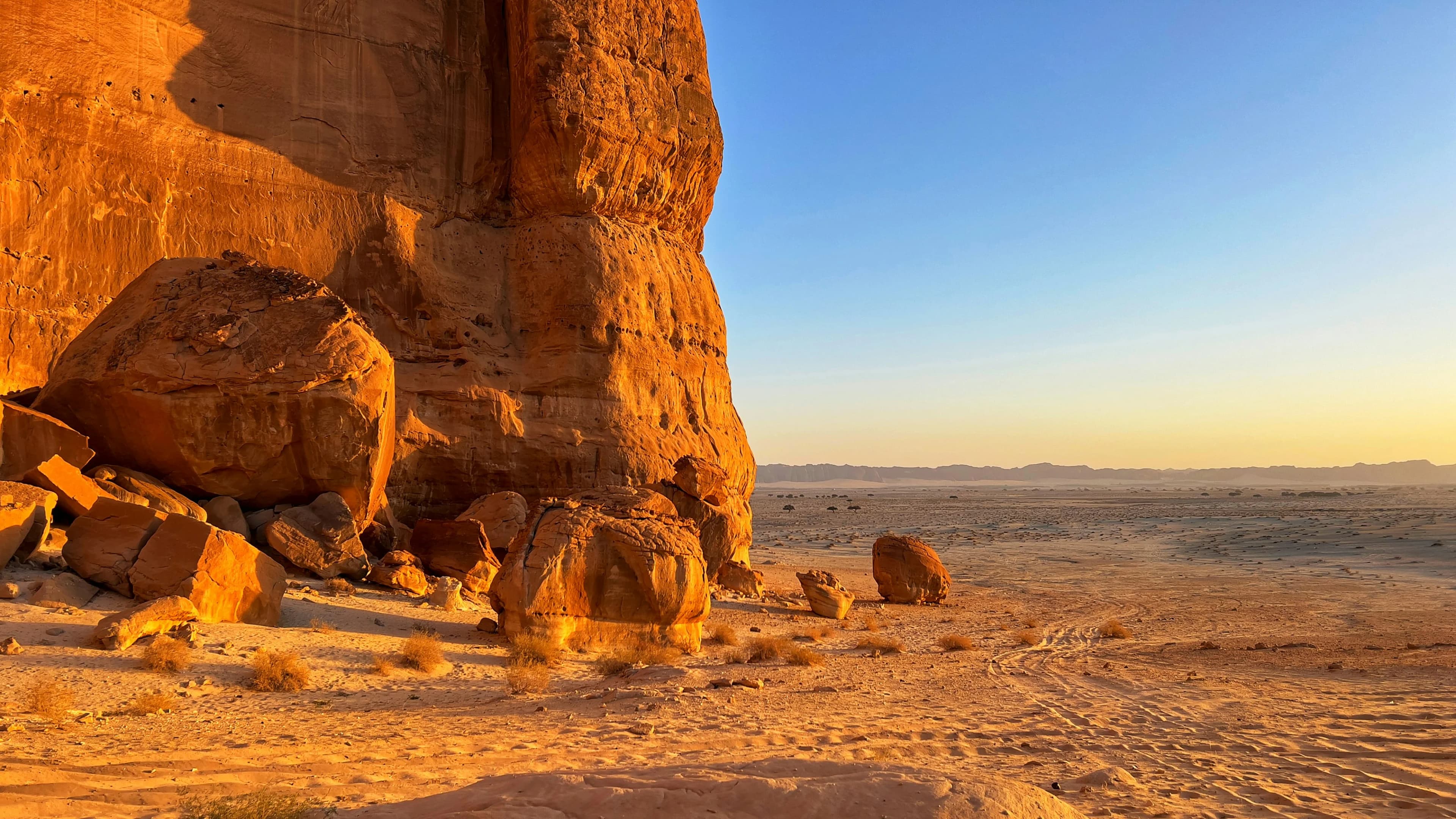
Hegra, also known as Mada'in Salih, is Saudi Arabia's first UNESCO World Heritage Site, inscribed in 2008. It contains more than 100 Nabataean tombs carved directly into sandstone outcrops, and access is managed through timed entry. Staying near this corridor offers proximity to the most significant archaeological site in the country, with the silence of the open desert as a constant register. The light changes radically between dawn and late afternoon, and the best suites in this zone are positioned to capture that transition from private terraces.
Sharaan and the conservation zone
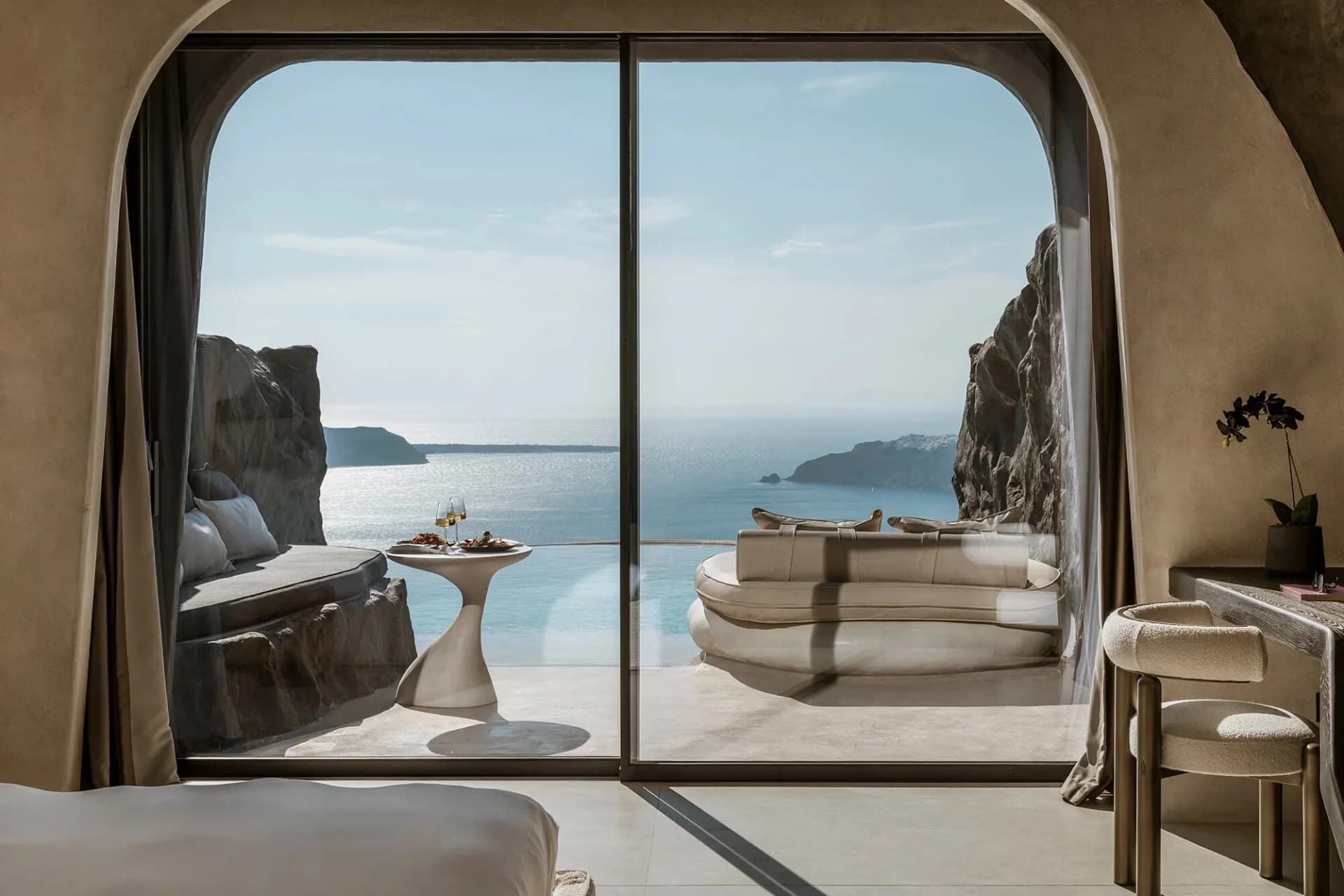
The Sharaan Nature Reserve, designed in part around a concept by Jean Nouvel, represents AlUla's ambition to align ecological preservation with high-specification hospitality. This zone is intended for visitors who want a controlled, immersive encounter with the desert landscape, with minimal external interference. The architectural language here is deliberately subterranean and geological, carved or set into the rock rather than placed upon it.
When to visit AlUla for a luxury suite stay
The core season: October to March
The primary visiting window runs from October through to March, when daytime temperatures sit between 15 and 25 degrees Celsius. This is the only period when outdoor engagement with the landscape is comfortable for extended periods. Nights can drop significantly, which matters for open-air dining and terrace access. Suite availability at premium properties tightens considerably from December onward, and advance planning of three to six months is standard for peak weeks.
Winter at Heart: the cultural season
The Winter at Heart festival, organised by the Royal Commission for AlUla, runs annually from approximately December through March. It brings together contemporary art installations, live performances, archaeological access events, and culinary programming across the valley. This period represents the highest concentration of curated experience in the destination and also the most competitive suite market. Rates reflect that density of programming.
Shoulder considerations
April and October offer transitional conditions: warmer than the core winter season but still manageable. These months suit travelers who prioritise solitude over programming. Suite rates generally ease, and the landscape has a particular quality in these weeks, with long, low light across the sandstone formations in the late afternoon.
Local luxury standards: what to expect from top suites in AlUla
Saudi Arabia does not use the French Palace classification or the Italian Relais and Chateaux framework as primary markers of prestige. The Royal Commission for AlUla has established its own oversight structure for the destination's hospitality development, which prioritises archaeological sensitivity, design integrity, and low-impact construction. This means that the most considered properties here are often architecturally unconventional by global standards: suites embedded in rock, tent structures with engineered interiors, or restored heritage buildings rather than purpose-built towers.
The relevant quality indicators in AlUla are spatial separation from other guests, private outdoor access, the quality of the architectural dialogue with the surrounding geology, and the specificity of the cultural programming offered to residents. A luxury hotel suite in this context is evaluated less on marble finishes and more on the degree to which it mediates the experience of one of the world's most extraordinary landscapes.
Service expectations at the highest tier include dedicated access coordination for Hegra visits, private guided sessions at off-hour intervals, and in-suite dining that draws on the ingredients and culinary traditions of the Medina and Hejaz regions. Alcohol is not served in Saudi Arabia, and menus at premium properties reflect a sophisticated non-alcoholic beverage culture built around regional herbs, dates, coffee, and fermented dairy traditions.
How to choose the best luxury suite in AlUla
Archaeological proximity versus landscape immersion
The first decision is whether a stay should prioritise proximity to the heritage sites or immersion in the open desert and rock formations. These are not mutually exclusive, but properties closer to Hegra and the old town offer a different rhythm from those positioned within the conservation reserve. The former suits travelers with an explicit archaeological agenda; the latter is appropriate for those whose primary interest is solitude and landscape.
Architecture and spatial character
AlUla is developing a design identity that is intentionally site-specific. Guests who value architectural coherence should assess whether a property's design responds to its geological context or functions as a generic luxury product placed in an unusual setting. The distinction is significant, and it is apparent in how suites are oriented, how private outdoor space is configured, and whether the materiality of the construction relates to the sandstone and volcanic basalt of the valley.
Group composition and access requirements
AlUla accommodates solo travelers, couples, and small groups with equal facility, but the infrastructure for families with young children is still developing relative to more established luxury destinations. Travelers with specific mobility requirements should verify site access conditions at individual properties, as the terrain across much of the valley is uneven and the most significant archaeological sites require walking on loose sand and rock.
Why a curated selection by La Suite matters in AlUla
AlUla is in active development. The Royal Commission's Vision 2030 framework has committed billions in investment to the destination, and new properties are announced and opened with significant frequency. This creates a market where the gap between concept and delivered experience can be wide, and where brand recognition provides less reliable guidance than it does in established luxury markets.
La Suite's curation process evaluates properties on their actual performance: suite quality, spatial integrity, service specificity, and the coherence of the overall guest experience. In a destination as singular as AlUla, that filtering function is not a convenience. It is the difference between an encounter with one of the world's most significant landscapes and an expensive night in an underdeveloped product.
The curated selection by La Suite reflects properties that have demonstrated a standard appropriate to the surroundings, and that understand what a discerning traveler requires when the destination itself is the primary reason for the journey.