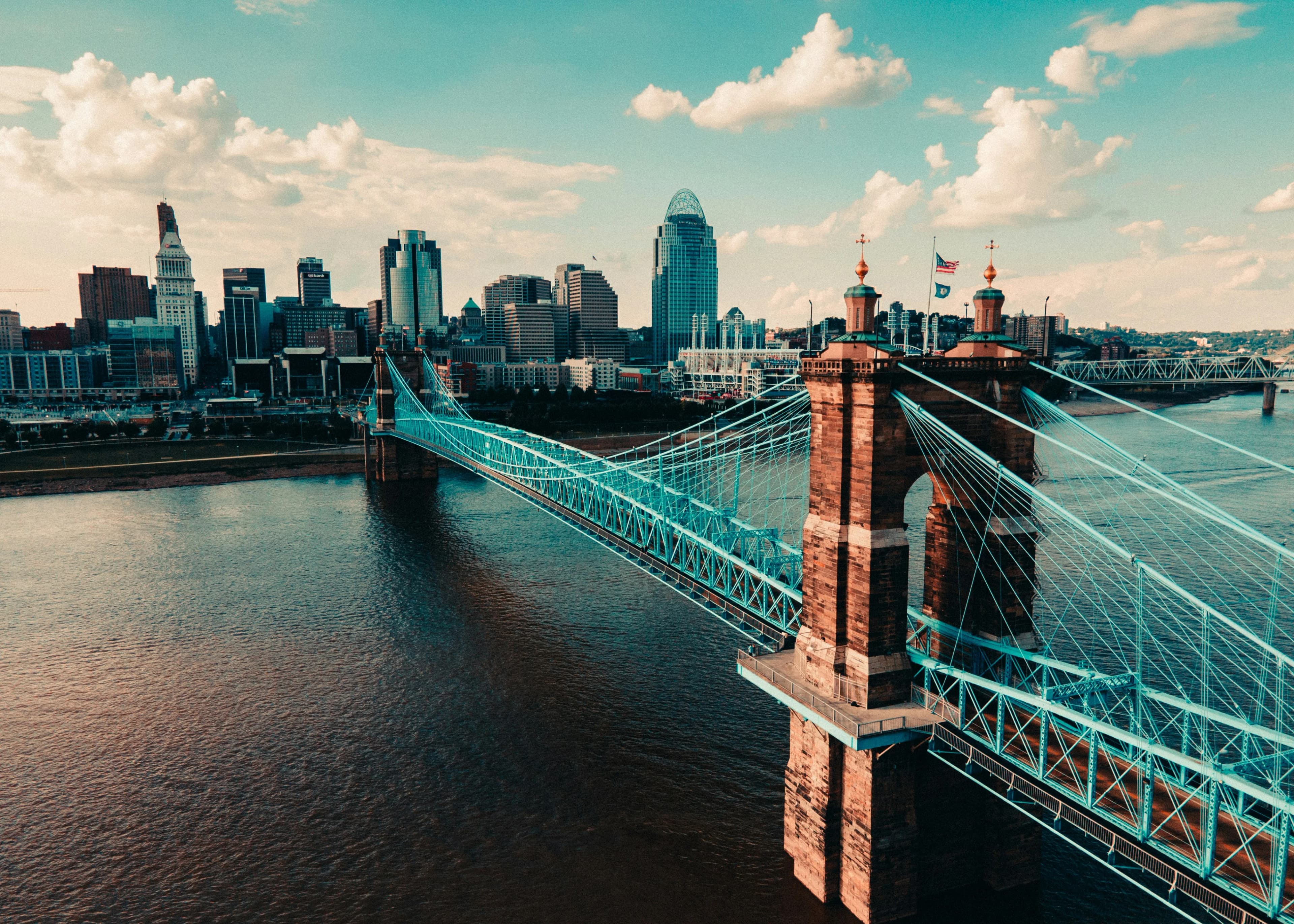
Understanding Cincinnati as a luxury destination
The United States contains dozens of cities with strong luxury hotel markets, but secondary markets like Cincinnati often deliver something that coastal flagships cannot: genuine local character, fewer crowds, and properties with a direct relationship to neighborhood context. Across North America, this pattern repeats in cities that have undergone deliberate urban reinvestment, and Cincinnati belongs firmly in that category.
Best areas to stay in Cincinnati
Downtown and the central business district
The downtown core concentrates the majority of full-service hotel properties. Proximity to Fountain Square, the Convention Center, and the riverfront makes this area practical for travelers with multiple engagements. The architectural scale here is substantial, with several historic towers that have been repurposed as hotel properties, retaining their original facades and interior volumes. A luxury hotel suite in this district typically offers skyline or river views, with floor plans that reflect the generous proportions of early 20th-century commercial construction.
Over-the-Rhine
Over-the-Rhine is the most architecturally coherent 19th-century urban district in the United States by some assessments, with a concentration of Italianate brick buildings that has been progressively restored over the past two decades. Boutique properties and smaller hotel concepts have followed the neighborhood's rehabilitation, offering a different register of luxury: intimate, design-led, with a direct relationship to street-level culture. Washington Park, the Cincinnati Music Hall (a National Historic Landmark), and a dense concentration of independent restaurants and bars make this neighborhood the most experientially rich address in the city.
The hilltop neighborhoods
Mount Adams, Hyde Park, and Clifton occupy elevated positions above the city, each with a distinct social character. Mount Adams is compact and walkable, adjacent to Eden Park and the Cincinnati Art Museum. Hyde Park draws a more residential luxury profile, with large properties and proximity to Hyde Park Square. These neighborhoods are better suited to travelers arriving by car or using a driver, but they offer a quieter, more residential experience for those who prefer distance from the downtown core.
When to visit Cincinnati
Cincinnati's climate follows a temperate continental pattern: cold winters, warm and often humid summers, and two shoulder seasons (April to May, and September to October) that represent the most comfortable windows for travel. Spring brings the Cincinnati Music Festival season into its early phase, while autumn coincides with Oktoberfest Zinzinnati, one of the largest German-heritage festivals in North America, a reflection of the city's 19th-century immigrant history. The Cincinnati Reds baseball season runs from April through October, generating meaningful demand at downtown properties during home game weekends. For travelers prioritizing suite availability and moderate pricing, the late winter months (February to early March) offer the softest market conditions.
Major cultural anchors include the Cincinnati Symphony Orchestra season (September through May), programming at the Contemporary Arts Center, and the Cincinnati Opera summer season. Travelers planning around these events should anticipate compressed availability at the better-positioned properties.
Local luxury standards: what to expect from top-tier suites in Cincinnati
The United States does not operate a nationally standardized luxury hotel classification equivalent to the French Palace designation. In practice, the relevant markers are brand affiliation (properties operating under upper-upscale or luxury flags from major international groups), Forbes Travel Guide ratings, and AAA Diamond assessments. Cincinnati's luxury hotel market is relatively concentrated: a small number of full-service properties meet the standards that design-literate travelers expect, while the broader market skews toward select-service and limited-service formats.
A luxury hotel suite in Cincinnati at the top of the market will typically offer: separated living and sleeping areas, curated local or regional artwork, access to concierge and butler-level services, and in-room dining of a consistent quality. The most considered properties have invested in locally sourced materials and partnerships with Cincinnati's creative community, giving suites a specificity of place rather than a generic international finish. Bathroom specifications at this tier generally include soaking tubs, walk-in showers, and high-quality amenity partnerships.
How to choose the best suite in Cincinnati
The primary axis of choice in Cincinnati is between the downtown hotel model and the boutique or independent model concentrated in Over-the-Rhine and adjacent neighborhoods. Each serves a different traveler profile.
Travelers arriving for business, attending events at the convention center, or needing efficient access to the financial and legal districts will find downtown full-service properties most practical. Suite selection here should prioritize floor height (for river or skyline orientation), soundproofing (the urban canyon effect amplifies street noise in several properties), and club lounge access, which remains a meaningful differentiator at this level.
Travelers prioritizing cultural immersion, architectural interest, and neighborhood-scale experience should weight the Over-the-Rhine options more heavily. Suite sizes in these properties tend to be more intimate, but the sense of place is considerably stronger. The trade-off is explicit and worth making deliberately.
In either case, confirming the specific suite category rather than accepting a standard room upgrade is essential. Suite inventory in Cincinnati's luxury segment is limited, and early reservation is advisable during peak event periods.
Why a curated selection matters in this market
Cincinnati's luxury hotel market is small enough that the difference between a well-chosen property and an adequate one is immediately apparent. The city does not have the density of options that allows for casual discovery. A curated selection by La Suite applies a consistent editorial standard to a market where self-research often produces undifferentiated results: review aggregators tend to compress quality distinctions, and brand loyalty programs do not always surface the most architecturally or experientially relevant options.
La Suite's approach to Cincinnati focuses on properties where the suite product is genuinely considered: where design, service architecture, and spatial quality meet the expectations of travelers accustomed to the best addresses in larger markets. For a city that rewards the informed visitor, this kind of editorial filter is not a convenience. It is a precondition for a stay that reflects the actual quality of the destination.