










North America
Hotels with luxury suites in North America
North America does not offer a single luxury register. It offers several, each defined by geography, culture, and a different relationship between space and service.

Our latest articles about North America

The Chancery Rosewood London: the former American embassy turned all-suite hotel
In Mayfair, the former United States embassy houses 144 suites designed by Joseph Dirand.

New York / Christmas: Suites with Central Park Views for an Exceptional Stay
Central Park blanketed in snow, illuminated by year-end festivities, offers an unparalleled spectacle from the upper floors of New York's most prestigious addresses. Between winter luxury and hushed intimacy, discover the signature suites that transform Christmas in Manhattan into an exceptional moment.
BY Jules Peulet

New York / December: Inside the Most Coveted Suites
December transforms Manhattan into a competitive arena for access to the most exclusive suites. Between structural scarcity and exponential demand, luxury hotels reveal the mechanisms governing seasonal luxury.
BY Jules Peulet
Where to stay in North America: distinct territories for suite travel
The northeastern United States operates within a tradition of civic grandeur. Properties in this corridor tend toward historical architecture, high ceilings, and a formal sensibility rooted in the early twentieth century. The experience is dense, cultural, and close to major institutional life: galleries, opera houses, financial districts. A suite here is a command post, not a retreat.
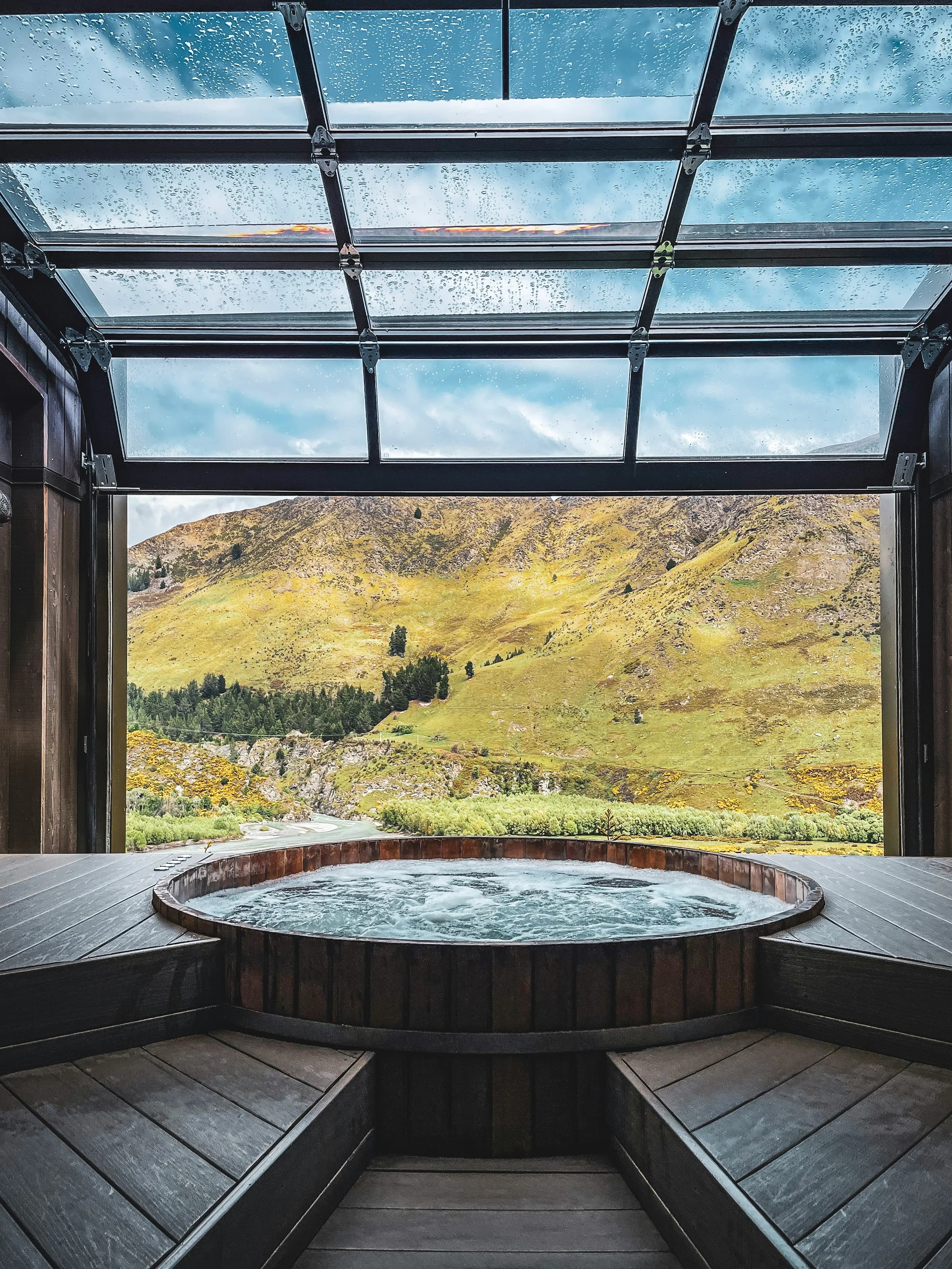
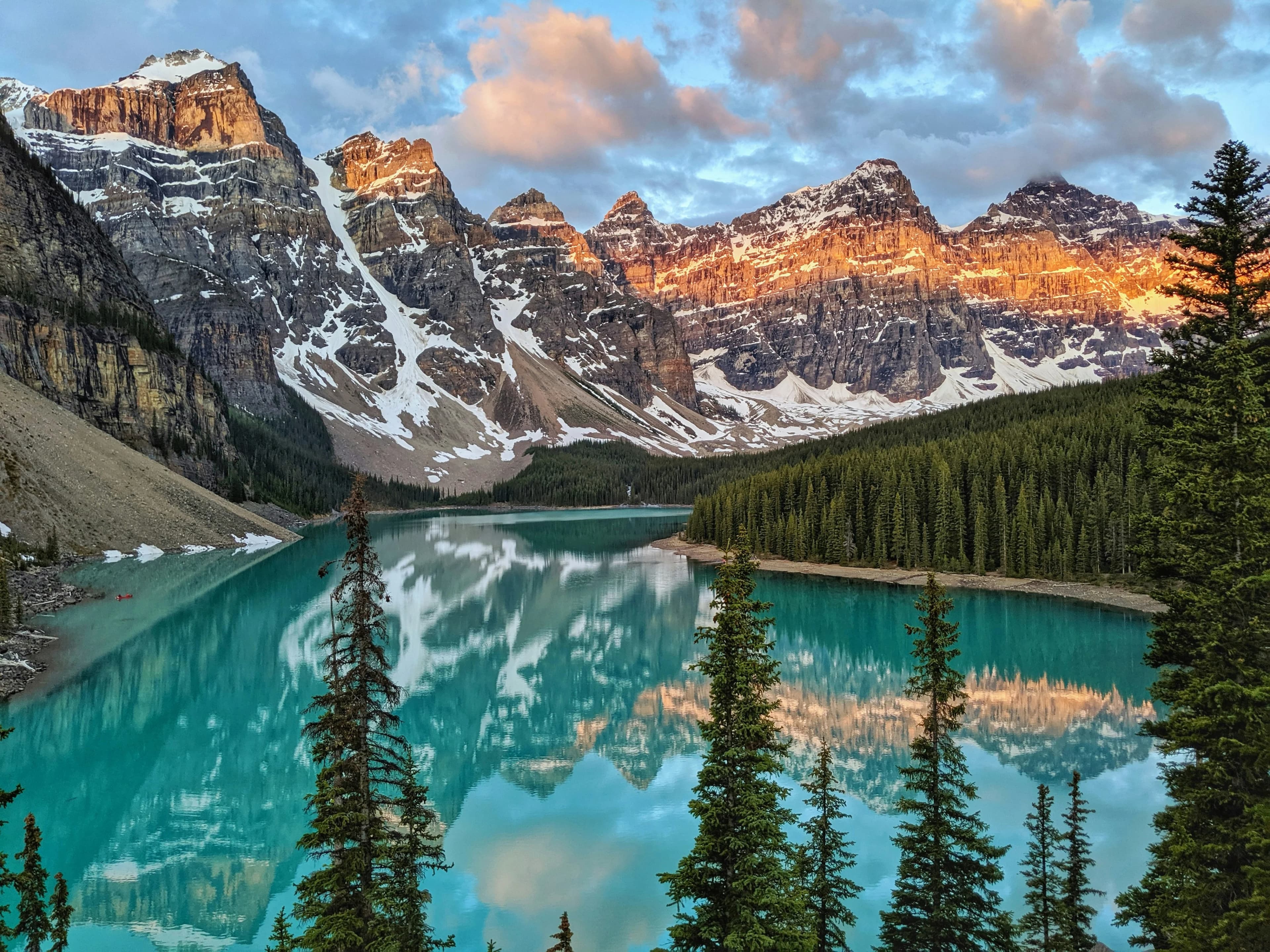
The American West and Pacific Northwest offer something categorically different. Here, luxury is spatial rather than ornamental. Properties are frequently designed around their landscape position, with floor-to-ceiling glazing oriented toward mountain ranges, desert formations, or Pacific coastline. The suite is an observation platform as much as a residence. Interior design tends toward materiality: raw stone, reclaimed timber, neutral palettes that defer to the exterior.
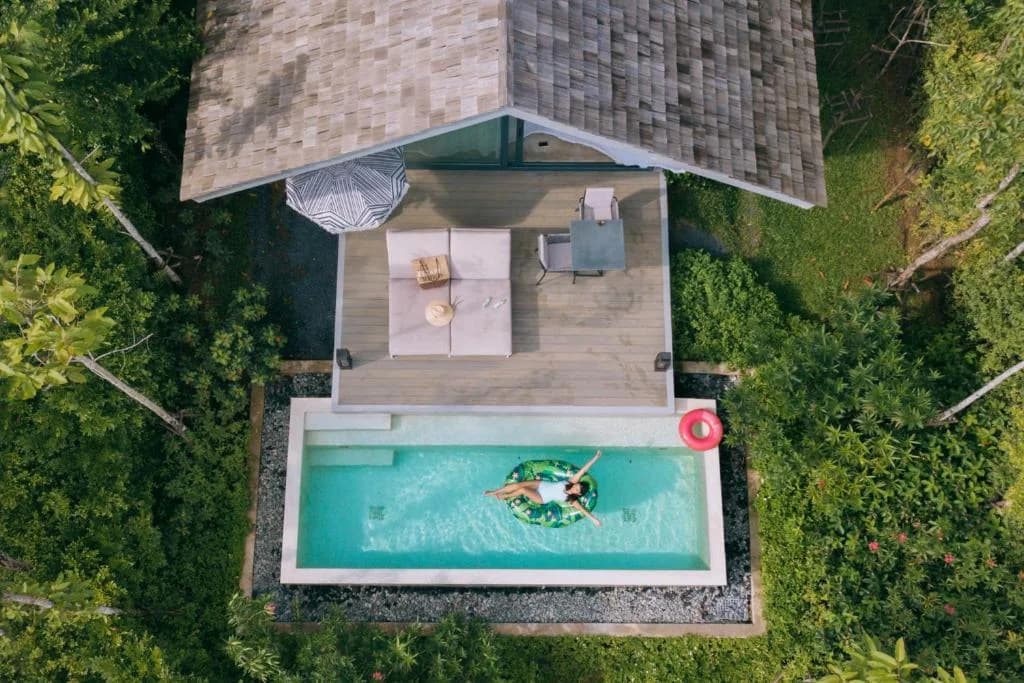
Mexico, particularly the Pacific coast and the Yucatán Peninsula, has developed a distinct luxury hospitality vocabulary rooted in hacienda architecture, open-air living, and a more sensory relationship with heat, vegetation, and water. Suites here frequently dissolve the boundary between interior and exterior, with plunge pools, open courtyards, and plantation-era detailing that has been reinterpreted for contemporary travelers.
Canada's luxury suite landscape is concentrated but precise. Properties in British Columbia and Quebec reflect a European formality filtered through North American scale, with access to wilderness corridors that no other luxury destination on the continent can replicate at comparable proximity to an urban center.
When to visit North America for a luxury suite experience
North America's continental scale means that optimal timing varies significantly by territory, and a strategic traveler will plan accordingly.
The northeastern United States and eastern Canada reach their most photogenic and culturally active period in late September and October, when foliage cycles create a visual backdrop that has no equivalent elsewhere. Hotel occupancy peaks during this window, and suite availability at the most considered properties requires advance planning of several months.
The American Southwest and desert regions of Mexico are best approached between November and April, when temperatures are precise and manageable rather than oppressive. This period also aligns with the primary art and design season in cities such as Santa Fe and Mexico City, making cultural programming a practical consideration alongside the climate.
The Pacific coast of both the United States and Mexico operates on a more consistent register year-round, though the shoulder months of April, May, September, and October offer the clearest combination of availability, pricing, and weather across most of these markets.
Canada's wilderness-adjacent luxury properties reach their peak in late summer, particularly July and August, when access to lakes, rivers, and remote terrain is at its most direct. Winter offers an entirely different register, particularly in Quebec, where the cold itself becomes part of the experiential proposition.
Understanding luxury hospitality standards in North America
North America does not operate within a single prestige labeling system comparable to France's Palace designation or Italy's historic relais classifications. Instead, quality is communicated through a combination of brand positioning, architectural pedigree, and editorial recognition.
In the United States, the Forbes Travel Guide five-star rating and the AAA Five Diamond designation function as the primary institutional markers of top-tier hospitality. Neither is self-awarded, and both require sustained performance across service, spatial, and culinary criteria. Properties carrying both designations represent a small fraction of the total hotel inventory and serve as a reliable baseline for suite-level expectations.
Mexico has developed its own prestige tier through the Gran Turismo classification, which applies to properties meeting specific spatial and service thresholds set by the country's tourism authorities. Beyond official classification, the most respected properties in Mexico tend to be defined by their architectural coherence and their relationship to local craft and material culture.
Canada's top-tier properties frequently operate within international group portfolios while maintaining a regional identity expressed through design and local programming. The concept of the wilderness lodge, particularly in British Columbia and Alberta, represents a category of luxury that has no direct equivalent in European hospitality: remote, spatially extraordinary, and deliberately disconnected from urban frameworks.
Across all territories, the defining characteristic of a North American luxury suite is spatial generosity. Square footage expectations are higher here than in comparable European properties, and this is reflected in suite design: separate living rooms, dedicated dining areas, private terraces, and, at the upper end, multi-room configurations that function as temporary residences rather than upgraded rooms.
How to choose the right luxury suite in North America
The primary consideration when selecting a suite in North America is the relationship between the property and its physical context. This continent rewards travelers who choose based on geography first and brand second.
In urban settings, position within the property matters considerably. High-floor suites in city-center hotels offer a relationship with the skyline that lower floors cannot replicate. In coastal or landscape-adjacent properties, the orientation of the suite relative to the primary view is the most critical variable, and this information is rarely communicated clearly in standard booking interfaces.
Architectural period is a meaningful filter. Pre-war properties in cities such as New York, Chicago, and Montreal carry a spatial logic, ceiling height, and material quality that later construction rarely replicates. Contemporary properties, particularly those completed in the past decade in markets such as Los Angeles, Miami, and Mexico City, offer a different proposition: integrated technology, landscape-driven design, and a social architecture calibrated for the current moment.
For travelers prioritizing privacy, properties with dedicated suite floors, private elevator access, and separate check-in protocols represent a distinct category. These configurations are more common in North America than in most other luxury markets, and they command a premium that reflects the genuine operational cost of that separation.
Seasonal programming is also worth factoring into the selection process. Many top-tier North American properties run curated cultural, culinary, or wellness programming tied to specific periods of the year. Aligning a stay with these cycles adds a layer of specificity that transforms a hotel visit into a structured experience.
Why a curated selection by La Suite matters in North America
North America's hotel market is large, commercially saturated, and difficult to navigate without a reliable editorial filter. The volume of properties claiming luxury positioning is disproportionate to the number that genuinely deliver it at the suite level, and the gap between marketing language and spatial reality is wider here than in most mature luxury markets.
La Suite applies a consistent curatorial standard across every North American listing: architectural quality, spatial integrity, service design, and the degree to which the property has developed a coherent identity rather than assembled one from borrowed references. The result is a selection that reflects genuine editorial judgment, built for travelers who make deliberate choices and have no use for volume-driven recommendations.
Frequently asked questions
What are the best regions in North America for luxury hotel suites?
The northeastern United States, the American West, Mexico's Pacific and Yucatán coasts, and Canada's British Columbia and Quebec each offer a distinct suite experience. The choice depends on whether the traveler prioritizes urban density, landscape immersion, or a combination of both. La Suite curates properties across all of these territories with a consistent architectural and service standard.
When is the best time to book a luxury suite in North America?
Optimal timing varies by region: fall in the northeast, winter in the Southwest and Mexico, summer in Canada, and year-round on the Pacific coast with shoulder-month advantages in spring and early autumn. Suite availability at the most considered properties requires advance planning, often several months ahead of peak periods. Aligning a stay with cultural or seasonal programming adds further precision to the decision.
What is the difference between a luxury suite and a standard room in a North American hotel?
At the top tier of the North American market, a luxury suite typically includes a separate living area, a dedicated dining space, a private terrace or balcony, and, in many cases, multiple bathrooms or a private plunge pool. The spatial differential is more pronounced in North America than in comparable European properties, reflecting higher base expectations around square footage. Suite-level service protocols, including dedicated concierge access and private check-in, are also more consistently present in this market.
How do I identify a genuinely high-end hotel suite in North America versus one that is simply marketed as luxury?
Reliable institutional markers include the Forbes Travel Guide five-star rating and the AAA Five Diamond designation in the United States, the Gran Turismo classification in Mexico, and editorial recognition from credible hospitality publications. Beyond certifications, architectural coherence, spatial generosity, and a clearly defined property identity are stronger indicators of genuine quality than brand affiliation alone. La Suite applies these criteria editorially to every property in its North American selection.
Are luxury hotel suites in Mexico comparable in standard to those in the United States or Canada?
Mexico's top-tier suite properties, particularly those on the Pacific coast and in the Yucatán Peninsula, operate at a standard fully comparable to the best properties in the United States and Canada. The difference is one of register rather than quality: Mexican luxury suites tend to integrate open-air design, local craft, and an indoor-outdoor spatial logic that reflects the climate and cultural context. Properties carrying the Gran Turismo classification or recognized by major international travel guides represent the clearest reference points.
What should I look for in a luxury suite in a North American wilderness or nature-adjacent property?
In wilderness or landscape-adjacent properties, the orientation of the suite relative to the primary natural feature (mountain range, lake, ocean, desert formation) is the most critical variable. Properties that offer genuine privacy, direct access to the landscape, and a design language that defers to its context rather than competing with it represent the highest tier. Canada's British Columbia and Alberta lodges, along with certain properties in the American West, define this category on the continent.
Is privacy a realistic expectation in a luxury hotel suite in a major North American city?
Yes, and it is more systematically delivered in North America than in most other luxury markets. Many top-tier urban properties offer dedicated suite floors with private elevator access, separate check-in protocols, and in-suite dining that reduces the need for shared spaces. High-floor positioning also contributes meaningfully to the sense of visual separation from the city below. These configurations are a standard feature of the upper suite tiers rather than an exceptional amenity.
How far in advance should I plan a luxury suite stay in North America?
For peak periods, including fall foliage season in the northeast, winter sun in Mexico, and summer in Canada, planning six to twelve months in advance is advisable for properties with limited suite inventory. Shoulder seasons offer more flexibility, though the most architecturally distinct properties with small room counts can fill quickly regardless of timing. A curated selection from La Suite provides direct access to availability information without requiring navigation of broader commercial booking platforms.
What distinguishes a North American luxury hotel suite from comparable properties in Europe or Asia?
The primary distinction is spatial scale. North American suites, even at mid-tier luxury properties, tend to offer significantly more square footage than comparable European counterparts. The design language also differs: American and Canadian properties frequently incorporate more open-plan living, residential-scale kitchens or kitchenettes, and an informality of layout that reflects broader residential norms. Mexican properties add a distinctive open-air and courtyard-based spatial grammar rooted in Spanish colonial and hacienda architectural traditions.
How does La Suite select luxury hotel suites in North America?
La Suite applies an editorial curatorial standard that evaluates architectural quality, spatial integrity, service design, and the coherence of the property's identity. Commercial arrangements do not influence the selection. The result is a focused inventory of properties that deliver at the suite level rather than a comprehensive directory of branded hotels. For travelers navigating a market as large and commercially complex as North America, this editorial filter is the primary value of the platform.