Why Detroit rewards a considered approach to accommodation
The city sits within the broader context of the American Midwest, a region explored in depth across North America on La Suite. Detroit, however, occupies a category of its own: a post-industrial capital with a design culture that has influenced everything from automotive aesthetics to techno music and contemporary visual art.
Key areas to consider when choosing where to stay in Detroit
Downtown and the central business district
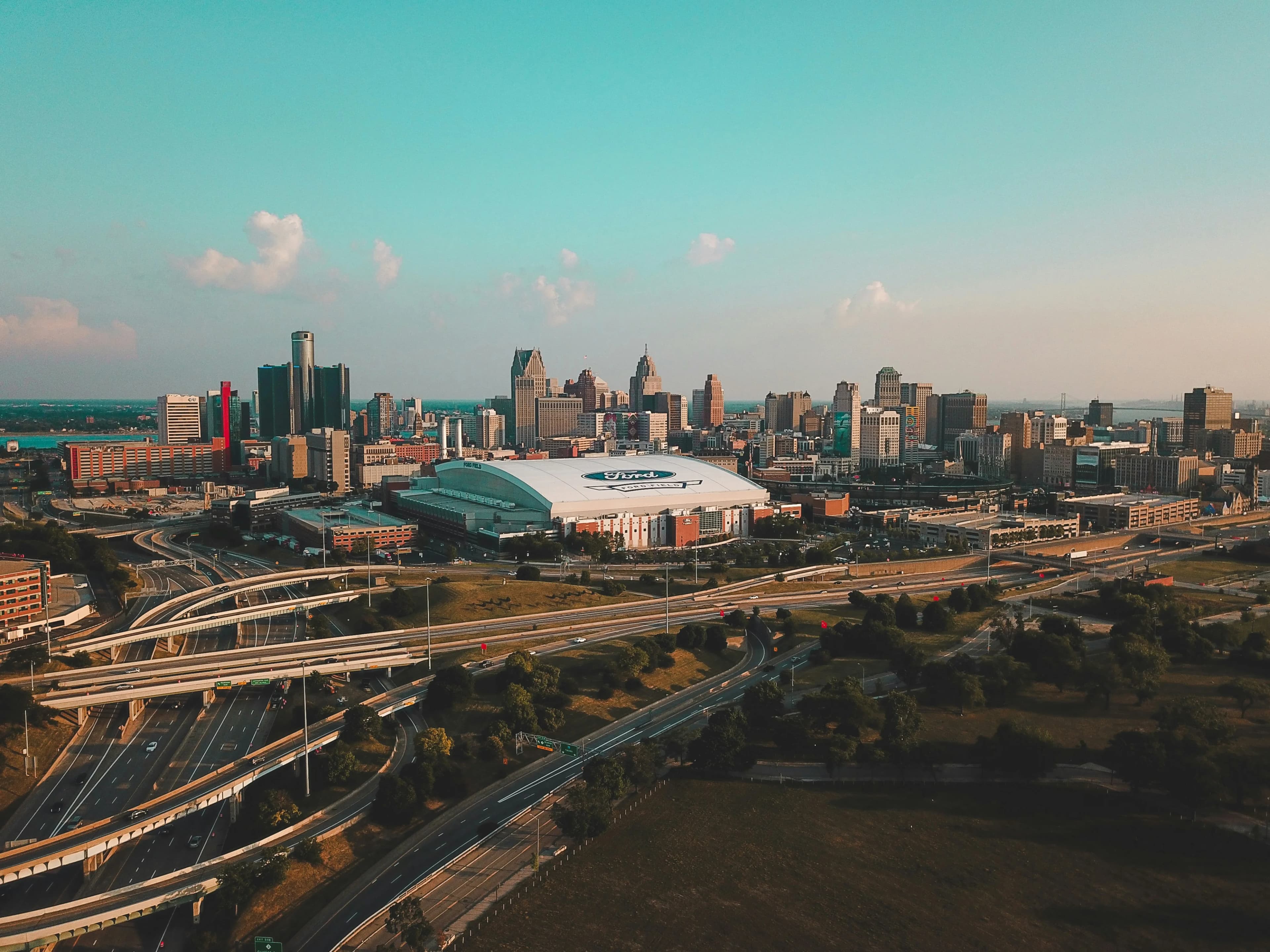
Downtown Detroit concentrates the city's most architecturally significant buildings within a walkable radius. The Fox Theatre, the Guardian Building, and the Fisher Building represent some of the most intact Art Deco commercial architecture in North America. Staying here places you within reach of Comerica Park, Little Caesars Arena, and the Detroit Riverfront, which has been systematically reclaimed as public space over the past decade. Luxury hotel properties in this zone tend to occupy either restored historic buildings or purpose-built contemporary structures, and the suite offerings reflect both typologies.
Midtown and New Center
Midtown anchors Detroit's cultural infrastructure. The Detroit Institute of Arts, the Detroit Symphony Orchestra, the Charles H. Wright Museum of African American History, and Wayne State University all sit within this corridor. The neighborhood has also developed a coherent dining and hospitality scene that appeals to a more design-literate traveler. Suites in this area often occupy boutique properties that prioritize material quality and spatial intelligence over conventional hotel programming.
Corktown and the southwest
Corktown, Detroit's oldest surviving neighborhood, has become the focal point of the city's contemporary hospitality moment. The renovation of Michigan Central Station by Ford Motor Company has accelerated investment in the surrounding blocks. Independent restaurants, specialty coffee roasters, and design-forward retail have followed. For travelers seeking proximity to the city's current creative energy, this corridor offers an alternative to the more formal downtown experience.
When to visit Detroit for a luxury stay
Detroit's climate follows a continental pattern with cold winters and warm summers. The most comfortable period for visiting falls between late April and October, when the city's outdoor spaces, including the Riverfront and Eastern Market, operate at full capacity. Summer brings the Detroit Jazz Festival, one of the largest free jazz festivals in the world, held over Labor Day weekend. The North American International Auto Show, when it returns to its traditional January format, draws an internationally minded business audience that shifts the city's accommodation market significantly. Spring and early autumn offer the best balance of temperate conditions and manageable demand on hotel inventory.
Detroit is also a serious destination for architecture enthusiasts, and the annual Dlectricity light festival and various Design Week programming moments attract a culturally engaged crowd. Planning around these events requires advance coordination with hotel properties, particularly for suite-level inventory which is limited across the market.
Understanding luxury standards in Detroit
Detroit does not follow the conventional luxury hotel typology of coastal American cities. The prestige here is embedded in architectural authenticity: properties that have restored historic fabric with precision, retained original terrazzo floors, brass fixtures, and ornamental plasterwork, while integrating contemporary amenity standards. A luxury hotel suite in Detroit often carries a material richness that derives from the building's original construction rather than from imported finishes.
The city also has a strong relationship with the American automotive industry, and several hotel properties reflect this through bespoke design collaborations, curated garage facilities, or programming tied to the collector car community. Suite guests at higher-tier properties may find access to experiences that are specific to Detroit's industrial and creative heritage, from private tours of working design studios to access to archival collections.
Service culture in Detroit's leading hotels is attentive without the performative formality sometimes found in legacy luxury markets. The city has developed its own hospitality register: direct, knowledgeable, and oriented toward the guest's actual needs rather than ceremonial convention.
How to choose the right luxury suite in Detroit
Historic versus contemporary
The most consequential decision when selecting a luxury hotel suite in Detroit is the question of architectural context. Historic properties offer ceiling heights, window proportions, and material authenticity that contemporary construction rarely replicates at equivalent cost. However, contemporary properties offer mechanical precision, acoustic control, and spatial flexibility that older buildings sometimes cannot deliver. The choice depends on whether you prioritize sensory atmosphere or operational consistency.
Spatial requirements and suite configuration
Detroit's luxury market includes properties with genuinely generous suite footprints by American city standards. Given the city's scale and the relatively recent development of its luxury hospitality sector, some properties offer suite configurations that would command significantly higher rates in New York or Chicago. Travelers with specific requirements around separate sleeping and working areas, or those hosting private meetings within the suite, should verify floor plans directly with the property before confirming.
Proximity to specific institutions
Detroit rewards intentional itinerary construction. If your visit centers on the Detroit Institute of Arts or the Museum of Contemporary Art Detroit, a Midtown address reduces transit friction considerably. If your interests align with the riverfront, the Eastern Market, or the Corktown development zone, a downtown or southwest location makes more practical sense. Luxury suite selection here should follow the logic of your specific program rather than a generic proximity to a central point.
The value of curation in a market still defining itself
Detroit's luxury hotel market is in active development. New properties have opened, historic buildings have been converted, and the overall standard of the city's hospitality offer has risen measurably over the past decade. This also means the market contains significant variation in quality, and the designation of a room as a suite does not carry uniform meaning across properties.
La Suite applies a consistent editorial standard to every property it considers, evaluating suite-level offerings on spatial quality, material integrity, service architecture, and experiential coherence. In a market like Detroit, where the range of what presents itself as luxury is wide, this curation function carries particular value. The curated selection by La Suite removes the research burden and surfaces only the properties that meet a defined and consistent threshold, allowing you to allocate your attention to the city itself rather than to the process of elimination.