








Grand Canyon
Hotels with luxury suites in the Grand Canyon
The Grand Canyon divides broadly into two distinct access zones, each with its own character, infrastructure, and quality of experience. Choosing between them is the first and most consequential decision for any serious traveler.
Where to stay near the Grand Canyon: understanding the key areas
South Rim
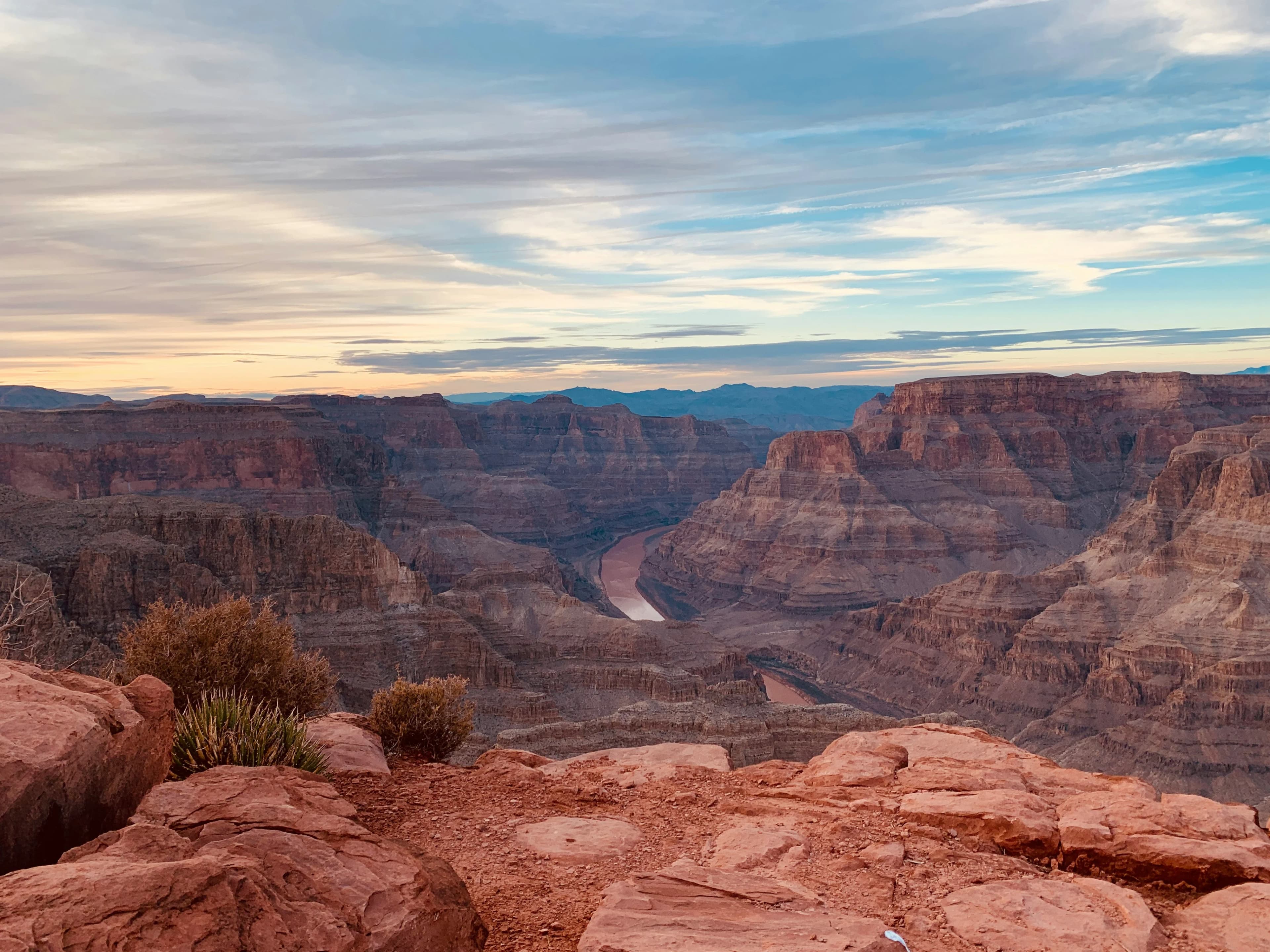
The South Rim is the more developed and accessible of the two, open year-round and sitting at approximately 6,800 feet in elevation. It accounts for the vast majority of visitor infrastructure, including the historic lodges positioned along the rim itself. Properties here benefit from direct canyon views and proximity to well-maintained trail systems. The village atmosphere is present but manageable outside of peak summer weeks. For travelers seeking established luxury in close range of the canyon edge, the South Rim remains the primary reference point.
North Rim
The North Rim operates on a seasonal basis, typically accessible from mid-May through mid-October, after which snowfall closes the road. Sitting roughly 1,000 feet higher than the South Rim, it offers a measurably quieter and more isolated experience. Accommodation options are fewer and more limited in scope. Travelers who prioritize solitude and a less mediated encounter with the canyon may find the North Rim a more honest proposition, provided they accept its comparative austerity.
The broader Tusayan and Flagstaff corridor
Several travelers choose to base themselves slightly outside the park boundary, in the township of Tusayan just south of the South Rim entrance, or further south in Flagstaff. Flagstaff, at 7,000 feet and roughly 80 miles from the South Rim, offers a wider range of accommodation quality and access to additional regional attractions including Sedona and Monument Valley. This approach trades immediacy for comfort and flexibility.
When to visit the Grand Canyon for a considered stay
Timing a Grand Canyon visit is not simply about weather. It is about the quality of light, the density of other visitors, and the operational status of the accommodation you intend to book.
Spring, specifically April and May, is widely regarded as one of the most rewarding windows. Temperatures on the rim are moderate, wildflowers are present at higher elevations, and crowds have not yet reached their summer intensity. Autumn, from September through November, follows a similar logic: consistent light, cooling temperatures, and a perceptible reduction in foot traffic after Labor Day.
Summer brings the canyon's most demanding conditions. Rim temperatures are tolerable but inner canyon heat can reach extreme levels, making ambitious hiking inadvisable without serious preparation. July and August also coincide with the Southwest monsoon season, which delivers dramatic afternoon thunderstorms and a particular quality of cloud formation above the canyon. The visual effect is genuinely remarkable, though logistical disruptions are possible.
Winter on the South Rim is an underappreciated period. Snow on the canyon rim creates a visual contrast that is unlike any other season. Crowds thin considerably, and accommodation is often available at reduced rates. The North Rim is closed entirely during this period.
Understanding luxury standards at the Grand Canyon
The Grand Canyon operates within a specific hospitality context that differs from urban or coastal luxury markets. The National Park Service framework governs what can be built within park boundaries, which has historically limited the scale and architectural ambition of in-park accommodation. The most significant lodges inside the park were constructed in the early twentieth century and carry genuine historic designation.
Luxury here is therefore measured differently. It is not about contemporary finishes or expansive square footage in all cases. It is about position: a suite or room with an unobstructed canyon view represents a scarcity that no level of investment can easily replicate outside the park boundary. The Rim Suite category, offered by certain in-park properties, sits at the top of this local hierarchy purely on the basis of orientation and proximity.
Outside the park, luxury standards align more closely with conventional hotel expectations: generous suite dimensions, premium bedding specifications, dining at a higher register, and amenity programming that includes spa access and curated outdoor experiences. Properties in and around Sedona, approximately two hours south, operate within a distinct luxury ecosystem shaped by the red rock landscape and a long-standing wellness culture.
How to choose the right suite near the Grand Canyon
Several practical considerations should structure the selection process for high-end travelers.
Rim access versus off-rim comfort
The central tension in Grand Canyon accommodation is between proximity to the canyon and quality of the suite itself. In-park lodges offer irreplaceable position but may not meet the physical expectations of travelers accustomed to contemporary luxury hotel standards. Off-rim properties, particularly in Tusayan or Flagstaff, often provide superior suite specifications but require a drive to reach the canyon edge. Clarifying your own priorities before booking resolves this tension directly.
Reservation lead time
In-park accommodation at the South Rim, particularly for rim-facing rooms and suites, is subject to significant demand. Reservations for peak season often open a full year in advance and are taken quickly. This is not a destination where last-minute planning serves the traveler well, particularly if specific suite categories are a requirement.
Seasonal operational constraints
The North Rim's seasonal closure, the monsoon window, and winter road conditions all affect what is available at any given time. A curated approach to suite selection accounts for these operational realities and presents only what is genuinely bookable within the traveler's intended window.
Pairing the canyon with the broader Colorado Plateau
Many travelers combine a Grand Canyon stay with exploration of the wider Colorado Plateau, which includes Monument Valley, Antelope Canyon, Bryce Canyon, and Zion National Park. Planning the suite itinerary across this wider geography requires attention to driving distances and accommodation availability at each point. The region rewards a sequenced approach rather than a single fixed base.
Why a curated selection makes sense here
The Grand Canyon accommodation market is unusual. The combination of National Park constraints, historic lodge designations, and a wide range of off-rim options at varying quality levels makes it genuinely difficult to assess from a distance. Marketing language in this market frequently overstates the canyon proximity or the quality of the suite itself.
La Suite applies a consistent editorial standard to every property in its selection: verified suite specifications, confirmed view orientation where claimed, and a clear account of what the property delivers relative to its price and category. For a destination where the gap between expectation and reality can be significant, that curatorial discipline has direct practical value.
The curated selection by La Suite for the Grand Canyon region presents only properties where the suite experience meets a threshold worth the journey. Whether that is a historic rim-facing room inside the park or a well-specified suite in a broader Southwest itinerary, the selection is built on position, quality, and honesty about what each property is.
Frequently asked questions
What are the best luxury hotel suites near the Grand Canyon South Rim?
The South Rim offers the widest range of accommodation options near the canyon, including historic in-park lodges with rim-facing suites and more contemporary properties in the nearby township of Tusayan. For travelers prioritizing direct canyon views, in-park options with designated rim suites represent the highest positional value, though reservation lead times of up to twelve months are common for peak dates.
How far in advance should I book a luxury suite at the Grand Canyon?
For in-park properties on the South Rim, particularly those with rim-facing suites or premium room categories, reservations typically open twelve months in advance and fill quickly for spring and summer dates. Off-rim luxury hotels in Tusayan or Flagstaff generally offer more availability, though peak season still warrants booking several months ahead to secure specific suite categories.
Is the North Rim a good option for a luxury stay at the Grand Canyon?
The North Rim offers a quieter and more isolated experience than the South Rim, but its accommodation options are limited and its operational season runs only from mid-May through mid-October. Travelers who prioritize solitude and a less visited approach to the canyon may find it compelling, but those expecting contemporary luxury hotel suite standards will find the South Rim or off-rim properties better suited to those expectations.
What is the best season to visit the Grand Canyon for a high-end travel experience?
Spring (April to May) and autumn (September to November) offer the most favorable combination of moderate temperatures, clear light, and reduced visitor density. Winter on the South Rim is increasingly recognized as a worthwhile period, with snow-dusted rim views and significantly lower crowd levels. Summer delivers dramatic monsoon light but involves heat, crowds, and logistical complexity, particularly for any planned hiking.
Can I combine a Grand Canyon luxury suite stay with other Southwest destinations?
The Grand Canyon sits within a broader Colorado Plateau itinerary that naturally includes Sedona, Monument Valley, Zion, and Bryce Canyon. Each destination has its own suite accommodation ecosystem, and sequencing them requires attention to driving distances, which can be significant, and advance reservation timelines. La Suite curates properties across this wider geography to support a coherent multi-destination approach.
What should I expect from a luxury hotel suite inside Grand Canyon National Park?
In-park accommodation is governed by National Park Service parameters, which have historically shaped the scale and architectural vocabulary of what is built within park boundaries. The most prized suite categories are those with direct, unobstructed rim views, a scarcity that represents genuine positional value. Travelers should calibrate expectations accordingly: the prestige here is primarily about location and historic character rather than contemporary luxury finishes.
How does Sedona compare to the Grand Canyon as a base for a luxury suite stay in Arizona?
Sedona operates within a distinct luxury hotel ecosystem approximately two hours south of the Grand Canyon South Rim, shaped by its red rock landscape and an established wellness and spa culture. Properties there typically offer more conventional luxury suite specifications, including generous square footage, spa facilities, and curated outdoor programming. Some travelers use Sedona as a primary base and visit the Grand Canyon as a day excursion, though the drive is substantial.
Are there luxury suites with private canyon views available at the Grand Canyon?
A small number of in-park lodge rooms and suites on the South Rim offer direct, private-facing views of the canyon from the room itself. These categories are classified at the top of the local accommodation hierarchy and are subject to the highest demand and earliest booking windows. Availability is genuinely limited by the physical constraints of the rim and the historic designation of the lodges involved.
What practical factors should high-end travelers consider when planning a Grand Canyon suite stay?
Key considerations include the choice between South and North Rim access, the operational season for North Rim properties, reservation lead times for in-park accommodation, and whether off-rim comfort or in-park proximity is the primary priority. Travelers planning a broader Southwest itinerary should also map driving distances carefully, as the region's scale is frequently underestimated from a distance.
Why use a curated platform like La Suite to book a hotel suite at the Grand Canyon?
The Grand Canyon accommodation market combines National Park constraints, historic lodge designations, and a wide off-rim supply at varying quality levels, making it difficult to assess accurately from standard booking platforms. La Suite applies a consistent editorial standard, verifying suite specifications and view claims, and presents only properties where the suite experience meets a defined threshold. For a destination where the gap between marketing and reality can be significant, that curation has direct practical value.