Understanding Beverly Hills as a luxury suite destination
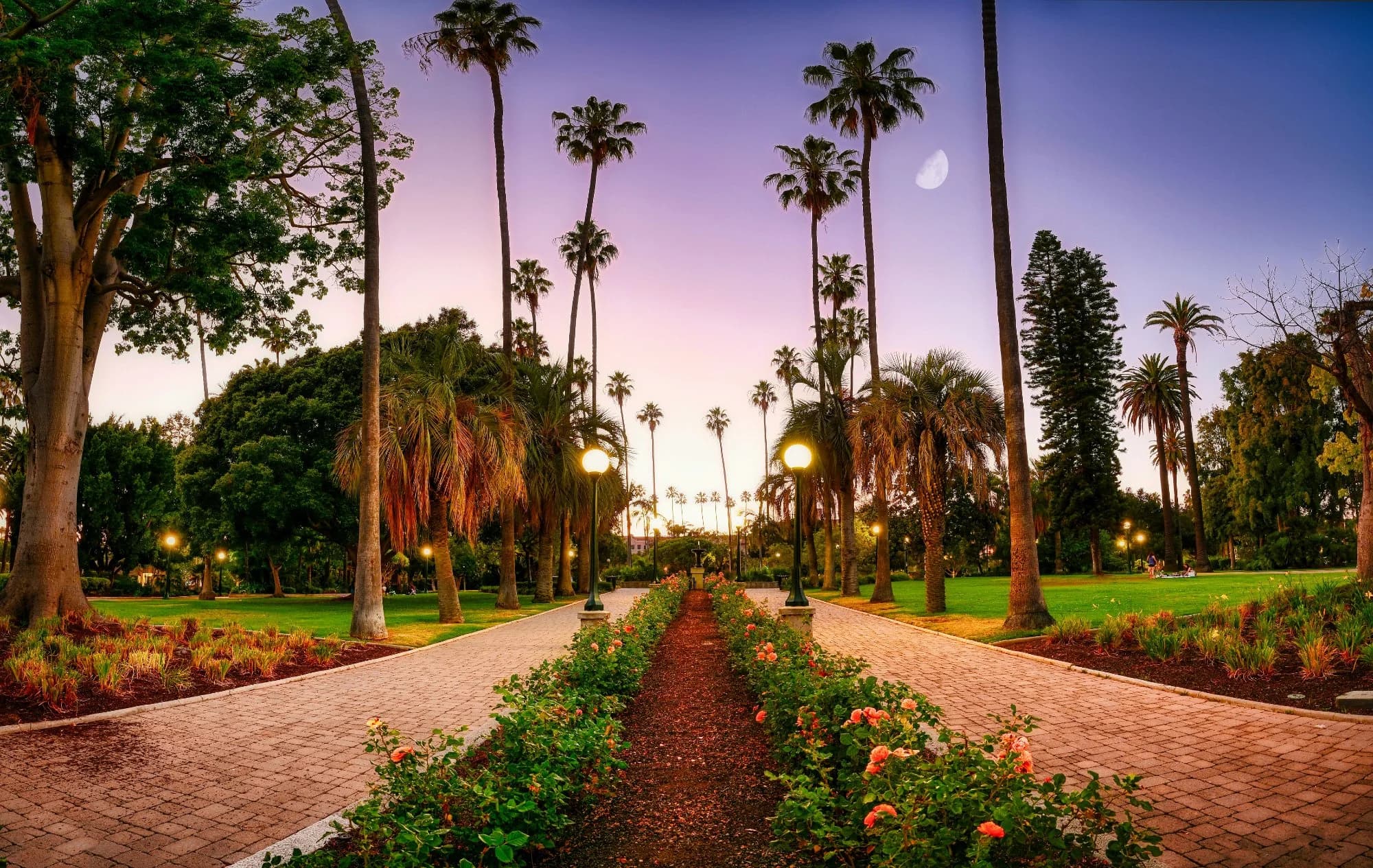
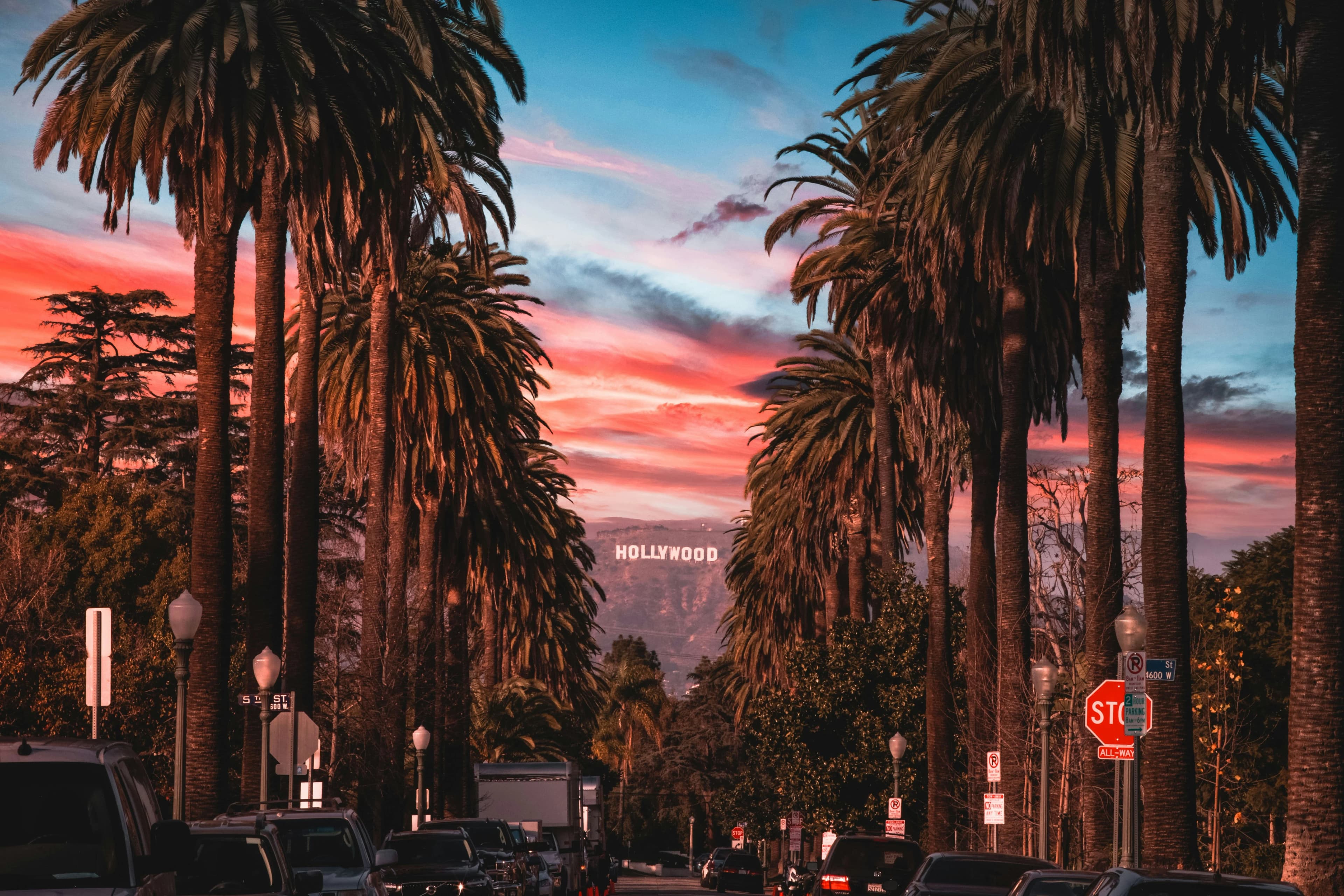
The geography is compact and legible. The commercial and hotel corridor runs primarily along Wilshire Boulevard and its immediate surroundings, with residential architecture ascending into the hills above Sunset Boulevard. This gradient from city grid to canyon landscape defines the character of the destination. Lower-elevation properties offer proximity to retail, dining, and business. Properties positioned higher, toward the canyons, offer acoustic separation and a different relationship to the landscape.
Distinct areas within Beverly Hills for suite stays
The Wilshire corridor
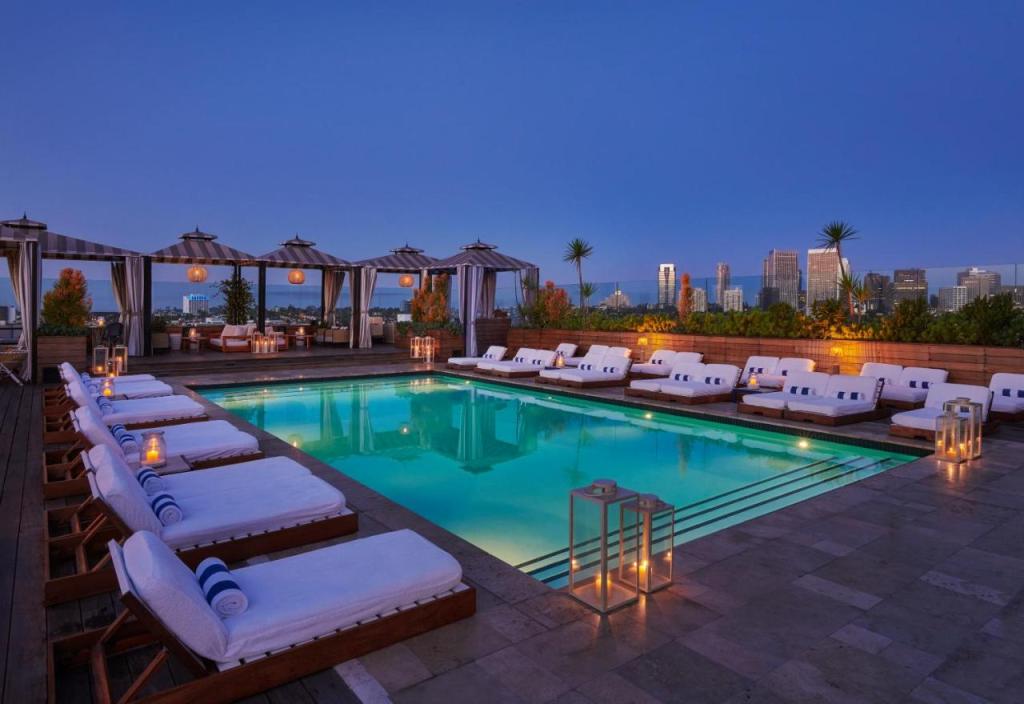
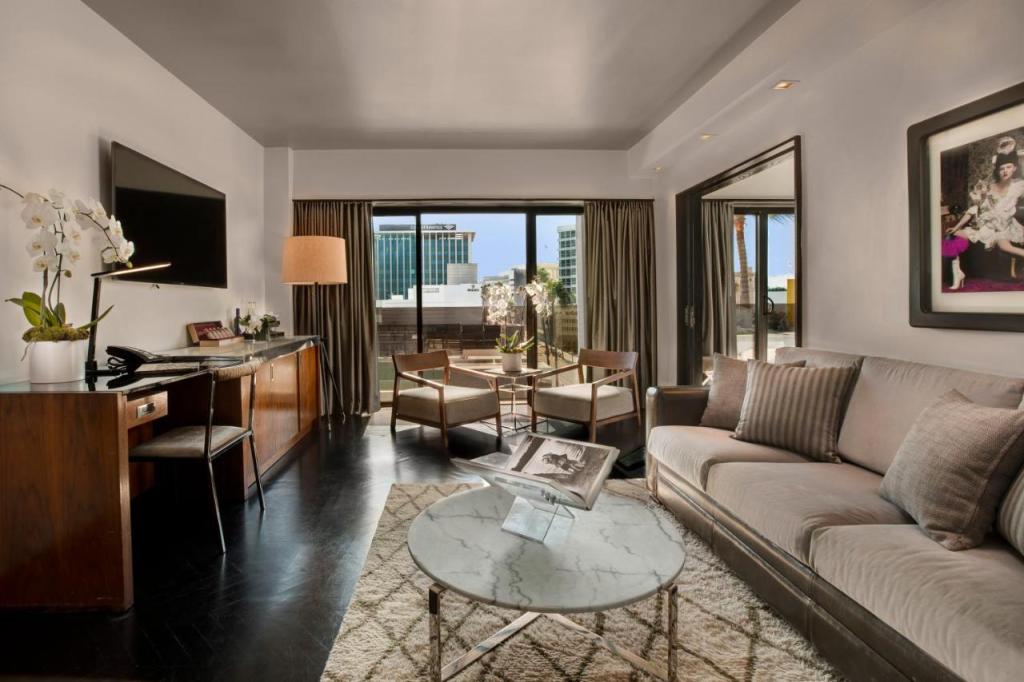
The stretch of Wilshire Boulevard running through Beverly Hills functions as the formal civic spine of the destination. Properties along this corridor offer access to the city's primary commercial infrastructure, including the Golden Triangle retail district. Suite guests here tend to prioritize convenience and proximity over seclusion. Architecture ranges from mid-century towers to contemporary structures with floor-to-ceiling glass and terrace configurations that face the Santa Monica Mountains.
North of Sunset
The residential neighborhoods north of Sunset Boulevard represent a quieter register of Beverly Hills luxury. Some properties in this zone occupy converted estates or purpose-built structures that prioritize garden space and horizontal living. Suite configurations here often include private outdoor areas, separate living volumes, and a scale that reads closer to a private residence than a conventional hotel room. The acoustic environment is markedly different from the corridor below.
The flats and the Triangle
The Beverly Hills Flats, the residential grid between Santa Monica Boulevard and Sunset, and the Golden Triangle commercial district together form the cultural and social core of the city. Many travelers choose suite properties in this zone specifically for walkability, a rarity in Los Angeles County. Access to independent restaurants, galleries, and the weekly farmers market at Civic Center Park makes this zone operationally practical for extended stays.
When to visit Beverly Hills for a luxury suite stay
Beverly Hills operates on a year-round basis. Southern California's Mediterranean climate keeps temperatures within a functional range across all twelve months, though the distinctions matter to travelers with specific intentions. The months of October through April carry lower average temperatures, reduced smog accumulation, and a higher likelihood of clear visibility toward the Pacific on clear days. This period also aligns with awards season, which concentrates industry activity and elevates ambient demand for premium accommodations from January through March.
Summer months, particularly July and August, bring increased leisure travel and higher occupancy across the market. Families with school-age children and international visitors from Europe tend to concentrate in this window. Suite availability tightens during this period, and advance planning of three to six months is advisable for properties with a limited number of top-tier configurations. Spring, from late March through May, offers a balance of mild weather, lower occupancy, and full access to the city's cultural and dining calendars.
Local luxury standards: what defines a top-tier suite in Beverly Hills
The United States does not operate a formal palace hotel classification in the manner of France, where the "Palace" designation is awarded by the national tourism authority to a small number of properties meeting architectural, service, and cultural criteria. American luxury classification relies primarily on Forbes Travel Guide star ratings and AAA Diamond ratings, both of which apply rigorous inspection standards. A Five-Star Forbes rating in the Beverly Hills market is a meaningful signal. A Four-Star property may still offer individual suites that meet or exceed Five-Star expectations in terms of space and configuration.
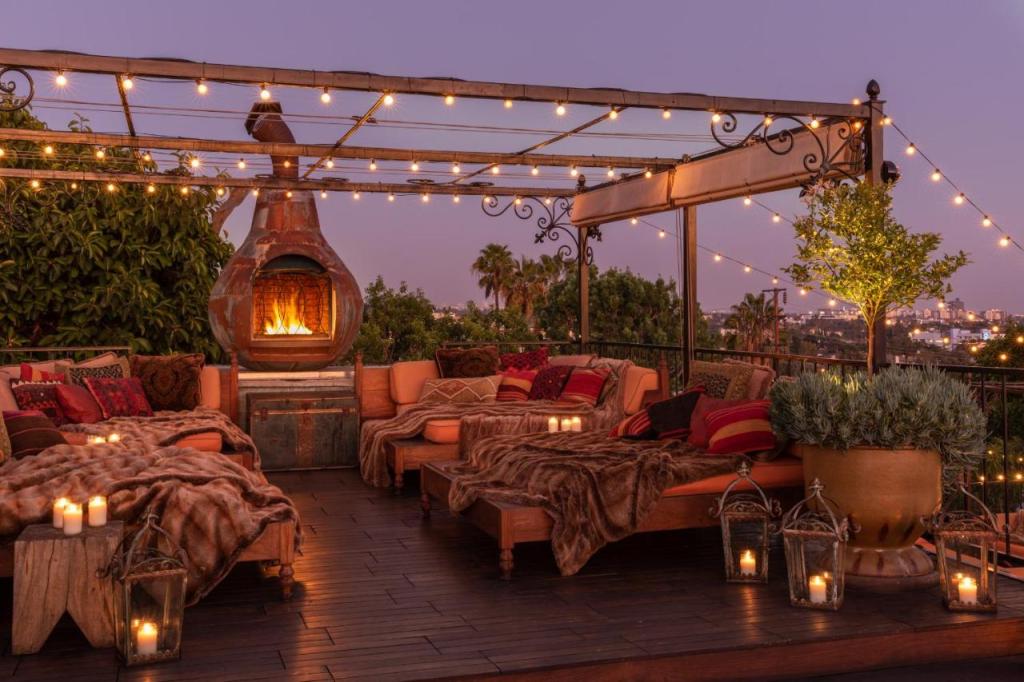
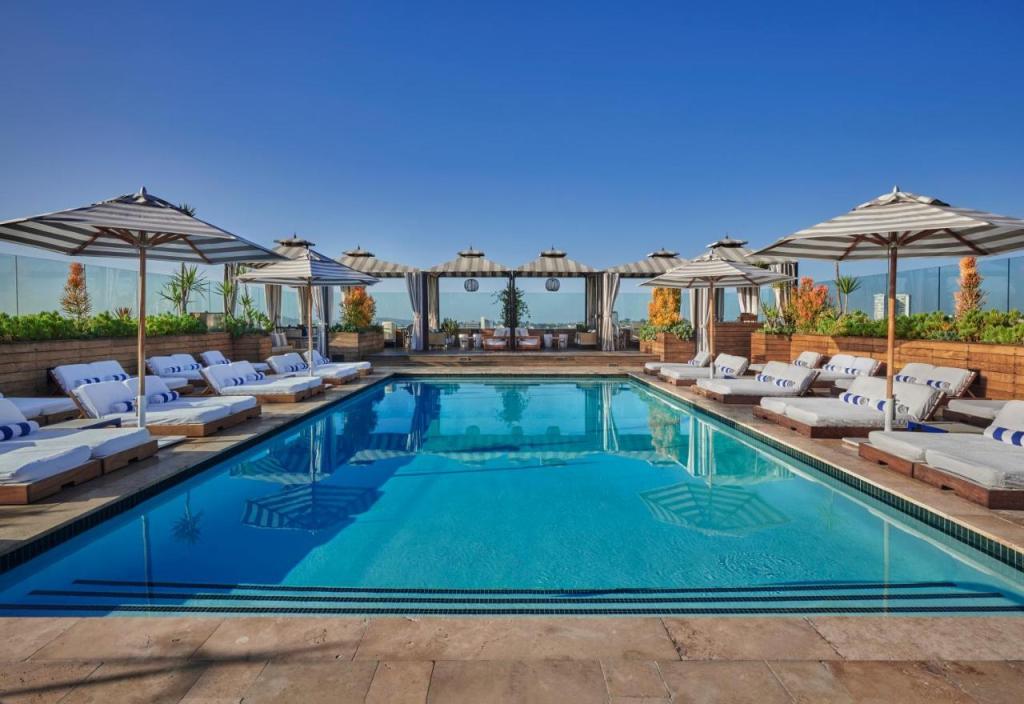
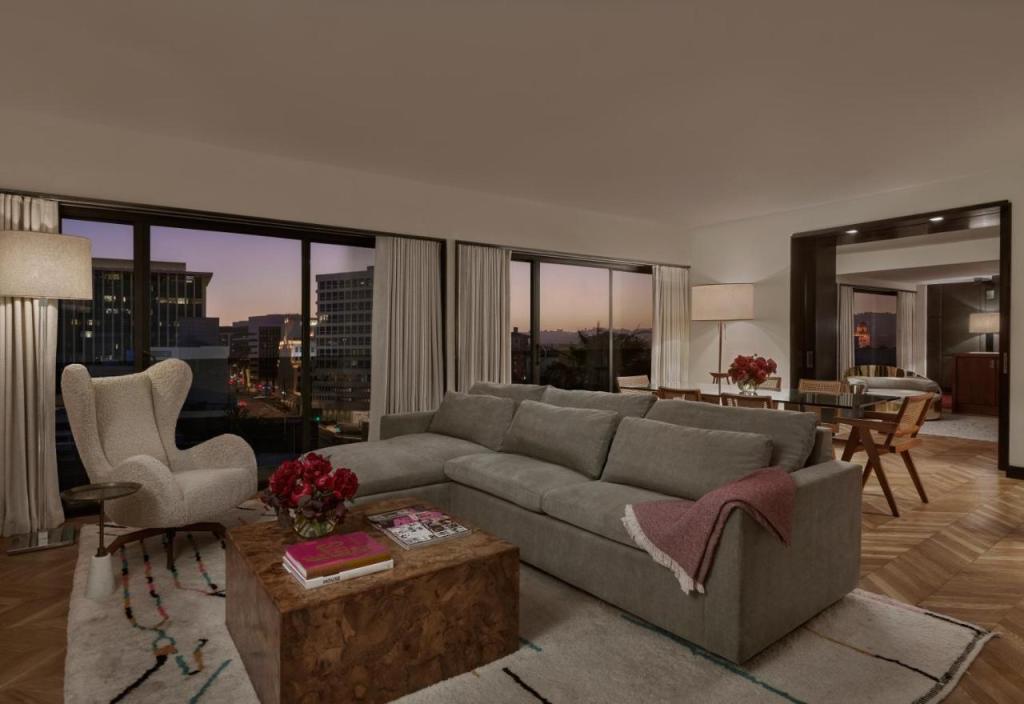
Beverly Hills suites at the top of the market are typically distinguished by several concrete attributes: dedicated butler or personal assistant service, private terrace access with city or canyon views, separate sleeping and living volumes with acoustically isolated spaces, and in-suite dining infrastructure that functions as a full kitchen or kitchenette. Many flagship suites in this market have hosted figures from the entertainment, political, and business worlds over decades, and their configurations reflect that accumulated service intelligence. Thread counts, bath architecture, and technology integration are all areas where Beverly Hills properties invest at a level commensurate with their positioning.
How to choose the right luxury suite in Beverly Hills
The first variable to resolve is the relationship between elevation and lifestyle. A suite positioned on the upper floors of a tower on Wilshire offers a different sensory environment from a bungalow suite set within a garden property. Neither is superior in absolute terms, but they serve different travel intentions. Business travelers who require proximity to Century City or the Westside corporate corridors will prioritize different configurations from guests whose primary purpose is cultural or recreational.
The second variable is the relationship between service model and privacy. Some Beverly Hills properties operate at high social visibility, with lobbies and public areas that function as meeting points for the entertainment and business communities. Others maintain a more contained profile, with discretion built into the physical layout of arrival, check-in, and suite access. Both models have their advocates among frequent luxury travelers, and the choice depends on whether visibility or opacity is the preferred mode for a given trip.
Suite size is a practical consideration. Beverly Hills properties range from intimate boutique configurations of under ten suites to large full-service hotels with tiered suite inventories. Travelers with families or with professional entourages often require connecting suites or multi-room configurations. These should be confirmed at the point of booking, not assumed.
The value of curated selection in Beverly Hills
Beverly Hills has one of the most marketed hospitality landscapes in the world. The volume of promotional content generated by properties, travel agencies, and media covering this market is substantial. Within that volume, the signal-to-noise ratio is poor for the traveler who requires accurate, experience-based information about specific suite configurations, service consistency, and the degree to which a given property's reputation matches its current operational reality.
La Suite approaches the Beverly Hills market as it does every destination across North America: through editorial selection based on verifiable standards rather than commercial relationships. The platform does not list every property that markets itself as luxury. It lists properties whose suite offerings meet a defined threshold across space, service architecture, privacy infrastructure, and experiential coherence. For a destination as heavily promoted as Beverly Hills, that filtering function has direct practical value. It compresses the research process and reduces the probability of a mismatch between expectation and experience.
For the traveler arriving in Beverly Hills with specific intentions, whether that is extended privacy during a creative retreat, a base for industry meetings during awards season, or a family configuration that requires genuine domestic space rather than a reconfigured standard room, the La Suite selection by La Suite provides a starting point grounded in editorial judgment rather than inventory volume.