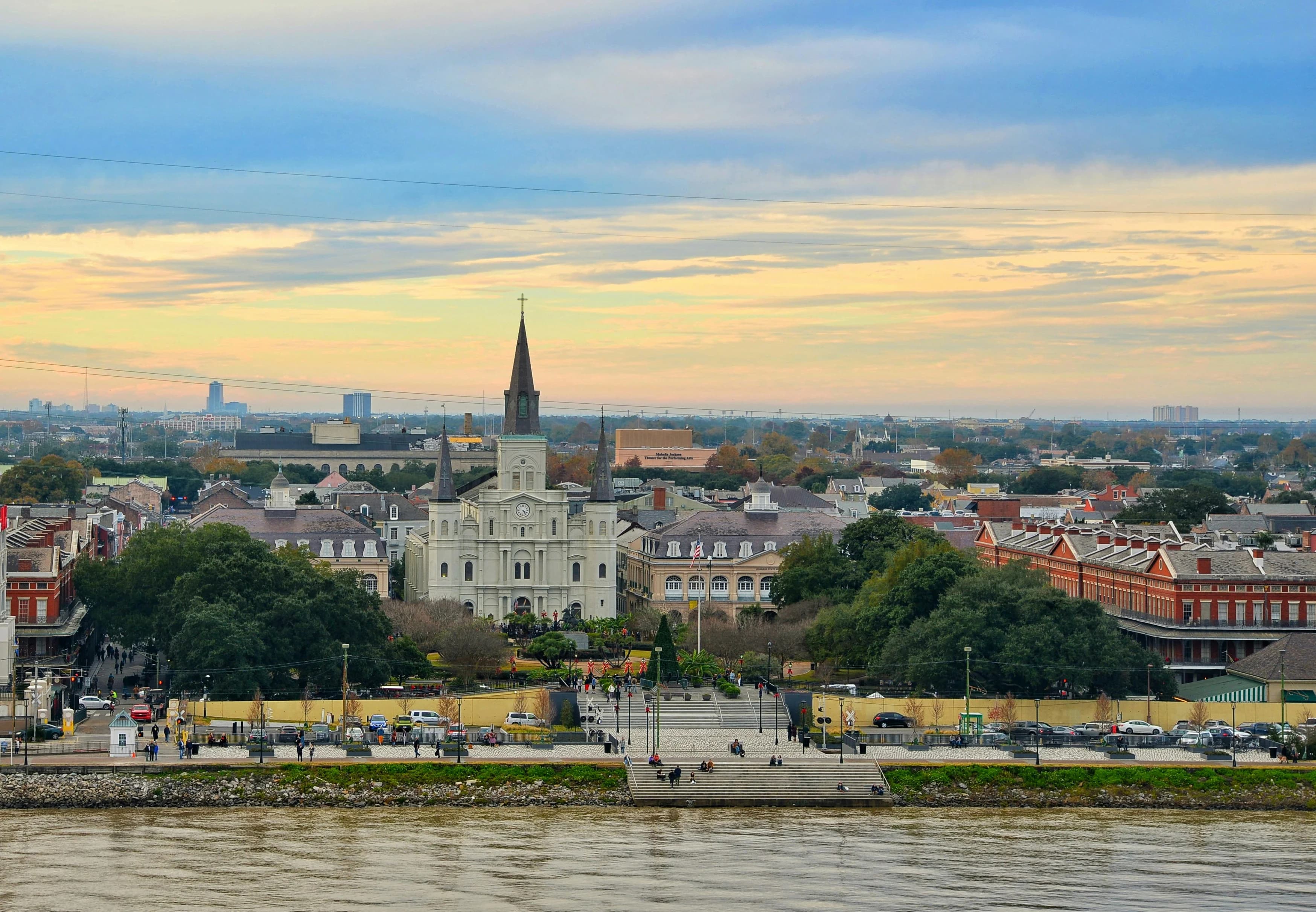
Blackbird Hotel, New Orleans
Elegant Accommodations Blackbird Hotel in New Orleans offers adults-only rooms with private balconies, air-conditioning, and modern amenities. Each room includes a private bathroom, free toiletrie

New Orleans is a city of clearly defined neighborhoods, each with its own architectural grammar and social tempo. Understanding these distinctions is essential before selecting a luxury hotel suite, because location here is not merely logistical. It shapes the entire sensory register of your stay.
20 hotels available

Elegant Accommodations Blackbird Hotel in New Orleans offers adults-only rooms with private balconies, air-conditioning, and modern amenities. Each room includes a private bathroom, free toiletrie

This boutique hotel is located on Bourbon Street in the center of New Orleans’ French Quarter. It features an outdoor pool surrounded by a tropical courtyard and a bar. All guest rooms at Four Points

Four Seasons New Orleans features a restaurant, fitness center, a bar and garden in New Orleans. Featuring a concierge service, this property also provides guests with a terrace. The accommodations of

Elegant Accommodations Garden District Hotel in New Orleans offers luxurious rooms with private bathrooms, air-conditioning, and modern amenities. Each room features a balcony with city views, parquet

This New Orleans French Quarter hotel is located 15 miles from Louis Armstrong New Orleans International Airport and within walking distance to all restaurants, nightlife, and shopping, along with the

Located in the heart of historic French Quarter on Canal Street, this JW Marriott New Orleans features a large outdoor pool with a sun terrace. Complimentary wireless internet is available in public s

Within walking distance to the French Quarter and adjacent to Harrah's Casino, Loews New Orleans Hotel offers accommodations in New Orleans' Warehouse District. An on-site restaurant and bar featuring

Comfortable Accommodations Louis Park Hotel in New Orleans offers family rooms with private bathrooms, air-conditioning, and free WiFi. Each room includes a tea and coffee maker, hypoallergenic beddin

Maison Metier is located in the center\al business and arts district of New Orleans, a short walk to the French Quarter. Located on the St. Charles historic street car line, Tulane University and the

Comfortable Accommodations Memoir Warehouse District in New Orleans offers comfortable rooms with air-conditioning, private bathrooms, and modern amenities. Guests appreciate the room comfort and

Centrally located near the French Quarter and Superdome, NOPSI Hotel, New Orleans, offers a rooftop pool and bar with stunning city views. Breakfast inclusive rates include the Crescent City breakfas

Comfortable Accommodations ONE11 Hotel in New Orleans offers comfortable rooms with air-conditioning, private bathrooms, and city views. Each room includes a tea and coffee maker, hairdryer, and f

Just 2 blocks from the French Quarter, this hotel offers accommodations in a restored 19th century building. It offers an on-site bar and rooms with free WiFi and a flat-screen TV. Each room includes

Located at the edge of the French Quarter, this hotel features onsite dining options and a destination spa offering more than 100 treatments. Bourbon Street is 1640 feet away from the property, Rooms

This 5-star hotel in New Orleans is a 15-minute walk to Jackson Square. The elegant hotel features The Rooftop Bar, a full-service spa and rooms with a 42-inch flat-screen TV. Guest rooms at The Roos

Located in the historic French Quarter on Bourbon Street, The Royal Sonesta New Orleans offers accommodations with an outdoor pool, multiple bars, and a jazz club. The hotel is decorated with modern a

Prime Location The Rubenstein Hotel in New Orleans offers a central setting with key attractions nearby. Mercedes-Benz Superdome lies 1.1 mi away, while Union Station is a 19-minute walk. The Aquarium

Next to the Mississippi River, near the French Quarter and the central business district, this hotel in New Orleans, Louisiana offers free Wi-Fi and 2 on-site restaurants. All guestrooms at the New O

Just a half-block from Canal Street, this 5-star New Orleans hotel is a 5-minute drive from the French Quarter. It features the city’s only 4-Diamond restaurant, an outdoor pool and spacious rooms wit

Comfortable Accommodations Virgin Hotels New Orleans in New Orleans offers air-conditioned rooms with free WiFi, refrigerators, and wardrobes. Each room includes a bath, seating area, and mini-bar
The French Quarter is the oldest neighborhood in the city, characterized by its ironwork balconies, narrow streets, and Creole townhouses that date primarily from the Spanish colonial period, despite the name. Staying here places you inside one of the most architecturally coherent urban environments in North America. The Quarter operates at high intensity, particularly along Bourbon Street, so suite selection within this zone rewards careful attention to courtyard-facing rooms and properties with genuine acoustic insulation. The best suites here often occupy converted merchant buildings or historic residences, offering internal garden access and a sense of enclosure that the street-level experience does not suggest.
Moving upriver from the French Quarter, the Garden District presents a contrasting grammar: Greek Revival and Italianate mansions set behind mature oak canopies, on streets that are notably quieter. This area developed in the nineteenth century as a residential enclave for the Anglo-American merchant class, and the scale of the architecture is correspondingly domestic and grand. Luxury properties here tend to be boutique in scale, often occupying converted historic homes. The neighborhood rewards travelers who prefer to walk through residential streets rather than tourist corridors, and who value proximity to the city's independent restaurant culture.
The Warehouse District, adjacent to the central business area, has undergone significant transformation since the 1984 World's Fair catalyzed its conversion from industrial use to cultural infrastructure. It now houses the city's major contemporary art institutions, including the Ogden Museum of Southern Art and the Contemporary Arts Center. Luxury hotels in this zone tend toward a more minimal architectural vocabulary, making use of the district's loft-scale buildings. This area appeals to travelers with a strong interest in contemporary art and design who prefer a somewhat quieter residential tempo after dark.
The timing of a visit to New Orleans has material consequences for both the quality of the experience and the availability of premium accommodations.
The period from late January through February culminates in Mardi Gras, the city's most significant annual event. The weeks immediately preceding Fat Tuesday draw substantial crowds, and suite availability at top properties becomes limited and commands peak pricing. For travelers who wish to engage with Carnival culture, booking six to twelve months in advance is standard practice at the upper tier of the market. Those who prefer the city at a lower register should note that the parades begin well before the final week, allowing for a more selective engagement.
Jazz Fest, held across two weekends in late April and early May, attracts a different audience: one oriented toward music, food, and a somewhat more deliberate pace. Suite availability during this period is also constrained, and the clientele tends to skew toward repeat visitors with established relationships with specific properties.
The period from June through August is climatically demanding. Temperatures regularly exceed 90 degrees Fahrenheit with high humidity, and the city operates at a reduced social tempo. This is not a period that luxury travel platforms typically recommend for first visits, though rates are lower and the city has a more local character. September and October represent a transitional period with more moderate temperatures and the beginning of the cultural season. November through January is arguably the most comfortable window for extended stays, with cooler temperatures, fewer tourists, and a full calendar of cultural programming.
New Orleans does not operate within the standard American luxury hotel taxonomy. The city has no formal designation equivalent to the French Palace label, but it maintains its own internal hierarchy of prestige that is legible to those familiar with the market.
At the upper register, the defining characteristics of a genuinely exceptional suite in New Orleans include: historic building provenance, courtyard or garden access, architectural authenticity in the interior detailing (plaster cornices, heart pine floors, original millwork), and a service culture that is warm without being performative. The city's hospitality tradition is deeply embedded, and the best properties communicate this through consistency rather than theater.
Larger international luxury brands maintain a presence in the city, particularly along Canal Street and in the central business district, offering the infrastructure and suite scale that corporate and leisure travelers expect. Alongside these, a tier of independently operated historic properties offers a more site-specific experience. The choice between these two categories is one of the central decisions facing travelers booking luxury hotel suites in New Orleans.
It is also worth noting that New Orleans has a strong culture of entertaining and hosting, and many of the finest suites in the city are designed with this in mind: they feature separate living areas, private dining capacity, and, in some cases, direct access to private courtyards or rooftop terraces.
Several practical considerations are specific to this city and should inform suite selection.
First, the question of noise management is non-trivial. The French Quarter in particular operates as a continuous entertainment environment, and rooms facing the street on certain corridors will experience significant ambient sound levels, particularly on weekend evenings. High-quality suites in this zone compensate through courtyard orientation, double-glazed openings, or both.
Second, the architectural context of the building matters in ways that go beyond aesthetics. Historic structures in New Orleans are subject to specific preservation requirements, which can affect everything from elevator access to the configuration of bathrooms in converted rooms. The finest suites navigate these constraints with intelligence, but it is worth understanding that the building's history is part of the product.
Third, consider the question of mobility. New Orleans is a walkable city in its core neighborhoods, but the distances between the French Quarter, the Garden District, and the Warehouse District are meaningful on foot in summer heat. Properties that offer consistent car service or are positioned to minimize unnecessary transit add a measurable quality to the stay.
For travelers interested in the broader American luxury hotel landscape, the United States page on La Suite provides a structured overview of the country's finest suite destinations, from the Gulf Coast to the Pacific Northwest.
New Orleans presents a market that rewards specificity. The city has a large number of hotels across all price points, and the gap between a property that understands the city and one that merely operates within it is significant. At the luxury suite level, the differences in architectural quality, service culture, and spatial experience are not always visible from standard booking platforms.
La Suite's curation process is designed to identify the properties that meet the precise criteria that matter to a traveler who chooses suites deliberately: space, privacy, architectural integrity, and service that is consistent rather than occasional. In a city as particular as New Orleans, this kind of editorial judgment is not a convenience. It is a precondition for a stay that matches the city's own standards. The North America section of La Suite provides further regional context for travelers planning itineraries across the continent.

The French Quarter offers the most historically immersive experience, with suites often occupying converted colonial-era buildings with private courtyard access. The Garden District provides a quieter, more residential alternative with boutique properties set in nineteenth-century mansions, while the Warehouse District appeals to design-oriented travelers seeking contemporary architecture and proximity to the city's art institutions.
November through January offers the most comfortable climate and a full cultural calendar with relatively manageable demand at premium properties. Jazz Fest in late April and early May and the weeks surrounding Mardi Gras in February require advance booking of six months or more for top-tier suites, as availability at the upper market level becomes very constrained during both periods.
For Mardi Gras, which culminates on Fat Tuesday in late February or early March depending on the year, six to twelve months of advance booking is standard practice at the luxury hotel suite level. Properties at the highest tier frequently reach capacity for the final week of Carnival within days of opening their booking windows for that period.
French Quarter suites are typically characterized by their location within buildings of genuine historic provenance, often dating from the Spanish colonial period, with architectural details such as ironwork balconies, interior courtyards, and plaster or masonry construction. The trade-off is ambient noise, which the finest properties address through courtyard-facing orientation and acoustic design rather than through proximity to quieter streets.
Yes. The Garden District and Uptown contain a number of smaller, independently operated properties housed in converted nineteenth-century residences, offering a more residential scale of suite accommodation. These properties tend to prioritize architectural authenticity and a quieter setting over the full-service infrastructure of larger central properties, and they suit travelers who value neighborhood access and a lower social intensity.
New Orleans has a deeply embedded hospitality tradition that distinguishes the best properties from standard luxury hotel service. At the upper tier, service is warm and knowledgeable rather than formal, with staff who typically have genuine familiarity with the city's restaurant, music, and cultural landscape. The most accomplished properties in the city treat their guests as informed visitors rather than generic tourists.
Summer in New Orleans is climatically demanding, with temperatures regularly above 90 degrees Fahrenheit and high humidity from June through August. While rates at luxury hotel suites are generally lower during this period and the city takes on a more local character, it is not a period that most experienced travelers would recommend for a first visit. Those who do visit in summer benefit from air-conditioned suite environments and a reduced tourist presence.
The dominant architectural references in New Orleans luxury accommodation are Creole and Spanish colonial construction in the French Quarter, with courtyards, galleries, and masonry party walls, and Greek Revival or Italianate residential architecture in the Garden District. The Warehouse District offers a contrasting vocabulary of converted industrial loft buildings. Each typology produces a distinct spatial experience at the suite level.
New Orleans occupies a category of its own within the American luxury hotel landscape because of the density and authenticity of its historic building stock, its food culture, and its music heritage. Unlike cities where luxury accommodation is defined primarily by scale or brand affiliation, New Orleans rewards travelers who engage with the city's architectural and cultural specificity. The result is a suite experience that is more site-specific than in most comparable American destinations.
Given the city's climate and street-level energy, the most valuable amenities in a New Orleans luxury suite are courtyard or garden access, reliable acoustic insulation from street noise, a separate living area for decompression, and proximity to the culinary and cultural assets most relevant to your interests. Properties with consistent car service or a location that minimizes transit between key neighborhoods add measurable value to an extended stay.