Understanding Omaha as a luxury destination
Best areas to stay in Omaha
Downtown and the Old Market district
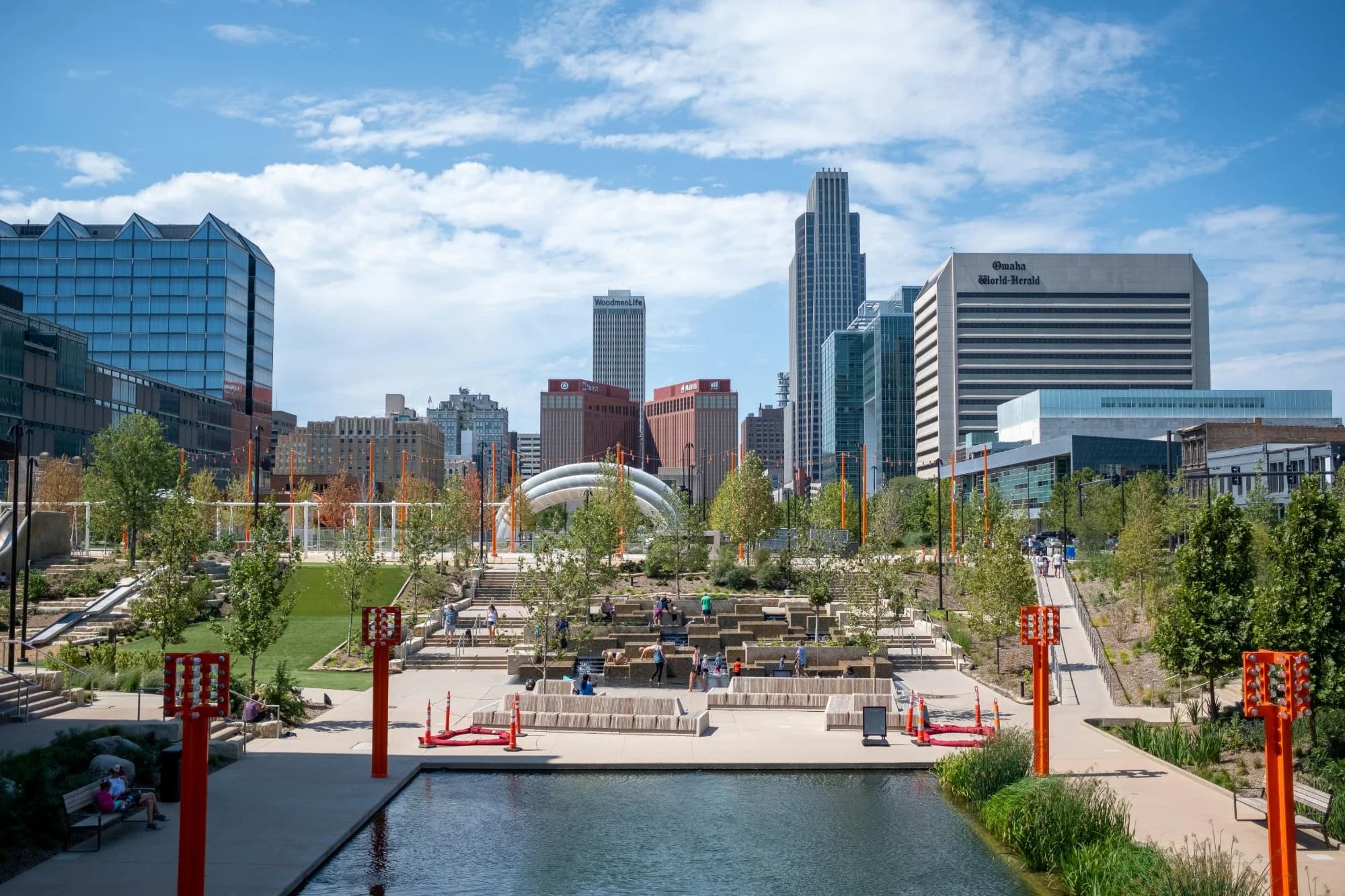
The Old Market district is Omaha's most architecturally coherent neighborhood: nineteenth-century brick warehouses converted into restaurants, independent galleries, and retail. The cobblestone streets and preserved facades give the area a density of character rarely achieved through modern planning. Hotels in this zone place guests within walking distance of the city's most serious dining and cultural institutions. For travelers who value urban texture and ease of movement on foot, this district is the natural anchor.
Midtown and the Blackstone district
The Blackstone district, once the city's entertainment corridor in the early twentieth century, has undergone a sustained renovation over the past decade. The result is a neighborhood with genuine architectural bones, now populated by independent food and beverage operators and boutique accommodation. Midtown more broadly offers proximity to Creighton University's campus and the medical center corridor, making it a practical choice for extended stays combining professional and personal travel.
West Omaha
West Omaha's development pattern is newer and more suburban in character, but it houses a significant concentration of corporate headquarters and conference facilities. Travelers arriving for business will find well-appointed hotels oriented toward the executive market, with suite configurations designed for extended working visits rather than purely leisure use.
When to visit Omaha for a luxury suite stay
Omaha's climate follows a continental pattern: cold, dry winters and warm, occasionally humid summers. The most temperate windows are late spring (April to early June) and early autumn (September to October), when temperatures are moderate and the city's outdoor spaces are most accessible.
Two events define the city's peak demand periods. The Berkshire Hathaway Annual Shareholders Meeting, held each May, draws tens of thousands of investors and creates acute pressure on suite inventory across the city. Advance planning is essential, with lead times of six months or more for premium accommodation. The College World Series, held in June at Charles Schwab Field, generates similar demand, particularly for larger suite configurations suitable for group travel.
Outside these windows, Omaha operates at a more measured pace, and suite availability is generally more accessible. Autumn in particular offers a favorable combination of comfortable temperatures, post-summer pricing, and the city's cultural season in full operation.
Local luxury standards: what to expect from top-tier suites in Omaha
Omaha does not operate within the same branded luxury hotel ecosystem as cities like New York, Chicago, or Los Angeles. The market is smaller, and the concentration of internationally recognized luxury brands is limited. What the city does offer is a selection of independently positioned hotels and regional flag properties that have invested seriously in suite-level product: generous square footage, considered furnishing, and service standards calibrated to a clientele that travels frequently and has clear expectations.
The best suites in Omaha tend to offer separation of living and sleeping spaces, in-room dining capacity, and views oriented toward either the downtown skyline or the Missouri River valley. Some properties in the Old Market district occupy converted historic buildings, where suite configurations reflect the original architecture: high ceilings, exposed brick, and irregular floor plans that give each room a distinct spatial character.
Travelers accustomed to international palace-category hotels should calibrate expectations accordingly. Omaha's luxury offer is genuine but operates at a different scale. The value proposition is often found in the ratio of space to price, the quality of local culinary sourcing in room service programs, and the absence of the impersonality that can accompany very large luxury properties in major gateway cities.
How to choose the best suite in Omaha
Define the purpose of the stay
Omaha attracts distinct traveler profiles: the corporate executive attending meetings or events, the investor visiting during annual shareholder season, the leisure traveler using the city as a base for broader Midwestern exploration, and the culturally motivated visitor drawn by the dining and arts programming. Each profile has different suite requirements. A business traveler will prioritize connectivity, desk configuration, and proximity to financial district offices. A leisure traveler may weight views, bathroom specification, and access to the Old Market's pedestrian environment more heavily.
Historical versus contemporary architecture
The choice between a suite in a converted historic building and one in a purpose-built contemporary hotel carries real spatial implications. Historic conversions in the Old Market offer character and scale, but may present irregular layouts and limited natural light in some configurations. Contemporary properties in West Omaha or along the riverfront tend to offer more standardized suite formats with predictable amenity packages. Neither is categorically superior; the decision depends on what the traveler is optimizing for.
Seasonal and event-driven pricing
Suite pricing in Omaha moves significantly around the Berkshire Hathaway meeting and the College World Series. Travelers with flexibility in their dates will find materially better value and inventory in the weeks immediately before or after these events. For those traveling specifically for these occasions, early reservation is not optional; it is a logistical requirement.
The value of a curated suite selection in Omaha
In a city with a smaller luxury hotel market, the risk of a misaligned booking is higher, not lower, than in a destination with dozens of internationally graded options. A property that presents well in marketing materials may not deliver at suite level: the gap between a standard room and a genuinely considered suite product is wider in mid-sized markets than in established luxury capitals.
La Suite applies a consistent editorial framework to every destination it covers, including Omaha. The curated selection reflects direct assessment of suite-level product: spatial quality, service consistency, and the specific conditions under which a property performs at its best. For a traveler allocating meaningful time and expenditure to an Omaha visit, that filtering function removes the uncertainty that comes with relying on aggregated review platforms or unverified listings. The goal is a simple one: to place the right traveler in the right suite, in a city that has more to offer than its national profile suggests.