Best areas to stay in Palm Springs and the Coachella Valley
Palm Springs proper
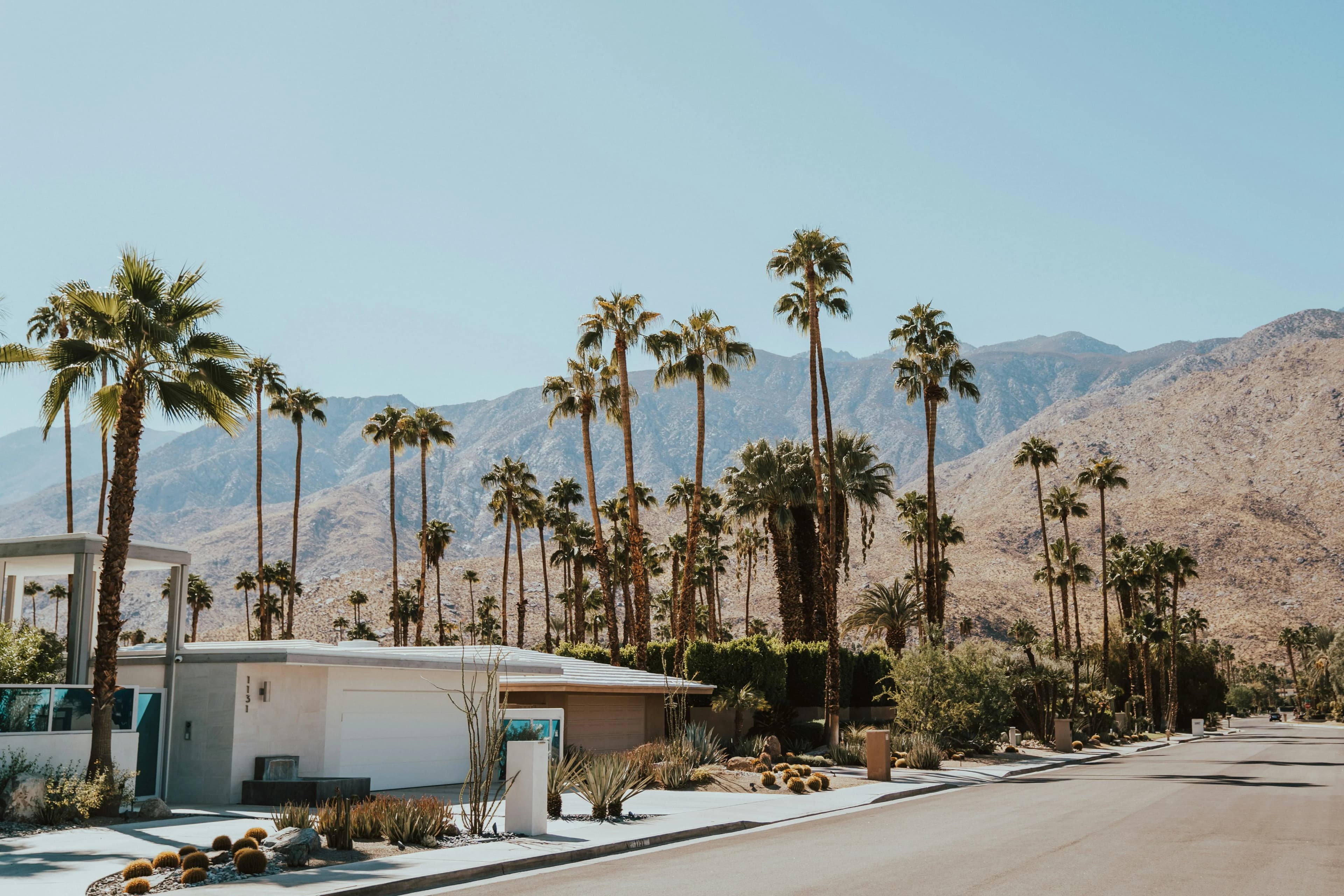
The city of Palm Springs remains the cultural and architectural core of the region. The downtown corridor along Palm Canyon Drive concentrates galleries, mid-century estates converted into boutique hotels, and a walkable density unusual for the desert southwest. Suites here tend to occupy restored properties from the 1950s and 1960s, where original terrazzo floors and steel-framed windows have been preserved and updated with considered restraint. The scale is intimate by design: zoning regulations and historic preservation frameworks limit new development, which keeps the hotel stock deliberately small.
Palm Desert and Rancho Mirage
Moving east, Palm Desert and Rancho Mirage shift toward a more expansive residential luxury register. Golf courses define the landscape here, and the properties follow accordingly: larger footprints, longer driveways, suites that face onto manicured fairways or private mountain views. The El Paseo shopping district in Palm Desert provides a walkable retail and dining corridor that functions as the valley's more formal social address. This corridor tends to attract travelers prioritizing space and privacy over urban proximity.
La Quinta and Indio
The eastern end of the valley around La Quinta and Indio draws a different traveler profile. The Santa Rosa Mountains provide a sharper backdrop here, and the terrain feels more rugged. La Quinta has positioned itself as a golf and wellness destination, with resort properties occupying large parcels of land. During the Coachella Valley Music and Arts Festival and the Stagecoach Festival in April, the Indio fairgrounds become the focal point of the region, drawing a temporary population that transforms the valley's usual quiet into something considerably more activated.
When to visit Palm Springs and the Coachella Valley
The valley operates on a seasonal rhythm governed almost entirely by temperature. The peak luxury season runs from October through April, when daytime temperatures sit between 70 and 85 degrees Fahrenheit and nights drop into the 50s. This window aligns with the busiest cultural calendar: the Palm Springs International Film Festival in January, the Modernism Week architecture festival in February, and the twin music festivals in April.
Summer months from June through September see temperatures regularly exceeding 110 degrees Fahrenheit. Most visitors retreat during this period, which creates an unusual off-season dynamic: hotels offer their most significant rate reductions, and the valley takes on a spare, almost monastic quality. For travelers who can tolerate the heat, a summer suite stay provides a version of Palm Springs that is stripped of its social layer, focused entirely on the pool, the air conditioning, and the long desert evenings.
Spring, particularly March, represents a transitional sweet spot: temperatures are comfortable, wildflower blooms appear in the higher desert terrain, and the region's social season is at full amplitude before the festival crowds arrive in April.
Local luxury standards: what to expect from top-tier suites here
The Coachella Valley does not have a local prestige classification system equivalent to France's Palace designation or Japan's Ryokan grading. Luxury here is defined by a combination of architectural pedigree, outdoor amenity quality, and spatial generosity rather than formal institutional labels.
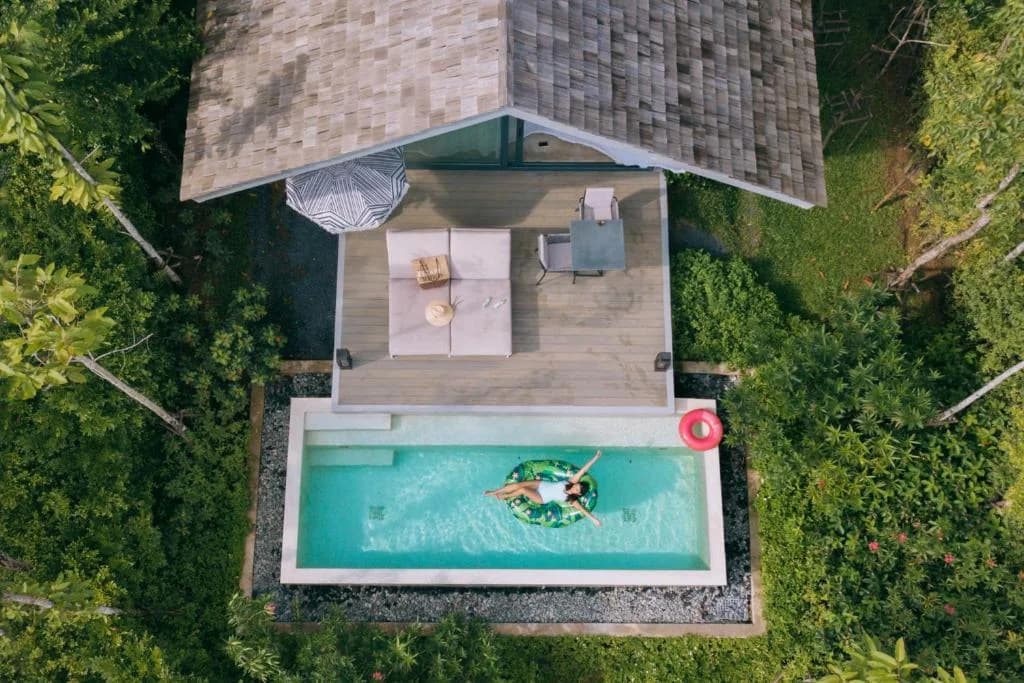
The dominant architectural idiom is mid-century modernism, and the finest suites in the region engage with this legacy either through authentic historic fabric or through contemporary design that shares the same formal vocabulary: clean geometry, wide overhangs, floor-to-ceiling glass, and an explicit relationship between interior and exterior space. A suite in Palm Springs without a private pool, a plunge pool, or direct access to a pool is considered a lesser category of accommodation by travelers who know the market.
Service culture in the valley leans toward the relaxed and discreet rather than the ceremonially formal. Expect knowledgeable staff, responsive logistics, and a general ethos that prioritizes privacy over performance. The valley has historically been a retreat for celebrities, architects, and executives who value anonymity, and that institutional memory persists in how the best properties operate.
How to choose the best luxury hotel suite in the Coachella Valley
Several variables determine which suite configuration is appropriate for a specific visit. The first is orientation: mountain-facing suites along the western edge of Palm Springs receive dramatic afternoon shadow from the San Jacinto Mountains, which drops temperatures significantly after 3pm and creates a distinct quality of afternoon light. Pool-facing suites sacrifice some privacy but position guests at the social center of a property.
The second variable is architectural period. Historic properties converted from mid-century estates or motor lodges offer a specific atmosphere tied to the postwar leisure culture of Southern California, while newer resort developments in Palm Desert and La Quinta prioritize scale and amenity breadth over historical character. Neither is objectively superior: the choice reflects what kind of narrative a traveler wants to inhabit.
The third variable is proximity to events. During Modernism Week in February or the music festivals in April, properties within close range of the relevant venues command significant premiums and require advance planning measured in months, not weeks. Outside of these windows, the same properties are considerably more accessible.
Why a curated selection by La Suite matters in this destination
The Coachella Valley hotel market is fragmented across a wide geographic corridor, with properties ranging from faithfully restored mid-century compounds to large-scale resort complexes, boutique wellness retreats, and short-term vacation rentals marketed with inflated language. For a traveler arriving with specific expectations around architecture, service, and suite quality, the signal-to-noise ratio without curation is poor.
La Suite applies a consistent editorial standard to every property in its selection: spatial quality, design coherence, service reliability, and the capacity to deliver a genuinely private experience. In a region where the concept of the suite is tied directly to outdoor living and the relationship between architecture and landscape, these criteria carry specific weight. The curated selection by La Suite removes the research burden and replaces it with a shortlist of properties where the suite experience is the primary consideration, not an afterthought.