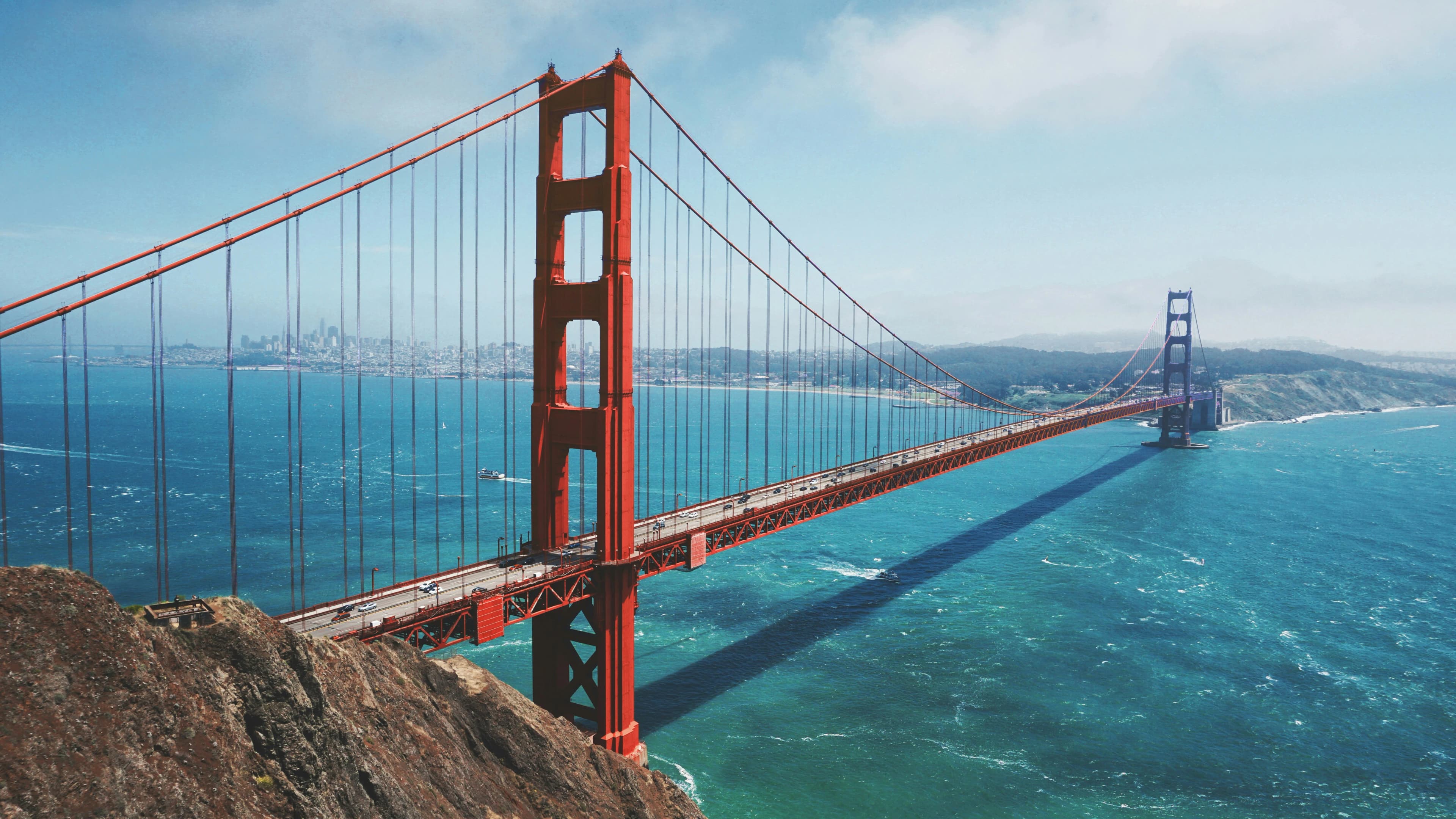
1 Hotel San Francisco, San Francisco
Overlooking San Francisco’s Embarcadero waterfront, this hotel features an outdoor rooftop terrace. Free WiFi is provided in all guest rooms. Oracle Park is 1 mi away. A flat-screen cable TV and an h

San Francisco's geography is unusually decisive. The city divides itself into micro-territories, each with its own architectural logic, social register, and proximity to the experiences that matter most to high-end travelers.
29 hotels available

Overlooking San Francisco’s Embarcadero waterfront, this hotel features an outdoor rooftop terrace. Free WiFi is provided in all guest rooms. Oracle Park is 1 mi away. A flat-screen cable TV and an h

Located in San Francisco, 656 feet from Union Square, Beacon Grand, A Union Square Hotel features accommodations with a fitness center, private parking, a restaurant and a bar. With free WiFi, this 4-

Atop centrally located Nob Hill, this landmark San Francisco hotel features luxurious rooms and suites. A full-service gym and spa and two unique dining experiences are available on site. Fairmont San

Located five minutes’ walk to the shops and restaurants at Union Square and Yerba Buena Gardens, this San Francisco hotel provides a full-service spa, an adult indoor lap pool and a restaurant. Select

Featuring stunning views of downtown San Francisco from each spacious guestroom, Four Seasons Hotel San Francisco at Embarcadero offers gourmet on-site dining, in-room massage services and easy access

This San Francisco hotel in Union Square is just steps from Chinatown. On-site dining and a 24-hour gym are available for guest convenience. The spacious, modern rooms at Grand Hyatt San Francisco Uni

Parc 55 San Francisco places you steps from Union Square, with sleek, contemporary rooms and some of the best downtown views in the city. This is a hotel designed for the way you actually travel, effic

This San Francisco hotel is just 2 minutes’ walk from Union Square and cable car lines. All rooms offer custom amenities. An internet ready 42-inch Smart TV is provided in each air-conditioned room a

Located in San Francisco’s Japantown, this elegant hotel is connected to the Nihonmachi Mall and blends Eastern and Western design. It features on-site dining and an indoor garden with a fishpond. Fre

Elegant Accommodations Hotel Nikko San Francisco in San Francisco offers luxurious rooms with city views, air-conditioning, and modern amenities. Each room includes a private bathroom, mini-bar, and f

This contemporary eco-friendly hotel is ideally located in downtown San Francisco, 7 minutes' walk from Union Square. It features a gym. The bright rooms at Hotel Zelos San Francisco are decorated in

Across the street from Westfield Shopping Center, this Central San Francisco hotel offers rooms with a 46-inch flat-screen smart TV. Food options are offered in the full-service bar and lounge area.

Comfortable Accommodations Hyatt Place San Francisco/Downtown in San Francisco offers air-conditioned rooms with private bathrooms, tea and coffee makers, and free WiFi. Each room includes a sofa bed,

Located in San Francisco, Hyatt Regency San Francisco Downtown SOMA offers air-conditioned rooms, a fitness center, free WiFi and a shared lounge. This 4-star hotel offers a 24-hour front desk and an

Overlooking San Francisco's SoMa area and moments from top city center sites, InterContinental San Francisco provides guests with modern in-room amenities. Shopping and dining opportunities in Union S

Comfortable Accommodations Kimpton Alton Fisherman's Wharf by IHG in San Francisco offers pet-friendly rooms with air-conditioning, private bathrooms, and city views. Each room includes a work desk, f

Famed bars, an awe-inspiring crystal chandelier restaurant, a fitness area and a glass dome indoor pool are featured at this landmark Financial District Palace. San Francisco’s vibrant Union Square is

This boutique San Francisco hotel is less than 2 blocks from Union Square and the Powell Street and Market Street cable car line. Free WiFi is offered. A flat-screen cable TV and a desk are included i

This San Francisco hotel is within 10 minutes' walk of Fisherman’s Wharf. The hotel offers a refrigerator in every room. Marriott San Francisco Fisherman’s Wharf rooms include a coffee maker and haird

Staypineapple is a historic 1913 hotel located just 5 minutes' walk from vibrant Union Square. It offers a coffee and treats reception at check-in and free WiFi in all rooms. A blend of modern decor
Nob Hill remains the city's most historically weighted address. Positioned at the summit of the hill that once anchored the railroad barons' mansions, hotels here sit above the fog and command unobstructed views across the bay to Marin County and the East Bay hills. The neighborhood's formal streetscape and cable car access give it a verticality that is rare in American cities. Travelers who prioritize discretion, classical interior language, and proximity to the city's cultural core tend to gravitate here.
Union Square and the adjacent Financial District offer a different proposition: density, immediacy, and direct access to the theater district, the Moscone Convention Center, and the city's principal retail corridors. Luxury hotel suites in this zone tend toward the contemporary, often occupying high floors with panoramic city views. The scale of the buildings here is closer to a conventional global business city, which appeals to travelers who prefer altitude and skyline geometry over residential character.
The Embarcadero and Rincon Hill corridor represents San Francisco's most recent architectural investment. Glass-faced towers and converted industrial structures sit along the waterfront, offering views of the Bay Bridge and direct access to the Ferry Building, the city's most functional food market. Suites in this zone tend to prioritize the visual relationship with the water.
Pacific Heights and Presidio Heights function as the city's residential luxury benchmark. While major hotel infrastructure is limited here, the neighborhood establishes the aesthetic reference point for what local affluence looks like: Edwardian and Victorian houses maintained with unusual precision, proximity to the Presidio's forested trails, and a quietness that contrasts with the density further east.
San Francisco operates on a climate logic that surprises most first-time visitors. The city's famously cool, fog-heavy summers are a product of marine airflow from the Pacific, while the warmest and clearest conditions typically occur in September and October. This inversion of conventional seasonal expectations means that autumn is the city's prime luxury travel window.
Late September through November offers the most reliably clear skies, the warmest temperatures (regularly reaching the low to mid-20s Celsius), and reduced domestic leisure traffic compared to July and August. Hotel suite availability and rate flexibility also tend to improve in this window, as the peak summer occupancy period subsides.
January and February represent the city's wet season but also its most commercially advantageous period for suite travelers. Rates compress significantly, the city operates at a quieter register, and the cultural calendar, including performances at Davies Symphony Hall and the San Francisco Opera, remains active.
Major events worth calibrating around include the San Francisco International Film Festival (April to May), Fleet Week in October, and the Salesforce-adjacent Dreamforce conference in September, which applies significant upward pressure on hotel rates and availability across the city. Travelers with flexible schedules should treat Dreamforce week as a period to avoid.
The United States does not operate a formalized national prestige classification equivalent to France's Palace designation or Italy's Leading Hotels of the World criteria, but San Francisco's top-tier properties participate in the Forbes Travel Guide five-star program and the AAA Five Diamond rating system, which function as the most rigorous American benchmarks.
San Francisco's luxury hotel landscape is relatively compact. The city's geography, combined with stringent planning regulations and the seismic engineering requirements of California construction, has constrained the development of large new-build luxury properties. This scarcity confers a degree of institutional weight on established addresses that would not exist in a more permissive development environment.
Suites in San Francisco's top hotels typically occupy corner or high-floor positions with bay or city views, feature locally sourced materials and California-influenced design palettes, and offer dedicated butler or concierge services. The most considered properties invest in spatial programming that connects the interior experience to the city's visual landscape, making the suite itself a vantage point rather than simply a room with a view.
Service culture in San Francisco sits at the intersection of West Coast informality and global luxury standards. The expected register is warm but precise: less ceremonial than equivalent properties in London or Tokyo, but more attentive to individual preference than the standardized service of chain-operated hotels.
The primary decision variable in San Francisco is orientation. A bay-facing suite on Nob Hill or the Embarcadero delivers a fundamentally different experience from a city-facing suite in Union Square. Travelers should clarify whether they are drawn to the water (the bay, the Golden Gate, Alcatraz) or the city grid (rooftops, the Financial District towers, the hills cascading toward the Pacific).
Architectural period is a secondary consideration. San Francisco's historic hotels occupy Beaux-Arts and neoclassical structures that predate the 1906 earthquake or were built shortly after it. These properties tend to offer higher ceilings, more substantial room volumes, and a physical presence that newer towers cannot replicate. Contemporary properties trade that presence for floor-to-ceiling glazing and a more explicit visual connection to the cityscape.
Travelers arriving for cultural or gastronomic purposes should map suite selection against the city's restaurant geography. Hayes Valley and the Mission District contain the city's most critically serious dining, while the Financial District and Embarcadero concentrate the business-oriented restaurant infrastructure. Nob Hill sits at a moderate distance from both, which is a practical consideration for evening travel.
Finally, San Francisco's microclimates operate at a granular level. The western side of the city, including the Richmond and Sunset districts, receives significantly more fog than the eastern neighborhoods. Even within a neighborhood, one block can be notably cooler than the next. Suites with protected terraces or south-facing exposures will deliver more reliable outdoor use than those facing the ocean or the bay directly.
San Francisco's luxury hotel market is compact but not simple to navigate. The gap between a property that markets itself as luxury and one that actually delivers at that level is significant, and the variables that determine quality in a suite context (spatial programming, view orientation, service calibration, architectural integrity) are rarely legible from standard booking platforms.
La Suite applies a consistent curatorial framework to every property in its selection, prioritizing the suite experience specifically rather than treating suites as an extension of the general hotel offering. For San Francisco, this means identifying properties where the suite tier represents a genuine step change in spatial quality and territorial positioning, not simply a larger version of a standard room. The curated selection by La Suite is structured to help travelers make that distinction with clarity and confidence.

Nob Hill is the city's most historically prestigious address, offering bay views and a formal urban character well-suited to luxury suite travelers. The Embarcadero and Financial District offer contemporary high-rise suites with direct waterfront access. The choice between these areas largely depends on whether you prioritize architectural heritage or visual connection to the bay.
September and October offer the clearest skies and warmest temperatures, making autumn the optimal window for most luxury travelers. Rates tend to soften in January and February, when the cultural calendar remains active but leisure traffic decreases. Travelers should avoid the Dreamforce conference period in September, which compresses suite availability significantly.
Top-tier suites in San Francisco generally feature bay or city views from high-floor or corner positions, locally influenced design materials, and dedicated concierge or butler services. The most considered properties invest in spatial programming that frames the city's landscape as part of the suite experience. Forbes five-star and AAA Five Diamond ratings are the most reliable quality benchmarks in this market.
San Francisco offers a compact but architecturally rich hotel landscape shaped by California's seismic engineering requirements and strict planning regulations, which have limited new development and preserved institutional weight in established addresses. The combination of a dramatic topography, a serious food culture, and a visually distinctive cityscape makes it a considered choice for suite travelers who value specificity over scale.
Rates for luxury suites in San Francisco vary considerably based on property, season, and view orientation. Entry-level suite tiers at five-star properties typically begin around 800 to 1,200 USD per night, while signature or penthouse suites at the city's most prestigious addresses can reach 5,000 USD or more. Autumn represents the highest demand window, and major conference weeks apply additional upward pressure on rates.
In San Francisco's top-tier properties, the suite tier represents a meaningful step change in spatial volume, view quality, and service access rather than simply an incremental upgrade. Suites typically occupy corner or high-floor positions, offer separate living and sleeping areas, and include dedicated concierge access. The architectural quality of the space, including ceiling height and glazing, differs substantively from standard rooms in the same property.
Yes, several of the city's most established properties on Nob Hill and along the Embarcadero offer suites with direct bay views encompassing the Golden Gate Bridge, Alcatraz Island, and the Bay Bridge. Orientation is one of the most decisive variables when selecting a suite in San Francisco, and properties that face west or north from elevated positions deliver the most unobstructed perspectives.
The primary considerations are view orientation (bay-facing versus city-facing), architectural period (historic Beaux-Arts properties versus contemporary glass towers), and proximity to the cultural and gastronomic destinations relevant to your itinerary. San Francisco's microclimates also mean that south-facing suites with protected terraces will provide more reliable outdoor use than those directly exposed to the Pacific-facing fog corridor.
San Francisco's luxury hotel landscape is more compact than New York or Los Angeles but possesses a topographic and visual specificity that those cities cannot replicate. The combination of bay views, Victorian and Edwardian architectural context, and a West Coast service culture calibrated toward individual preference gives the city a distinct identity in the American luxury market. The limited supply of top-tier suites also means that quality is more consistently concentrated than in larger markets.
La Suite applies its curatorial framework to San Francisco's luxury hotel market, selecting properties where the suite tier delivers a substantive rather than cosmetic distinction from standard room categories. The platform focuses on spatial quality, view positioning, architectural integrity, and service calibration specific to the suite experience. The curated selection by La Suite is designed to help discerning travelers identify the properties that meet these criteria without navigating the broader market independently.