Emiliano Rio, Rio de Janeiro
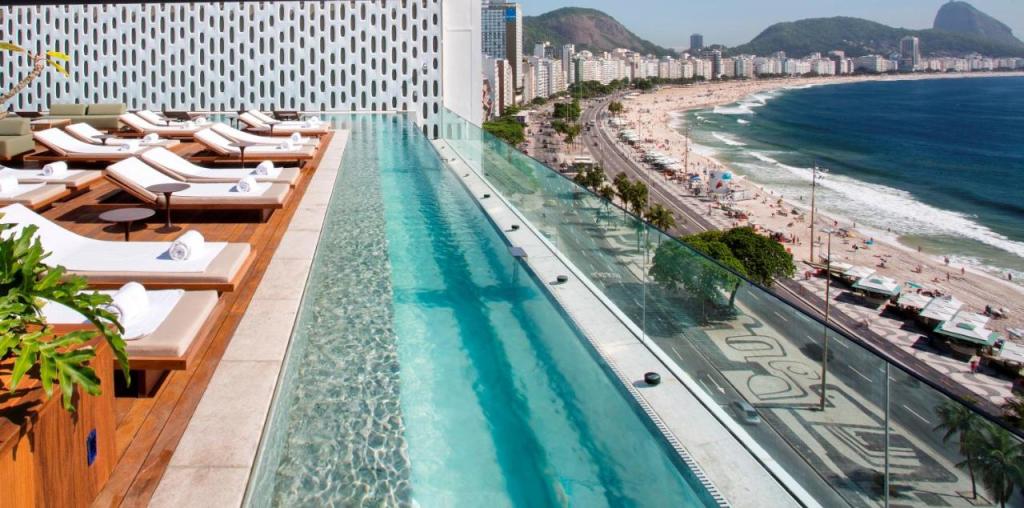
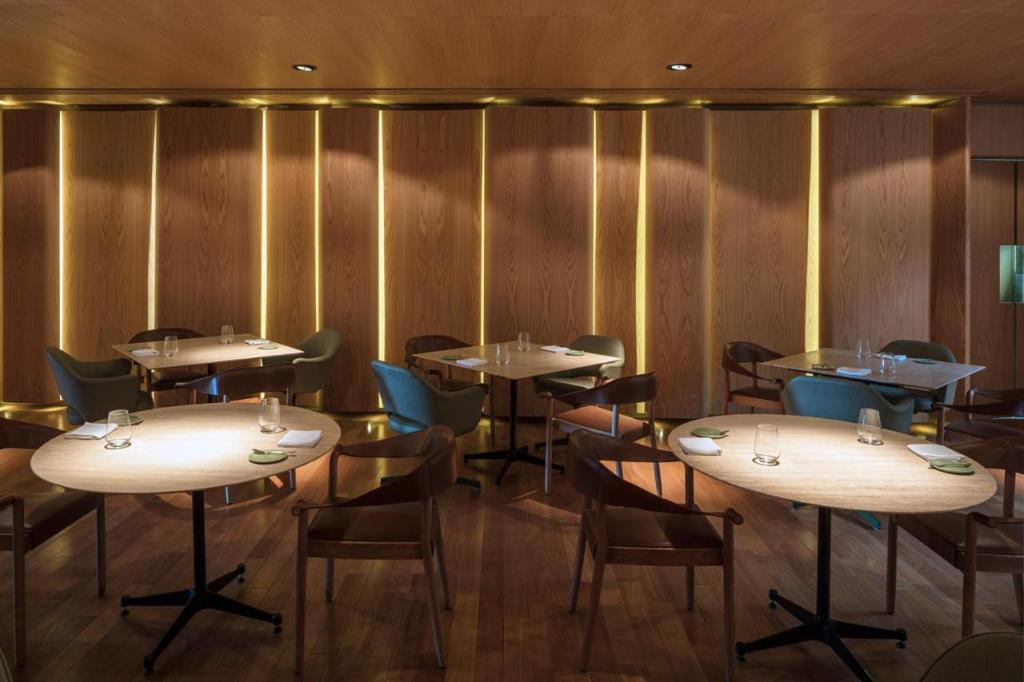
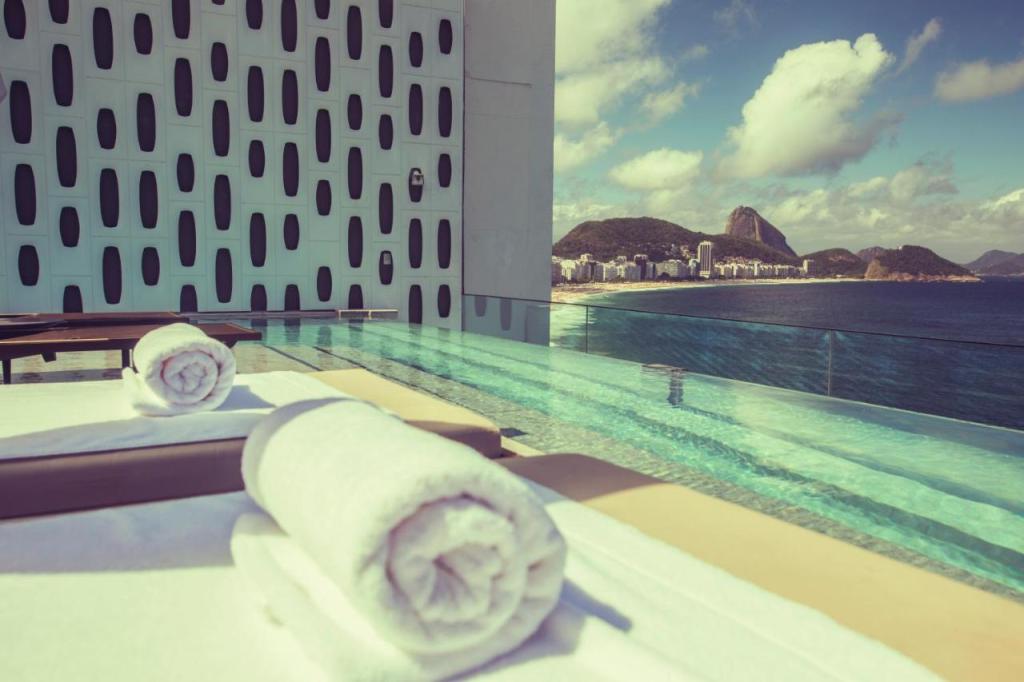
Boasting an outdoor infinity pool, Emiliano Rio is set in a privileged location in Rio de Janeiro, beachfront to Copacabana Beach. The contemporary architecture values natural light and sea views, off

Ipanema is not Rio de Janeiro's most prominent tourist district, and that is precisely its appeal. Where Copacabana draws volume, Ipanema draws discernment. The neighborhood emerged as a counterculture enclave in the 1960s, a creative and intellectual hub that produced the bossa nova movement and shaped a particular strain of Brazilian modernism. That legacy has never fully dissolved. Today, the streets between Rua Visconde de Pirajá and the beachfront Avenida Vieira Souto carry a quietly sophisticated character: independent bookshops, design-conscious restaurants, and a residential fabric that suggests a neighborhood in which people actually choose to live.
3 hotels available

Boasting an outdoor infinity pool, Emiliano Rio is set in a privileged location in Rio de Janeiro, beachfront to Copacabana Beach. The contemporary architecture values natural light and sea views, off

The 4-star Grand Mercure Rio de Janeiro Copacabana is ideally located at Copacabana Beach. It offers a restaurant and nonsmoking accommodations. Grand Mercure Rio de Janeiro Copacabana provides brigh

Boasting a rooftop pool with stunning sea views, Hotel Fasano Rio de Janeiro offers luxurious beachfront accommodations on Ipanema Beach. The property also offers a spa and wellness center. Elegantly

Barra da Tijuca is often described as Rio de Janeiro's planned district, a deliberate urban project conceived in the 1970s to absorb westward expansion. Unlike the dense hillside fabric of Santa Teresa or the compressed beachfront geometry of Ipanema, Barra operates on a broader scale. Wide avenues, gated residential condominiums, and a consistent architectural vocabulary give it a character closer to Miami Beach or parts of coastal São Paulo than to central Rio de Janeiro. For a specific category of traveler, this is precisely the appeal.

Copacabana occupies a distinct position within Rio de Janeiro's geography of prestige. Unlike Ipanema to the south, which carries a residential quietness and boutique sensibility, Copacabana is denser, more layered, and more architecturally complex. The Avenida Atlântica runs the full length of the beachfront, lined with hotels ranging from legacy grand properties built in the mid-twentieth century to more recently repositioned contemporary addresses. This is a neighborhood where the Atlantic Ocean is not a backdrop but a constant presence, visible from upper-floor suites, audible at night, and central to the rhythm of the day.

Santa Teresa is not a resort district. It is a living urban neighbourhood that happens to contain some of the most characterful accommodation in Rio de Janeiro. Its appeal to high-end travellers rests on a specific set of qualities: architectural authenticity, cultural density, relative quiet, and proximity to the city's cultural institutions without immersion in its commercial corridors.
For high-end travelers exploring Brazil, Ipanema functions as Rio's most coherent address. It is walkable, legible, and dense with quality. The beach itself, divided into informal social zones by the lifeguard posts known as postos, provides a kind of open-air sociological study. Post 9 and Post 10 have historically drawn a more culturally self-aware crowd, a geography that reflects the neighborhood's general sensibility.
The Avenida Vieira Souto axis, which runs parallel to the beach, concentrates the highest-tier accommodation in the neighborhood. Properties here command direct Atlantic views and immediate access to the sand. The orientation is west-facing at the Arpoador end, which produces exceptional late-afternoon light conditions that define the neighborhood's visual character.
Ipanema transitions without interruption into Leblon at its western edge, separated only by the Jardim de Alah canal. Leblon carries a slightly higher residential density and is considered by many residents to be the more private of the two. Travelers who prefer the aesthetic and social qualities of Ipanema but value additional quiet often find that a suite positioned in this transitional zone provides the best of both contexts.
The interior edge of Ipanema faces the Lagoa, a brackish lagoon surrounded by a flat running and cycling circuit that functions as the neighborhood's secondary public space. Suites in properties oriented toward the Lagoa offer a different visual and acoustic register: less oceanic, more residential, with the Tijuca forest rising sharply behind. This is a considered alternative for travelers who prioritize quiet over beach immediacy.
Rio de Janeiro operates on a tropical wet-dry cycle. The Southern Hemisphere summer, running from December through March, is the period of highest temperatures, most intense beach culture, and the Carnival festival, which reaches its peak in February or early March depending on the year. Suite availability during Carnival contracts sharply and rates increase significantly. Travelers with fixed itineraries should plan well in advance for this period.
The Southern Hemisphere autumn and winter, April through August, offer a different quality of visit. Temperatures remain warm by northern standards, humidity drops, and the city takes on a more local, less tourist-saturated character. This is often when the neighborhood's cultural programming, its gallery openings, music events, and food scene, operates at its most interesting. For travelers prioritizing comfort and considered access over beach conditions, the May to August window is frequently the most rewarding.
The Festa Junina season in June, while more associated with inland Brazil, produces a series of cultural events across Rio that add texture to a stay without overwhelming the city's rhythms. September and October mark a shoulder period with reliable weather and moderate demand, making them particularly practical for travelers seeking suite value relative to the peak calendar.
Brazil does not operate a formal state classification system equivalent to France's Palace designation. Quality in the luxury hotel sector here is assessed through international chain affiliation, independent design reputation, and the specificity of service. The most considered properties in Ipanema and its immediate surroundings tend to emphasize spatial generosity, view orientation, and the quality of local material choices: natural stone, bespoke joinery, and the kind of considered detailing that reflects Brazilian modernist design lineage.
Top-tier suites in this part of Rio de Janeiro typically offer private terrace access, direct beach or Lagoa views, and service structures calibrated to international business and leisure travelers. In-suite amenities often reflect Brazilian craft production, with linens, soaps, and F&B sourced from regional producers of genuine quality. The broader South American luxury market has matured significantly, and Ipanema sits at its most refined end.
The most consequential decision for a suite in Ipanema is view orientation. Atlantic-facing suites offer direct beach exposure and the neighborhood's signature light quality. Lagoa-facing suites provide a calmer visual register and access to one of Rio's most genuinely local landscapes. Properties on the interior streets offer privacy and residential character at the cost of direct water views.
Ipanema's building stock is predominantly mid-century modernist, a product of Rio's rapid residential expansion between the 1950s and 1970s. The finest suites in this period of construction retain original structural gestures, generous ceiling heights, and a relationship to natural light that later construction rarely replicates. Some properties occupy converted or extended modernist structures with contemporary interior programs. This architectural layering is part of what distinguishes an Ipanema stay from a generic resort experience.
Ipanema is a functioning urban neighborhood, not a resort enclave. Travelers who require absolute acoustic isolation or gated separation from the city's density should factor this into their selection. The best suites here offer considered noise attenuation and private access points, but the neighborhood's character is fundamentally urban. That is its quality, not a limitation, for the right traveler.
The Ipanema accommodation market includes a wide range of properties, from boutique guesthouses to full-service international hotels. The signal-to-noise ratio for a traveler researching independently is low. Suite quality, view guarantee, service standard, and the precise relationship between room category and actual experience vary considerably across properties that present similarly in general listings.
La Suite applies an editorial framework to this selection process: spatial quality, design integrity, service calibration, and the specific character of the suite experience within its neighborhood context. For a district as particular as Ipanema, where the difference between a considered choice and a mediocre one is measured in details rather than broad categories, that editorial discipline is the most practical tool available to a discerning traveler. Explore the full Rio de Janeiro selection curated by La Suite to identify the properties that match your precise criteria.

Ipanema operates at a smaller scale and with a more residential character than Copacabana, which draws significantly higher tourist volume. The neighborhood's cultural history, its association with bossa nova and Brazilian modernism, gives it a distinct social register that tends to attract a more design-literate and locally engaged traveler. For a luxury suite stay, Ipanema generally offers quieter street-level conditions and a more coherent neighborhood identity.
The May to August window offers the most practical conditions for a considered luxury stay: lower humidity, stable temperatures, reduced tourist density, and stronger suite availability relative to peak periods. Carnival season in February and March is culturally significant but requires very early booking and commands premium rates. September and October represent a reliable shoulder period with good weather and moderate demand.
The most considered suites in Ipanema typically offer direct Atlantic or Lagoa views, private terrace access, and interiors that reflect Brazilian modernist design principles including natural stone finishes and generous spatial proportions. Service structures in the best properties are calibrated to international business and leisure standards, with in-suite amenities often sourced from regional Brazilian producers of genuine craft quality.
Ipanema is one of Rio de Janeiro's most walkable districts, with the beach, primary commercial street Rua Visconde de Pirajá, restaurants, galleries, and food markets all accessible on foot from most suite locations. The flat coastal topography makes pedestrian navigation straightforward, which is a practical advantage for travelers who prefer urban mobility without dependence on transfers or vehicles.
Ipanema offers a more residential and less commercially saturated environment than the Zona Sul's higher-traffic districts, but it remains an urban neighborhood with the corresponding acoustic and social conditions. Travelers who require resort-level isolation will find Ipanema's character more urban than secluded. Those who value city proximity alongside considered suite quality will find it among Rio's most coherent addresses.
Ipanema and Leblon are contiguous neighborhoods separated only by the Jardim de Alah canal, and they share a comparable social and aesthetic character. Leblon is generally considered slightly more residential and private, with a higher concentration of long-term residents and a quieter street-level atmosphere. Travelers who prioritize the aesthetic qualities of Ipanema but value additional quiet often find that properties near this border zone provide an effective balance.
Yes. Properties positioned on the interior edge of Ipanema, facing the Lagoa Rodrigo de Freitas, offer a different visual and acoustic register from beach-facing suites. The Lagoa provides a calm freshwater landscape with the Tijuca forest behind it, and the surrounding circuit is a significant leisure and social space for Rio residents. Suites with this orientation tend to attract travelers who prioritize quiet and a more local perspective over direct Atlantic exposure.
Carnival in Rio de Janeiro is one of the world's most significant public festivals, drawing very large volumes of visitors and compressing suite availability across the city. Rates during the Carnival period, typically in February or early March, increase substantially and the best suites are reserved months in advance. Travelers who wish to experience Carnival from an Ipanema suite should begin planning at least six months prior to their intended dates.
La Suite applies an editorial framework that evaluates spatial quality, design integrity, view orientation, service calibration, and the specific character of each suite within its neighborhood context. For a destination like Ipanema, where property quality varies considerably despite similar surface-level presentation in general listings, this editorial discipline allows travelers to make precise decisions based on verified criteria rather than marketing descriptions.
Ipanema emerged as a creative and intellectual hub in 1960s Rio, producing the bossa nova movement and contributing to a specific strand of Brazilian modernism in architecture and visual culture. That history has shaped the neighborhood's built environment and its ongoing cultural programming, which includes independent galleries, design-conscious restaurants, and a residential character that reflects considered aesthetic choices. For a traveler interested in the intersection of design, music, and urban culture, Ipanema carries a density of reference that few coastal neighborhoods in South America can match.