Where to stay in Luxor for a luxury suite experience
The West Bank operates on a different register entirely. Quieter, more agricultural, and saturated with the presence of the mortuary temples and royal tombs, it attracts travelers who prioritize atmosphere over convenience. Staying on the West Bank places guests within minutes of the Valley of the Kings, the Temple of Hatshepsut at Deir el-Bahari, and the Colossi of Memnon. Boutique properties here tend to be smaller in scale, more architecturally intentional, and better suited to those who prefer solitude over spectacle.
For travelers arriving by Nile cruise, the mooring points are predominantly on the East Bank, and several properties offer seamless transitions between land-based suites and river cabin accommodations.
When to visit Luxor
Luxor's climate is among the most extreme of any major archaeological destination. Summer temperatures regularly exceed 40 degrees Celsius, making site visits between June and September genuinely demanding, even at dawn. The optimal window for Luxor runs from October through April, when temperatures settle into a range that allows extended outdoor exploration.
The winter months of December and January see the highest concentration of international visitors, which affects both suite availability and pricing across the city's top properties. Booking three to four months in advance is standard practice during this period. February and March offer a practical balance: temperatures remain manageable, crowds thin slightly after the peak holiday season, and the quality of light in the early morning, particularly at the temples, is architecturally exceptional.
The Abu Simbel Sun Festival occurs twice annually, in February and October, drawing travelers from across the region. While Abu Simbel is located 280 kilometers south of Luxor near Aswan, many itineraries combine both destinations, making Luxor a natural base before or after the journey south.
Luxury standards in Luxor: what to expect from top-tier suites
Egypt does not operate the same formal classification system as France, which applies the Palace designation to its most exceptional urban hotels. Egyptian hotel grading follows a five-star system administered by the Egyptian Hotel Association, and the country's top properties in Luxor hold five-star ratings. Within that band, however, quality varies considerably.
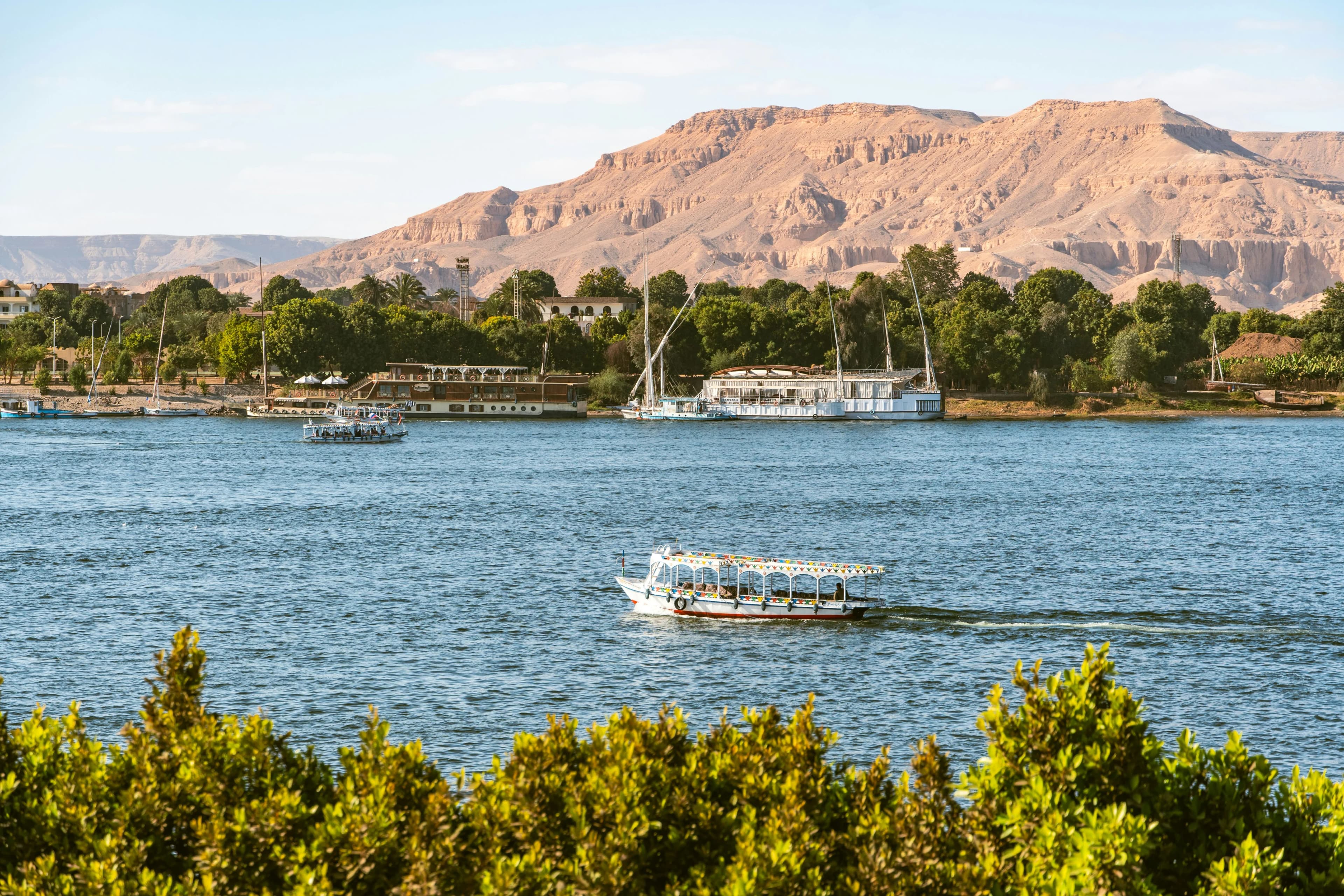
The most distinguished suites in Luxor share several consistent characteristics. Nile views are the primary spatial premium: a suite with an unobstructed river view commands a significant price differential over interior-facing rooms, and for good reason. The Nile at Luxor retains a quality of light and movement that feels distinctly different from the urban stretches further north. Beyond the view, look for suites that integrate architectural references to the surrounding context, whether through material choices, courtyard layouts, or the integration of local craft traditions into the interior specification.
Private butler service, temperature-controlled pools, and dedicated check-in processes are standard at the upper end of Luxor's hospitality offer. Several properties also provide private Egyptologist guides as part of their suite packages, which materially changes the quality of site visits and is worth considering when evaluating total value.
How to choose the best luxury suite in Luxor
The first decision is the bank. East versus West is not merely logistical but experiential. Travelers who want to treat Luxor as a base for day trips, combined with evenings on the Corniche and access to restaurants, should lean toward the East Bank. Those for whom Luxor is specifically about the tombs and mortuary temples, and who prefer their surroundings to reflect that gravity, should consider West Bank properties seriously.
The second consideration is scale. Luxor's largest hotels carry hundreds of rooms and offer the full range of resort amenities, including multiple dining venues, spas, and large pool areas. These are appropriate for families or extended stays where variety matters. Smaller boutique properties, several of which operate on the West Bank or in converted historic structures, offer a more compressed and curated experience that suits shorter, more focused itineraries.
Third, consider the suite's relationship to the site. Some properties are positioned within walking distance of Luxor Temple, which becomes dramatically lit after dark. Others are further from the main sites but offer private access to less-visited areas. This distinction matters more in Luxor than in most destinations, because the quality of access to the sites is itself a form of luxury.
Finally, consider the time of day. Luxor's most memorable moments occur at dawn and dusk. A suite with an east-facing terrace captures the sunrise over the Nile and the first light on the East Bank temples. A west-facing position frames the sunset behind the Theban Hills, which mark the entrance to the Valley of the Kings. This orientation detail is worth confirming before finalizing any booking.
Why curated selection matters in Luxor
Luxor is a city where the gap between expectation and reality can be significant. The density of historical interest creates strong demand across a relatively limited portfolio of genuinely distinguished properties. Not every five-star hotel in Luxor delivers a suite experience commensurate with the destination's importance, and the variance in quality between properties in the same category is wider here than in more mature luxury markets.
La Suite applies a consistent editorial standard to its selection process, prioritizing spatial generosity, architectural coherence, and the quality of the guest experience across the full stay. In a city as historically charged as Luxor, the suite is not incidental to the trip: it is the frame through which everything else is experienced. A considered selection by La Suite ensures that frame is worthy of what surrounds it.