Understanding the Palmeraie as a luxury destination
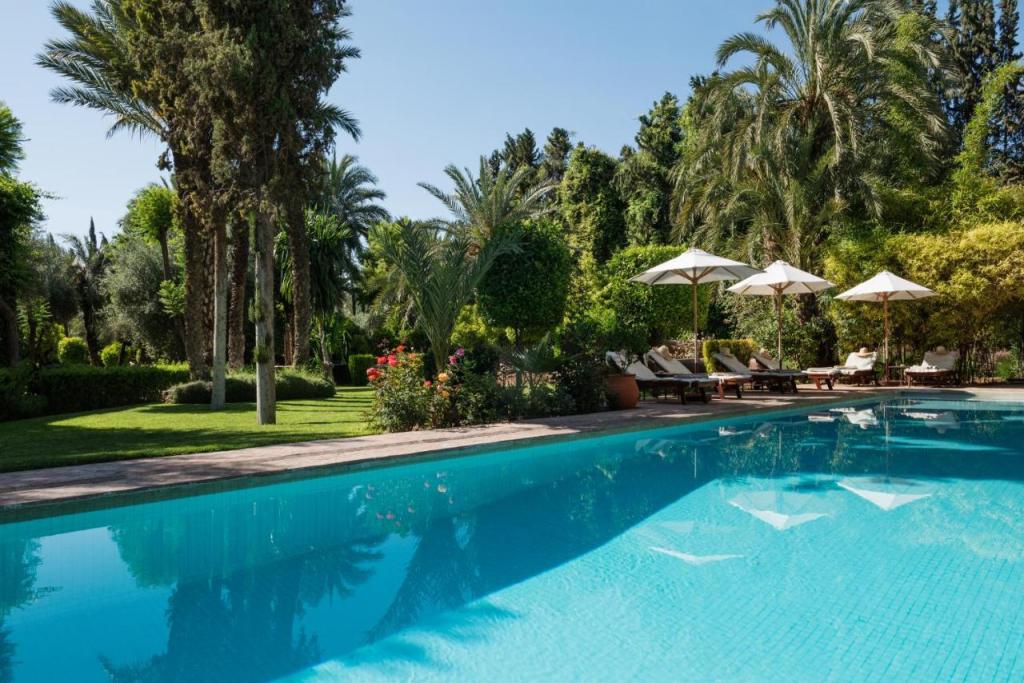
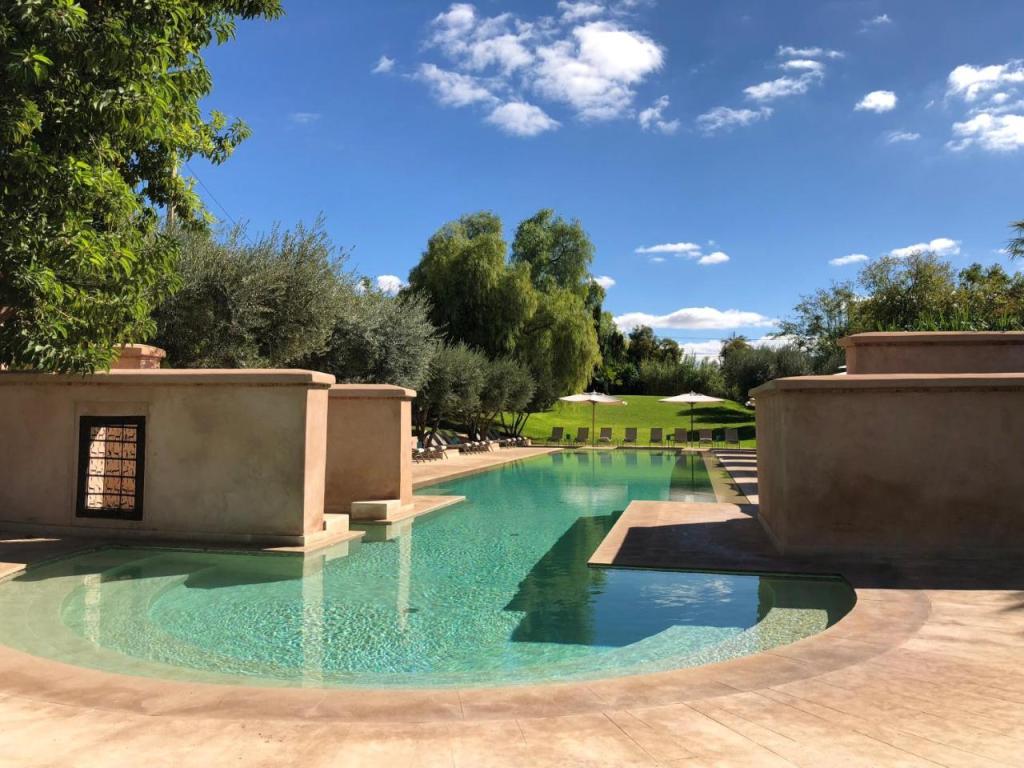
The properties that have settled here tend to be expansive by design: large land parcels allow for private pools, gardens, and the kind of spatial separation between suites that is structurally impossible in the historic city centre. For travelers who require genuine privacy, the Palmeraie is the correct address.
The distinct character of Palmeraie stays
Staying in the Palmeraie is a considered choice, not a default. The neighborhood operates on a different rhythm from the medina. Mornings here are defined by stillness, the sound of birds, and the particular quality of light that comes through palm canopies rather than narrow souks. Evenings cool faster, and the scale of the sky changes the mood entirely.
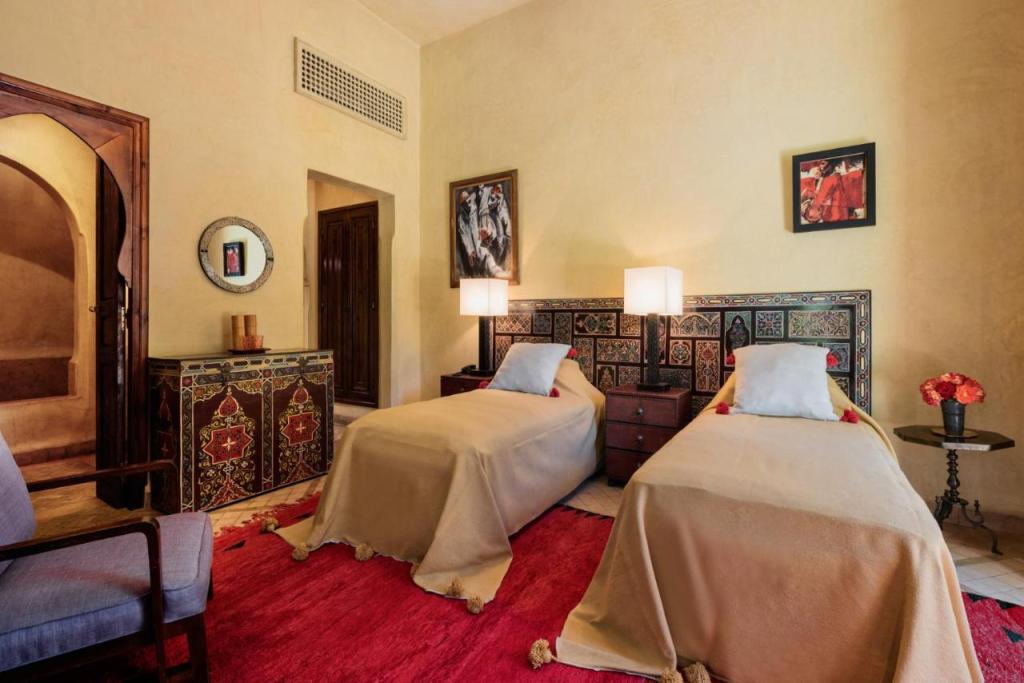
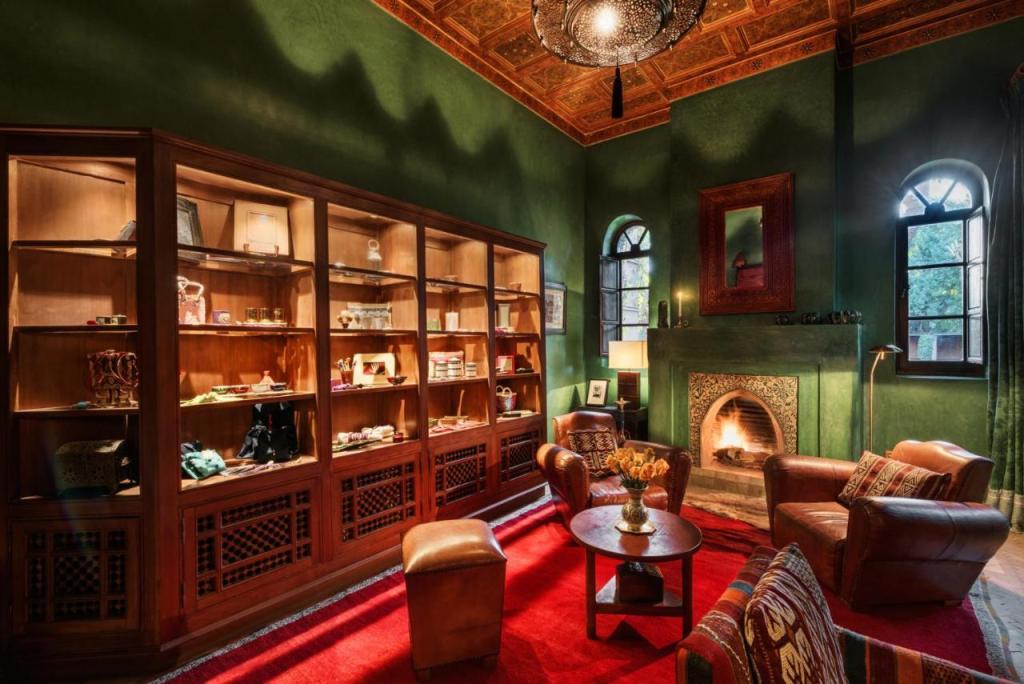
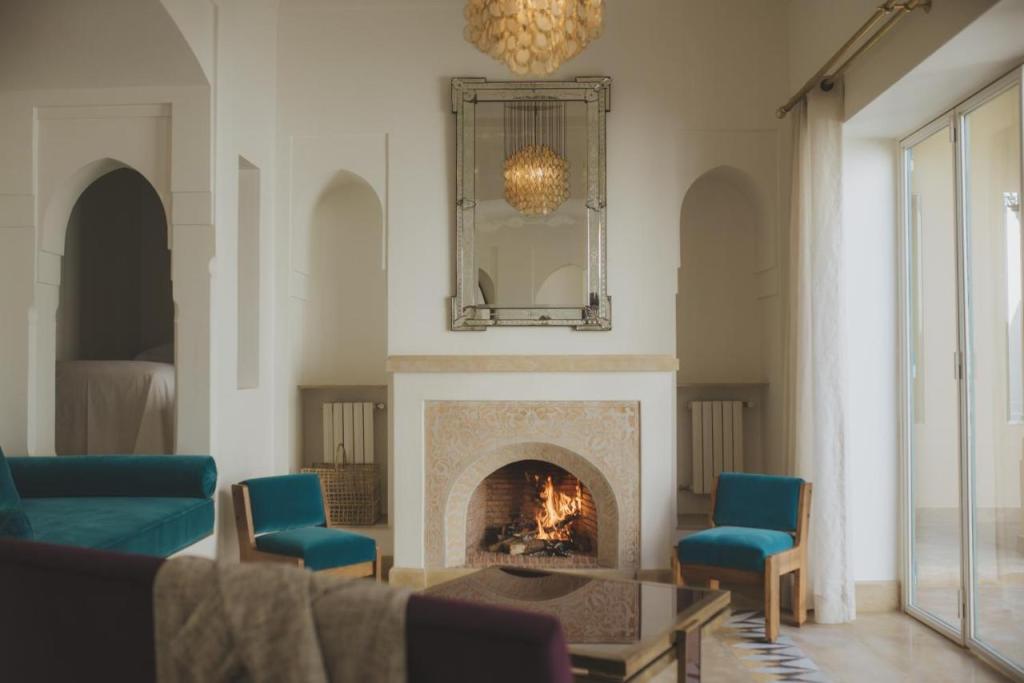
Architecturally, Palmeraie properties tend to draw on Moroccan vernacular traditions while working at a scale impossible in the old city. Zellij tilework, carved cedar ceilings, and keyhole archways appear in rooms and suites where the ceilings are high and the proportions generous. The best luxury hotel suites in the Palmeraie read as interpretations of traditional Moroccan palace design, applied to contemporary standards of space and comfort.
When to visit the Palmeraie
Optimal seasons
The Palmeraie is at its best in spring, from March through May, when temperatures in Marrakesh settle between 18 and 28 degrees Celsius and the gardens surrounding each property are in active bloom. October and November offer a comparable quality of light and temperature, with the added advantage of lower occupancy at most hotels. These shoulder seasons are when suite availability is most reliable and the outdoor spaces, which are central to the Palmeraie experience, are fully usable across most hours of the day.
Summer and winter considerations
July and August bring intense heat to the Palmeraie, with daytime temperatures frequently exceeding 38 degrees Celsius. Properties with strong air conditioning infrastructure and shaded pool terraces remain functional, but the experience is largely contained to the early morning and evening hours. Winter months from December through February are mild by day but can be notably cold after sunset, which affects how outdoor terraces and open-riad configurations perform as living spaces.
Events and cultural calendar
The Marrakesh International Film Festival, held annually in December, draws a significant international audience to the city and directly impacts suite availability across the Palmeraie. The Festival of Popular Arts in July is another key cultural moment. Travelers seeking suite availability during either period should plan well in advance.
Local luxury standards: what defines a top-tier suite in the Palmeraie
Morocco does not operate a formal palace classification equivalent to the French label, but the country's Ministry of Tourism applies a rigorous five-star rating system that functions as the benchmark for top-tier properties. Within the Palmeraie, the most respected hotels typically hold this classification and have built reputations over decades of hosting internationally sophisticated guests.
The concept most relevant to understanding Palmeraie luxury is the kasbah. A traditional kasbah is a fortified residence, and several of the Palmeraie's leading properties have been designed in this idiom: high perimeter walls, internal courtyards, a clear separation between public and private space. When applied to a luxury hotel suite, this model produces rooms that feel architecturally self-contained, with private terraces, plunge pools, and sight lines calibrated for seclusion.
Across Africa more broadly, the Palmeraie stands as one of the few destinations where this level of architectural intention is consistently applied to the suite category specifically, rather than only to common areas.
How to choose the right luxury suite in the Palmeraie
Space and configuration
Suite sizes in the Palmeraie vary considerably. Some properties offer self-contained villa suites with dedicated butler access and private garden walls; others position their suites within larger hotel structures, with shared amenities nearby. The distinction matters depending on your priorities. If total visual privacy is essential, a freestanding villa suite with its own pool is the appropriate configuration. If proximity to the property's dining and spa programming is important, a wing-based suite within the main building may serve better.
Architectural register
The Palmeraie contains properties across a spectrum of architectural registers. Some are faithful to classical Moroccan craftsmanship in every detail, from hand-painted plasterwork to bespoke Berber textiles. Others take a more contemporary approach, using the same materials in cleaner, more reductive compositions. Neither approach is inherently superior; the choice depends on how you relate to decorative density versus spatial restraint. A curated platform like La Suite can identify which properties align with specific aesthetic preferences, rather than leaving that research to unfiltered review aggregators.
Connectivity and transfers
Palmeraie properties are typically located 10 to 20 minutes from Marrakesh Menara Airport by private transfer. The distance from the medina varies by property but is generally 20 to 35 minutes by road. Most top-tier hotels offer dedicated transfer services; confirming this before arrival removes the primary logistical variable for guests arriving at night or during peak traffic periods.
The value of curation in the Palmeraie
The Palmeraie contains a wide range of properties, not all of which operate at the level implied by their marketing. The category of luxury hotel suite is applied loosely in this market, and the gap between properties that genuinely deliver on spatial quality, service intelligence, and architectural coherence can be significant.
La Suite's curated selection for the Palmeraie is built on direct assessment of which properties meet the standards that define a high-calibre suite stay: genuine privacy, architectural integrity, and a service model that does not require the guest to advocate for their own comfort. In a destination where the visual language of luxury is easily replicated on a surface level, that distinction is material.
For travelers approaching Morocco through the lens of design, space, and cultural depth, the Palmeraie remains one of the most coherent luxury propositions available on the African continent. Approached with the right information, it rewards deliberate choice over spontaneous booking.